From start-ups to big pharma – how to get into industry

Early career researchers are increasingly faced with the prospect of leaving academia, but is industry the right career move for you?

Naturejobs journalism competition winner Rachel Harris reports.

It can become easy to believe that skills developed during a PhD are suited only to academia, so it’s always refreshing to learn about the value of doctoral training in other settings. I went to the Naturejobs Career Expo London 2016 to see what else I could use my skills for.

RachelHarris

Rachel Harris

Continue reading

Commercial break

Science doesn’t happen in a vacuum. Most researchers pursue their career because they not only love science but because they want to have an impact on the world – to help cure cancer, build a better dam, discover new planets, ease hunger. But those findings have to get from the lab to the market before they can become useful.

Ideas-naturejobs-blog

{credit}Topp_Yimgrimm/ThinkStock{/credit}

Continue reading

Why building a start-up is probably your most sensible career path

Your PhD has given you the perfect tool set to start a high-tech company, and it’s nothing to do with your technical skill, says Mark Hammond.

In stark contrast to the proliferation of web based start-ups led by young founders, science based start-ups have typically remained the domain of seasoned professors, spinning out breakthrough technology built on years of research. This is changing rapidly, and it’s now more viable than ever to start a science based company straight out of a PhD. In fact, it might just be one of the most sensible career paths that you can take.

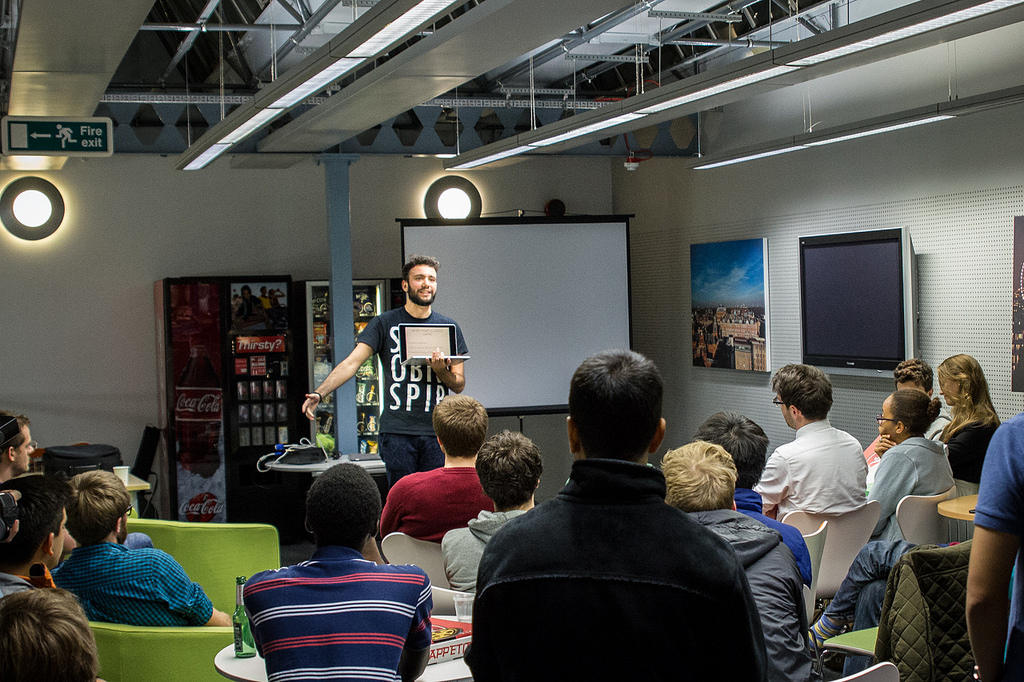
Students at Imperial College’s Marker’s meetup present ideas and get feedback

Continue reading

Jobs of the Future: What will a science career look like in 2030?

Scientists should be the ones designing the jobs of the future, say Michael Fischer and Mandë Holford. The Jobs of the Future initiative enables them to do so.


The modern growth in cross- and multidisciplinary research in academia has already had huge impact on the world around us, and is set to reshape the jobs market for scientists globally. With this in mind, the UN recently announced their 2030 Sustainable Development Goals (SDGs), which includes the goal to create jobs with competitive salaries that lead to sustainable economic growth. We believe young scientists should be the ones establishing the new fields and areas of employment for the future, to address the 2030 SDGs.


JOF-2

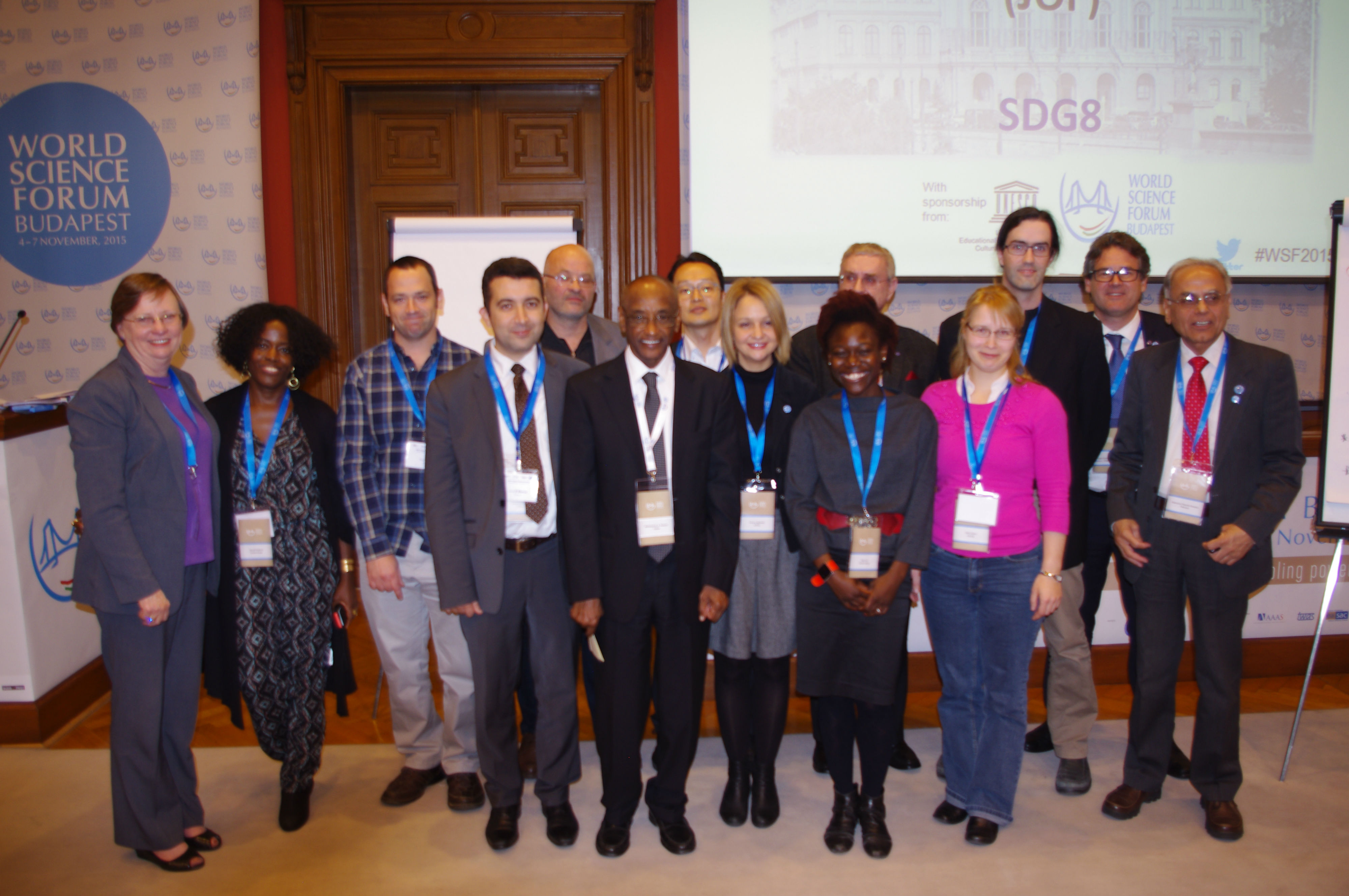
The JOF team

The Jobs of the Future (JOF) initiative will provide a platform to do just that – it’s a that allows young scientists and engineers to describe their dream job of the future.


To answer this call, a group of early career scientists and engineers at the 2015 World Science Forum pitched ideas on tangible ways to address the SDGs to a panel of international judges composed of high profile decision makers from UNESCO, InterAcademy Panel, and The Academy of Science of South Africa. The winning pitch, made by a team including the authors, was the JOF initiative.


Continue reading

Entrepreneurship: You’ve got the edge to found

Young scientists have substantial advantages over others when it comes to founding a start-up.

Guest contributor Leonie Mueck

Ideas-naturejobs-blog

{credit}Topp_Yimgrimm/ThinkStock{/credit}

Eoin Hyde has been running from meeting to meeting. His start-up, Innersight, is in a critical phase and he has to convince investors to give him and his co-founder enough funds to get it off the ground. Even with his hectic schedule, he’s full of energy.

“Everything is happening very fast,” he says. Until just a few months ago, Hyde had been working as a postdoc at King’s College London, following a PhD in computational biology at the University of Oxford. He enjoyed his research, but when a former colleague approached him with the request to co-found Innersight, a medical imaging company that constructs 3D images from patients’ scans to help doctors during minimally invasive surgery,  he didn’t think twice. “I had been playing with the idea to found a start-up for a long time,” he explains.

Hyde belongs to a minority. Not many science PhDs choose to found companies, at least not in the UK. According to the UK GRAD programme, only 2% of UK-based physical science and engineering PhD graduates are self-employed; it is unknown how many of those have the goal to found fast-growing technology start-ups with global reach. Alex Crompton, programme director at Entrepreneur First, finds these low numbers regretful because in his opinion, science PhD graduates are perfect founders. Continue reading

Transferable skills: Beyond the bench

Based on personal experience, Nina Dudnik highlighted the lessons learned and transferable skills gained when moving from academia to beyond the bench at the 2015 Naturejobs Career Expo in Boston.

Contributor Diana Cai 

 Nina-dudnik-naturejobs-blog

Nina Dudnik, CEO of Seeding Labs, shares her thoughts on transferable skills at the 2015 Naturejobs Career Expo in Boston.

As a teenager, Nina Dudnik, now CEO of not-for-profit Seeding Labs, was fascinated by agriculture and genetics. After graduating from Brown, she spent several years working with scientists in developing countries on agricultural development projects. This included spending a year in a rice research lab in Ivory Coast. There, Dudnik was struck not only by the innovative scientists she met but also by the sparseness of the lab. There was only one PCR machine, and scientists had to wash and reuse equipment like pipette tips. Other labs she visited in Africa were in similar conditions. When she returned to the US to begin a doctoral program at Harvard, a wealth of resources was available to her. Dudnik started using her spare time to collect unused lab equipment and send them to researchers in need of them. This was the beginning of her path to what is now Seeding Labs.

Reflecting on her journey, Dudnik scoffs at the idea that careers other than academia are considered “alternative”. Continue reading

Most read on Naturejobs: May 2015

Building reputations, relocation, adjunct teaching and more have been the topics of choice in May 2015.

naturejobs-readsThis month the Naturejobs team have been working hard on the Boston Naturejobs Career Expo, which happened last week. It was a long, but great day and we want to thank everyone who got involved: Speakers, delegates, exhibitors, sponsors. THANK YOU!

For those that missed it, there will be reports on the event coming out on the Naturejobs blog next week, starting with a summary of the keynote speech by Professor Robert Langer on Monday June 1st.

But now I want to concentrate on May, and here’s a list of your Top Ten reads from Nature Careers and the Naturejobs blog:

1. To get respect in a field, scientists need to consider not just their work, but also their interactions with others, says Chris Woolston in Recognition: Build a reputation on Nature Careers.

2. Contract teaching positions are becoming the norm for many aspiring professors. Know how to make the best out of them, says Kendall Powell in Adjunct teaching: For the love of lecture on Nature Careers.

3. The postdoc series: Help for lost postdocs shows how self-reflection can help young researchers analyze their skills and plan for their futures. Continue reading

The Boston Naturejobs Career Expo 2015

Entrepreneurship and taking control of your own careers are the themes for this years’ Boston Naturejobs Career Expo.

Naturejobs-career-expo-boston-2015The Naturejobs Career Expo in Boston is only 2 days away so it’s time for you to get your skates on and prepare yourself for the event. We’ve got a fantastic line-up of speakers this year, including Professor Robert Langer from MIT, entrepreneur Steve Blank and a whole host of other great influencers in panels and workshops.

Some important information:

Venue: Back Bay Events Center, 180 Berkeley St, Boston, MA 02116, United States

Date: May 20th 2015

Time: 9am – 6pm

Professor Langer and Steve Blank will both have an element of entrepreneurship in their talks. Langer’s entrepreneurial attitude has allowed him to see opportunities and ventures where others might not have (hence allowing him to take control of his own career! (He has over 1,080 patents worldwide, many of which have been licensed or sublicensed to over 300 pharmaceutical, chemical, biotechnology and medical device companies.)  Steve Blank has worked with hundred of scientists to see if they can get the right entrepreneurial attitude and get their ideas and products off the ground using a Lean method. I’ll be asking him why this attitude is so important, what the Lean method is and how scientists can adopt it.

I hope that throughout the day many of you that come will feel inspired by the speakers we have lined up for you, and that you too will come away looking to take control of your own careers. To make sure that you all get the most of the event and that you can start taking control of your own careers, here are a few tips on how to prepare for the event and navigate your way around whilst you’re there. Continue reading

Entrepreneurship: Discovering synergy

The entrepreneurial spirit is vital for science, says Diana Cai.

Contributor Diana Cai

entrepreneurship-naturejobs-blogFrom stories I have read (here, here, here, and here are just a few examples) and conversations I have heard, views of entrepreneurship within the scientific community at large have changed drastically since the mid-1970s. Before that time, entrepreneurship seemed to be spoken in a positive light by only a few scientists in hushed voices. To most in the community, entrepreneurship seemed to be incompatible with science. Science was associated with unbiased truth-seeking and healthy skepticism while entrepreneurship was associated with biased commercialization and aggressive sales. Since then, however, with 1) prominent academic scientists engaging in more entrepreneurial activities*, 2) the introduction of the Bayh-Dole Act in 1980 (allowing universities to take ownership of inventions) and 3) a decrease in federal funding for basic research (which encouraged scientists to turn to elsewhere for stable support) the negative attitudes towards entrepreneurism have largely dissipated. Scientists today have increasingly embraced entrepreneurship. More academic labs now than ever before are commercializing products and forming start-ups based on technologies developed or discoveries made in an academic lab. According to a 2011 Nature Methods editorial, between the establishment of the 1980 Bayh-Dole Act  and 2010, there have been more than 6,000 new companies formed from US universities.

While entrepreneurship is exciting, the entrepreneurial spirit is vital for science. The US Small Business Administration identifies an entrepreneur as “a person who organizes and manages a business undertaking, assuming the risk for the sake of profit”. These are traits that could easily describe a Principle Investigator, who, essentially, manages a lab of people who test ideas and budgets the resources of the lab for the different projects. However, these are only the most fundamental qualities of an entrepreneur. The most successful entrepreneurs have several more intangible qualities.

In a study of 2500 entrepreneurs, Gallup identified several characteristics that separate highly successful entrepreneurs from their less successful peers.  Among these characteristics are several that are most commonly associated with the entrepreneurial spirit: determination, risk taking, creativity and promotion.

Survival in science requires determination. It a characteristic that is probably found within almost all scientists as it is ingrained in us from the start. Most of us have had projects go awry, had confusing and perhaps directionless experimental outcomes, and experienced multiple rejections. But, we all know we need to find a way to overcome these obstacles, and in the end, we usually do. It is simply impossible to be in the field without being able to put up a fight and motivate oneself.

Beyond determination, risk taking and creativity are qualities that often set apart the best scientists. The most innovative work and amazing discoveries have often come from scientists who think unconventionally, take great risk, and do their research creatively. While performing safe research often leads to small, incremental progress, which is important and needed, well thought-out but risky projects done creatively are often what lead to the giant leap and catapult fields in new directions. There should be a balance between safe and risky research, but taking an entrepreneurial attitude reminds us it is important to be aware of this and not settle for the traditional methods and ways of thinking when more is possible.

Gallup also found that the most successful entrepreneurs are great promoters. Similarly, scientists need to not only be able to perform experiments and analyze data but also need to be able to sell their work so that society remains interested and excited about research, and thus willing and eager to support it. Additionally, no matter the experimental results, an enthusiastic presenter can still dazzle colleagues at conferences, publish in good journals and receive sizable funds to continue risky, creative science.  Hence, promotion in science, as in entrepreneurship, is necessary and rewarding.

Though scientists once viewed entrepreneurship with great skepticism and perhaps even repulsion, the science community has gradually come to embrace entrepreneurism and has become increasingly aware of the importance of an entrepreneurial attitude in science. If the recent years are any indication of the future, it is probably reasonable to assume that the boom in scientific entrepreneurism will continue for the foreseeable future, as scientists are increasingly looking for jobs outside academia and new companies are constantly formed from research done in academic labs.

Furthermore, while this article focuses mostly on the US, entrepreneurism seems to be regarded in a similar light by scientists in other developed countries. The embrace of entrepreneurism by scientists in developed countries has started spreading to emerging countries, with some of those countries enacting similar policies to the Bayh-Dole Act. While some of the emerging countries, most notably China ($), have seen much growth in scientific entrepreneurism in the past decade, it will be interesting to see if the trends continue in a similar manner and as rapidly as the development of scientific entrepreneurism in developed countries.

*ie: founding of Biogen by Walter Gilbert, Sir Kenneth Murray and Phillip Sharp, and founding of Genetics Institute by Thomas Maniatis and Mark Ptashne
diana-cai-naturejobs-blog

{credit}Image credit: Diana Cai{/credit}

Diana Cai is a winner of the 2015 Boston Naturejobs Career Expo journalism competition. She is also a graduate student in the Genetics and Genomics Program at Harvard, where her thesis research is in the realm of cancer biology. She was previously an undergraduate at Columbia, where she majored in biochemistry and performed research to better understand neural development. 


Career paths: Realize your inner entrepreneur

Scientists are inherently entrepreneurs, as Ada Yee learned when comparing the two during a business school talk.

Contributor Ada Yee

entrepreneur-naturejobsI slipped into a chair at the “Reserved for Latecomers” table, and poured a coffee. I was at a talk by Stanford business school alum Amy Wilkinson on her book “The Creator’s Code”– describing six traits that make entrepreneurs successful. I felt out of place. As a dyed-in-the-wool academic, I’d never counted myself in on the Silicon Valley buzz, but a lab mate had given me his ticket. It was 7am, and I’m a 10am-to-10pm-type grad student—but a grad student nevertheless—and so not one to turn down free eggs and bacon.

My school prides itself on being an innovation incubator, a campus that spawned the founders of Google, Cisco, and Yahoo. Nevertheless, there remains in me a feeling that science and business don’t mix. The majority of academic science still operates on an apprenticeship model, where “losing” students to companies is to lose them from the academic pantheon and kill your own lineage. Growing up in the Silicon Valley, I read headlines on the conflict of interest held by professor-scientists with industry ties in the post Bayh-Dole era (the 1980 decree that paved the way for tech transfer). At a party recently, a student-turned-startup member told me,  “academic scientists like to dig really deep into a problem. That doesn’t work in industry. It’s too slow.” Continue reading