A picture is worth a thousand words

Karin Bodewits and Philipp Gramlich share their thoughts on how an infographic CV could set you apart from the crowd.

By Karin Bodewits & Philipp Gramlich

In most western countries, the number of PhD graduates in the life sciences has increased by around 50% over the last ten years. As the job market, in both academia and industry, has been largely flat in most countries, this PhD glut is creating undesirable patterns of employment — and unemployment. Some academics are calling for ‘academic birth control’, but the academic system itself profits from the resulting endless supply of cheap labour. Continue reading

The emotional toll of unemployment in academia

Why don’t we acknowledge the long-term unemployed researcher, asks Michelle Newman

I recently read an article discussing how mental health in academia is taboo. While this is likely to be true, I feel that there is another area that encounters silence — the long-term unemployed academic.

The dilemma of the postdoc and early career researcher is nothing new, and has been written about again and again. From an economic standpoint, more PhD students mean greater productivity. The question in the past has been, “What do we do with all the postdocs?” It has been suggested (and in reality is quite obvious) that having a PhD isn’t tied to long-term employment because hiring is based on the amount of research funding available, and there is no need to offer permanent positions due the constant influx of ‘fresh’ graduates. So this means the question should be: “How do we help the researchers who are (still) unemployed?”

glasses-1611121_1920 Continue reading

Thinking of a PhD? This is the Australian story

Advice for prospective PhD candidates focuses on career prospects in R&D, but more thought should be given to personal aspirations in life and work.

Research is fuelled by the energy of post-graduate students. PhD students contribute 57% of total university research output, according to a 2013 discussion paper from The Group of Eight Universities in Australia. In 2011 Nature published “The PhD factory,” which described the ongoing crisis caused by the oversupply of trained researchers and the inability of academia and industry to soak up the overflow.

CSIRO_ScienceImage_3881_Five_Antennas_at_Narrabri_-_restoration1

Five of the Australia Telescope Compact Array antennas at Narrabri, New South Wales

Fast forward to 2016, and the PhD factories are just as productive, if not even more so. In the 2011 article, Dr Anne Carpenter at Harvard/MIT’s Broad Institute fought the system by hiring permanent staff scientists instead of the usual mix of postdocs and graduate students. She struggled to justify her high staff cost to grant-review panels. Continue reading

Jobs of the Future: What will a science career look like in 2030?

Scientists should be the ones designing the jobs of the future, say Michael Fischer and Mandë Holford. The Jobs of the Future initiative enables them to do so.


The modern growth in cross- and multidisciplinary research in academia has already had huge impact on the world around us, and is set to reshape the jobs market for scientists globally. With this in mind, the UN recently announced their 2030 Sustainable Development Goals (SDGs), which includes the goal to create jobs with competitive salaries that lead to sustainable economic growth. We believe young scientists should be the ones establishing the new fields and areas of employment for the future, to address the 2030 SDGs.


JOF-2

The JOF team

The Jobs of the Future (JOF) initiative will provide a platform to do just that – it’s a that allows young scientists and engineers to describe their dream job of the future.


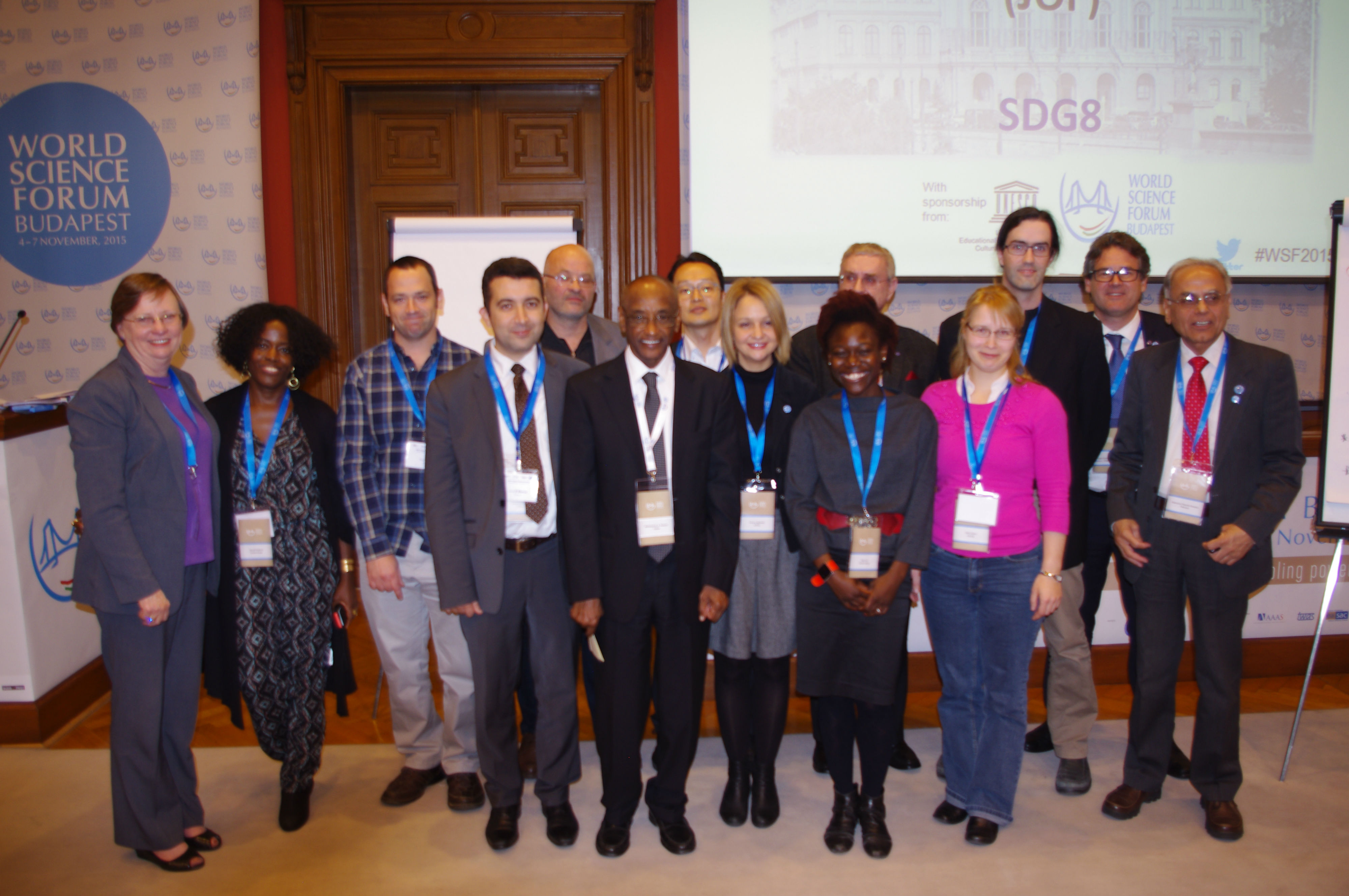
To answer this call, a group of early career scientists and engineers at the 2015 World Science Forum pitched ideas on tangible ways to address the SDGs to a panel of international judges composed of high profile decision makers from UNESCO, InterAcademy Panel, and The Academy of Science of South Africa. The winning pitch, made by a team including the authors, was the JOF initiative.


Continue reading

Internships: Time to think small?

For those keen to get an internship, SMEs provide a different kind of experience, and placements may be easier to come by.

Personality is key at SMEs Credit: Stockbyte/Thinkstock

By Rob Blythe, contributor

Securing internships and graduate placements in 2012 is difficult. There has been a 25% increase in applications to graduate employers since 2009, with an average of 52 applications for each job, according to a comprehensive survey by High Flyers Research.

Certainly, as you’ll know if you’ve found your way to this blog, research roles are particularly competitive, but the landscape isn’t as bleak as the statistics suggest.

There are only vast numbers of applications for a small minority of well-publicised opportunities. Big corporations spend enormous amounts of money making sure their roles are really competitive both because it ensures they are introduced to the very best candidates but also because graduates subsequently really want their jobs.

But what about smaller companies? A recent survey produced by UKCES that interviewed over 15,000 UK employers from a cross-section of sectors reported that 27% of businesses have recruited someone aged between 19 and 24 in the past twelve months. There are jobs out there, but the vast majority will be with companies you won’t be familiar with and won’t have been on campus trying to reach you there.

‘SMEs’ (or small to medium enterprises) is an umbrella term for a real array of businesses. It might be a company run from the founder’s kitchen table or a business with hundreds of employees and very slick offices. The category represents the vast majority of UK employers – and a vast majority of prospective jobs.

If you haven’t considered applying for work placements at SMEs, you could be missing out. Not only are there fewer applicants per role but also some real advantages to the roles themselves. Working in close contact with senior management gives any new recruit the chance to learn from the best, and fast-growing businesses delegate real responsibility early on.

Finding the roles can be the hard part. To increase your chances of success:

Continue reading

Was your degree worth it?

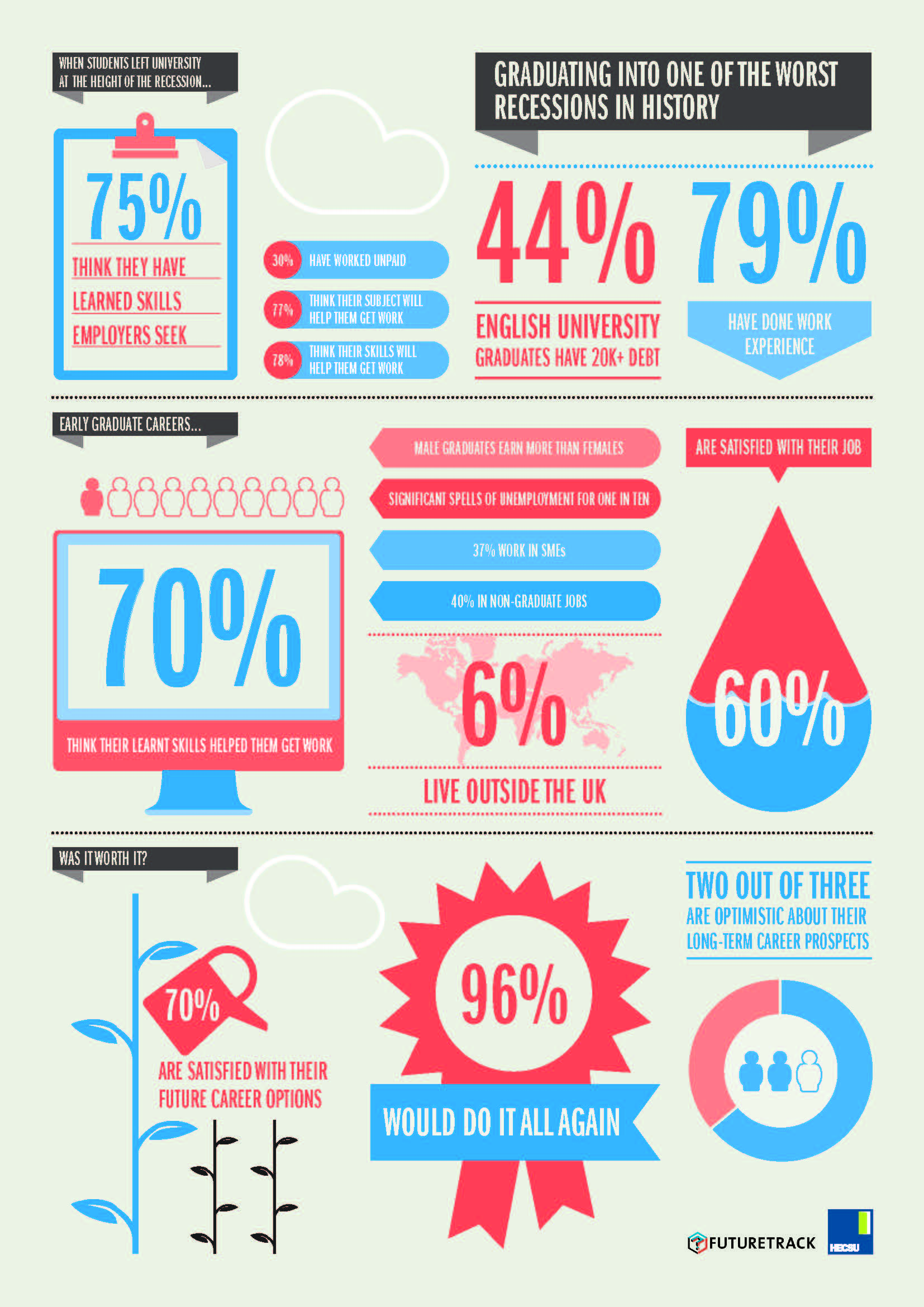
Would you do it all again?{credit}Futuretrack report{/credit}

A study tracking university students over 6 years from the moment they applied for university until well after they graduated has been published this week.

Perhaps unsurprisingly, the findings reveal just how hard it has been for UK students graduating during the recession, with a significant increases in debt and lower earnings compared with the class of ’99. On a positive note, the vast majority thought it was worth it – see the infographic above.

The study found that :

  • 1 in 10 graduates experienced significant spells of unemployment

AstraZeneca to cut 2,200 R&D jobs

As part of a major restructuring programme, pharmaceutical company AstraZeneca announced yesterday it would be cutting 2,200 jobs from its research and development (R&D) workforce.

The bulk of job losses will affect employees in its neuroscience arm as the company looks to outsource more of its R&D via external collaborations. It will set up a ‘virtual’ neuroscience research unit comprising 40 to 50 AstraZeneca scientists working with partners in academia and industry, such as the Karolinska Institute in Sweden. The unit will be based in Boston, United States, and Cambridge, United Kingdom, while R&D activities will cease at two sites that are focused on neuroscience: Södertälje in Sweden and Montreal in Canada.

In a statement, AstraZeneca’s president of R&D, Martin Mackay, said: “We’ve made an active choice to stay in neuroscience though we will work very differently to share cost, risk and reward with partners in this especially challenging but important field of medical research.”

United States sheds high-tech jobs

The United States lost more than a quarter of its high-technology manufacturing jobs over the last decade, according to a new report from the National Science Board (NSB), the policy-making body for the National Science Foundation.

During the same period, US multinational corporations rapidly expanded the number of their research and development (R&D) jobs held overseas, according to the Science and Engineering Indicators 2012 report. The proportion of US multinationals’ R&D employment outside the United States increased from 16 percent in 2004 to 27 percent in 2009, contrasting with a very modest growth in R&D employment in the United States by foreign companies.

In a statement, the NSB’s José-Marie Griffiths said the world had changed dramatically in the past decade. “Other nations clearly recognise the economic and social benefits of investing in R&D and education, and they are challenging the United States’ leadership position,” said Griffiths. “We are seeing the result in the very real, and substantial, loss of good jobs.”

On a slightly more positive note, the NSB report highlighted that job losses from the 2007-2009 recession were less severe for scientists than for the US workforce as a whole, and that in 2010 the median pay for scientists and engineers was more than twice that of the median income for all US workers ($73,290 compared with $33,840).

Other key figures released by the NSB include the following:

–  State funding for the top 101 public research universities in the United States declined by 10 percent between 2002 and 2010

–  In China, the number of natural science and engineering degrees rose from 280,000 in 2000 to one million in 2008, and the number of doctorates awarded in these fields in 2008 (26,000) exceeded the number earned in the United States

What’s your reaction to the report? Will it affect your job search? Let us know your thoughts below. You can also vote in our latest reader poll, which asks where you are most likely to look for a new job this year.


Chemists face employment woes – but there are ways to prosper

The rise of the biochemist and the challenges faced by recent chemistry graduates were among US employment trends discussed by analysts from the American Chemical Society (ACS) and the US Bureau of Labor Statistics (BLS) in a webinar last week. We’ve summarised the key points for you below – let us know your thoughts by leaving a comment.

Troubling figures

Unemployment among ACS members in 2009 and 2010 was at the highest level since 1972, when the society started collecting annual data, according to ACS researcher Gareth Edwards. “It’s a very troublesome figure,” says Edwards. “We are hoping it has at least plateaued or is going to decrease in forthcoming years.”

But biochemistry is blossoming

Brian Roberts from the BLS says employment trends for life scientists are much more positive than for chemists.

One of the reasons is that while chemists are “falling out of favour” in pharmaceutical research, biochemists are flourishing due to the shift in emphasis towards biotechnology and other life sciences in the sector.

Experience beats youth

Recent chemistry graduates are losing out to older, more experienced employees when it comes to finding a job. “In the race between people with experience and new graduates, people with experience are winning,” says David Harwell, assistant director for careers at ACS.

“Having seasoned vets on staff seems to be cheaper than hiring two [less experienced people] at half the price,” adds Edwards.

“Try before you buy”

The unpredictable financial climate in the United States has resulted in an increase in the number of people being employed on fixed-term contracts. “That’s especially true at the bachelor’s or associate level,” says Harwell. “It’s a little bit of ‘try before you buy’ for the employers.”

Have you been affected?

Are you a recent chemistry graduate struggling to find a job? Are you looking at biochemistry as an alternative option? Share your experiences in the comment box.