The power of data shared

In a world of interdisciplinary research, we need to make data freely available, says Katie Ember

Better Science through Better Data writing competition winner Katie Ember

Every Monday in the University of Edinburgh’s School of Chemistry, the Campbell group gather in Room 233 for a lab meeting. If you’re hosting the meeting, you bring cake. Or you forget and everyone pretends they’re not feeling a bit hungry and disappointed. Then, two scientists in the group present that month’s work.

Every Friday in the Centre for Regenerative Medicine, a fifteen minute cycle from the School of Chemistry, the Forbes group file into the first floor meeting room. After battling with the “motion-activated” lights, we all talk through what we’ve achieved that week.

Teamwork

The reason I go to two lab meetings in one week is because I’m attempting to detect liver damage using laser light. It’s multidisciplinary and it’s hard: requiring input from biologists, physicists and transplant surgeons from different institutes. The end result is that I spend about four hours each week not doing science but discussing it. Whilst this may seem like a strange way to do research, I cannot overstate how important it is. Continue reading

Naturejobs podcast: Flexibility and forward planning

#IAmAScientistAndA-smaller

London Naturejobs Career Expo speakers, exhibitors and attendees share how flexibility in a scientific career is beneficial.

“Science is a multifaceted and large enterprise, and there are lots and lots of very interesting ways to contribute to science” said Venki Ramakrishnan, president of the Royal Society, lab leader at the MRC Laboratory of Molecular Biology and joint winner of the 2009 Chemistry Nobel, at the 11th annual Naturejobs London Career Expo on Oct 4th 2017.

Ramakrishnan encourages scientists to think about the wide variety of options available to them; that having a PhD in science doesn’t mean you need to follow the tenure track career path. Continue reading

Do it for science – not for tenure

Career advice from a Nobel Laureate

By Judith Reichel

I recently had the pleasure of joining the 67th Lindau Nobel Laureate meeting at Lake Constance in the south of Germany. The weeklong meeting alternates its main focus between chemistry, physics, and medicine & physiology each year — the three categories of natural sciences the Nobel Prizes are awarded for. This year the focus was back on chemistry, and I was lucky enough to be invited by the organisers to cover the event on their blog.

Throughout the week I met handpicked junior researchers, talented fellow science communicators and journalists, and — above all — sat down with Nobel Laureates for one-on-one interviews.

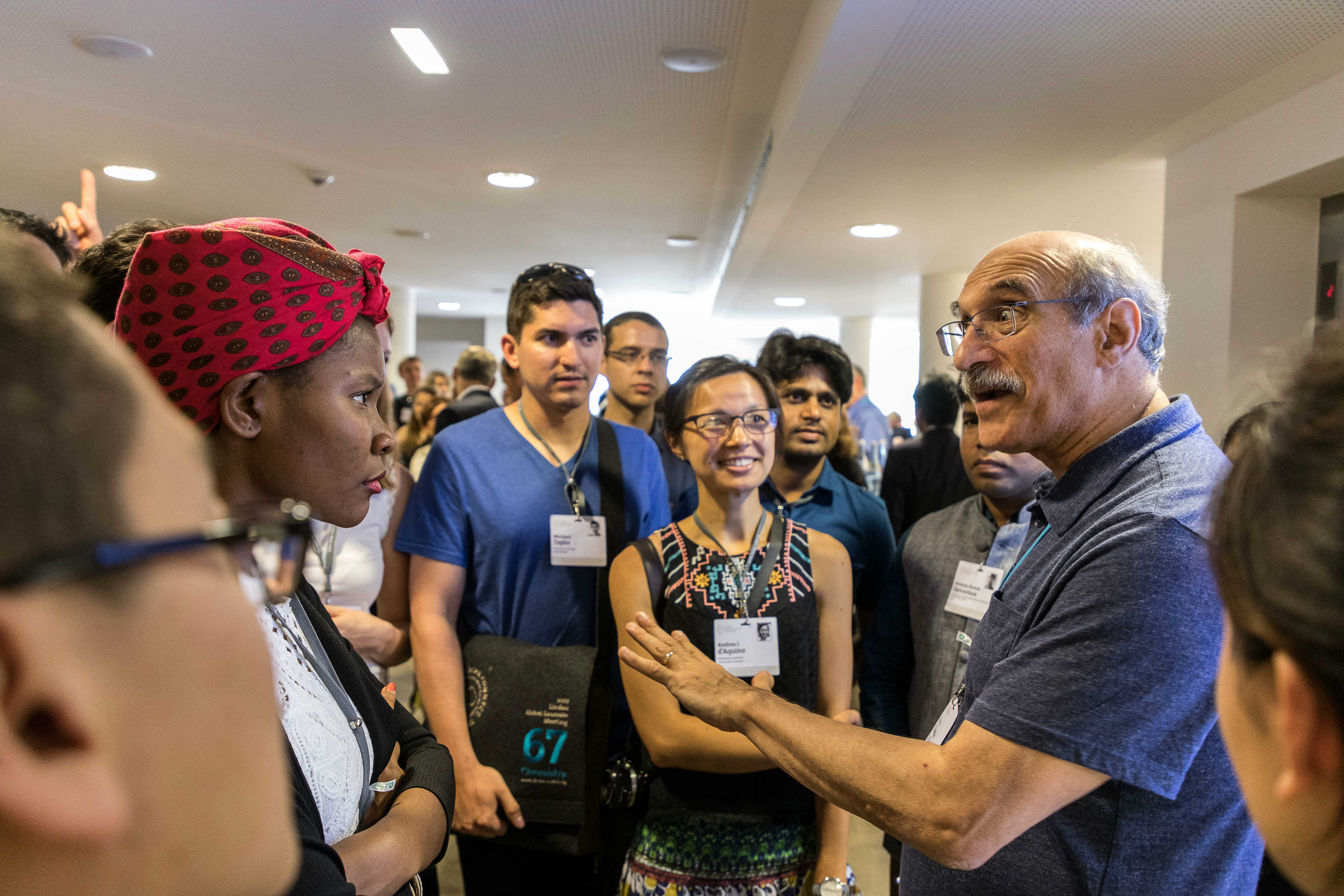
One of them was Martin Chalfie, who won the 2008 prize in Chemistry with Osamu Shimomura and Roger Y. Tsien for their development of the now widely used Green Fluorescent Protein (GFP) tag. Inserting the gene sequence for GFP into a host organism produces the protein within a cell, which allows for the visualization of intricate biological processes.

Chalfie talking to students at Lindau 2017

Chalfie talking to students at Lindau 2017{credit}Christian Flemming/Lindau Nobel Laureate Meetings Young Scientists in conversation with Martin Chalfie{/credit}

Continue reading

Reflections on the L’Oreal-UNESCO For Women in Science program

Muireann Irish on celebrating diversity in science

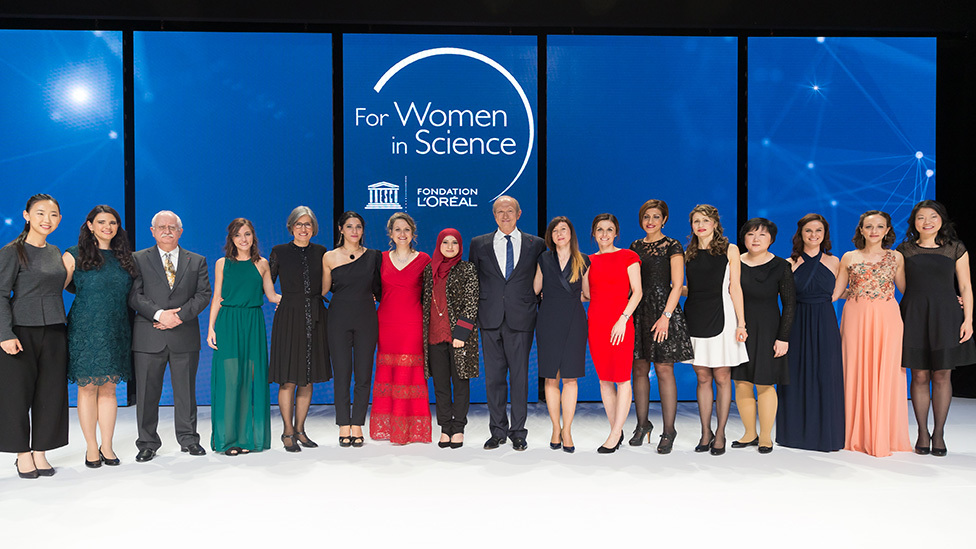
Springtime in Paris seems a fitting backdrop for any awards ceremony but particularly so in the case of the L’Oréal-UNESCO For Women in Science program. I recently had the honour of attending the 2017 International Awards along with 14 other early career researchers from around the globe, as part of the L’Oréal-UNESCO International Rising Talents Fellowship.

FWIS IRT ceremony 2017 Continue reading

The talent prize that flies the Spanish flag for organometallic chemistry

In 2016 Eva Hevia published her 100th paper, had her second child, celebrated her 40th birthday, and won a £14k prize which she will use to strengthen links between scientists in the UK and her native Spain. David Payne attended the prizegiving.

Hevia, professor of inorganic chemisty at the University of Strathclyde, Glasgow, described herself as a “molecular architect” after receiving the Society of Spanish Researchers in the UK’s inaugural Emerging Talent Award at the Spanish Embassy in London this week.

embassy

Continue reading

No such animal

Nobel Laureate Dan Shechtman describes the structure of quasi-crystals, the discovery of which won him the scorn of colleagues in the 1980’s and then the Nobel Prize in chemistry in 2011.


Suggested posts

Tick tock cold cold clock

Big box small box light-filled box

Aint no stopping them now

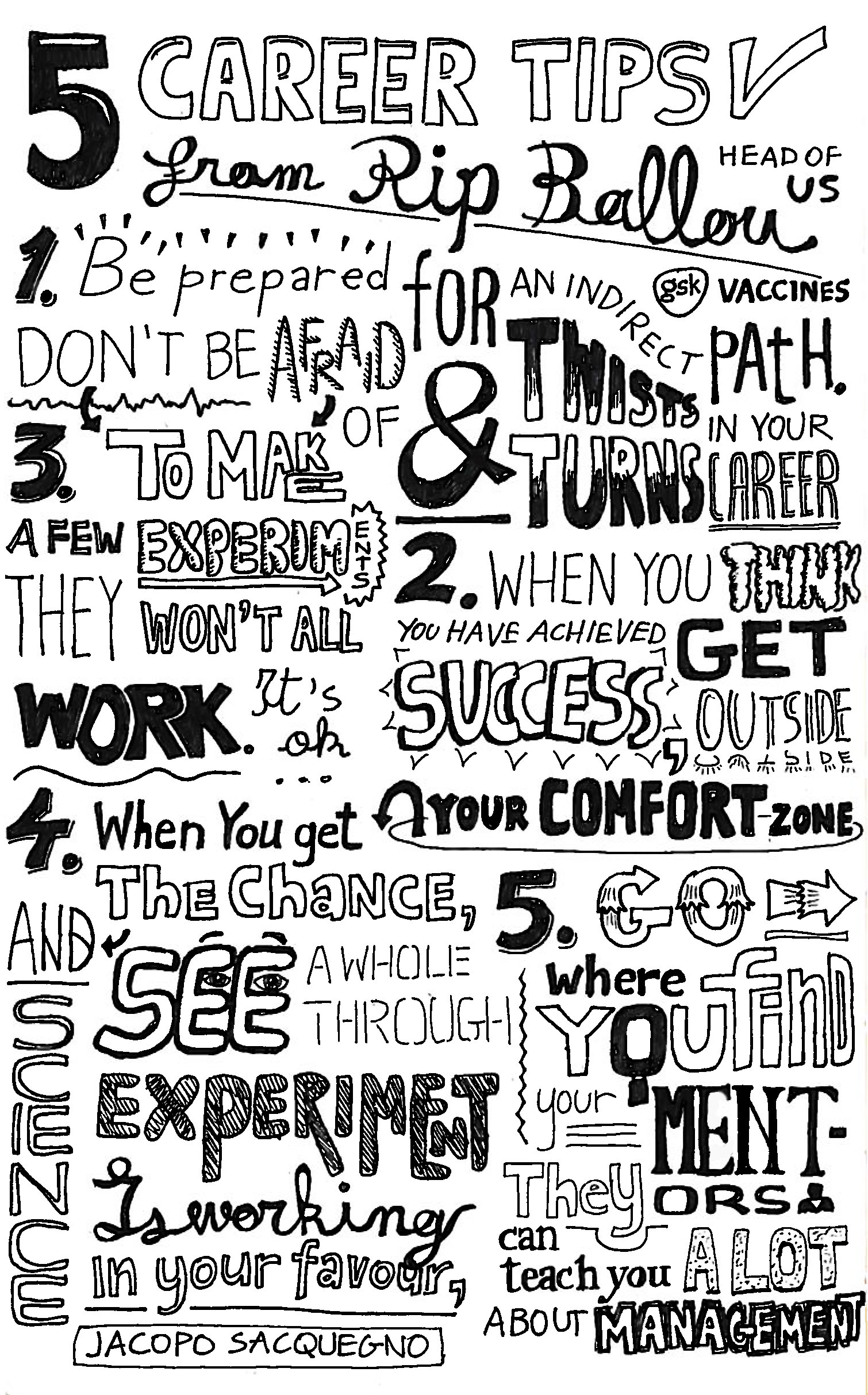
Five career tips from Ripley Ballou

We sat down with Rip at the Naturejobs career expo, Boston, to talk about his career and the advice he would give to other scientists starting theirs.

Rip’s had an interesting life; he started his career as a researcher at the US army’s Walter Reed Institute of Research, where he once exposed himself to malarial mosquitoes in a bid to see if his malarial vaccine worked. It didn’t, and that experience has motivated him in his career ever since. He’s now the head of US vaccines at GSK.

Here’s a word art graphic of five points from Rip’s talk, by Jacopo Sacquegno.

Sketch_5Tips_tweet_NJCE-smaller

{credit}jacopo sacquegno{/credit}

Continue reading

Academia to industry and back again

Eric Betzig, one of three chemistry Nobel laureates from 2014, shares what he learned from working in both academia and industry, and how he applies it to his career now.


Naturejobs-podcast
It’s often said that being a science graduate is a great thing: it opens so many doors and gives you the chance to take on any career. Although this might be true, it also makes deciding what career to focus on, and train for, very difficult.

This month, Nature Careers published a great piece based on the 2015 Nature Graduate Student Survey, where Nature tried to uncover what careers early career researchers were hoping to get, and how they were preparing themselves. In this podcast I was joined by Monya Baker, one of the Nature Careers editors, to give us some further insight into the survey.

The second part of the podcast is an interview I did with Eric Betzig, one of the three chemistry Nobel prize winners in 2014. In our chat we talk about his work in breaking the diffraction limit, what it’s like to see living cells move and his transitions from academia to industry and back again.

Academic research: Getting into a lab

Three chemistry Nobel laureates share how they select the PhD students and faculty members that join their labs and departments.

Naturejobs-podcastFor many young researchers entering graduate school for a PhD, a career in academic research is the end goal. Yet the pyramidal career structure doesn’t make this easy for everyone to reach. So, when it comes to finding out how you can get your foot in the door, who better to ask than three of the most successful academic research scientists?

One of my best trips this year was to the 65th Lindau Nobel Meeting. It was set on Lindau Island, a beautiful, picturesque little place in Lake Constance in Germany. And whilst I was there enjoying the sights, I also had the opportunity to speak to some very interesting people. The meeting was an opportunity for hundreds of early-career researchers to meet Nobel Prize winners from across the sciences. They networked, presented and had informal conversations about the scientific life.

This month’s podcast is a collection of conversations and thoughts I had at that meeting with three Chemistry Nobel Laureates: the 2008 Laureate Martin Chalfie from the University of Columbia; Venki Ramakrishnan from the Laboratory of Molecular biology, Cambridge, UK, who won the prize in 2009; and Arieh Warshel from the University of Southern California, the 2013 prize winner.

Amongst other things, we discussed what each of them looks for in PhD students that they take on into their laboratories and faculty members that they hire into their departments. The main message from all laureates I spoke to, not just these three, was that without visible, tangible passion and enthusiasm for the science, it’s going to be difficult for you to get a position in a laboratory.

This lead us nicely onto a discussion about how you communicate this in an interview. And so, in the last part of this podcast, Warshel and Ramakrishnan, share their concerns for young scientists in this endeavour: They understand the importance of being a good communicator, but scientists need to know the limits to this. It’s no good over-selling your work if it means neglecting it, or even fabricating it.


Nature Biotechnology podcast: First Rounders with Julian Davies

Julian Davies

{credit}Image courtesy of Julian Davies{/credit}

Contributor Brady Huggett

Julian Davies has a long history in biotechnology research, particularly in antibiotics and resistance, and he also served as head of research at Biogen’s European division in the 1980s. But for more than 20 years now, he’s been at the University of British Columbia (UBC), where he’s the principal investigator at the Davies Lab. I spoke to Julian for the Nature Biotechnology First Rounders podcast, which was recorded in his office on the UBC campus, with the door closed to help with audio quality, and the overhead lights off. A light rain fell against his office window.

We talked at length about his early family life during World War II, his education in chemistry and biology, and his research across countries. A Nature Biotechnology profile in 2008 had covered TerraGen, Davies’ spinout from UBC, and it’s a topic in the podcast, too. But the element that perhaps stands out most is his eagerness to move around: he’s lived in New York, Manchester, Boston, Paris, Geneva, and beyond – partly to follow research he found interesting, and partly, it seems, because he was perpetually invited to work alongside others. This willingness to relocate helped facilitate his career, as well as allowed him to see the world.

Hear more about Julian’s life on the Nature Biotechnology First Rounders podcast.

Brady Huggett is the Business Editor for Nature Biotechnology