The leaky pipeline: Thank putdowns, slights

Searches for the reasons behind the ‘leaky pipeline’—the structural failures, such as equal representation, that drive women out of science, technology, engineering and maths (STEM)—often focus on large-scale problems such as work-family or work-life balance. But insidious psychological strikes also contribute to the outflow.

A study involving interviews and online posts of 28 women in the later stages of PhD studies in engineering and physical sciences in the United States, published 31 January in the journal Social Sciences, revealed many day-to-day slights that left them feeling alienated and undervalued. Some said they were contemplating leaving research as a result. “There’s a culture in male-dominated environments,” says Bianca Bernstein, a co-author of the study and a psychologist at Arizona State University in Tempe. “Some women feel it’s not for them.”

Even though they were already deep into their PhD studies, 12 of the 28 women indicated that they didn’t want to pursue research careers. Five cited personal or work-life balance reasons, but six chalked up their decision to change course to the workplace environment and culture, including two who specifically expressed a desire to escape a male-dominated field. Hypothetically, Bernstein says, more women would finish graduate school and remain in research careers if the gender balance wasn’t already so skewed, but noted that any such scenario is difficult to test.

The interviews and posts, which took place over seven months, highlighted many of the positive aspects of the scientific life, including feelings of accomplishment and mastery. But the women in the study also reported “frequent” instances of feeling ignored, dismissed or excluded. One woman reported that a male colleague reacted rudely when she won a scholarship. “He blamed it on the fact that I was a woman and that they probably gave me a scholarship to fulfill a quota,” she said in an interview as part of the study.

The women reported that they were disproportionately asked to perform “women’s work” such as cleaning up the lab or performing clerical duties. “We’ve been hearing that complaint for decades now,” says Bernstein, who is also a principal investigator with the US National Science Foundation’s CareerWISE programme, a coaching initiative for graduate-level women in science and engineering. “It’s surprising that it hasn’t changed.”

A few women reported unwanted sexual advances in the workplace. Bernstein notes that the interviews and posts tracked only study subjects’ recent experiences, not everything that had ever happened with them during their graduate programme. Also, the interviews and posts took place before the rise of the #metoo movement, so women may have been more reluctant to report such events than they would be today.

Kevin Miller, a researcher with the American Association of University Women based in Washington DC, says that even seemingly minor grievances can add up. “Women in STEM have to fight an uphill battle that starts when they are girls and their interest in the sciences may be discouraged or ignored,” he says. “The experiences described in this study show that women face bias both subtle and overt as well as systemic factors that make them more likely to exit STEM fields.”


Chris Woolston is a freelance writer in Billings, Montana.


Suggested reading:

Technology: Women are alienated
Academic housekeeping: Women’s work?

Men are more likely to be hired

Reflections on the L’Oreal-UNESCO For Women in Science program

Muireann Irish on celebrating diversity in science

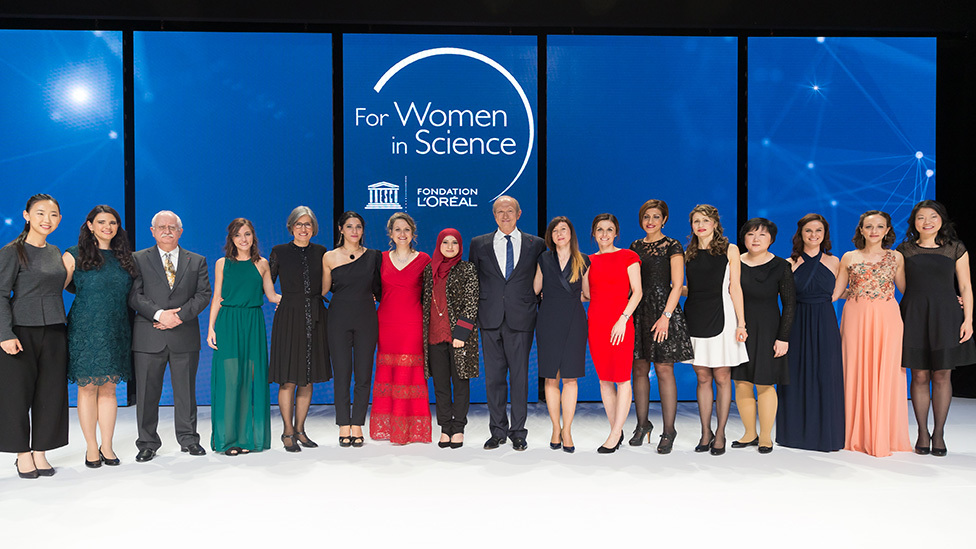
Springtime in Paris seems a fitting backdrop for any awards ceremony but particularly so in the case of the L’Oréal-UNESCO For Women in Science program. I recently had the honour of attending the 2017 International Awards along with 14 other early career researchers from around the globe, as part of the L’Oréal-UNESCO International Rising Talents Fellowship.

FWIS IRT ceremony 2017 Continue reading

A Tale of Two Labs – Our Academic Journeys in China and in the USA

The journeys of two professors show how to survive and thrive in the different academic systems of the US and China.

Guest contributors Zhiyong Jason Ren and Defeng Xing

Once upon a time, we worked in the same lab. Ten years later, we both lead big research labs – in Boulder, USA, and Harbin, China. We have similar backgrounds and research interests, but our journeys were very different. After reading Turning Point: Chinese Science in Transition and Nature’s How to build a better Ph.D, we want to share our stories with young researchers in the hope it might help them navigate their own science adventure.

How did we start?
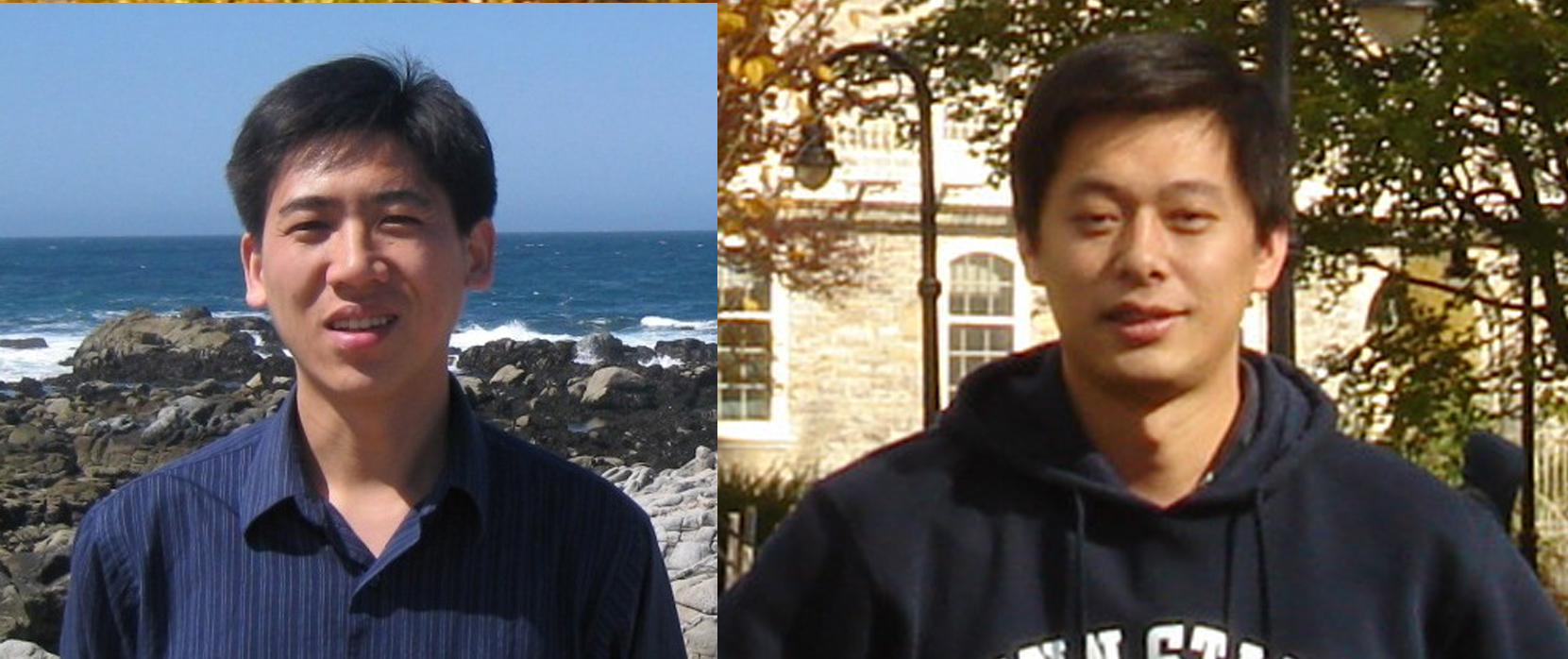
It was 2006 when we first met at Penn State and became lab mates and close friends. When it became time to decide on a career path, Ren chose to become an assistant professor in the U.S., while Xing returned to his Alma Mater in China. In an “ever-lasting” U.S. tenure track system, Ren was handed a well-structured guideline for new principal investigators (PIs), while Xing got a pile of applications on his desk, so he could recruit from various young talent programs.

Ren (L) and Xing (R) in 2006

For Ren, winning the position meant he started the job as decision-making group leader, though he didn’t receive much training.  For Xing, it meant joining a big group with an established platform and shifting gradually from a team player to team lead. Continue reading

Spotlight on Women in Science with Roma Agrawal

Roma-Agrawal

{credit}Credit: Nicola Evans, WSP {/credit}

Naturejobs is celebrating Women in Science. Every day this week we’re interviewing an inspirational woman in science. Yesterday, we spoke to Professor Frances Ashcroft.

Today, Naturejobs talks to Roma Agrawal, a physicist turned engineer, now working as a structural engineer at WSP Group. I went to visit her at the WSP Group offices, London, to find out more about her adventures in engineering and supporting young people in science, technology, engineering and maths (STEM) studies.

Roma decided to study physics because she loved maths and physics, there was nothing else to it. With some encouragement from teachers at school, she went off to university to study for a degree in physics. “It was really clear to me at the time that you could do a huge range of careers with physics, so it didn’t feel like I was limiting myself.”

But what to do after graduation took some thought. Roma didn’t find much inspiration at the university careers fairs, “you only had accountant, investment banks, and all these financial institutions coming in to these careers days. And I really wasn’t very interested by any of that.” After studying physics for such a long time, Roma wanted to use her degree skills in a practical way, rather than just head for the financial district. So she tried her hand in engineering by doing some work experience. “My role was very boring… however, I was surrounded by very, very inspirational engineers, and they gave me little bits and pieces to do, and I saw how it was all about problem solving. And that’s when the light bulb went off.”

Continue reading