Most read on Naturejobs: March 2015

The most popular reads on the Naturejobs blog and Nature Careers in March 2015.

naturejobs-readsIt’s that time of the month again for us to say a MASSIVE thank you to all our contributors, interviewees and of course, our readers! Without you, this blog wouldn’t exist.

To celebrate that it’s the end of the month, payday, Lent is almost over and the fact that we can almost crack open the Easter eggs (I confess I might have had a nibble at mine already), we’ve collated the top ten most popular reads on Naturejobs this month. This includes any podcasts, blog posts and Nature Careers articles.

1) The hidden job market by Barry O’Brien gives an insight into how to find those jobs that aren’t traditionally advertised. Unfortunately, this is for about 80% of all jobs that are going… so this piece is definitely worth a look!

2) The second part of the postdoc series: What is a postdoc? is a quick look at the basics of what a postdoc really is.

3) The postdoc series: Insights, careers, options is the opening post to our Postdoc series on the blog in March, and introduces you to some of the concepts that the series touches on.

4) The postdoc series: The plight of the postdoc looks at the challenges that postdocs face, aprticularly in the life sciences.

5) Do you ever wish you’d stayed in science? Some scientists do, some don’t. But now, there is the option to do science and science communication at the same time.

6) Jobs in the USA: Academic CVs and industrial resumes

7) An academic postdoc position might not be the right thing for you. You might want to get a sneak peak into the industrial science world, so maybe part 4 in our postdoc series, Postdocs in industry will be useful to you.

8) One of the most popular pieces on Nature Careers, especially on social media, is all about sexual harassment and assault that is ever-present, and much-hushed in academia. It’s worth reading Social behaviour: Indecent advances, to make yourself aware of the situation.

9) Viviane Callier and Nathan Vanderford’s piece, Wanted: Information, argues that more detailed information about scientists’ movement after they leave academia will help future researchers make more sense of the career options that lie ahead of them.

10) Postgraduate careers: The hunt for the elusive alumni by Paul Smaglik also argues about the need for information about university alumni. It’s obviously something on many-a-researcher’s mind.

Special thanks go to our Naturejobs and Nature Careers contributors in March 2015: Prital Patel, Lauren Celano, Gina Maffey and Barry O’Brien for the Naturejobs blog. Virginia Gewin, Julie Gould, Rachel Cernansky, Paul Smaglik, and Viviane Callier and Nathan Vanderford on Nature Careers

The postdoc series: Finding funding

Becoming an independent researcher in academia is crucial to achieving future success.

Naturejobs-money

{credit}ImageSource{/credit}

When you start your first postdoc, you often find yourself dependent on your supervisor: the one that provides the funding so that you can do their your research. But as you build up your experience, it’s important to start demonstrating your own independence as a researcher. Doing this whilst working for someone else is not an easy task.

It might sound obvious, but “just being a clone of your PhD supervisor may be a bad strategy,” says Jim Usherwood, Wellcome Trust Senior Research Fellow and Reader at the Structure & Motion Laboratory at the Royal Veterinary College in London. You might look up to them and admire their work, but in the end funding agencies will look for innovative applications that demonstrate how you will be doing new research.

But, it’s more difficult than it looks to build up independence without treading on a PI’s toes, especially when you’re hired to work on their research. “I do know there are disciplines where the PI needs/demands postdocs to stay in their field of expertise and put all their time in to the PI’s project,” he says. If that field is expanding and going to continue to expand, then this could be an advantage: at some point a new institution would hire a younger/cheaper duplicate of the PI. “But if not, then you may be competing to step into dead-man’s shoes… and there could be generations ahead of and behind you waiting to take that step.”

Usherwood suggests the following should be done early on in an academic postdoctoral career to build up some autonomy:

  • Start supervising undergraduate student projects to give you extra time and resources on slightly different projects.
  • Find out what other areas of interest the PI might have. They might not currently be working on them but they could be willing to discuss opportunities.
  • Don’t be protective about your ideas. “It’s much better to chat about them and find what has been done before; if the occasional idea gets adopted/swiped along the way, have a new one and believe that there will be important people in the field appreciating your input anyway.”

Once you’ve started developing some of these skills during the first postdoc, it’s time to think about where you could find your own funding. Continue reading

From start to finish: A guide to informational interviewing

Informational interviews, when properly prepared for, are a powerful career and self-development tool.

Contributor Prital Patel

informational-interviews-patel-naturejobs-blog

Lauren Celano, Propel Careers{credit}Image credit: Shawna Lu and Jennifer Gorman{/credit}

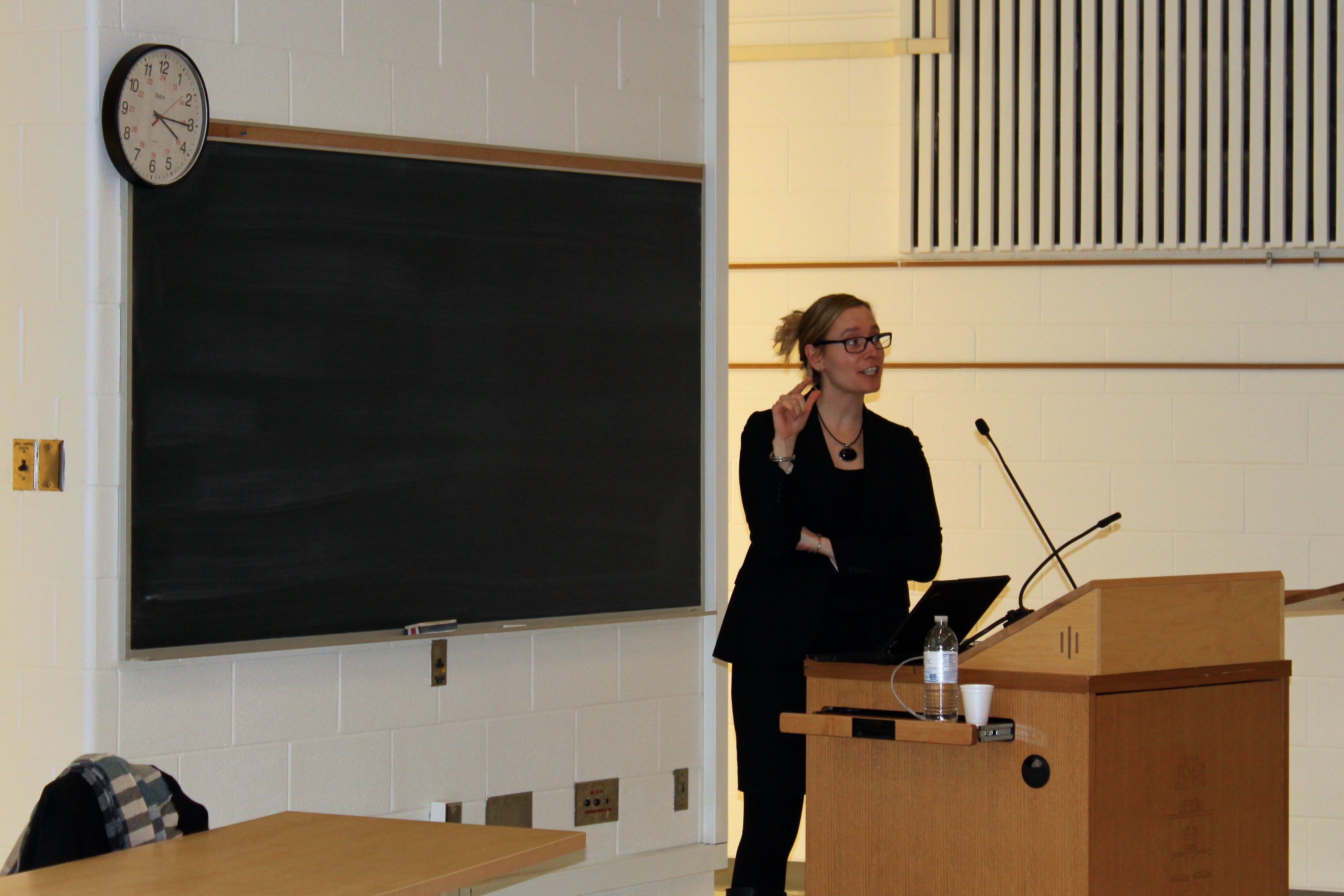
In 2014 I attended the Naturejobs Career Expo in Boston as a reporter, covering a talk delivered by Lauren Celano of Propel Careers on how to look your best on paper (here’s part 1 and part 2). I am currently an executive member of the Life Sciences Career Development Society (LSCDS) at the University of Toronto, a platform for assisting graduate students in exploring career options outside of academia. I worked as part of a team to organize a networking reception to give researchers at University of Toronto an opportunity to engage and network with life sciences professionals in non-academic roles. As a prelude to the event, Celano gave a seminar on informational interviewing and effective networking.

“Informational interviews are one of the most powerful tools available to graduate students and academics who wish to figure out what exactly it is they wish to do.”- Lauren Celano

Typically lasting between 15-30 minutes, informational interviews can happen anywhere ranging from coffee shops, Skype or even the telephone. They are an opportunity for job seekers to gather information about jobs and companies that are of interest to them.

As a graduate student, I can attest to the fact that the number of “non-traditional” career options I can pursue are numerous. Whilst the possibilities are exciting, they quickly become overwhelming. As Celano pointed out, narrowing down where your interests lie is crucial for proper time management, especially as it allow you to effectively develop career-specific networks and prepare for job interviews. I’ll admit that reaching out and speaking to strangers over an informational interview seemed very daunting at first. However, Lauren simplified it into a step-by-step process making it easier for me to find a structured approach to take.

Continue reading

The postdoc series: The podcast

Postdocs are urged by peers and senior scientists to help change the postdoc research culture.

Naturejobs-podcastAt the end of 2014, two papers were released reviewing the postdoctoral research space and suggesting ways to improve it. The first, Shaping the future of research, is a paper written by postdocs themselves and gives their point of view based the Future of Research symposium that they held in Boston in October 2014. The symposium brought together early career researchers to discuss (and maybe complain a little about) the postdoc part of the academic career track. We’ve mentioned it in part 3 of the postdoc series: The plight of the postdoc.

The second report, The postdoctoral experience revisited, was commissioned by the National Academies in the USA, and was chaired by Gregory Petsko, professor of neuroscience at Weill Cornell College of Medicine in New York City. This report revisits a similar report that was written in 2000, to see whether or not any of the suggested action points had been followed through and whether or not they had made any difference.

In this podcast I speak to Petsko, as well as Gary McDowell, a biology postdoc at Tufts University and to Kristin Krukenberg, a systems biology postdoc at Harvard Medical School, both of whom were authors of the Future of Research paper. The aim of the podcast is to get an overview of each of the reports, to see how similar they are, and whether or not the suggested action points made bby each paper are in any way feasible. This section starts at 6minutes into the podcast.

The main take away message from both reports, and the podcast, is that this grass-roots movement of postdocs starting conversations and looking for ways to change the current system is a good thing. Educating yourself about your ptoential future careers in a good thing. these messages reflect those from other podcasts that I’ve done this year: Take control of your own careers.

But before we get into that, the podcast also features Monya Baker, one of the Nature Careers editors, who shares some of her favourite Nature Careers and Naturejobs stories this month. She mentiones the postdoc series on the blog (yay!) but also a story about indecent advances in science.

If you haven’t come across the postdoc series before, you can catch up here:

Part 1: Insights, options, careers

Part 2: What is a postdoc?

Part 3: The plight of the postdoc

Part 4: Postdocs in industry


The postdoc series: Postdocs in industry

Postdocs based in industry can give young academic researchers an insight into how the other half lives.

For PhDs that don’t feel quite prepared enough to go straight from academia into industry, there is a half-way point. Many life science and biotechnology companies work in partnership with academia to create industrial postdoc positions.

Timothy Allsopp heads up the bio-hub Neusentis, a part of Pfizer that delivers ‘new science therapeutics’, with a particular focus on pain, sensory disorders, channelopathies (disorders related to ion channels) and enabling stem cell technologies. Neusentis hires researchers straight out of academia for their postdoc positions because of their research focus and the intellectual input they can offer the projects, says Allsopp. By offering an industrial focus, companies like Pfizer give young researchers an opportunity to experience different working environments. “We want to give them a positive experience whilst working on applied science projects.”

“We realise that postdocs are at the point in their career where they want to combine their previous experience and turn it into something new,” says Allsopp. So, the young researchers are not just given a project; they are required to use their previous training. The projects can be either blue-skies research or more applied, but either way the postdoc takes the lead on a project and will be pushed towards publishing in hig profile journals, adds Allsopp. Continue reading

Jobs in the USA: Academic CVs and industry resumes

Looking for jobs in the USA? Here are some top tips on academic CVs and industry resumes from Lauren Celano.

Contributor Lauren Celano

Who needs paper?

Who needs paper?{credit}iStockPhoto/Thinkstock{/credit}

Although CVs and resumes both contain information regarding experience, accomplishments, research focus and education, these documents differ in many ways. Understanding these is critical for candidates applying to non-academic positions. Here I highlight a few of the key differences. The details provided below refer to academic CV’s and industry resumes for the USA job market.

Industry resumes: A resume is meant to simply hit the high points and be directed toward the position of interest.

Length: Resumes are typically limited to just one or two pages, and this depends upon an individual’s experience. A candidate with limited work and/or educational experience should try to stick to just one page, and a more experienced candidate can extend to two.

Format: The first page typically starts out with a summary statement(s) that tells the reader who you are, what you do and how it directly relates to the position of interest. It also includes information on experience and positions you have held, which could include undergraduate, graduate, and postdoctoral research along with education.

The second page could contain a skills and techniques section, peer review experience, selected awards, leadership, and papers and presentations. Continue reading

The hidden job market

As the majority of jobs aren’t publicly advertised, job seekers should make sure they know where to look for them, says Barry O’Brien.

Contributor Barry O’Brien

magnifying-glass-naturejobs

{credit}Design Pics/Thinkstock{/credit}

Depending on which article you read, you will see stats that say that anywhere from 70 to 85% of job vacancies are never actually advertised. How these stats are ever calculated, no one knows. What is important is that any job seeker should ensure that their job search strategy involves spending time trying to unearth good roles, whether temporary or permanent, beyond job boards and LinkedIn ads.

One of the most soul destroying things any job seeker can do is spend eight hours a day firing off CVs in reply to job adverts that, often, are clearly not a good match to their skill set. It is essential that you make an effort to discover the unadvertised vacancies out there.

Why aren’t jobs always publicly advertised?

There are several reasons why the hidden job market exists, but the high price of recruiting is one of the main ones. The average cost of hiring someone through a recruitment company is over 4000 GBP, but the larger costs due to lost productivity whilst the position is vacant, can be much higher. Continue reading

From Scotland to Brazil: Queuing up in the urban jungle

Getting through the mountains of paperwork and bureaucracy when moving countries can be difficult, but don’t forget the reasons why you moved in the first place, says Gina Maffey in the third part of her adventures from Scotland to Brazil.

Ants-gina-maffey-naturejobs-blog-2

{credit}Image credit: Gina Maffey{/credit}

I stared blankly at the wall. The air-conditioning unit was humming away merrily, but it could offer no advice to my conundrum. The man behind the desk repeated the question, asking where I was born. The form in front of him said England, but my passport said that I was British. My mind was hurriedly trying to piece together an answer, stumbling over the unfamiliar language. How on earth do you explain the fact that the United Kingdom is comprised of Great Britain and Northern Ireland, and that England is a country within that kingdom… in Portuguese.

Our first week had been punctuated with encounters such as this as my husband and I sought to get all our documents in order. Hours of waiting in queues; passing from one desk to another; seeking approval from banks; the federal police; the tax office. The path to adventure had a seemingly slow and bureaucratic beginning. Continue reading

The postdoc series: The plight of the postdoc

Postdocs are looking for ways to change postdoctoral research and training.

In December 2014, Shaping the Future of Research: A perspective from junior scientists, by Gary McDowell et al was published in F1000Research. It’s a report based on the Future of Research meeting that was held in October that year. Its main message is that bioscience and biotechnology postdocs aren’t happy.

The report touches on many different problems that postdocs face, but the bigger problem is the culture within scientific academia itself, says Gregory Petsko, professor of neuroscience at the Weill Cornell Medical College and Chair of the National Academies’ report on the postdoctoral experience. “When I was a postdoc, it was the best time of my life. And many others my age could say the same,” says Petsko. “We had almost complete freedom, very few responsibilities and the particular career paths that we wanted to pursue were available to us (at least that was our perception). Now, the period of being a postdoc is enormously stressful.” Continue reading

#ScientistOnTheMove: February 2015

This month scientists have been setting up new labs, coordinating research, moving continents and more.

haworth-davis-naturejobs

Claire Haworth and Oliver Davis{credit}Image credit: Jan MacDonald at Blenheim Photography{/credit}

Claire Haworth and Oliver Davis, who both work in behavioural and statistical genetics, met whilst they were studying for a PhD at the MRC Social, Genetic and Developmental Psychiatry Centre at King’s College London and “managed to squeeze in getting married between submitting our PhDs and starting fellowships!” After graduating from their PhDs in the summer of 2009, Oliver started a Wellcome Trust funded postdoc in Oxford and Claire, funded by the MRS and ESRC, stayed in London. After her second fellowship Claire moved to the University of Warwick to set up her own lab and Oliver moved to UCL to start his own group in January 2013. After years of long commutes to see each other, both Oliver and Claire will now be working in the same laboratory for the first time since they finished their PhDs. “We are moving to the new MRC Integrative Epidemiology Unit (IEU) at the University of Bristol to establish our joint Dynamic Genetics Lab. Oliver will be Associate Professor in Statistical Genetics, and I will be Associate Professor in Behavioural Genetics.” Oliver has already started his position, and Claire will begin in April. the biggest challenge for them is that whilst they are moving and settling into Bristol, they are both still fulfilling promises to UCL and Warwick by “providing the teaching we committed to at the start of the academic year. It’s an understatement to say we’re a little stretched by these commitments at the moment, but we’re looking forward to focusing on our new roles from the summer.”


Meru-sheel-naturejobs

{credit}image credit: Alpana Dave{/credit}

Meru Sheel was doing pre-clinical, lab-based studies of parasite immunology at the QIMR Berghofer Medical Research Institute in Brisbane, Australia, when she got itchy feet. “While my lab-based research was very exciting and challenging, it lacked the big picture scenario that I was after,” she says. This, combined with the long hours spent on failing experiments and the lack of grant funding, meant that she wanted to make a switch. For Sheel, the most challenging part of leaving her position was that she was going to miss the research. “That feeling that maybe I will crack the mechanism of action with this experiment,” she says. Now, Sheel is the senior research officer for Group A Streptococcal diseases at the Telethon Kids Institute in Western Australia, and while she isn’t in the lab doing research, she is “reading and hunting for ideas and technologies that we can use to advance the development of vaccines and improve an old antibiotic to treat the same bug!” The role of a senior research officer involves coordinating research, analysing data and generating ideas and while gaining some management skills. “I have learnt to transfer my skills and now I love what I am doing.” Continue reading