When conferences collide with family needs

As a busy scientist with two young children, one of Rebecca Calisi’s most vexing challenges is figuring out how to attend scientific conferences without a huge disruption in family life. Bringing children to conferences is an option, but not all are especially welcoming to the needs of families, especially to mothers with young children.
1008602_10151664484247933_418737272_o (3)

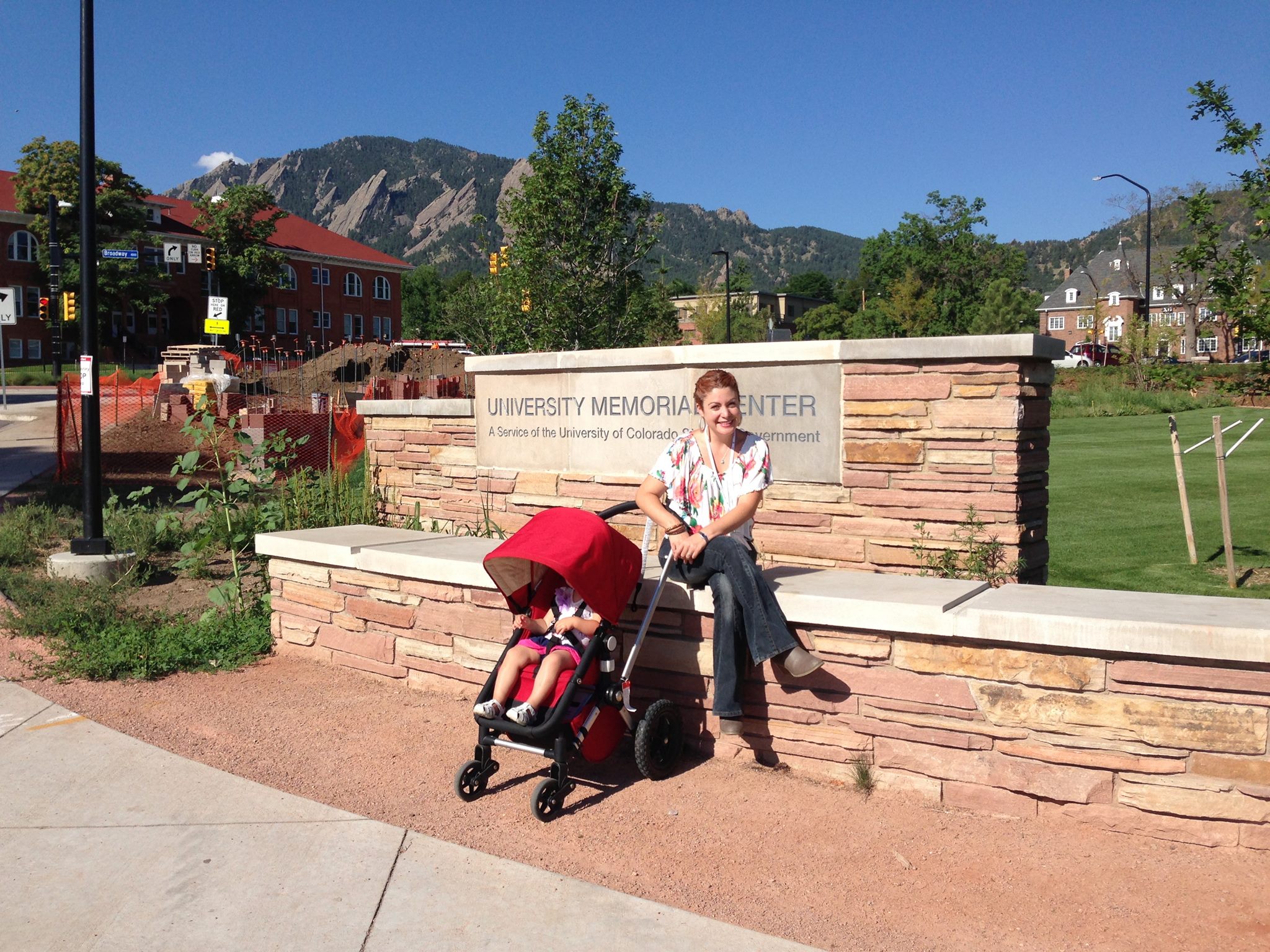
Rebecca and her daughter at the annual conference for the Animal Behavior Society at the University of Colorado in 2013

Calisi, a behavioural neuroscientist at the University of California, Davis, and a group of 45 other scientist-parents, have turned their frustrations into a call for action. In a paper published online Monday in Proceedings of the National Academy of Sciences, the researchers detail the shortcomings of past conferences and offer a blueprint for making conferences more welcoming and accessible to parents of young children.

By not providing accommodations for children, Calisi says, conferences can unintentionally create barriers that exclude large swaths of scientists—especially early-career scientist-mothers who may not be able to afford childcare. “One part of promoting diversity is supporting women with children,” Calisi says. “If institutions say they want to support diversity, they should put their money where there mouth is.”

In the paper, Calisi and co-authors suggest that conferences could fund on-site childcare services, lactation rooms and other amenities by asking for voluntary donations during registration. Exhibitors who make a donation could receive a sign or emblem that show their support. “I guarantee you they would get more foot traffic,” Calisi tells Nature. The paper also calls for all conferences to clearly state that parents are allowed to bring babies to talks and poster sessions. For now, she says, rules about children seem to change from conference to conference and even from hour to hour. She notes that researchers with babies were recently turned away from a poster session at a large conference even though the official policy permitted children in the exhibit area.

A practical, comfortable space for breastfeeding or pumping breast milk is an especially important accommodation, Calisi says. “A lactation room tells you a lot about how much a [scientific] society values women,” she says. In November, she turned to Twitter to complain about the facilities at the Society for Neuroscience (SfN) annual meeting, held last year in Washington DC.  Within hours of that tweet, the society provided more comfortable lounge chairs for mothers. “It’s not that the society was anti-women,” she says. “They just didn’t know.”

SfN, for its part, aims to become more inclusive. “The society is actively exploring ways to continue to enhance the spaces for nursing mothers in San Diego [California] this year and at SfN’s future meetings,” says society spokesperson Kara Flynn in a statement to Nature. She adds that the society is committed to “fostering a welcome and diverse community in which all scientists are able to contribute fully.”

Some conferences are already parent-friendly, Calisi says. She recently attended the annual meeting of the American Academy for the Advancement in Science in Austin, Texas, where the lactation room was comfortable and easily accessible. “I gave them two thumbs up,” she says.

Chris Woolston is a freelance writer in Billings, Montana.


Suggested posts:
The single scientist-parent

Motherhood and science 

From the frontlines 

March for Science 2018 gears up

Organisers of the second annual March for Science , scheduled for 14 April in Washington DC, are hoping to recapture the energy and enthusiasm that prompted more than 1 million researchers and others to march together last year across 600 cities around the world in support of evidence-based policy and upholding science for the greater good.

MarchforScience-Judith-2-smaller

Caroline Weinberg, an organizer for the upcoming march in Washington DC, expects smaller crowds than last year, although she admits her prediction may again be off the mark. “Last we expected 40,000 people, and we got around 100,000,” she says. She adds that most of the marchers in the nation’s capital city were concerned citizens, not practicing researchers.

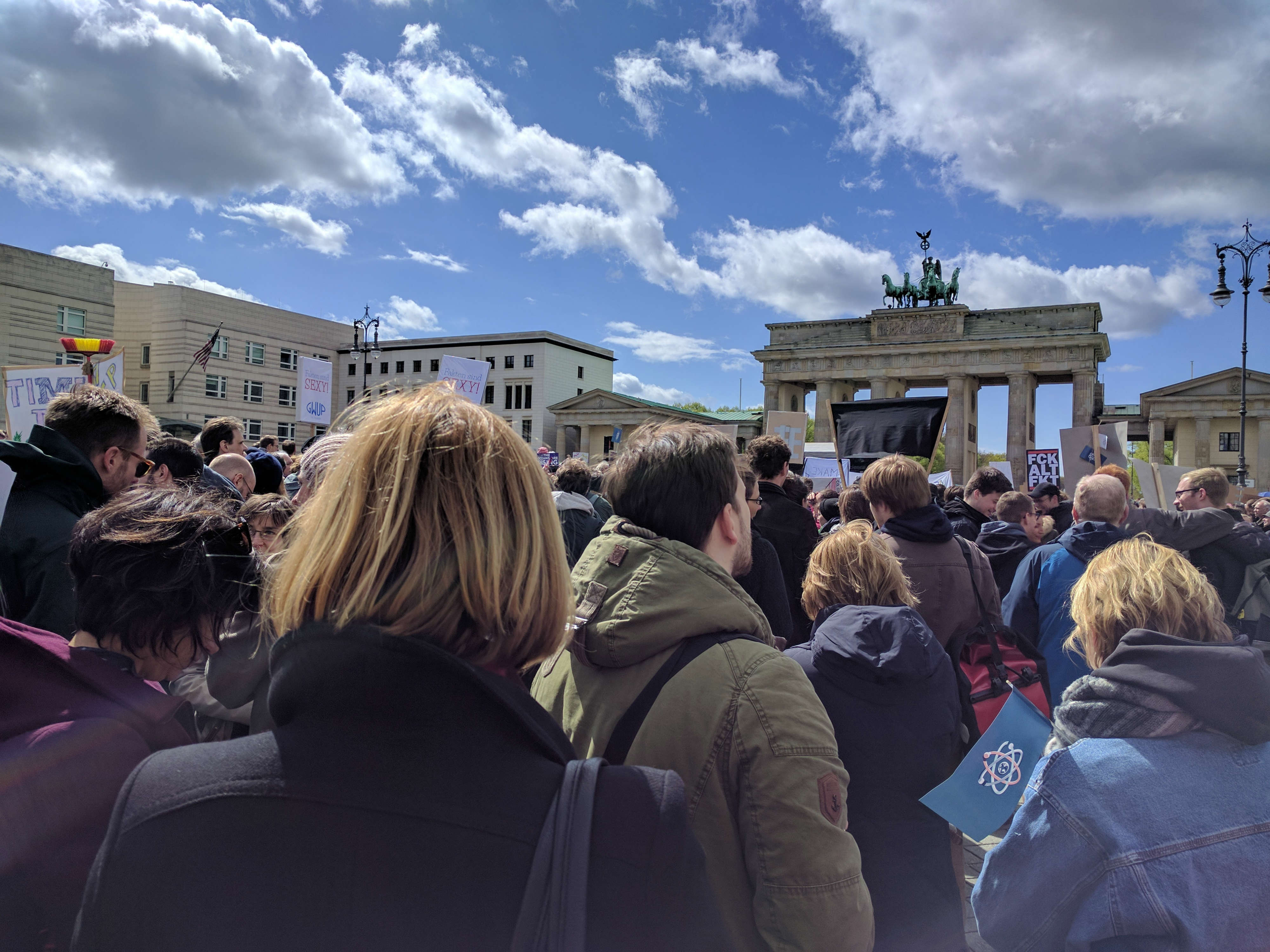
In Washington DC and elsewhere, organisers envision events with fewer marchers, placards and chants but more advocacy-related activities. Weinberg and others aim to offer hands-on projects for those taking to the streets in Washington DC. In Berlin, Germany, organisers are planning a “local hero” programme where scientists will give public talks at bars, cafes and other venues. March-related activities in Portland, Oregon, will include speeches by local politicians and a science expo with at least 30 presenters, including a juggler who demonstrates the principles of physics.

The election and inauguration of Donald Trump for US president helped to spur marchers last year, and Weinberg says that she suspects that some scientists this year may be motivated to speak out against Trump’s recent budget proposal, which called for drastic cuts to the US Centers for Disease Control and Prevention spending plan . But she adds that the march and other forms of science activism shouldn’t depend on crises to draw interest and participation. “Our challenge is to build up a huge crowd and send a message that galvanizes everyone but to also make it sustainable,” she says. “We can’t allow our advocacy to be tethered to those moments.”

Roughly 15,000 people attended last year’s march in Portland, but that kind of enthusiasm will be hard to replicate, says Denesa Oberbeck, a behavioral neuroscientist at the Oregon Health & Science University in Portland and a member of the steering committee for this year’s march. “There’s some fatigue and some burnout, but we need to keep fighting,” she says. “We have to maintain an activist stance.”

Kristine Wadosky, a cancer researcher at Roswell Park Cancer Institute in Buffalo, New York, marched in Washington DC last year carrying a sign that read “Curing cancer is non-partisan.”  This year, she plans to join the march in Chicago, Illinois, where she will give a talk on advanced prostate cancer for the annual meeting of the American Association for Cancer Research. She says that she’s just as energized about science advocacy as ever before, and she thinks that many other young scientists feel the same way.

This time, Wadosky says, she won’t need a sign to send her message, which isn’t especially complicated. “I just want to go to show that I’m a scientists, and I exist,” she says.


Chris Woolston is a freelance writer in Billings, Montana.


Suggested reading:

Growing pains
In support of the March
Reflections on a movement

Building a Scientific Community – DIY for Young PIs

Through developing a new type of conference, we built a new scientific community – a place to openly share ideas, enjoy the support of our peers through both professional and personal bonds, and promote our trainees. Here’s how.

By Gabriel Leprivier, Thomas G. P. Grünewald, Maya Bar, Oded Rechavi, Barak Rotblat

Becoming a new PI is an exciting experience with its own set of challenges. To maximize our scientific and social impact, we asked how we could make conferences better for attendees. Could we come up with a conference format which would form a community, with an emphasis on mutual respect, trust and a spirit of collaboration?

Continue reading

Walking the walk: how the scientific community is embracing open data

Open data is the new normal, says Anastasia Greenberg.

Lots of people connected in hexagon pattern sharing data

The 2017 Better Science through Better Data event in London, UK, hosted by Springer Nature and Wellcome, was a full day exposé of emerging open data practices, tools, strategies, and policies. Among the potential benefits of open data are replicability, reproducibility, and reusability. While open data is a relatively new hype, some evidence suggests that open data does indeed increase reproducibility.

Continue reading

What Can You Be with a PhD?

What does it take to land your dream job beyond academia? Do PhDs even have marketable skills? the 2017 What Can You Be with a PhD career symposium has some answers, reports Elisa Lazzari.

171104_0571smaller

{credit}Jeff Weiner/NYU Postdoctoral Affairs Office{/credit}

Continue reading

The real climate debate

Young scientists on the ground at Lindau share their thoughts on scientists’ place in the climate change debate

In the scientific community, the big question is not whether action on climate change is required, but what form it should take and the part that scientists should play, says the recent Nature Outlook on Climate Change. Three early-career researchers share their thoughts on the current state on climate action worldwide and the place of science in society.

You can find the full Nature Outlook on Climate change here.

Julie Fenton

Julia Nimke/Lindau Nobel Laureate Meetings

Graduate student, Pennsylvania State University, USA

It’s hard for scientists to make definitive statements about the ‘truth’. Just as we don’t believe exactly the same things as we did 50 years ago, we expect our understanding of the things we’re learning now will change over time.

It doesn’t mean our current understanding should be dismissed as incomplete, but it can be a challenge to communicate this concept to non-scientists. It’s become evident that my communication skills are something I have to invest time in. It’s too easy to forget that we have a broader responsibility to the public. In my experience, public engagement is not a routine part of academic training. Every scientist can start by talking with people they know in their everyday lives. That’s not hard. Continue reading

Finding mentorship

A quest for the perfect mentor might be doomed from the start – but that doesn’t mean you shouldn’t try

Naturejobs journalism competition winner Eileen Parkes

Having spent years trying to find the perfect mentor, I’ve learned there is more to mentorship than first appears.

Mentorship is given when someone with expertise and experience takes an aspiring scientist under their wing, to share their knowledge and advice, and to provide support and guidance in career development. It is distinct from coaching, or sponsorship, where the coach can give critical feedback or a sponsor may intervene directly in a protégé’s career. Importantly, mentorship is driven by the mentee, who should define their own needs for mentorship and career development.

blackbord design, with blue Light Bulb Continue reading

Breaking the curse on science

Open data can help us avoid inherent biases in our work, says Ayushi Sood

Better Science through Better Data writing competition winner Ayushi Sood

Data-sharing-naturejobs-blog

Recently, an economist friend told me that “scientific inquiry is inherently cursed.” At first I was offended. But I had to agree after he elaborated further – science today suffers from something economists enigmatically call the “winner’s curse”. Continue reading

The Naturejobs journalism competition, London, 2017

Enter for a chance to work as a Nature journalist for the day!

NJCE (London) NoDate

We’re launching our annual journalism competition, to cover our flagship career fair in London on October 4th, 2017. Continue reading

Reflections on the L’Oreal-UNESCO For Women in Science program

Muireann Irish on celebrating diversity in science

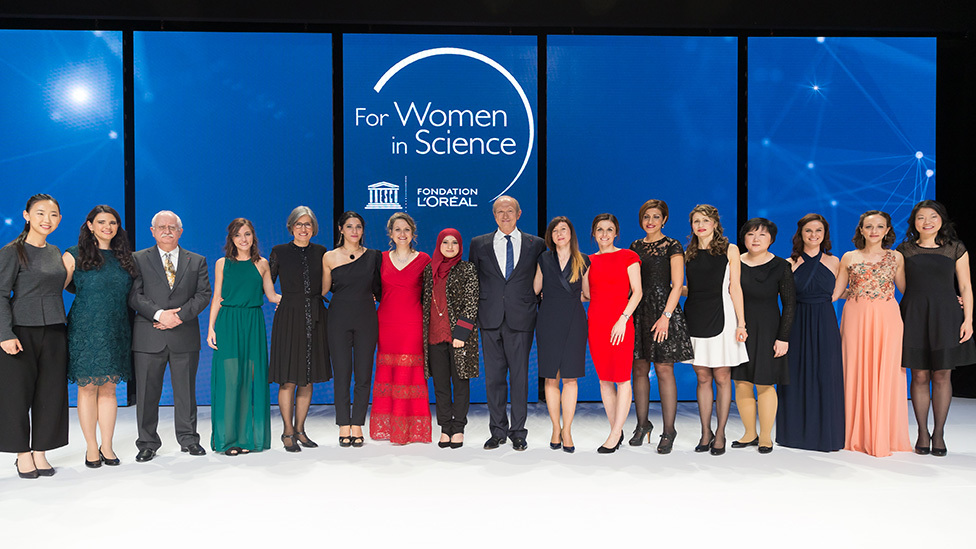
Springtime in Paris seems a fitting backdrop for any awards ceremony but particularly so in the case of the L’Oréal-UNESCO For Women in Science program. I recently had the honour of attending the 2017 International Awards along with 14 other early career researchers from around the globe, as part of the L’Oréal-UNESCO International Rising Talents Fellowship.

FWIS IRT ceremony 2017 Continue reading