How will open data advance scientific discovery?

SciData writing competition winner Sarah Lemprière explains how making the world’s deluge of data open will help science

As a global population we are generating more data than ever before. The International Data Corporation (IDC) estimates that by 2020 over 80 million gigabytes of data will be produced every minute. Each second, the world will generate enough data for a 50-year-long Netflix binge. Scientific investigation is a big part of that: every day huge amounts of data are generated on everything from the behaviour of supernovae to the 3D structure of proteins in the brain. When the world’s largest radio telescope comes online in 2020, it alone will produce 180,000 gigabytes of data a minute.

Previously, most of this scientific data would never be made public — the need to produce a compelling story for a journal article means that many datasets showing ‘negative’ results will never be published.


Continue reading

The power of data shared

In a world of interdisciplinary research, we need to make data freely available, says Katie Ember

Better Science through Better Data writing competition winner Katie Ember

Every Monday in the University of Edinburgh’s School of Chemistry, the Campbell group gather in Room 233 for a lab meeting. If you’re hosting the meeting, you bring cake. Or you forget and everyone pretends they’re not feeling a bit hungry and disappointed. Then, two scientists in the group present that month’s work.

Every Friday in the Centre for Regenerative Medicine, a fifteen minute cycle from the School of Chemistry, the Forbes group file into the first floor meeting room. After battling with the “motion-activated” lights, we all talk through what we’ve achieved that week.

Teamwork

The reason I go to two lab meetings in one week is because I’m attempting to detect liver damage using laser light. It’s multidisciplinary and it’s hard: requiring input from biologists, physicists and transplant surgeons from different institutes. The end result is that I spend about four hours each week not doing science but discussing it. Whilst this may seem like a strange way to do research, I cannot overstate how important it is. Continue reading

Remapping the scientific landscape: moving from a closed to open science world

Science is changing – and we will change with it, says Anastasia Greenberg

Better Science through Better Data writing competition winner Anastasia Greenberg

“Information is power. But like all power, there are those who want to keep it for themselves.” Those were the words of Aaron Swartz, a young programming prodigy and the creator of Reddit, in his Guerilla Open Access Manifesto. In 2011, Swartz wrote some code that systematically downloaded millions of academic papers from the JSTOR database onto his computer, which was hidden in a basement closet at the Massachusetts Institute of Technology (MIT). This act of hacktivism resulted in felony charges, with potential for decades of jail time. Swartz hanged himself in 2013.

To some, Swartz’s story embodies the open-science movement, but it is far from clear what his motives for downloading JSOR’s database were, and which, if any, segments of the open science movement Swartz identified with. Continue reading

The Naturejobs Career Expo – some secrets to scientific success

Naturejobs journalism competition winner Eileen Parkes

Over one thousand scientists attended the Naturejobs Career Expo last week in London. With professional CV checking, exhibitors from academic institutions and companies from around the world, and career-focused talks from Nobel Prize winner Professor Venki Ramakrishnan, science communication expert David Urry, popular blogger and senior lecturer Dr John Tregoning and many more, this was a resource-packed event for researchers.

Spending the day absorbing so much great careers advice left me feeling punch-drunk by the end.  Some themes cropped up repeatedly — distilled wisdom on scientific success.

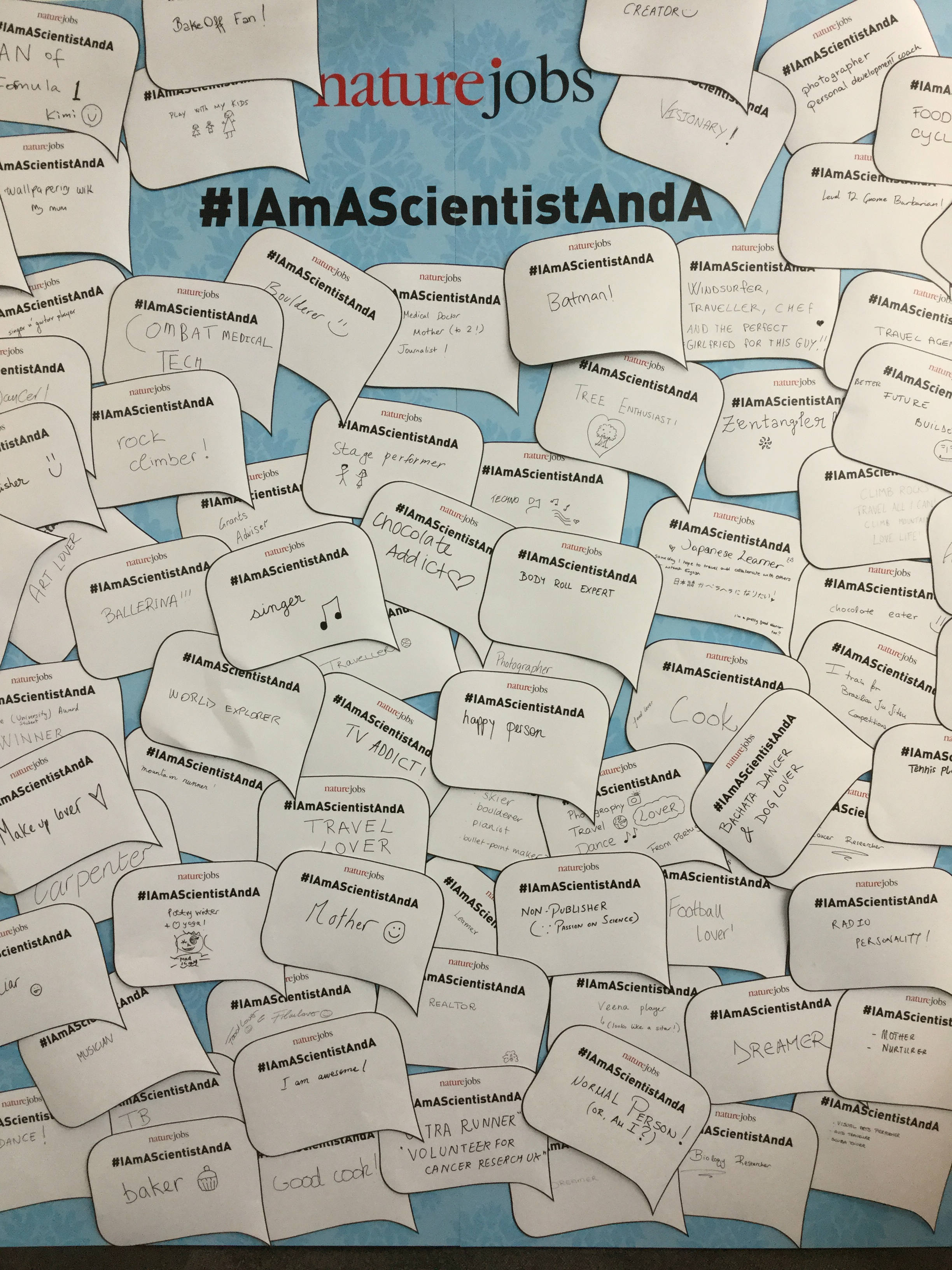
Some of the submissions to the Naturejobs Career Expo photoboth

Some of the submissions to the Naturejobs Career Expo photoboth

Continue reading

Turning scientific scrutiny on science itself

A proactive approach could help researchers contribute to solving many of the problems they encounter in academia

Naturejobs journalism competition winner Jiska van der Reest

microscope-385364_1920

Continue reading

Finding mentorship

A quest for the perfect mentor might be doomed from the start – but that doesn’t mean you shouldn’t try

Naturejobs journalism competition winner Eileen Parkes

Having spent years trying to find the perfect mentor, I’ve learned there is more to mentorship than first appears.

Mentorship is given when someone with expertise and experience takes an aspiring scientist under their wing, to share their knowledge and advice, and to provide support and guidance in career development. It is distinct from coaching, or sponsorship, where the coach can give critical feedback or a sponsor may intervene directly in a protégé’s career. Importantly, mentorship is driven by the mentee, who should define their own needs for mentorship and career development.

blackbord design, with blue Light Bulb Continue reading

Announcing the Better Science through Better Data 2017 (#scidata17) writing competition

SN&Wellcome

Enter for the chance to attend the Better Science through Better Data 2017 event (#scidata17) in October, work with a Nature editor, and have your writing published here on Naturejobs and on the Scientific Data blog.

Continue reading

#scidata16: Boost research and avoid embarrassing retractions by working openly and reproducibly

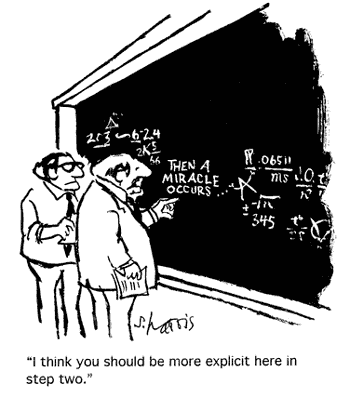
Experiments fail to be reproduced, research data from others is hard to come by, and steps between data and figure are described as ‘here, a miracle happens’.

Speakers at the Publishing Better Science through Better Data (#scidata16) conference addressed these issues and more.

Publishing Better Science through Better Data journalism competition winner Réka Nagy.

Most research happens behind closed doors, and the results can only be gleaned once they’ve been published. The raw data that lead to results, however, are rarely made public, and the steps taken to get from data to figures in a publication is not always clear, which has led to the reproducibility crisis currently facing research. It’s clear that something needs to be done to address this, and the ever-inventive collective mind of science is finding inventive solutions.

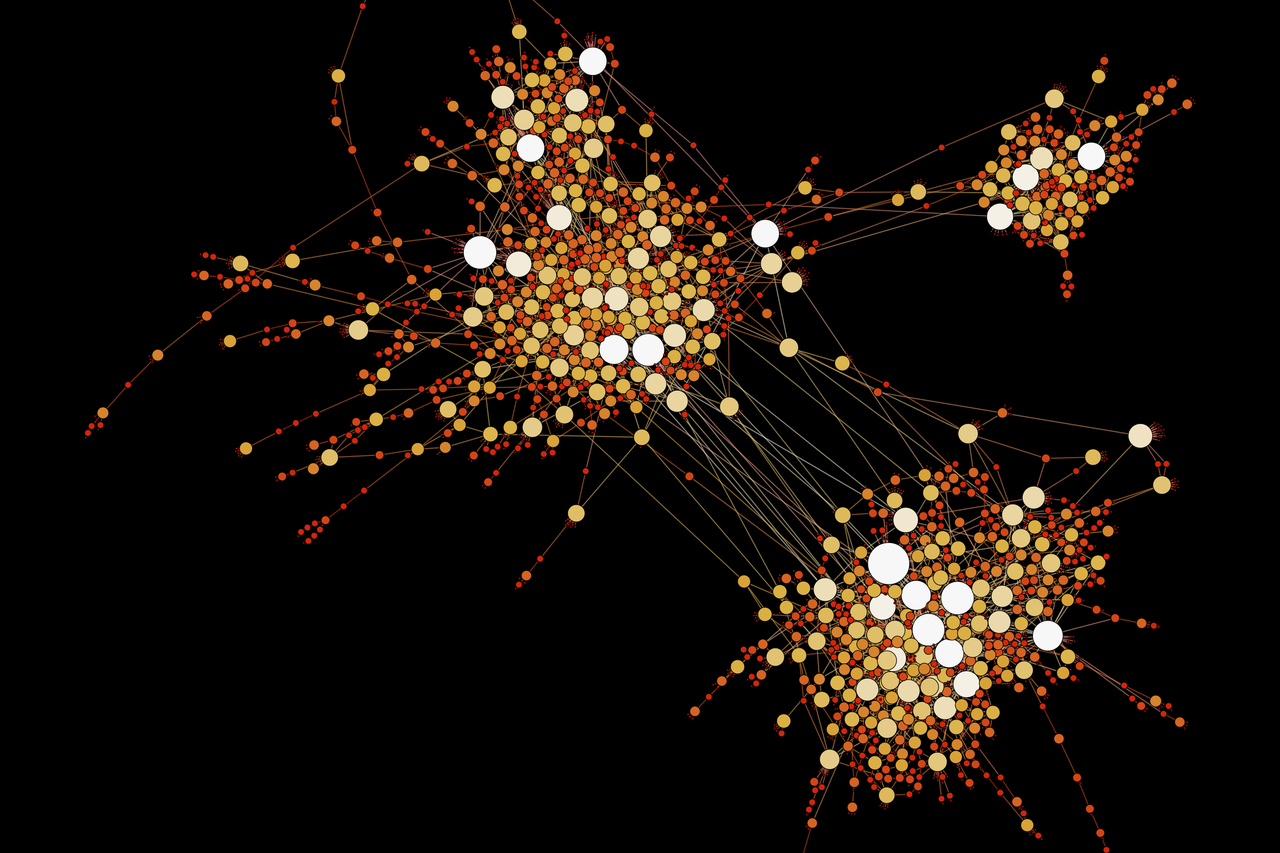
Network_Visualization

The steps taken to get from data to figures in a publication is not always clear {credit}SlvrKy/Wikimedia Commons CC-BY-SA-4.0 {/credit}

Continue reading

#scidata16: Work reproducibly for the sake of your career

Making sure others can do your experiments doesn’t just help them — it’s good for you, too.

Publishing Better Science through Beter Data writing competition Jonathan Page

A core tenet of science is reproducibility: the results of one scientist must be able to be reproduced by another, lest the findings be dismissed as a fluke or even fraudulent. In today’s data-driven realms of research, ‘reproducibility’ doesn’t simply mean publishing methods, many journals now require that datasets, and the code used to analyse them, be published too. This requirement ensures that both data, and methods, can be scrutinised. If other researchers can’t reach the same results, the study will need to be treated with caution. In doing this, scientists avoid damaging their reputation by publishing flawed studies, and journals avoid publishing bad science. It’s a win-win situation.

So why don’t scientists always work reproducibly?

JPage_Profile-smaller

Jonathan Page

Continue reading

Opening doors to open data at #scidata16

Want to embrace open data but don’t know where to start? The tools are out there, says Matthew Edmonds.

The Publishing Better Science through Better Data conference, or #scidata16 for short, took place at the Wellcome Collection in London at the end of October. This one-day event organised by the journal Scientific Data, Springer Nature and the Wellcome Trust explored the challenges facing early-career researchers as we enter the era of open data.

analytics-282739_1280

As a data novice, I arrived without really knowing what to expect. The types of experiments I perform generate only small datasets needing a simple statistical test, easily summarised in a graph in the manuscript. The original data can be safely left to gather dust in a shared drive. Continue reading