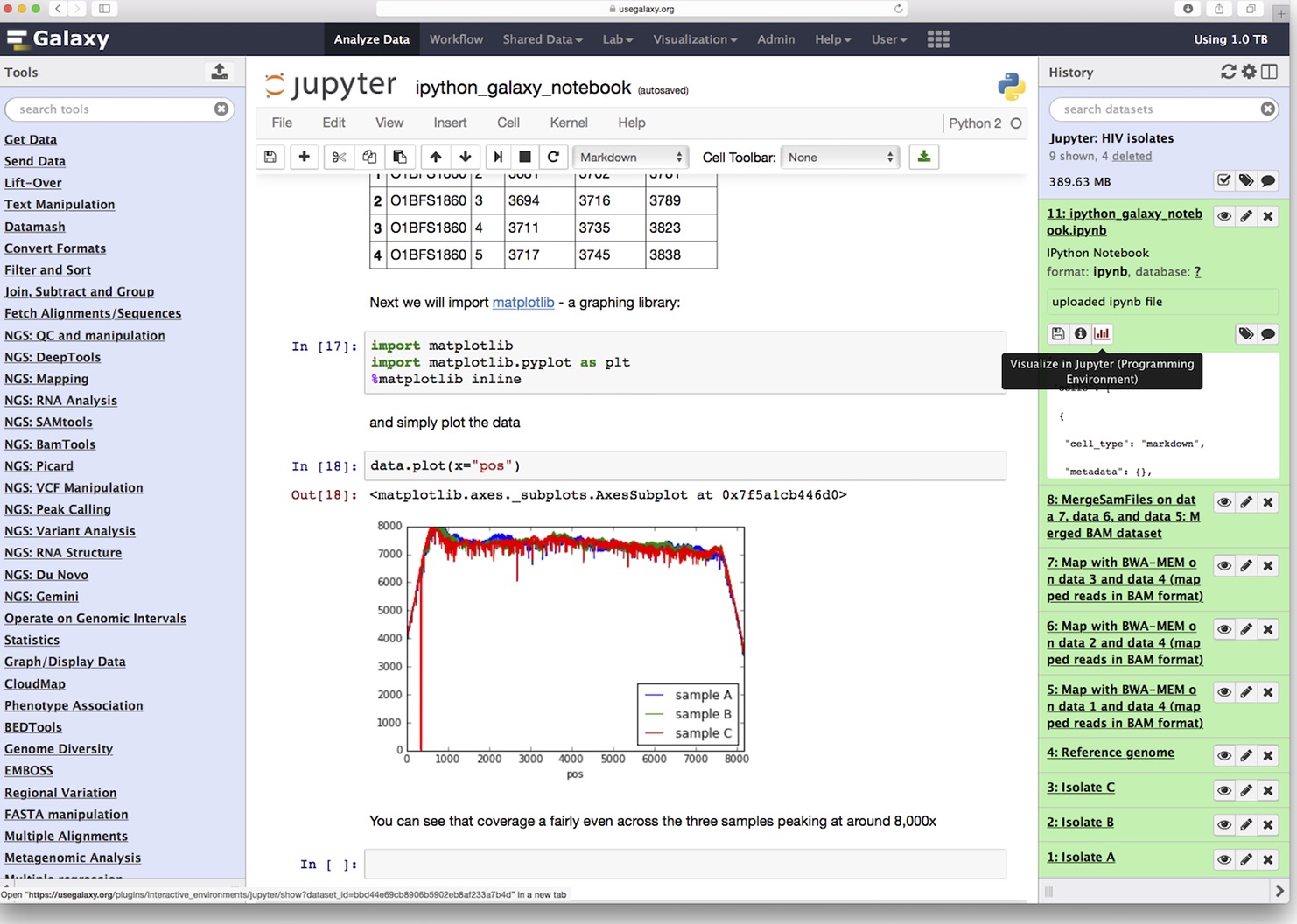
There’s a galaxy of tools in the Galaxy bioinformatics environment — 4,807 at last count. With them, researchers can do just about anything, computationally speaking. One thing they couldn’t do was work with their data programmatically. Now, thanks to a recent software update, that gap has been filled.
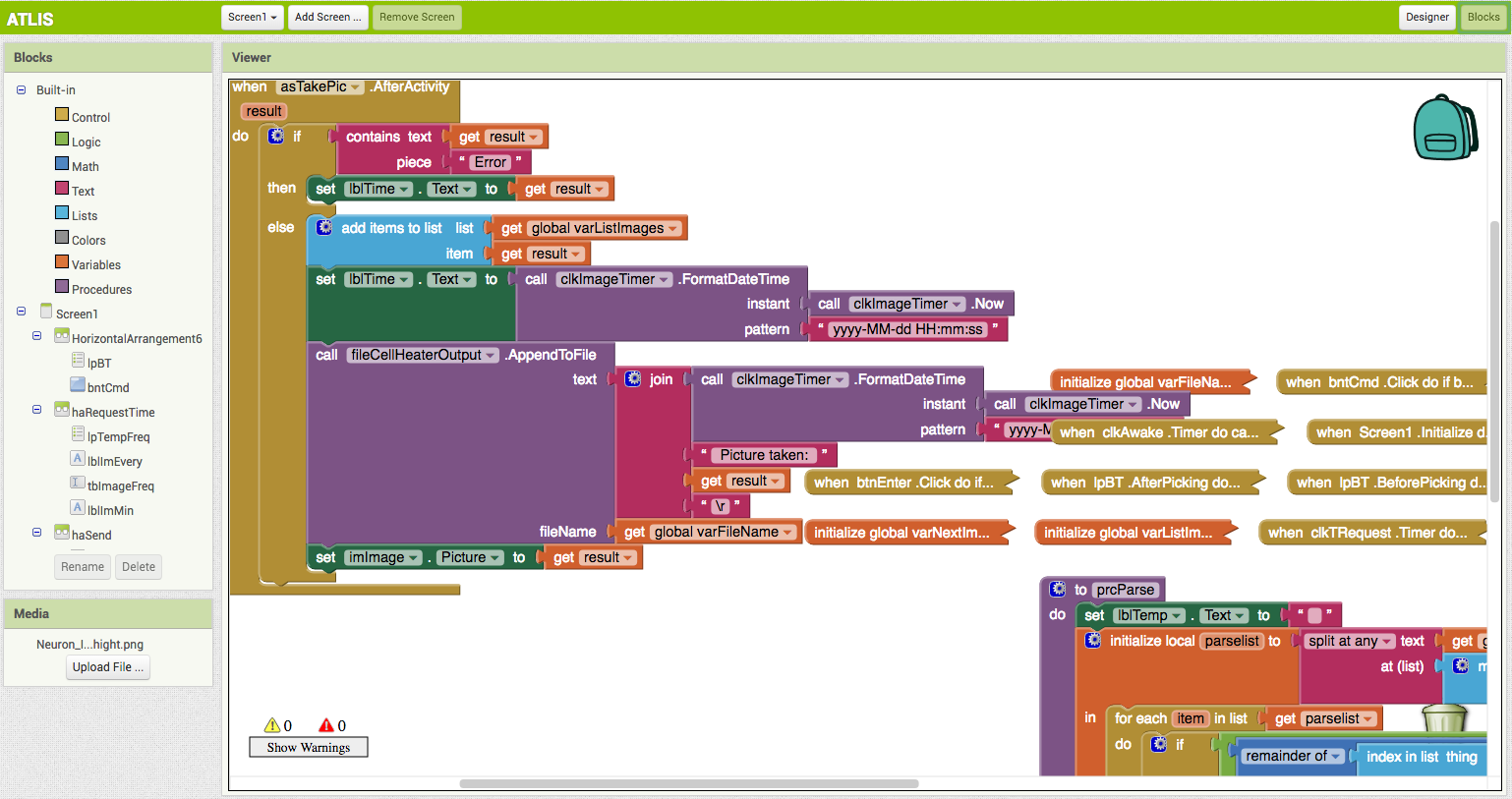
In the 4 May Nature technology feature, I explore the growing use of smartphones to drive scientific research. Today’s phones are so full-featured, they’re often ready for use out-of-the-box. Sometimes, though, a custom app is required, and that can be a sticking point, as programming a mobile app isn’t easy.
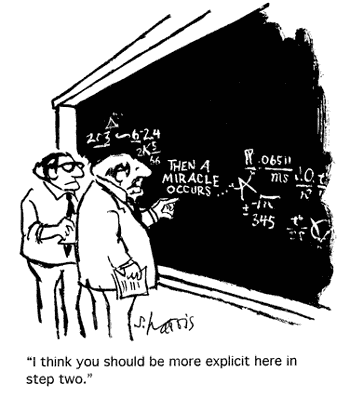
Experiments fail to be reproduced, research data from others is hard to come by, and steps between data and figure are described as ‘here, a miracle happens’.
Publishing Better Science through Better Data journalism competition winner Réka Nagy.
Most research happens behind closed doors, and the results can only be gleaned once they’ve been published. The raw data that lead to results, however, are rarely made public, and the steps taken to get from data to figures in a publication is not always clear, which has led to the reproducibility crisis currently facing research. It’s clear that something needs to be done to address this, and the ever-inventive collective mind of science is finding inventive solutions.
The steps taken to get from data to figures in a publication is not always clear {credit}SlvrKy/Wikimedia Commons CC-BY-SA-4.0 {/credit}
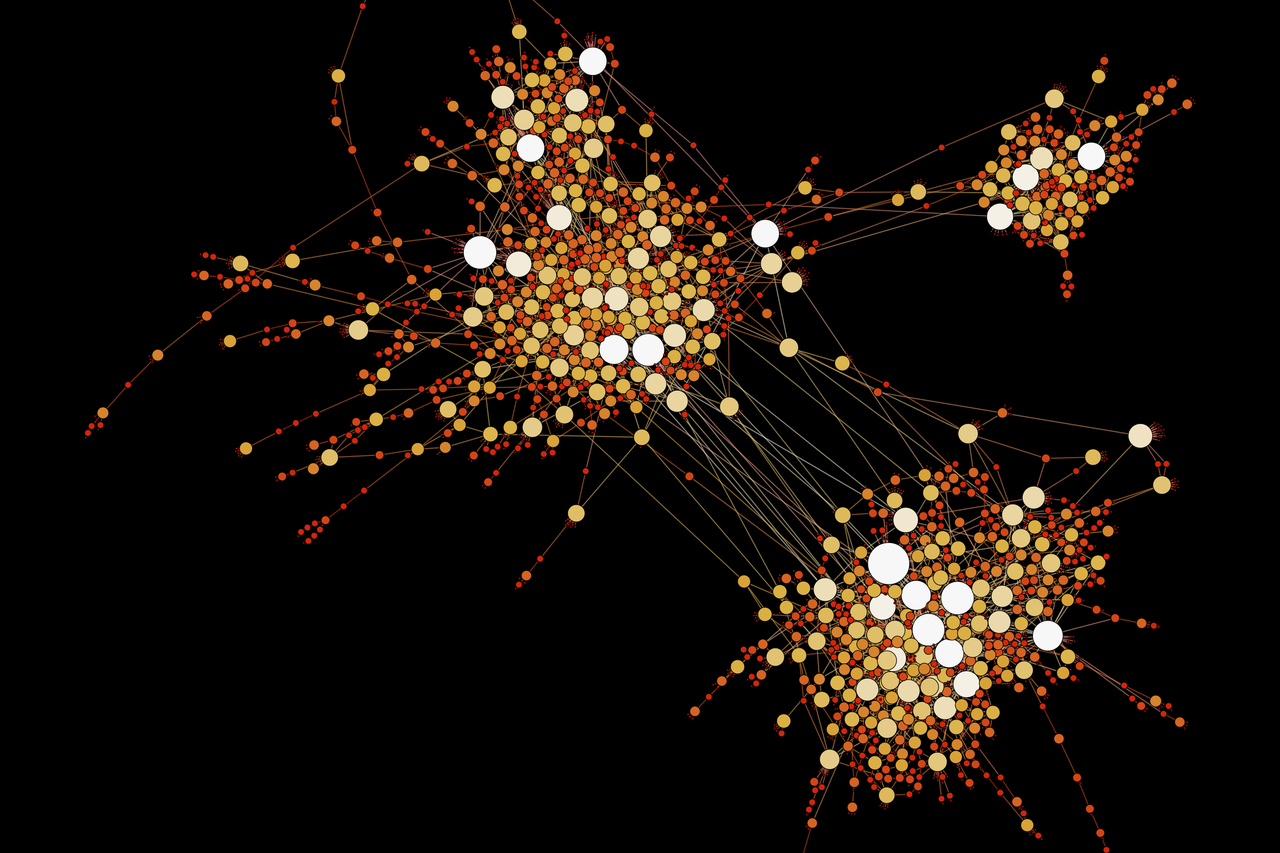
“Big data” is a catchall term for any data set of exceedingly large volume. It could be transaction information at a credit card company, invoice data at an online retailer, meteorological measurements from a weather station. All these data sets have unique characteristics that make it extremely difficult to use conventional computing technologies and techniques to store and process them for analysis. Their variety is daunting, and high velocity is required to handle them in a timely manner.
So who is going to store, manage and process all this information? Well, why not you? Companies are starved for people with this kind of expertise. Big data is a growth industry and people from a variety of academic backgrounds can find successful careers in this area.