How to mentor undergraduates as a postgraduate, and why it’s important

Spending more time mentoring undergraduates as a postgrad is good for everyone, says Jenn Summers.

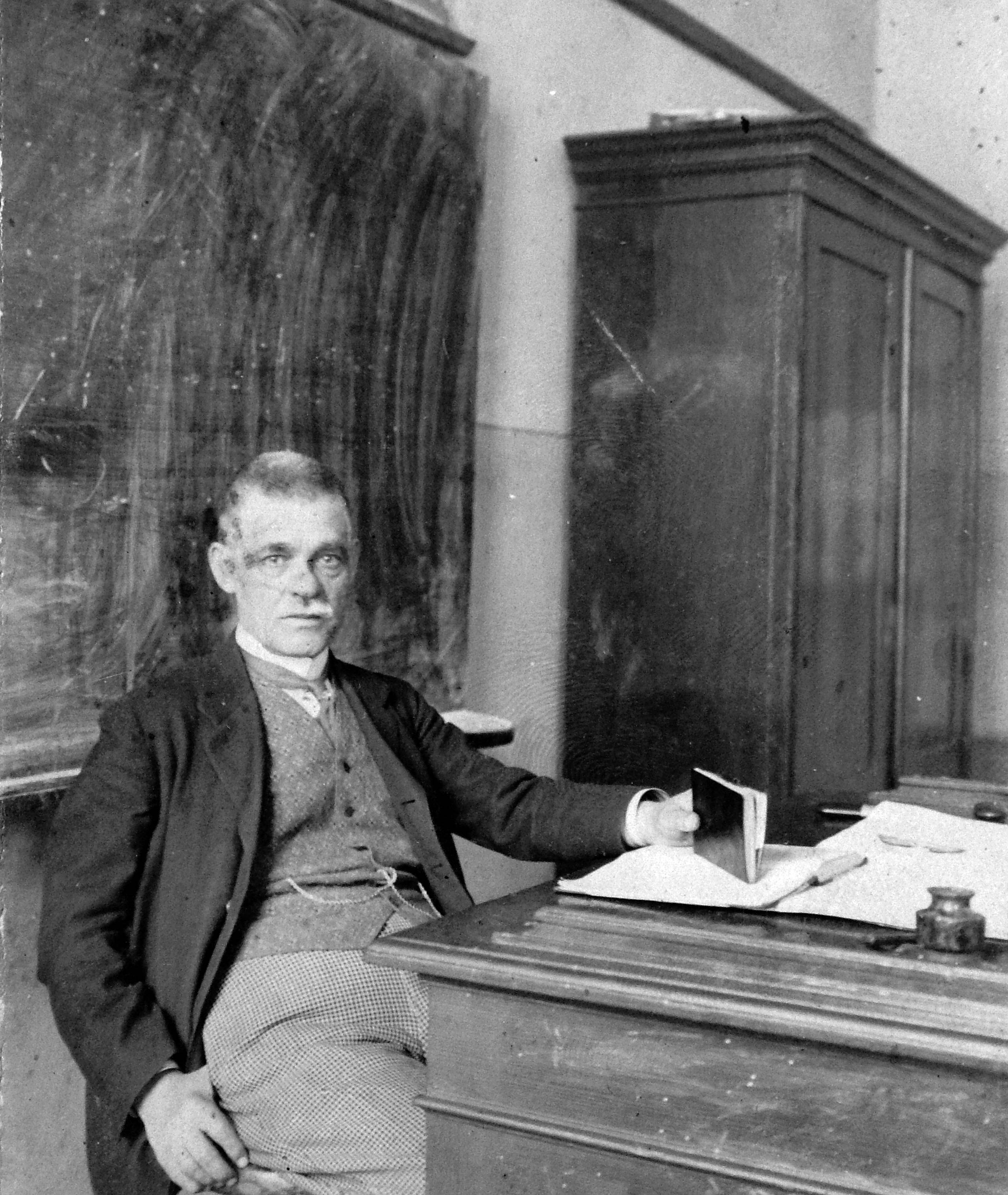
To-do lists work for some, but a more holistic approach to researcher development may bring larger rewards.{credit}By FOTO:Fortepan — ID 2278: Adományozó/Donor: Unknown. [Public domain or Public domain], via Wikimedia Commons{/credit}

There’s a difference between mentoring and doling out to-do lists. This is something I’ve learned over the past year, my first as a mentor. Mentoring undergrads became part of my job only recently – in the past, research came first. Most advisors value research outcomes over mentoring, and departments certainly place more value on publications. Before this past year, I was used to just a single undergrad working in my lab, and I thought of them as worker bees, not as future colleagues.

Put simply: I did not think about teaching in the lab.

Now, after guidance from recent research on mentoring, I realize that if graduate students like myself were more invested in mentoring, there would be many more small-but-important teaching opportunities.

Continue reading

Why learning to mentor and teach is more important for US faculty members than publishing papers

An influential ally aims to reform the experience of US PhD students in science, technology, engineering and math (STEM) by advocating for a system that rewards faculty members for mentoring and advising students rather than for their own publications.


By Chris Woolston

In a 29 May report , Graduate STEM Education for the 20th Century, the National Academies of Science, Engineering and Medicine (NASEM) in Washington DC calls for providing faculty members with incentives for developing skills such as teaching and mentoring while de-emphasizing the importance of publications. The report recommends that institutions change their promotion and tenure policies and practices to recognise and reward faculty members’ contributions to graduate mentoring and education.

Continue reading

How mentoring stopped me giving up

IMG_2721.jpgm smaller

Credit: Helena Lee

It took excellent mentors and a key realisation for Helena Lee to get back on track towards a career in clinical research.

The idea of solving scientific questions that have never been answered before has always excited me — especially if that knowledge might go on to help someone medically. Despite this, I have come very close to giving up on a career as a clinician scientist. Continue reading

Finding mentorship

A quest for the perfect mentor might be doomed from the start – but that doesn’t mean you shouldn’t try

Naturejobs journalism competition winner Eileen Parkes

Having spent years trying to find the perfect mentor, I’ve learned there is more to mentorship than first appears.

Mentorship is given when someone with expertise and experience takes an aspiring scientist under their wing, to share their knowledge and advice, and to provide support and guidance in career development. It is distinct from coaching, or sponsorship, where the coach can give critical feedback or a sponsor may intervene directly in a protégé’s career. Importantly, mentorship is driven by the mentee, who should define their own needs for mentorship and career development.

blackbord design, with blue Light Bulb Continue reading

Mentoring: A powerful tool

By Virginia Gewin

complexity

{credit}westend61/Getty{/credit}

A free mentoring toolkit that helps female Middle Eastern scientists around the world to find and support one another is available online.

Rana Dajani, a molecular biologist based at Hashemite University in Zarqa, Jordan, developed the toolkit to inspire female researchers to build the networks they need to support, collaborate and advise one another as they move forward in their careers.

The number of female researchers in Middle Eastern countries varies wildly. A 2016 report found that women represent around 35.5% of total researchers in the 57 Organisation of Islamic Cooperation countries. Still, the numbers of employed women in some Middle Eastern countries are much lower. In Jordan and Algeria, just 12% of women work and in Saudi Arabia, 14% are employed.

Dajani built a mentoring network in Jordan in 2013, pairing 10 mentees with 10 mentors. From that experience, and with funding from the US National Academies of Science and the US National Science Foundation, she created ‘Three Circles of Alemat’, a three-year project to develop and test the mentoring toolkit. Working with female researchers from 17 universities across the Middle East, she and her team created a low-cost method to improve personal and professional success for both women and men. The final phase of her mentoring project, Three Circles of Alemat, brought together a cross-regional group of female Middle Eastern scientists this year in Boston, Massachusetts, at the annual American Association for the Advancement of Science conference.

The mentoring toolkit is available for free through the website of the Society for the Advancement of Science and Technology in the Arab World. Another organization, 500 Women Scientists, a network of 19,000 women worldwide, has also adopted the toolkit. “We did not want to provide a centralized forum for mentors to find mentees because it is costly,” says Dajani, who is spending this year as a fellow at Harvard University in Cambridge, Massachusetts, writing a book about women redefining success. “Rather, we wanted people to take control and start their own creative forums.”

Virginia Gewin is a freelance writer in Portland, Oregon.


Suggested posts

Video: How did you cultivate mentors?

Ten tips for finding an effective mentor

The faculty series: What does it take to be a mentor?


Ten tips for finding an effective mentor

The meandering path to a career in science offers challenges that can be difficult to confront alone. Finding an effective mentor who offers advice and inspiration can help you navigate the maze successfully, say Andrew Gaudet and Laura Fonken.

Laura Fonken

Laura Fonken

Gaudet image

Andrew Gaudet


Continue reading

The Art of Supervision in the Arab and Gulf Region

The upcoming generation of Arab scientists has to be mentored differently, says Mohamed Boudjelal

This piece was cross-posted with Nature Middle East

professor-1696568_1280-smaller

The majority of the Arab world gained independence from western colonization during the second half of the 20th century. While Western states were building their research base then, most Arab states were focused on education. Now, the Arab world is trying to catch up. The two main challenges we face today are improving scientific training, and engaging more women in science.
Continue reading

You need a mentor or three

Choosing a mentor (or mentors) is one of the most important decisions facing an early-career scientist.

It is crucial to your professional success to have one or more strong and knowledgeable advocates and guides in your court. And you can’t leave this up to chance or a random meet.

mentoring-naturejobs-blog

{credit}Istockphoto/ThinkStock{/credit}


Continue reading