Mentoring: A powerful tool

By Virginia Gewin

complexity

{credit}westend61/Getty{/credit}

A free mentoring toolkit that helps female Middle Eastern scientists around the world to find and support one another is available online.

Rana Dajani, a molecular biologist based at Hashemite University in Zarqa, Jordan, developed the toolkit to inspire female researchers to build the networks they need to support, collaborate and advise one another as they move forward in their careers.

The number of female researchers in Middle Eastern countries varies wildly. A 2016 report found that women represent around 35.5% of total researchers in the 57 Organisation of Islamic Cooperation countries. Still, the numbers of employed women in some Middle Eastern countries are much lower. In Jordan and Algeria, just 12% of women work and in Saudi Arabia, 14% are employed.

Dajani built a mentoring network in Jordan in 2013, pairing 10 mentees with 10 mentors. From that experience, and with funding from the US National Academies of Science and the US National Science Foundation, she created ‘Three Circles of Alemat’, a three-year project to develop and test the mentoring toolkit. Working with female researchers from 17 universities across the Middle East, she and her team created a low-cost method to improve personal and professional success for both women and men. The final phase of her mentoring project, Three Circles of Alemat, brought together a cross-regional group of female Middle Eastern scientists this year in Boston, Massachusetts, at the annual American Association for the Advancement of Science conference.

The mentoring toolkit is available for free through the website of the Society for the Advancement of Science and Technology in the Arab World. Another organization, 500 Women Scientists, a network of 19,000 women worldwide, has also adopted the toolkit. “We did not want to provide a centralized forum for mentors to find mentees because it is costly,” says Dajani, who is spending this year as a fellow at Harvard University in Cambridge, Massachusetts, writing a book about women redefining success. “Rather, we wanted people to take control and start their own creative forums.”

Virginia Gewin is a freelance writer in Portland, Oregon.


Suggested posts

Video: How did you cultivate mentors?

Ten tips for finding an effective mentor

The faculty series: What does it take to be a mentor?
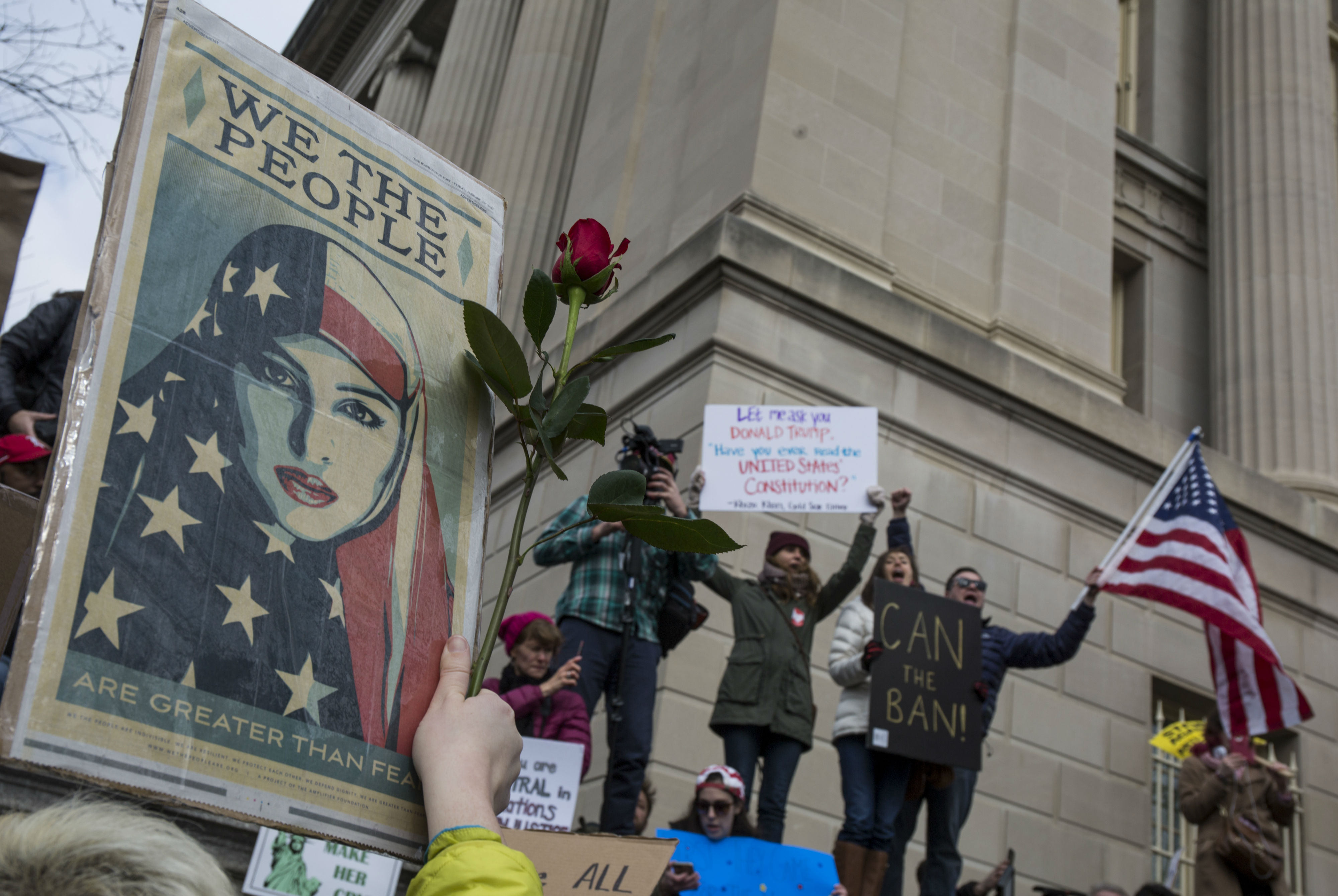
 

Donald Trump’s immigration ban and its impact on the scientific community

trumpmarch

Demonstrators protest outside The White House on January 29 2017

Immigration attorney Brendan Delaney summarises the issues for scientists affected by the US travel ban.

Continue reading

The Art of Supervision in the Arab and Gulf Region

The upcoming generation of Arab scientists has to be mentored differently, says Mohamed Boudjelal

This piece was cross-posted with Nature Middle East

professor-1696568_1280-smaller

The majority of the Arab world gained independence from western colonization during the second half of the 20th century. While Western states were building their research base then, most Arab states were focused on education. Now, the Arab world is trying to catch up. The two main challenges we face today are improving scientific training, and engaging more women in science.
Continue reading

Where are all the science bloggers in the Arab world?

The Arab world needs science bloggers to counter spin in the mainstream media, says Rayna Stamboliyska. So why are they so hard to find?

Cross-posted from House of Wisdom, a blog from Nature Middle East

When I started browsing the web for science blogs from the Middle East and North Africa (MENA) region, I didn’t think it would be such an adventure. And for a quest, it was one.

I thus started entering keywords in the search engine. The outcome was disappointing: one or two blogs in English popped up. I thought it is because I was only searching in English, but French and Arabic searches did not harbour significantly more results. When I asked friends to point me out my wrongdoing, they just laughed and the comment invariably was: “Dear, spare your efforts, there is no such thing like science blogging in the region.”

The blogging culture in the Arab world thus seems to mainly touch opinionated people with a say in politics and economy. There is nothing wrong with this. I’ll spare you a lecture on the importance of social media for changing the society we live in, this has been thoroughly discussed elsewhere. Loads of bits and ink have also been spilled to demonstrate the importance of science blogging. Given the paucity of science blogs in the Arab World, I guess a reminder is more than useful.

Why write about science? Reason #1: scientists get to speak directly to the public. Reason #2: lay scientists or enthusiasts engage and keep up to date with developments in various scientific fields. Reason #3: open discussions on research topics are promoted among peers.

This sounds great, motivating and all that. There is, however, a recurrent feature pointing its nose from this shortlist: scientists should initiate and nurture this dynamics, ideally complemented by active science writers and journalists.

A widely circulated image on social networks. Rayna Stamboliyska argues the voice of science is sorely missing in this kind of rhetoric.

If you are reading this piece, it means you are aware that science is an emerging field in the Arab world. Funding is far from sufficient to secure comfortable or even basal equipment for research. Moreover, political influence in science making and communication is a fundamental characteristics in the region. Doctoral degrees are, however, greatly appreciated in all MENA countries. Additionally, journalism and mass communication are a frequently taught discipline. But science and journalism do not really mingle, after all.

If you browse the websites of major universities in the Arab countries, you realize that they are rarely updated. Even if they are so, press releases about endeavours and achievements seldom land on journalists’ desks. Very often, the few science-related articles one stumbles upon in a newspaper are just a translation from foreign sources. This clearly gives the bitter taste of “nothing happens in our part of the world.” Even such admirable initiatives as publishing 50,000 PhD theses online and using the platform as a networking hub finally fail: the dedicated website does not exist at all.

Carry on reading on the House of Wisdom blog…


Rayna Stamboliyska is finalizing a PhD in Genetics and Bioinformatics. She is a science blogger at SciLogs.com’s Beyond the Lab, which looks at emerging ways of doing science. She also blogs at Australian Science and is an editor at Bioinfo-fr.net. In addition, Rayna writes for Global Voices Advocacy, FutureChallenges.org and Jadaliyya. Despite what you might think, she is very much a human being. She tweets as @MaliciaRogue.