How to mentor your supervisor
Reply

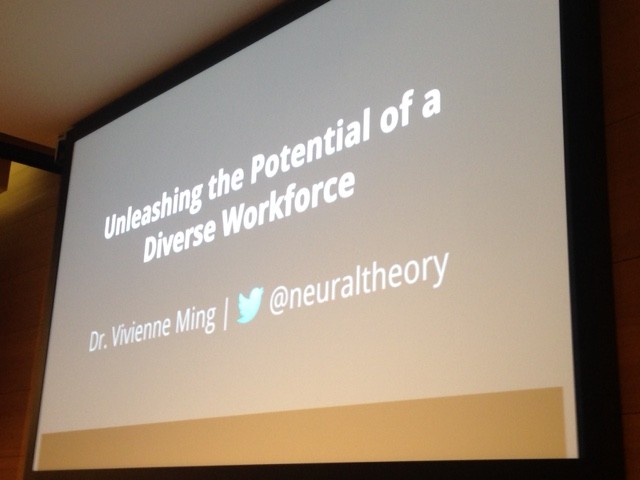 Mentoring is invariably presented as something “done” by someone senior to someone junior, but it works both ways, finds David Payne.
“Science is a multifaceted and large enterprise, and there are lots and lots of very interesting ways to contribute to science” said Venki Ramakrishnan, president of the Royal Society, lab leader at the MRC Laboratory of Molecular Biology and joint winner of the 2009 Chemistry Nobel, at the 11th annual Naturejobs London Career Expo on Oct 4th 2017.
Ramakrishnan encourages scientists to think about the wide variety of options available to them; that having a PhD in science doesn’t mean you need to follow the tenure track career path. Continue reading
Emma is now Global Medical Affairs Leader for Chronic Obstructive Pulmonary Disease (COPD) in GSK’s Respiratory Division.
As a child, I was fascinated by how things work, especially the human body, and I decided I wanted some kind of career in science. Medicine seemed like the ideal avenue and offered a reassuringly clear path including training and employment prospects.

{credit}iStockphoto/Thinkstock{/credit}
As more drugs come to market and pharma’s business model shifts from selling drugs directly to fostering earlier engagement, companies are looking for highly skilled scientifically- and clinically-trained candidates. Could this be an outlet for the overflowing pool of PhD (and MD) graduates produced every year?
An MSL is the scientific and clinical disease expert within a pharmaceutical or biotech company. They’re the go-to person for any complex questions about a specific drug. That could include questions about the science behind the drug, the mode of action, the competitors’ drugs, side effects, clinical trials, research opportunities, and disease-related questions.
MSLs work at the interface between internal stakeholders in the company and external stakeholders in the field – called Key Opinion Leaders (KOLs). MSLs help to bring innovative new drugs to the market and provide education about the proper use of drugs that are already on the market. KOLs – broadly defined as leaders in their field – can be heads of departments at teaching hospitals, heads of pharmacies, professors of medicine, the CEO of a patient organisation, physicians involved in pharmaceutical clinical trials and sometimes clinical scientists themselves. In short, MSLs work with the most influential stakeholders in a therapeutic area.

MSLs help to bring innovative new drugs to the market and provide education about the proper use of drugs that are already on the market.
The call for reproducibility has never been stronger in the history of science. Since two major pharmaceutical companies, Amgen and Bayer, reported in 2011/12 that their scientists were unable to replicate 80-90% of the findings in landmark papers, scientific news outlets have caught up on the issue. Their reports have catalyzed conversations among stakeholders (policy makers, funding agencies and scientists) to improve reproducibility in science.

{credit}LEGO{/credit}
There are a lot of reasons why reproducibility is so important, and why Amgen and Bayer’s results caused such controversy. I’ll start at the individual level. Continue reading
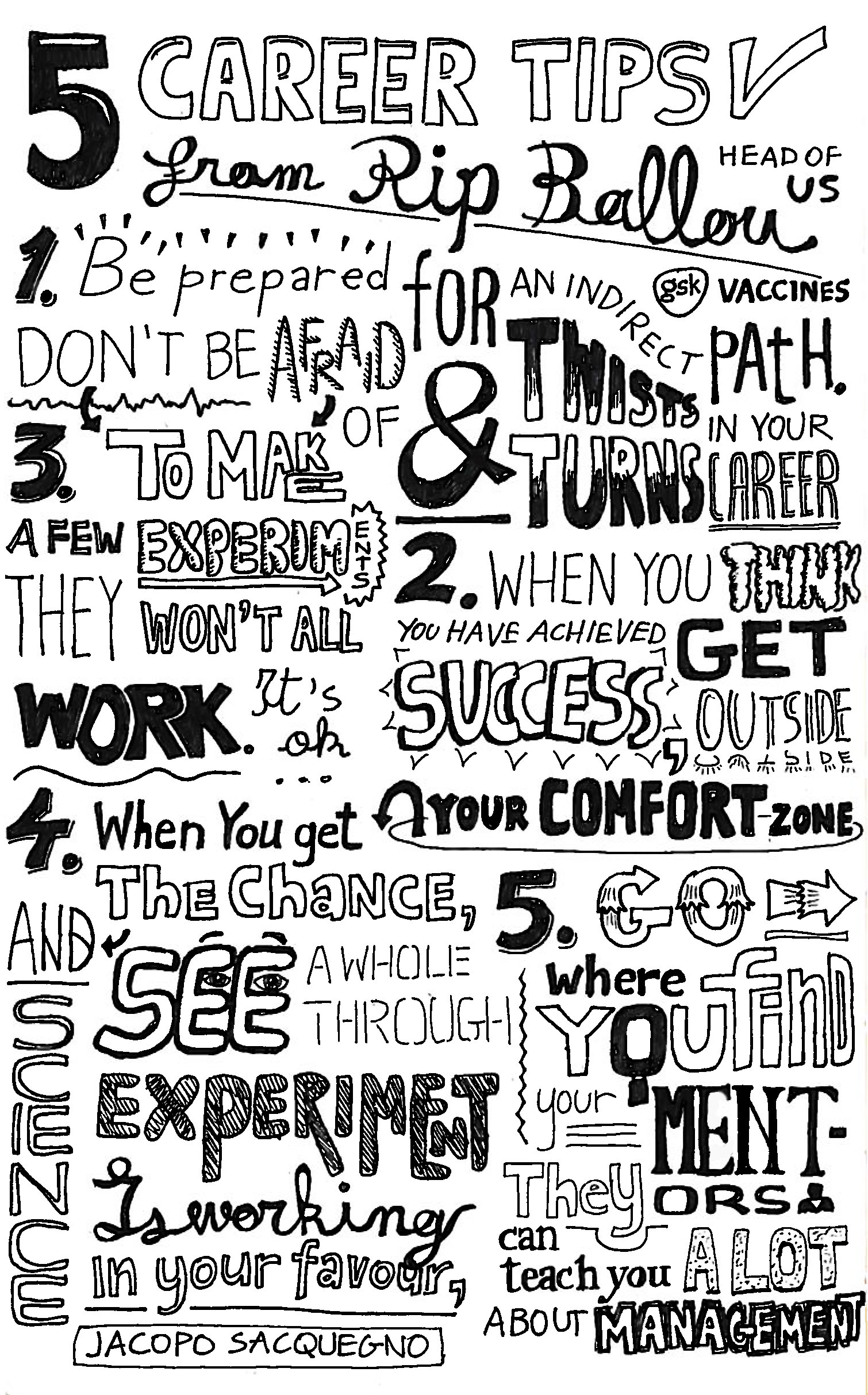
Rip’s had an interesting life; he started his career as a researcher at the US army’s Walter Reed Institute of Research, where he once exposed himself to malarial mosquitoes in a bid to see if his malarial vaccine worked. It didn’t, and that experience has motivated him in his career ever since. He’s now the head of US vaccines at GSK.
Here’s a word art graphic of five points from Rip’s talk, by Jacopo Sacquegno.
{credit}jacopo sacquegno{/credit}
In this podcast, Naturejobs interviews Sterghios Moschos, reader in Industrial Biotechnology and Biochemistry at the University of Westminster in London. We talk about his transition from industry back into academia, and the different attitudes to science that he has experienced.
You can now subscribe to the RSS feed or to our iTunes channel! Continue reading