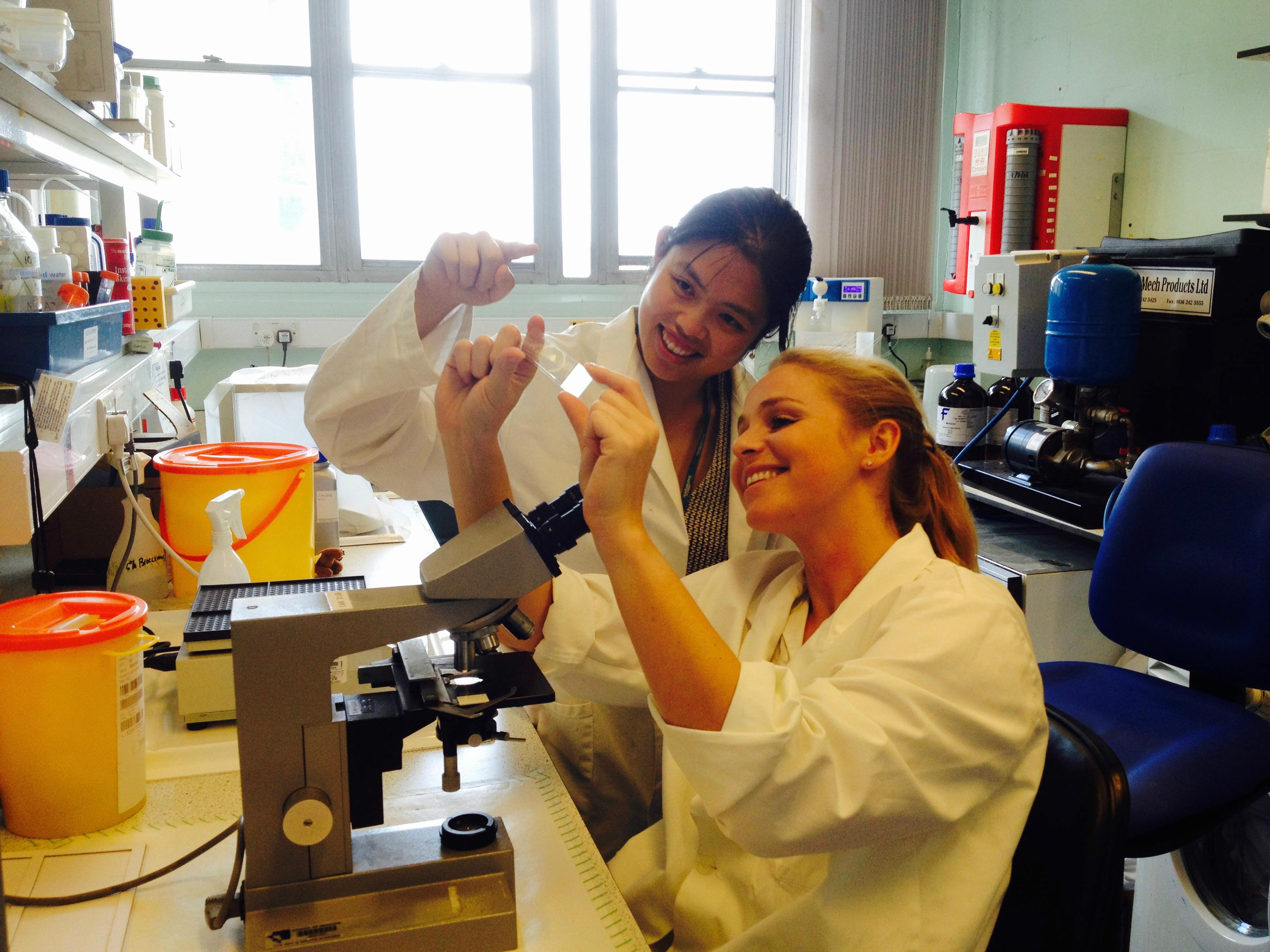
It took excellent mentors and a key realisation for Helena Lee to get back on track towards a career in clinical research.
The idea of solving scientific questions that have never been answered before has always excited me — especially if that knowledge might go on to help someone medically. Despite this, I have come very close to giving up on a career as a clinician scientist. Continue reading →
Does a career in science select against those unable to afford frequent relocation, unpaid work and short-term contracts?
Nick Riddiford
That a career in science is demanding is unsurprising. But alongside long hours spent in the lab grappling with abstract concepts, the number of years of education it takes to enter the professional ranks and the increasingly unstable nature of such employment, exists a further demand: money. It’s no secret that science costs money — building the Large Hadron Collider (LHC) and sequencing the human genome cost around €3 billion each — but what is less obvious is that entry to a career in science often requires considerable personal financial sacrifice.
Studying traumatic events comes with its own risks – the scientific establishment needs to be doing more to protect researchers, says Dale Dominey-Howes and Danielle Drozdzewski.
One of the authors interviews survivors a few days after the September 2009 South Pacific tsunami in the rubble of their communities in Samoa, as part of the UNESCO post-tsunami survey team reporting into the Prime Minister and King of Samoa. “It was a hard day for all of us,” says Dale Dominey-Howes.
What’s the issue and why is it important?
Earth is destabilizing rapidly. Terrorism, conflict, genocide, human displacement, socio-economic disruption, rapid global environmental change, slow emergencies and natural disasters are more common than at any point in history. Consequently, opportunities exist for researchers to investigate the causes, consequences and potential management solutions arising from this instability. For this to happen, we need a well-trained workforce equipped with the skills and capabilities to work with ‘traumatic’ research content, people and places. Continue reading →
Sometimes, things go wrong in academia. The experiment isn’t working; you can’t find your results; the money is running out and you haven’t got any more. What can you do about it?
In this short film, Usherwood and Horsfall give some great advice on how to deal with things when they go wrong.
Usherwood recommends building a support network around you that can serve two purposes. One will be a group of friends that will come to the pub with you and commiserate with you. The other will be someone (your partner, perhaps) who can help you see the bigger picture in life.
Horsfall has been forunate and has not had anything go wrong…. yet! Come the end of 2014/beginning of 2015, she will be coming to the end of two grants. At the moment, she’s got two “irons in the fire” but they aren’t confirmed. “Make sure that you’ve always got something,” she advises.