Surviving academia as an early career researcher: an unreliable guide

Being an early career researcher is exciting but terrifying. Use this guide to make the most of your PhD or postdoc experience, says Atma Ivancevic.

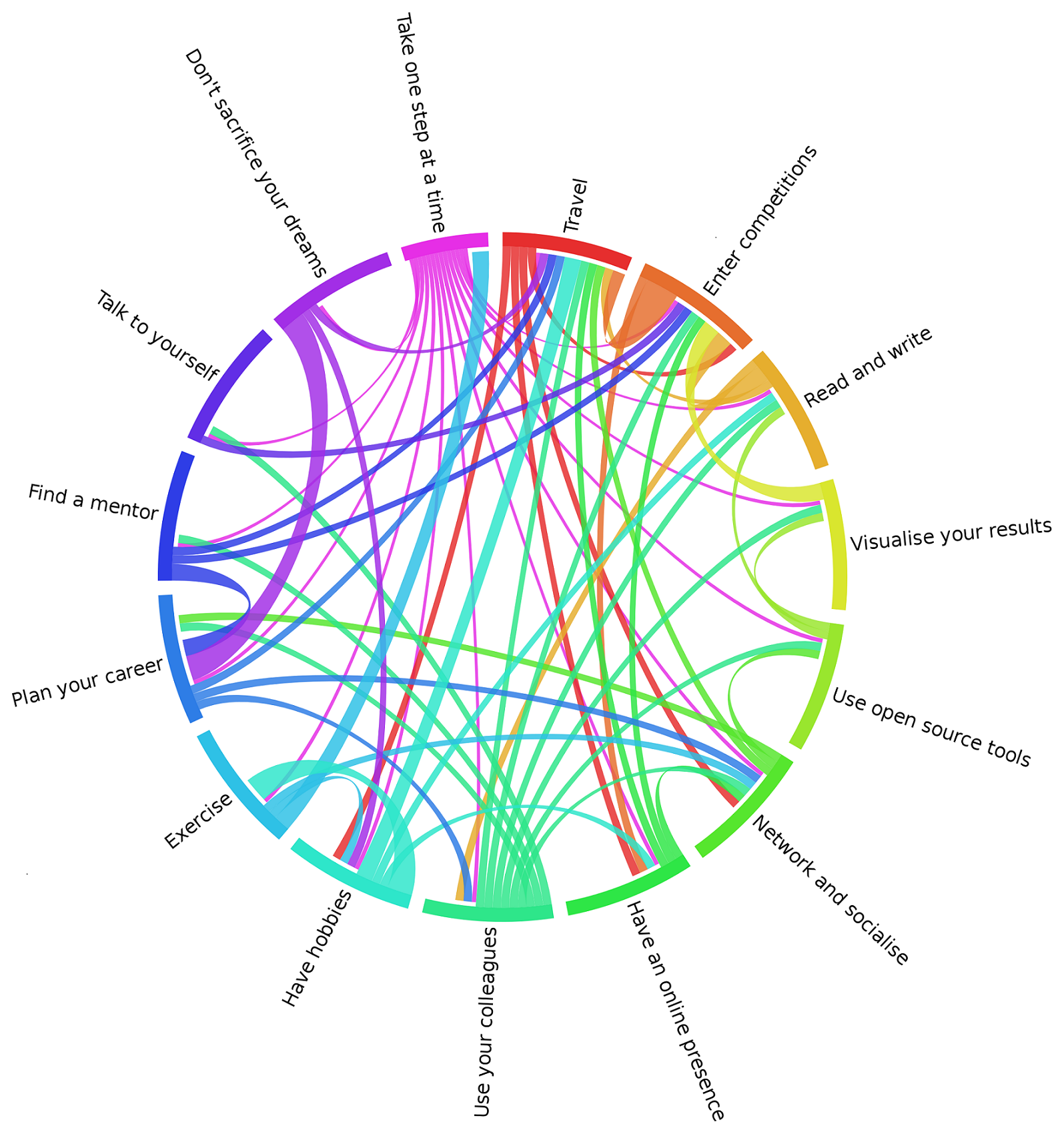
In today’s cut-throat world of grants and publications, being an early career researcher (ECR) can feel more than a little daunting. As an ECR myself, I can’t guarantee that this will help you make it to the other side unscathed. But I’m still here, and if you’re reading this, you probably are too. Outlined below are the things I’ve learnt during the ups and downs of post-PhD life.


circos-table-myxvjxw-smaller

Continue reading

Do it for science – not for tenure

Career advice from a Nobel Laureate

By Judith Reichel

I recently had the pleasure of joining the 67th Lindau Nobel Laureate meeting at Lake Constance in the south of Germany. The weeklong meeting alternates its main focus between chemistry, physics, and medicine & physiology each year — the three categories of natural sciences the Nobel Prizes are awarded for. This year the focus was back on chemistry, and I was lucky enough to be invited by the organisers to cover the event on their blog.

Throughout the week I met handpicked junior researchers, talented fellow science communicators and journalists, and — above all — sat down with Nobel Laureates for one-on-one interviews.

One of them was Martin Chalfie, who won the 2008 prize in Chemistry with Osamu Shimomura and Roger Y. Tsien for their development of the now widely used Green Fluorescent Protein (GFP) tag. Inserting the gene sequence for GFP into a host organism produces the protein within a cell, which allows for the visualization of intricate biological processes.

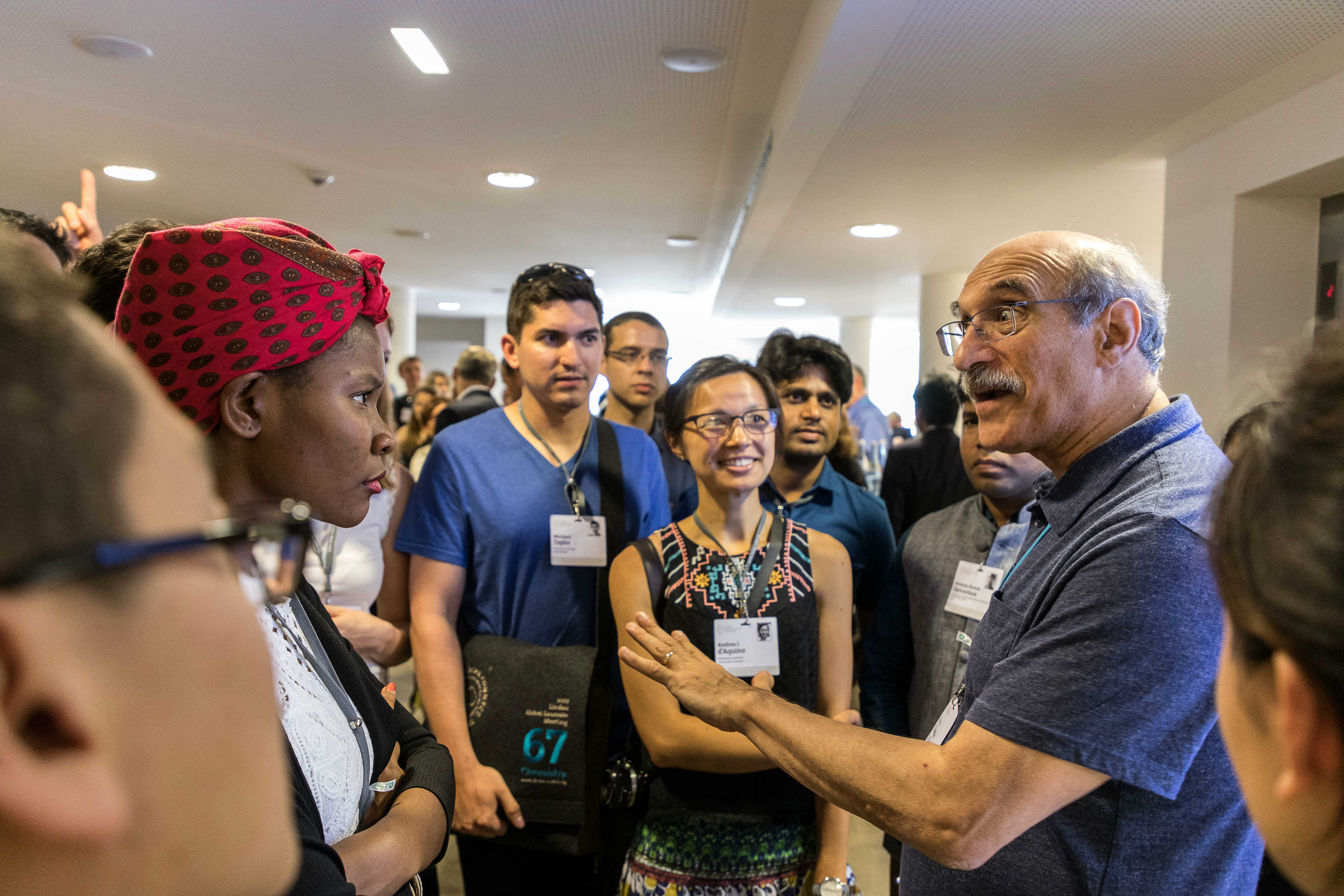
Chalfie talking to students at Lindau 2017

Chalfie talking to students at Lindau 2017{credit}Christian Flemming/Lindau Nobel Laureate Meetings Young Scientists in conversation with Martin Chalfie{/credit}

Continue reading

Babies or career: How to keep young researchers in science

Could shared post-docs improve work-life balance and make academia more attractive for early career scientists?

Naturejobs journalism competition winner Ulrike Träger.

If you look for advice on work-life balance in science online, the message seems clear: it’s possible to fit a 10-hour work day around quality time with your kids and family as long as you’re organized. Flexible hours of working in the lab help. Experiments don’t mind when you do them, and can be postponed until your kids are asleep. But still, long hours are expected in order to be successful, and finding childcare during midnight experiments is not always easy if you don’t live close by. So for many (including myself, a post-doc in my late twenties pondering the right time to start a family) the prospect of having to plan each and every minute of the day to be a good parent and scientist is daunting. This leaves promising young scientists everywhere feeling like they have to choose between family and career.

Continue reading

Most read on Naturejobs: May 2015

Building reputations, relocation, adjunct teaching and more have been the topics of choice in May 2015.
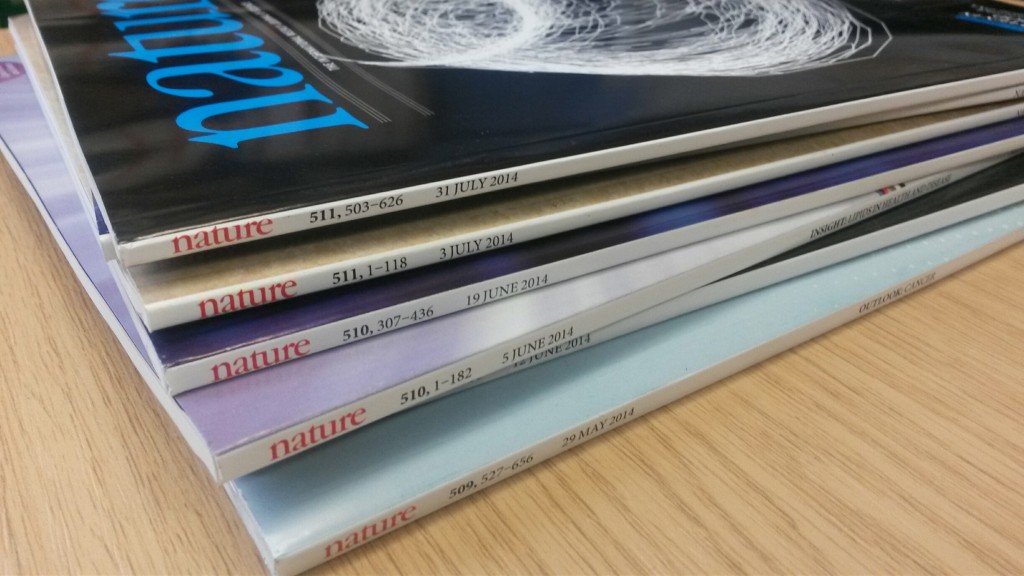
naturejobs-readsThis month the Naturejobs team have been working hard on the Boston Naturejobs Career Expo, which happened last week. It was a long, but great day and we want to thank everyone who got involved: Speakers, delegates, exhibitors, sponsors. THANK YOU!

For those that missed it, there will be reports on the event coming out on the Naturejobs blog next week, starting with a summary of the keynote speech by Professor Robert Langer on Monday June 1st.

But now I want to concentrate on May, and here’s a list of your Top Ten reads from Nature Careers and the Naturejobs blog:

1. To get respect in a field, scientists need to consider not just their work, but also their interactions with others, says Chris Woolston in Recognition: Build a reputation on Nature Careers.

2. Contract teaching positions are becoming the norm for many aspiring professors. Know how to make the best out of them, says Kendall Powell in Adjunct teaching: For the love of lecture on Nature Careers.

3. The postdoc series: Help for lost postdocs shows how self-reflection can help young researchers analyze their skills and plan for their futures. Continue reading

Work/life balance: New definitions

The scientific culture needs to redefine work/life balance so that each person can find their own route to it, says Susan Gelman.

Contributor Susan Gelman

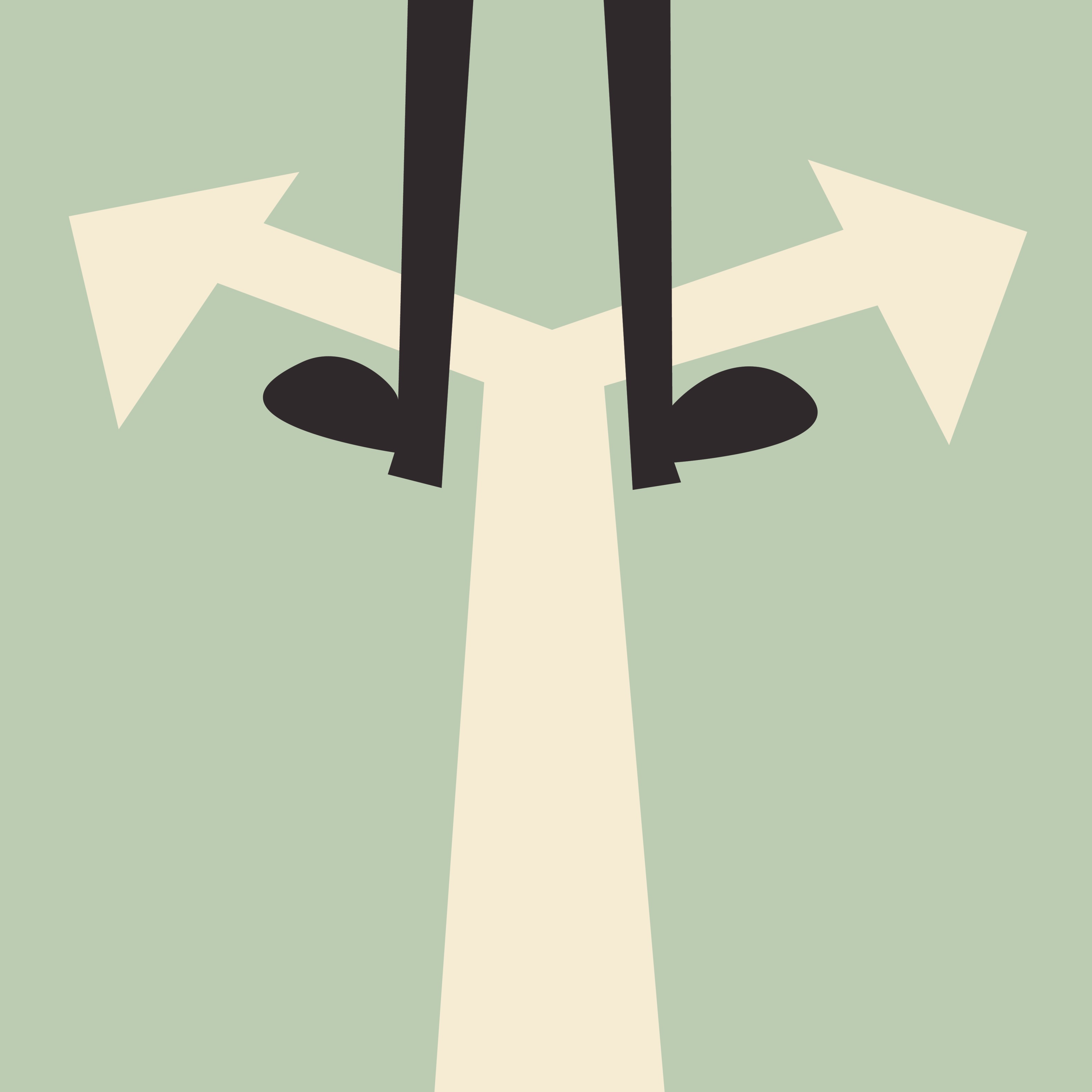
Which way now?

Find your own way {credit}iStockphoto/Thinkstock{/credit}

Research science is an incentive-based career: journal publications, tenure, grant funding, fellowships, awards, etc. It is certainly not unique in this aspect, but its extreme competition does set it apart. When you commit to a research path you are not only committing to become proficient in a general subject area, but to become one of the most knowledgeable people in the world on a very specific topic, creating an environment of extreme pressure and induce tunnel vision. And so, there are many fears and anxieties that go hand-in-hand with being a scientist, including  getting ‘scooped,’ becoming the 8th year Ph.D. student, doing multi-year projects producing no valuable data. So as tempting as it can be to take a weekend off or leave the lab while it’s still light outside, we often remain in our windowless workspaces late into the night out of guilt. We worry that a scientific career won’t wait for us.

However a major problem is that science culture not only expects but also celebrates the dedicated lab rats. Many of us are secretly in awe of their work ethic, even if we don’t necessarily want it for ourselves. We hear whispers of legends renowned for spending 80 hours a week buried in the lab and wonder if we should be doing the same. And therein lies the rub: we can’t cry out for work/life balance and yet still yearn to be the ones always burning the midnight oil. Continue reading

Work/life balance: An artificial construct

If work/life balance is unachievable, people should focus on acknowledging that life is a journey, not a goal, says Melissa Greven.

Contributor Melissa Greven

166620662_istock_thinkstock decision

{credit}iStockphoto/Thinkstock{/credit}

As a Ph.D. student who returned to science after a long absence (which included a brief career as an art historian and time as a stay at home mother, among other things), I take issue with this question.

It implies that scientists are somehow different than professionals in other disciplines, as though achieving this balance is more difficult for our lot. One may assume that scientists face unique demands, where bench work often lacks the regularity of a 9-5; however, scientists encompass a far greater population than just lab rats. It also might be said that scientists face the pressures of getting research done, be it discovering the next miracle drug or fossil fuel alternative, but how does this differ from a corporation preparing for the latest product launch? While an argument could be made about the necessity of the latest smartphone update, a non-bench/field scientist sitting behind a desk likely is not subject to additional public accountability than that faced by an employee of a tech company. The greater question is: can anyone achieve a work/life balance? Continue reading

Work/life balance: Remain flexible

Flexibility is the only viable way to remain competitive as a scientist while still juggling a life, says Igor Zlobine.

Contributor Igor Zlobine

flexible-naturejobs-blog

{credit}Image credit: Image Source/Alexander Porter C{/credit}

Are we living to work, or are we working to live? I’m not certain as to how many scientists have delved deep into their souls to ask this question, but I think it’s pertinent that we all do.

Work/life balance, that mystical unicorn, remains an elusive goal for undergraduates, graduates, post-docs and professors alike. And as I am about to embark on a PhD, I’m thinking about how I can manage my time to make sure I stay relatively sane. I’ve heard too many horror stories about people half way through their PhD going for a “coffee break” never to be seen again.

For me, flexibility is the only viable way to remain competitive while still juggling a life. I’ve set hours for myself, centered approximately around a 9-5ish type of schedule (typically including some work at home on Sundays) but I break them if absolutely required, if for example we are finishing a paper, or when I was close to completing my thesis. We need to move away from the notion of “work” and “life” as two separate entities that exist in parallel universes never to interact with one another. Continue reading

Work/life balance: A question of identity

Achieving work/life balance comes hand-in-hand with understanding yourself and your identity as a researcher, says Justin Chen.

questions

{credit}iStockphoto/Thinkstock{/credit}

Contributor Justin Chen 

During my third year at MIT, I began playing basketball with a small group of graduate students. The weekly games, casual and sloppy, were a chance to talk and catch up. During a break, a friend confessed that he felt guilty for spending a few hours away from lab. “But then I tell myself exercise is good for my research,” he said. “It clears my mind and helps me focus.” I had heard similar justifications for having hobbies and found them puzzling. “What about saying that exercise is good for you?” I asked. To what extent can we separate our personal identity (or a comprehensive view of who we are) from our research? I joked, “soon you’ll be saying eating is good for my productivity or breathing is good for my research.

The question of identity is linked to the issue of work-life balance. Most of us have a broad identity consisting of several things like mother, runner, writer, wife, daughter, baker, musician etc., but researchers usually have one identity: their job as a scientist.  Among professions, science is unique in that some researchers choose their projects.  As an undergraduate in a developmental biology lab, I was captivated by embryos. They were not much more than three layers of tissues flattened together in the pellucid shape of an animal.  While looking under the microscope I began to wonder how a single cell becomes a complete animal and eventually applied to graduate school to find out. This decision, in one sense, freed me to follow a passion but in another way my research became a shadow or alter ego constantly trailing me. Continue reading

Work/life balance: Get inspiration

As well as an opportunity to relax, time away from the bench might bolster creativity, says Grigori Guitchounts.

Contributor Grigori Guitchounts

istock_thinkstock_mentor

{credit}iStockphoto/Thinkstock{/credit}

About a year after graduating from college, I interviewed for a lab technician position with a postdoc who was gearing up to start his own lab. Chatting in Cambridge’s hipster Area Four coffee shop on a disappointingly freezing March day, I was trying to assess what kind of lab environment I should expect. After all, a highly competitive top-notch institution such as his was notorious for producing overworked, stressed people. “I work about one hundred hours in the lab every week,” he said, “plus another twenty in the clinic. And I have a kid at home.” Noticing my incredulous expression, he added, “science does not wait.”

I couldn’t help but imagine all that this young scientist was missing out on. At the peak years of his ability to explore life, this man was spending every waking hour digging deeper and deeper into ever more esoteric areas of science, and the protruding belly and baggy eyes couldn’t hide that the hours were taking their toll. Clearly his schedule did not allow for anything resembling a work-life balance, which is typically taken to mean the moderation in time spent working that allows one to engage in leisure activities daily. Taking the time to engage in activities outside the lab might not be for everyone; some are happy to be doing experiments sunrise to sunset. But besides being a way to relax, leisure activities can often reset one’s mind and inspire. Taking a break from the lab can often be the extra push needed to complete a difficult task. More importantly, time away from the bench might bolster creativity, which is crucial to the progress of science. Why then is a work-life balance so elusive for scientists? Why do so many feel that in order to succeed, they must immerse themselves completely in experiments? Continue reading

Work/life balance: Take a break

Take breaks to maintain manageable stress levels

Contributor Emily Porter

Is there a defined time and a place for science? Does science only happen at work and then you switch off when you leave the lab for the day? I don’t believe that for a second, and the majority of you will agree with me. There isn’t a distinct work/life balance for an academic researcher; science is a part of our lives, our passion for it defines who we are and we believe that we are honoured to have a career that allows us to feed our inquisitive nature and the need to solve problems.

There is no defined line between work and life for a scientist. Instead it is a series of intensities. Ranging from a 14 hour day working non-stop in the lab, to meeting with other academics and talking science, to chatting to someone at a party who asks what you do for a job, to discussing your day with your significant other, to total preoccupation with something else entirely.

The most important thing I learnt from my PhD is that it is ok to take a break. How can you expect to perform to your greatest potential if you are tired and stressed. In fact, my PI insisted that his students took time off. For me, this was sometimes as simple as finishing early on a Friday afternoon or taking an extended lunch break in the sun, or it could be a three week holiday planned for the summer. Continue reading