Future of research: Career awareness

A workshop at the 2015 Naturejobs Career Expo in Boston explored how early career researchers could improve career awareness and preparedness.

Contributor Melissa Greven
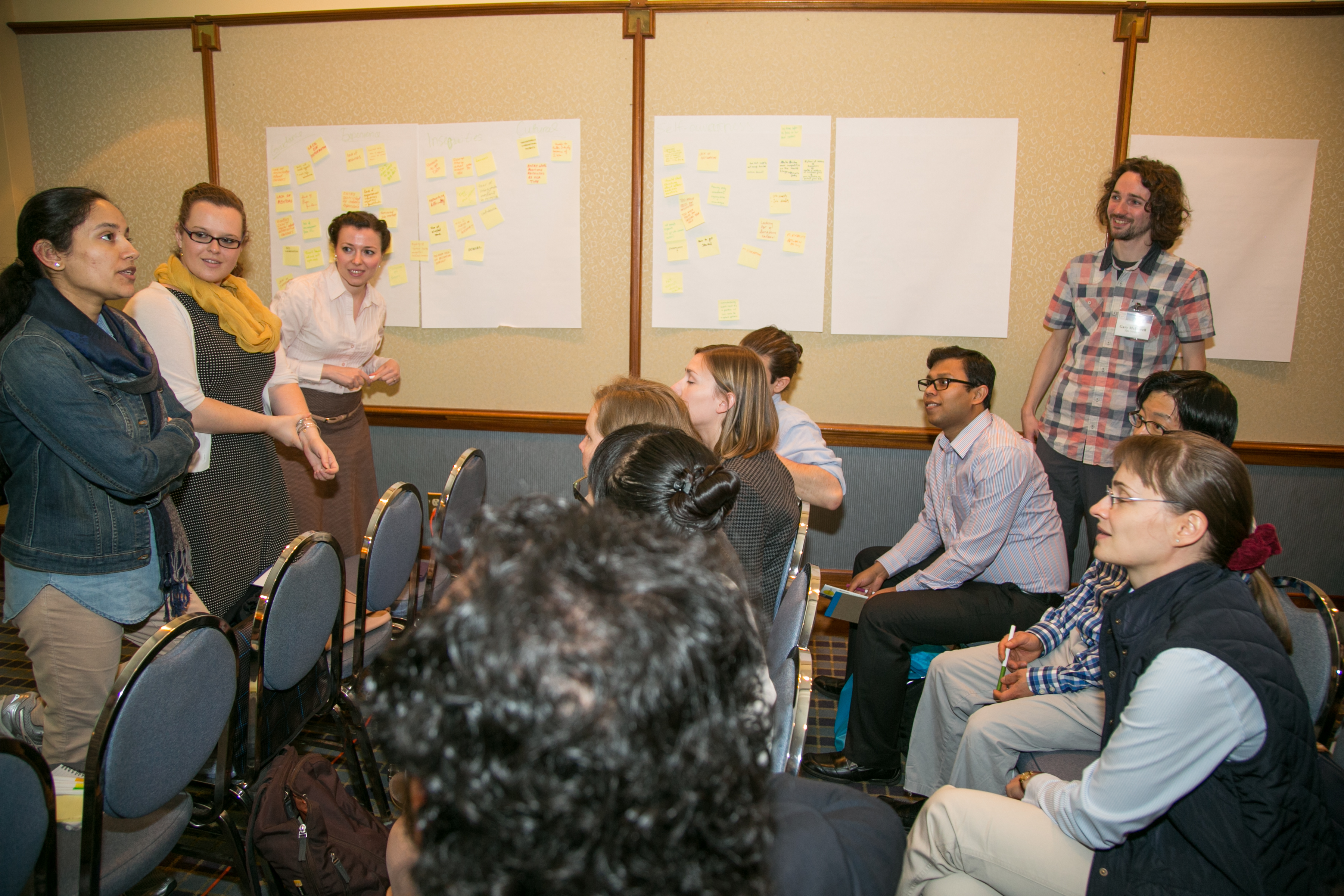
Future-of-Research-workshop-Naturejobs-Career-Expo-Boston-2015

Future of Research workshop at the 2015 Naturejobs Career Expo in Boston.

Academia is the alternative career today for most young scientists. That message became clear during a discussion among graduate students and postdocs during the Future of Research’s (FOR) workshop on career awareness at Naturejobs Career Expo on 20 May in Boston, Massachusetts. The Expo was a day-long careers conference organized and presented by the Naturejobs department of Nature Publishing Group.

The workshop’s ambience was similar to that of a bar on a Friday night—it was noisy and standing-room only. Attendees were eager to address the problem that most early-career researchers face: what are the alternative career paths beyond academia, and how can they be reached?

It is not that early-career scientists consider academic research to be an undesirable profession. Instead, they are coming to understand how difficult it is to obtain an academic post. Graduate students are surrounded by academics who believe their students are guaranteed successes if they just stick to it and keep applying to positions, yet many faculty members, academic advisers and mentors still do not realize that the landscape has changed dramatically in the last decade or so. Data exist on the fact that the vast majority of graduate students who do an academic postdoc end up leaving academia entirely. What is not known is where they end up. Continue reading

Bioscience industry: Booms in Boston

For early-career scientists who are interested in an industry position, it’s a great time to start making some new friends.

Contributor Melissa Greven

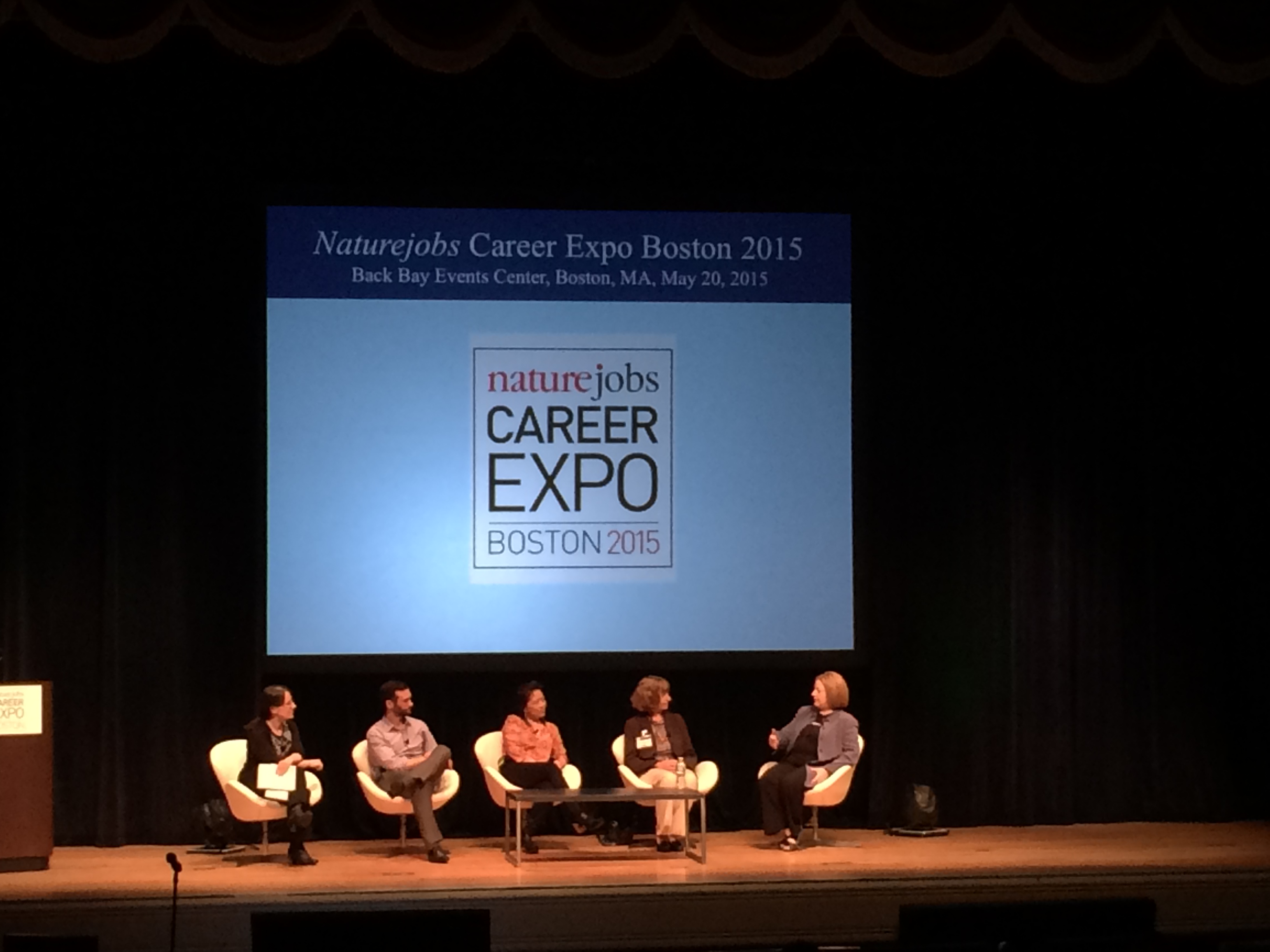
NJCE15-Boston-industry-panel-KIKI-CHU

Heidi Ledford, Kevin Bitterman, Margaret Chu-Moyer, Masha Harelli, Joanne Kamens{credit}Image credit: Kiki Chu{/credit}

“It’s the best time for biotech in more than 20 years,” said Kevin Bitterman, a partner at the venture-capital firm Polaris Partners during a panel discussion on the bioscience industry in Boston, Massachusetts. This observation was echoed by his fellow panelists, who came from a variety of backgrounds ranging from pharmaceuticals to non-profit biotechnology firms to contract research organizations (CROs). A few years ago, a lack of investment was expected to lead to the downfall of the biotech sector. But the biotech market swings up and down as does any other and, as with the stock market, the best investments often can be made while the market is in a down phase. Today, the biotech sector is booming thanks largely to an influx of start-ups (in disease, drugs, scientific tools and medical devices) and significant capital backing of them. And that means it is an excellent time for early-career researchers to try to gain entry to the field.

The panel discussion, where Bitterman was joined by Joanne Kamens (Addgene), Margaret Chu-Moyer (Amgen), Masha Hareli (ATR LLC) and was chaired by Heidi Ledford (Nature), was part of the Naturejobs Career Expo, a day-long science-careers conference on 20 May in Boston that was organized and presented by the Naturejobs department of Nature magazine. Continue reading

Work/life balance: An artificial construct

If work/life balance is unachievable, people should focus on acknowledging that life is a journey, not a goal, says Melissa Greven.

Contributor Melissa Greven

166620662_istock_thinkstock decision

{credit}iStockphoto/Thinkstock{/credit}

As a Ph.D. student who returned to science after a long absence (which included a brief career as an art historian and time as a stay at home mother, among other things), I take issue with this question.

It implies that scientists are somehow different than professionals in other disciplines, as though achieving this balance is more difficult for our lot. One may assume that scientists face unique demands, where bench work often lacks the regularity of a 9-5; however, scientists encompass a far greater population than just lab rats. It also might be said that scientists face the pressures of getting research done, be it discovering the next miracle drug or fossil fuel alternative, but how does this differ from a corporation preparing for the latest product launch? While an argument could be made about the necessity of the latest smartphone update, a non-bench/field scientist sitting behind a desk likely is not subject to additional public accountability than that faced by an employee of a tech company. The greater question is: can anyone achieve a work/life balance? Continue reading