Networking: a very short cheat sheet

We all know the value of networking. Here’s a very quick rundown of best practises, from Amali H. Thrimawithana

Networking plays a vital role in any scientist’s career development, being one of the main ingredients in building a professional profile. It feels especially essential in my own field of informatics and data science, where techniques and technology are rapidly evolving and cross-discipline collaborations are rampant.

Networking helps us stay up to date with developments, provides a space to learn, enhances communication skills, creates new opportunities, and helps to build a professional profile.
IMG_3286-smaller

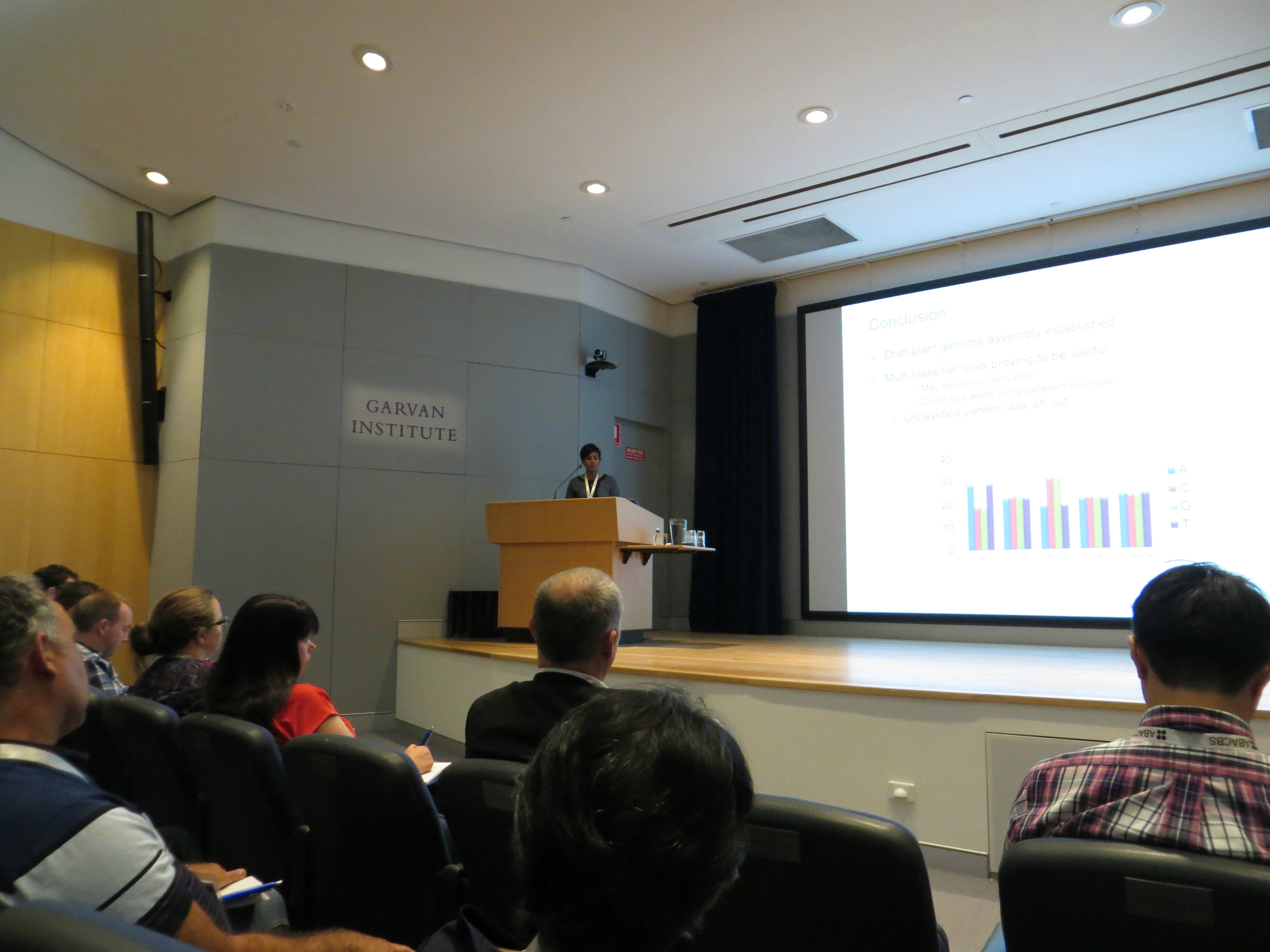
Conferences provide you with a literal stage to gain connections
Continue reading

Away from home: Collaboration in a global organisation

We’re bringing you the best stories in lab mobility from Nature India

The ‘Away from home‘ blogging series features Indian postdocs working in foreign labs recounting their experience of working there, the triumphs and challenges, the cultural differences and what they miss about India. They also offer useful tips for their Indian postdocs headed abroad. You can join in the online conversation using the #postdochat hashtag.

Today, we have environment scientist Ram Avtar, an alumnus of Jawaharlal Nehru University (JNU), New Delhi and a postdoc from the Japan Agency for Marine-Earth Science and Technology (JAMSTEC). He tells us about his transition from a postdoc to a research associate with the United Nations University in Tokyo, an organisation with a global outlook and ample scope to forge meaningful collaborations — not just in one’s professional life but also in the personal life.

Multi-disciplinary Centers are lousy lifeguards when drowning in sea of PowerPoint slides

Structured efforts to build collaboration-encouraging centers cannot overcome fundamental problems in scientific communication.

These centers should focus on new scientist-to-scientist communication techniques before designing formal programs, says David Rubenson.

Multi-disciplinary, trans-disciplinary, translational, team science. These are the buzzwords for a consensus that transformative science requires collaboration among diverse disciplines. With scientists locked into narrow sub-disciplines, universities are dedicating enormous resources for top-down multi-disciplinary “programs,” “centers,” and “institutes” that attract diverse researchers, with the aim of encouraging more multidisciplinary collaboration.

communication

Continue reading

The faculty series: Learning to collaborate

Collaborations are the key to success in modern scientific research, says Michelle Ma.

Guest contributor Michelle Ma

In contemporary science, collaborative research is the norm. The majority of my work as a PhD student, a postdoc and most recently as a research fellow has involved collaboration with physicists, engineers, pharmacists, biologists and clinicians, from the fields of cancer diagnosis to dye-sensitised solar cells. Whilst I occasionally endure nostalgia on a bygone era where a single scientist or a solitary duo authored papers, today research happens in teams. This is perhaps a result of the current climate: innovative science that will provide public benefit needs a range of different skills.

Michelle Ma-medium

Michelle in her lab

I’m a research chemist and aim to develop new pharmaceuticals for diagnostic imaging. To show that these chemicals work, I need to undertake preclinical studies. And the best way to accomplish this is to collaborate. I synthesise new molecules, and then work with others to test them. If they have clinical utility, I need commercial collaborators to develop them so they meet pharmaceutical requirements, and I need clinical collaborators to take the compounds all the way into a clinic where they can help people. In short, if I want to make a difference, I can’t be a one-man-band. Continue reading

AstraZeneca to cut 2,200 R&D jobs

As part of a major restructuring programme, pharmaceutical company AstraZeneca announced yesterday it would be cutting 2,200 jobs from its research and development (R&D) workforce.

The bulk of job losses will affect employees in its neuroscience arm as the company looks to outsource more of its R&D via external collaborations. It will set up a ‘virtual’ neuroscience research unit comprising 40 to 50 AstraZeneca scientists working with partners in academia and industry, such as the Karolinska Institute in Sweden. The unit will be based in Boston, United States, and Cambridge, United Kingdom, while R&D activities will cease at two sites that are focused on neuroscience: Södertälje in Sweden and Montreal in Canada.

In a statement, AstraZeneca’s president of R&D, Martin Mackay, said: “We’ve made an active choice to stay in neuroscience though we will work very differently to share cost, risk and reward with partners in this especially challenging but important field of medical research.”