The million-dollar question every scientist should be asking

Both science communicators and researchers carry the onus of answering science’s most important question

By Jessica Eise

I recently had a phone call with a frustrated colleague looking for some advice. She had two key pressure points, both common in the field of science communication.

First, she often couldn’t make sense of what scientists were telling her. They would explain their advanced, varied concepts increasingly quickly and impatiently as she struggled to understand them. Both parties would leave frustrated, having not achieved much. The scientists might wrongly assume she’s stupid to have not understood.
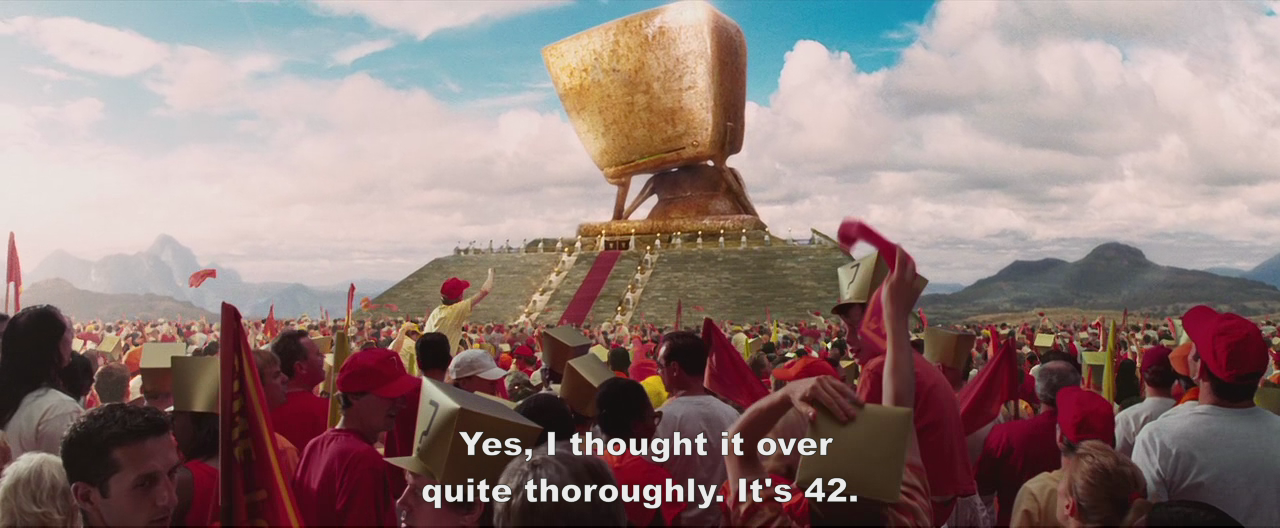
Douglas Adams’ The Hitchhiker’s Guide to the Galaxy asked “What is the answer to life, the universe and everything?” To communicate effectively, scientists should simply ask “So what?”{credit}By IllusionConscious [CC BY-SA 3.0 (https://creativecommons.org/licenses/by-sa/3.0)], from Wikimedia Commons {/credit}

Continue reading

Fake snot, bogus blood, no jokes: Science communication to kids made simple

Sarah Barnes

Sarah Barnes addressing the Academy of Medical Sciences winter meeting in London

Do you hanker for the opportunity to talk to schoolchildren about your research? If so, Sarah Barnes, public engagement manager at Queen Mary University of London, has some advice. David Payne reports.

The Centre of the Cell in London’s East End is the world’s first science education centre to be housed in an operating biomedical research facility, an embryo-shaped pod suspended high above the Blizard Institute’s labs, part of Queen Mary University of London (QMUL). It is accessed via a bridge and offers children the chance to see scientists at work, watch videos projected onto the pod’s ceiling, and play games aimed at triggering their interest in cell biology and medical research. Continue reading

Scientific presentations: A cheat sheet

Scientific culture and insufficient training in public speaking leads to dull, text-heavy talks. Put more effort into presentations, say Andrew Gaudet and Laura Fonken

As postdocs with a combined 20 years of experience in neuroscience research, we’ve attended hundreds of talks and delivered dozens of presentations. We’ve realized it is imperative to perform your best every time you present — whether at a weekly meeting or at a job interview.

Your preparation and organization will help the audience understand your main points, and this professionalism will boost your reputation, which could lead to further opportunities. Ultimately, a presentation is one of the ways of influencing how others perceive your science and your competence. Here, we’ve put together some ideas for creating polished presentations.

presentation-1559937_1280

Continue reading

Highlights from the Comm4Science science communication conference

You need to prepare to get your science in the news. And when it comes to interacting with journalists, loosen up and let your emotion come through.

Guest contributor Virginia Schutte

The international conference Comm4Science: communicating science beyond the lab took place in Heidelberg in early May. Around 100 participants attended, where they met a great roster of speakers, took part in a communication workshop, and asked questions of a panel of experts.

DSC_0889-small-square

Virginia Schutte

Continue reading

The Naturejobs Career Expo, San Francisco

Check out our feature video from our first event in San Francisco!

https://youtu.be/9U2nG3LbnRw


Sad you missed it? Our London expo is now open for registrations here.


Suggested posts

How to start a startup

How did you cultivate mentors?

How can people reach you?

The Naturejobs career expo journalism competition, London, 2016!

Enter for a chance to work as a Nature journalist for the day!


NJCE-2016-(London)


Here we go again!

Following the success of the Boston and San Francisco Naturejobs career expo journalism competitions this year, we’re launching the competition for our tenth career expo in London, to be held on September 16th.

The London Naturejobs career expo is our flagship event, so we are looking for five budding science writers to help us with our coverage of the conference sessions, workshops and general ambience of the event for those who cannot make it. The conference will explore career paths in industry, academia and science communication, finding funding, and much more.

The five winners will have the opportunity to attend the expo and write up at least two of the sessions or workshops for our readers, sharing the advice and expertise of the speakers with our worldwide audience. Winners will also have the opportunity to work closely with Nature editors, and their articles will be published on the Naturejobs blog. Continue reading

How to answer: Behavioral questions

Based on advice given by Sarah Cardozo Duncan at the Naturejobs career expo, Boston. Sarah has 20 years’ experience in recruitment and career development as career strategist based in Boston.

Naturejobs career expo journalism competition winner Ulrike Träger

You’re in the interview for your dream job. You give a great presentation on your work. You looked up the company, their work and the person interviewing you. All is going well. Until someone asks “please give us an example of when you had a conflict with your boss”. You start to sweat. You don’t know what to say. You stutter. You didn’t prepare for this type of question.

{credit}iStockphoto/Thinkstock{/credit}

Continue reading

How to answer: Why do you want to work for us?

We tackle another classic this week. Being genuine – and understanding the question – is key.

This is another one of those wholly overused interview questions that still get thrown around time and again by employers who are hoping to trip the odd candidate up. When faced with this, it’s tempting to be flippant. A legitimate – but wrong – answer would be “I need to pay the rent.” This isn’t going to do you any favours.

{credit}iStockphoto/Thinkstock{/credit}

Continue reading

How to answer: What is your greatest weakness?

We’re running through your most-dreaded interview questions, starting with this classic.

This classic question has been tripping prospective employees up for years – whether they’re applying for jobs at the local greengrocers or at Apple. There’s no 100% guaranteed-to-land-you-the-job answer to this question, but there are certainly wrong ways to answer, and ways that will maximise your chances. The first step, as with many interview questions, is to understand why you’re being asked the question – what is the interviewer looking for? After that, we’ll examine how you shouldn’t answer, and end on how you should.

Why?

Generally, an interviewer is looking to see a few things when they ask you about your weaknesses – first, they’re looking for self-awareness. Are you knowledgeable enough about yourself to understand and appreciate where you’ll fit well within a role, and where you might need to develop? And are you comfortable enough with yourself to admit those areas?

This is one of the most well-known interview questions out there, so an interviewer may also be looking to make sure you care enough to have prepared to answer this question. If you don’t have something ready for them, that could be taken as a red flag.

Continue reading