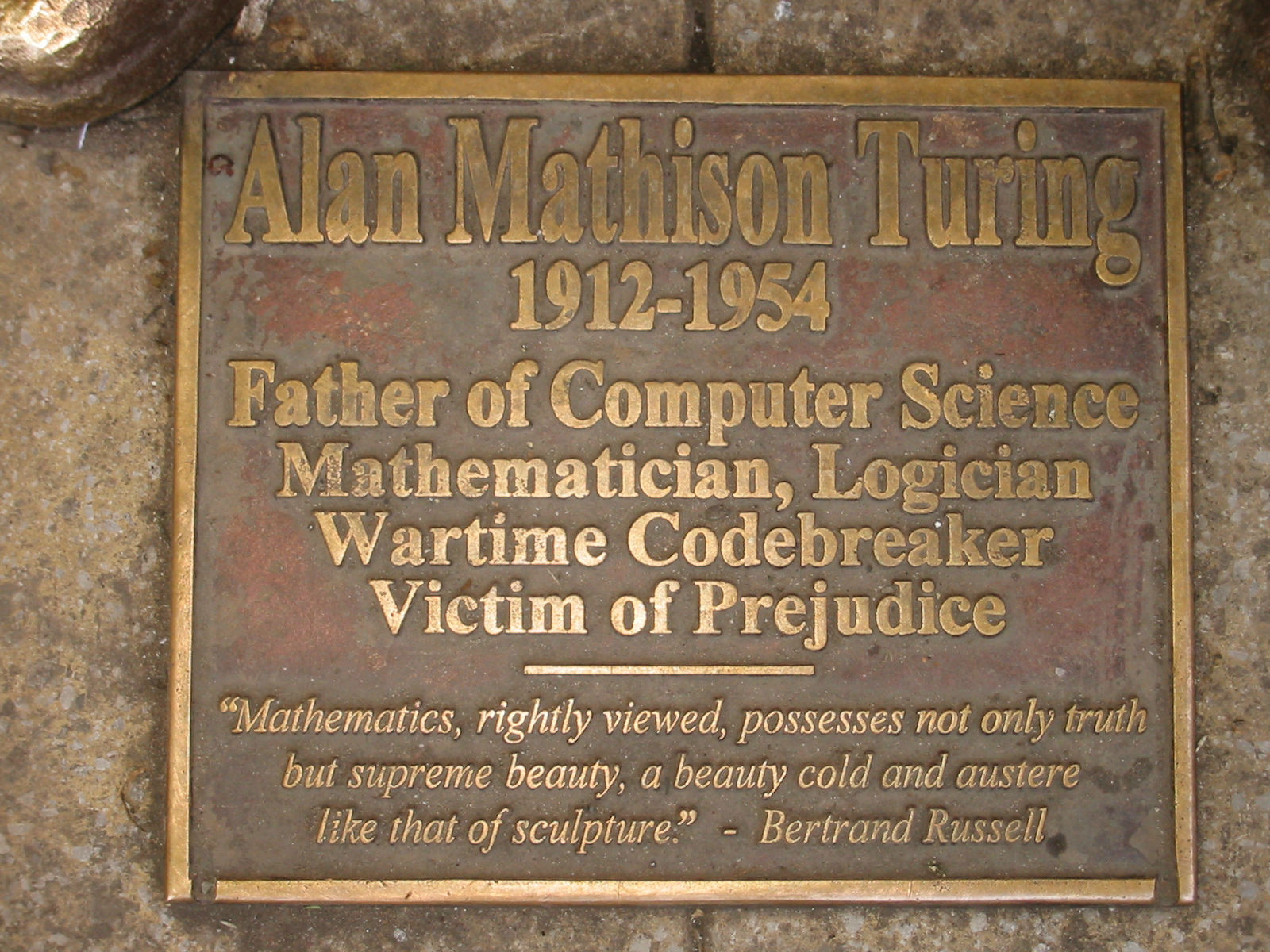
In 2012, on the 100th anniversary of his birth, Nature marked wartime code-breaker Alan Turing’s wider legacy.
The collection of features and opinion articles, along with an accompanying podcast, acknowledged that in his tragically short life, Turing — whilst working on a machine that would crack Nazi codes and become the modern day computer — shaped many of the hottest fields in science today, including artificial intelligence, biological pattern formation, and computation in physics.
Turing’s suicide came in 1954, two years after his prosecution for gross indecency related to his homosexuality, which was then illegal in England. Turing had divulged to police investigating a burglary at his home that he was in a same sex relationship, and after pleading guilty was given a 12-month course of diethylstilbestrol injections, a synthetic oestrogen which rendered him impotent and caused gynaecomastia. The alternative, prison, would have meant he could no longer work on his ground-breaking mathematical theories. He was posthumously pardoned in 2013.