Delivering workplace diversity in science takes time but there is cause for optimism. David Payne reports on a new collaborative approach between the Francis Crick Institute, Wellcome, and GlaxoSmithKline.

Last week, Julia Etulain was sitting in a lobby of a hotel in Paris, far from her hometown of Buenos Aires, Argentina. She explained her research energetically, occasionally apologising for near-perfect, short-sentence, staccato English.

Julia Etulain {credit}Photo via ParaBuenosAires/thebubble{/credit}
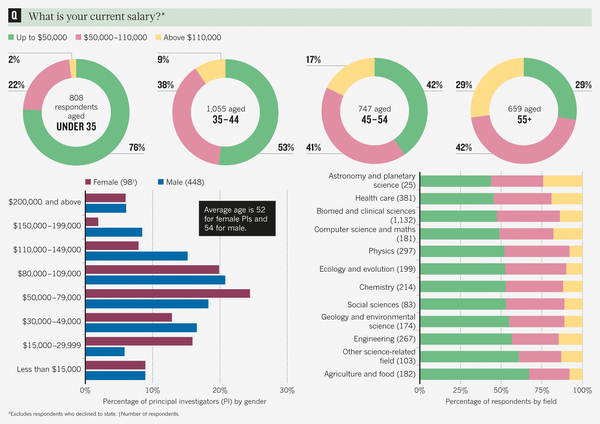
The Office of National Statistics (ONS) issued its annual survey of hours and earnings last month. Scientists are conspicuously absent from The Guardian‘s subsequent trawl of the data to highlight the UK’s top 10 best paid jobs. These include brokers (1), CEOs (2), pilots (4) air traffic controllers (7), and doctors (8). Continue reading
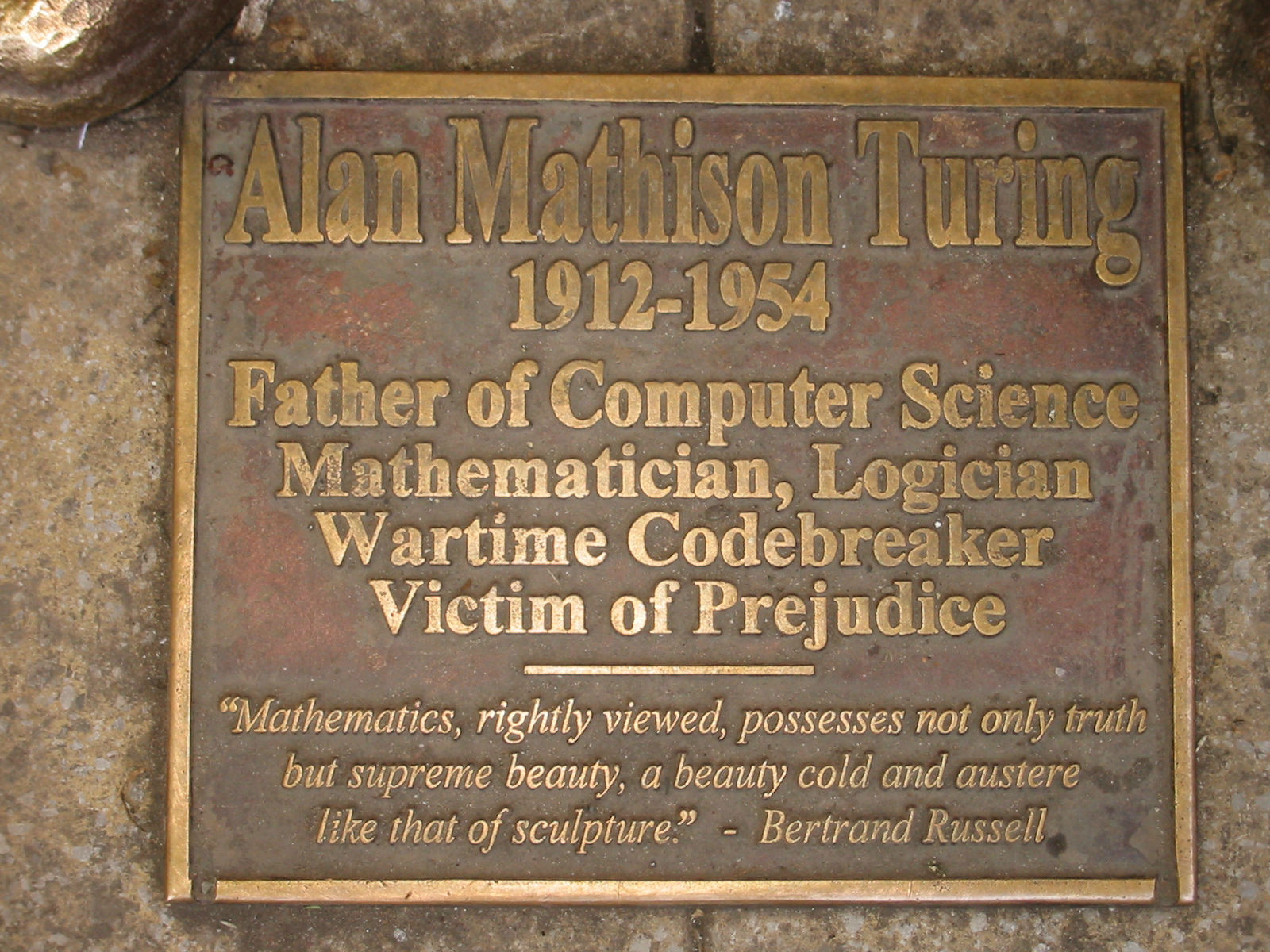
The collection of features and opinion articles, along with an accompanying podcast, acknowledged that in his tragically short life, Turing — whilst working on a machine that would crack Nazi codes and become the modern day computer — shaped many of the hottest fields in science today, including artificial intelligence, biological pattern formation, and computation in physics.
Turing’s suicide came in 1954, two years after his prosecution for gross indecency related to his homosexuality, which was then illegal in England. Turing had divulged to police investigating a burglary at his home that he was in a same sex relationship, and after pleading guilty was given a 12-month course of diethylstilbestrol injections, a synthetic oestrogen which rendered him impotent and caused gynaecomastia. The alternative, prison, would have meant he could no longer work on his ground-breaking mathematical theories. He was posthumously pardoned in 2013.
Does your university make provision for maternity leave in its PhD studentships? Does it insist on female representation on all committees, or run a buddy system linking female postdocs to female PhD students? These are just some of the initiatives in place at Queen’s University Belfast, which was recently named as the lead university in the United Kingdom for tackling the unequal representation of women in science.
Queen’s has been given a ‘Silver University’ award by the Athena SWAN Charter, a recognition scheme that rewards UK universities committed to advancing and promoting the careers of women working in science, engineering and technology (SET). It’s the highest level of award currently held in the United Kingdom, and Queen’s is the only university with the accolade. Tom Millar, dean of the faculty of engineering and physical sciences, says the university’s gender-equality initiatives are “part and parcel” of the regular business of the institution. “It is this integration, or mainstreaming, of an equal opportunities focus that has made our efforts sustainable,” he says.
Other examples of initiatives at Queen’s include:
Yvonne Galligan, director of Queen’s Gender Initiative — which has been the main driver of recent progress since it was established in 1999 — says the university’s ambition is to create a gender-equal environment for staff and students. “Winning the institutional Silver award was not an ‘event’,” she says. “It is [one] stage in a process.”
To achieve a Gold award, the highest possible, Millar and Galligan say the university must extend its gender-equality success to its arts and humanities departments and do more to tackle the loss of female academics at key career stages — the so-called ‘leaky pipeline’. It’s a process that will take time — Peter Mason from Athena SWAN explains that to be awarded Gold, a university would need the majority of its departments to hold individual Gold departmental awards. Currently only the department of chemistry at the University of York is at this level.
While Queen’s works towards this goal, Millar is understandably proud of the university’s achievement to date: “It is recognition of the enormous contribution and commitment, for more than a decade, of many staff, academic and non-academic, male and female.”
How does Queen’s compare to your institution for gender equality? Could you see similar initiatives being implemented where you work? Let us know your thoughts.