
From academia to Silicon Valley — and back

pexels-photo-77984-smaller

Although faculty members transition from industry to academia (and vice-versa), it’s rare to go back and forth. How does each setting help a researcher grow, and what skills are critical in both environments? Sam King offers his insight.

Five years ago, I left my tenured position in computer science at the University of Illinois at Urbana-Champaign to push myself intellectually and professionally in industry. During these years, I started a company (Adrenaline Mobility), sold my company to Twitter, worked as a software engineer, managed a two-person team, managed a 25-person organization, battled overseas fraudsters and fake accounts, and led a nine-month project (an eternity in industry) that ended up being the largest growth initiative in the history of Twitter. Continue reading

TechBlog: Santiago Perez De Rosso on Git, reimagined

Santiago Perez De Rosso, a PhD student in the Software Design Group at MIT’s Computer Science and Artificial Intelligence Laboratory, talks about Gitless—a kinder, gentler form of version control software.

Screen Shot 2017-03-24 at 1.11.30 PM

{credit}Santiago Perez De Rosso // https://dspace.mit.edu/handle/1721.1/106271{/credit}

Continue reading

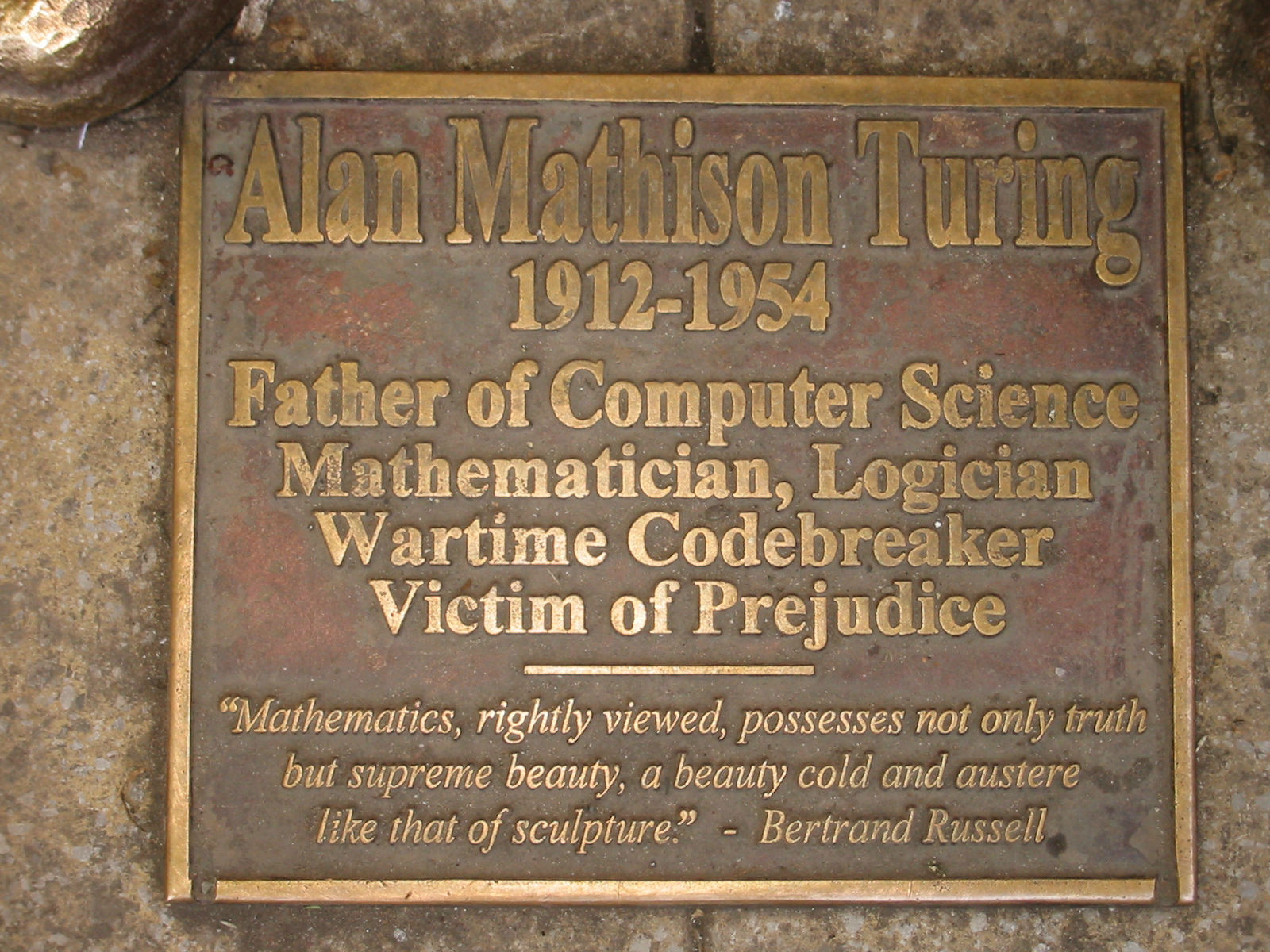
The Alan Turing law

In 2012, on the 100th anniversary of his birth, Nature marked wartime code-breaker Alan Turing’s wider legacy.

The collection of features and opinion articles, along with an accompanying podcast, acknowledged that in his tragically short life, Turing — whilst working on a machine that would crack Nazi codes and become the modern day computer — shaped many of the hottest fields in science today, including artificial intelligence, biological pattern formation, and computation in physics.

Turing’s suicide came in 1954, two years after his prosecution for gross indecency related to his homosexuality, which was then illegal in England. Turing had divulged to police investigating a burglary at his home that he was in a same sex relationship, and after pleading guilty was given a 12-month course of diethylstilbestrol injections, a synthetic oestrogen which rendered him impotent and caused gynaecomastia. The alternative, prison, would have meant he could no longer work on his ground-breaking mathematical theories. He was posthumously pardoned in 2013.

Sackville_Park_Turing_plaque-smaller Continue reading