Enough doom and gloom part 1: Science funding is cyclical

Contributor Scott Chimileski

A few months away from finishing a PhD, my social media feeds are filled with negativity about postdocs, jobs and funding. Article after article, elaborate infographics – there are even special calculators now that predict your chances of becoming a principal investigator.

labpredictor-scott-chimileski

{credit}Image credit: Scott Chimileski{/credit}

It is certainly true: the competition for a position as a science professor and to earn funding as a researcher is increasing. Raising consciousness around these issues is important, and these articles, driven by genuine concern, do help. However, I think it has gone too far. I see it affecting my peers on Facebook: “Wee!! Sadly this motivated me to get out of bed, someday I could make $40k!” accompanied by a link to the article “Too Few Jobs for America’s Young Scientists.” This same sort of sentiment is echoed on Twitter.

It’s human nature to focus on bad news; but it is long overdue to have a critical look at all the doom and gloom. Before we panic – before we decide there are too many PhD students and dream-up ways to intervene – let’s consider the history surrounding these issues, allow a little optimism in, and explore the positive. In this three part series, I want to help uplift my fellow young scientists. Continue reading →
Working in industry: An academic-style postdoc in a pharmaceutical setting

Roche

Dr Katrin Arnold
{credit}Credit: Esther Cooke{/credit}

Big pharma are starting to introduce academic-style postdoc fellowships, strengthening relationships between industry and academia.

Contributor Esther Cooke

Rightly or wrongly, postdoc positions within industry tend to have a less than stellar reputation. Rumours abound of a disregard for publishing papers, a lack of freedom to develop ideas and difficulty returning to academia. However, pharmaceutical companies, including Roche, AstraZeneca, Pfizer, Merck and NIBR, are starting to introduce academic-style postdoc fellowships, recognising the need to build relationships with universities. But what are the advantages of conducting research in industry, and how do these fellowships marry the two environments together? Moreover, will a postdoc in industry make it difficult to return to academia down the line?

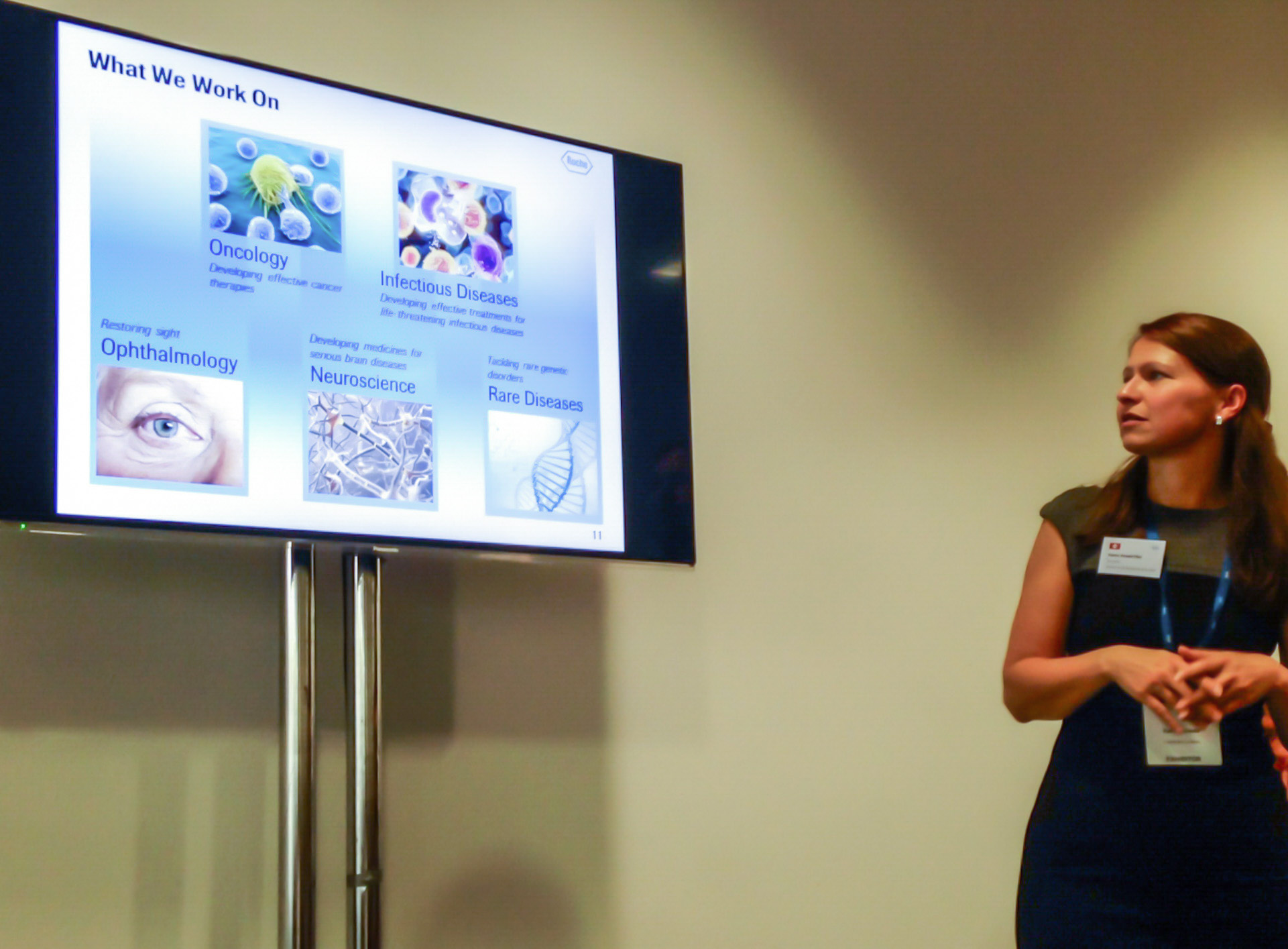
At the recent Naturejobs Career Expo in London, Dr Katrin Arnold, a recruitment manager for the Pharma Research & Early Development (pRED) sector at Roche, spoke about postodoc opportunities in industry and addressed some of these questions. Roche is a large multinational company specializing in pharmaceuticals and diagnostics. Based at six research sites worldwide, Roche’s pRED organization employs approximately 2,500 scientists and clinicians, including close to 100 postdocs. The predominant area of research is neuroscience, with a focus on neurodegeneration, neurodevelopment and psychiatry. Other research areas include oncology, infectious diseases, ophthalmology and rare diseases. Continue reading →