
Professor Robert Langer, the 2015 Naturejobs Career Expo keynote speaker in Boston, shares the challenges he faced when becoming an academic entrepreneur.
Contributor Diana Cai
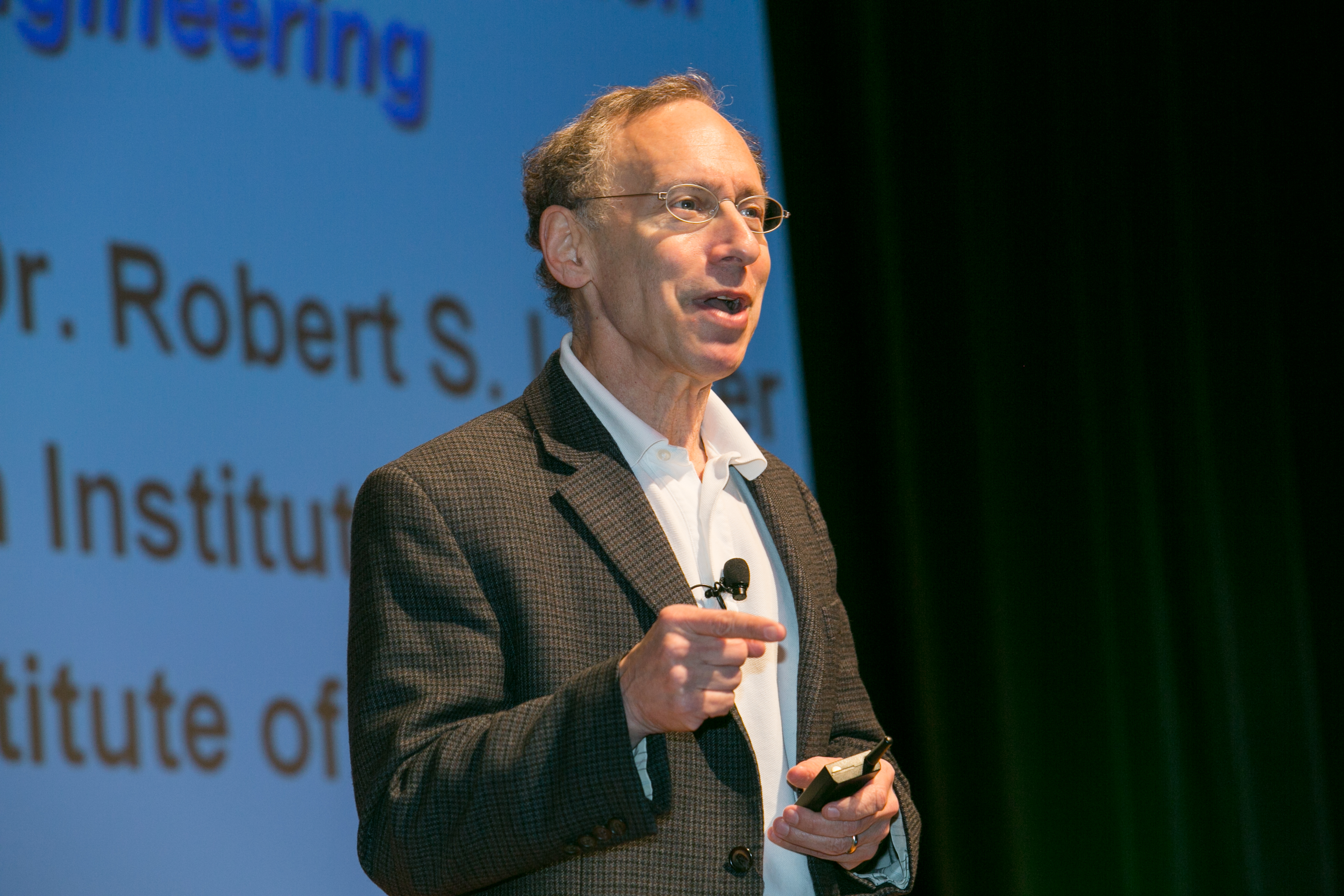
Robert Langer, David H. Koch Institute Professor at MIT and Keynote speaker at the 2015 Naturejobs Career Expo in Boston.
Robert Langer began by telling the audience about how, upon receiving his graduate degree in chemical engineering from MIT in 1974, he had job offers from 20 oil companies. “It’s not like I was that great or anything,” Langer says. He goes on to explain that the previous year had ended on a bad note for the oil market: the price of oil quadrupled in the span of four months, from $2.67 a barrel in October 1973 to $11.65 a barrel in January 1974. As a result, job opportunities for chemical engineers skyrocketed. He was ready to follow this path, until one of the engineers at a company said to him, “If you could just increase the yield of this one chemical by 0.1%, that would be wonderful!” Feeling uninspired and unable to contribute to society in that line of work, Langer decided to look for other options.
After applying to teaching positions at more than 40 colleges and failing to hear back from any of them, he asked himself, “How else can I use my chemical engineering education to help people? And I thought about medicine.” Langer eventually entered the laboratory of Judah Folkman, a professor at Harvard Medical School. Folkman was interested in angiogenesis, the process by which new blood vessels are formed. He had found that tumour growth is dependent on angiogenesis and postulated that inhibiting angiogenesis might be a way to halt tumour growth. Continue reading