
Organizing events offers early career researchers an opportunity to develop transferable skills attractive to multiple industries, says Aliyah Weinstein.
Contributor Aliyah Weinstein
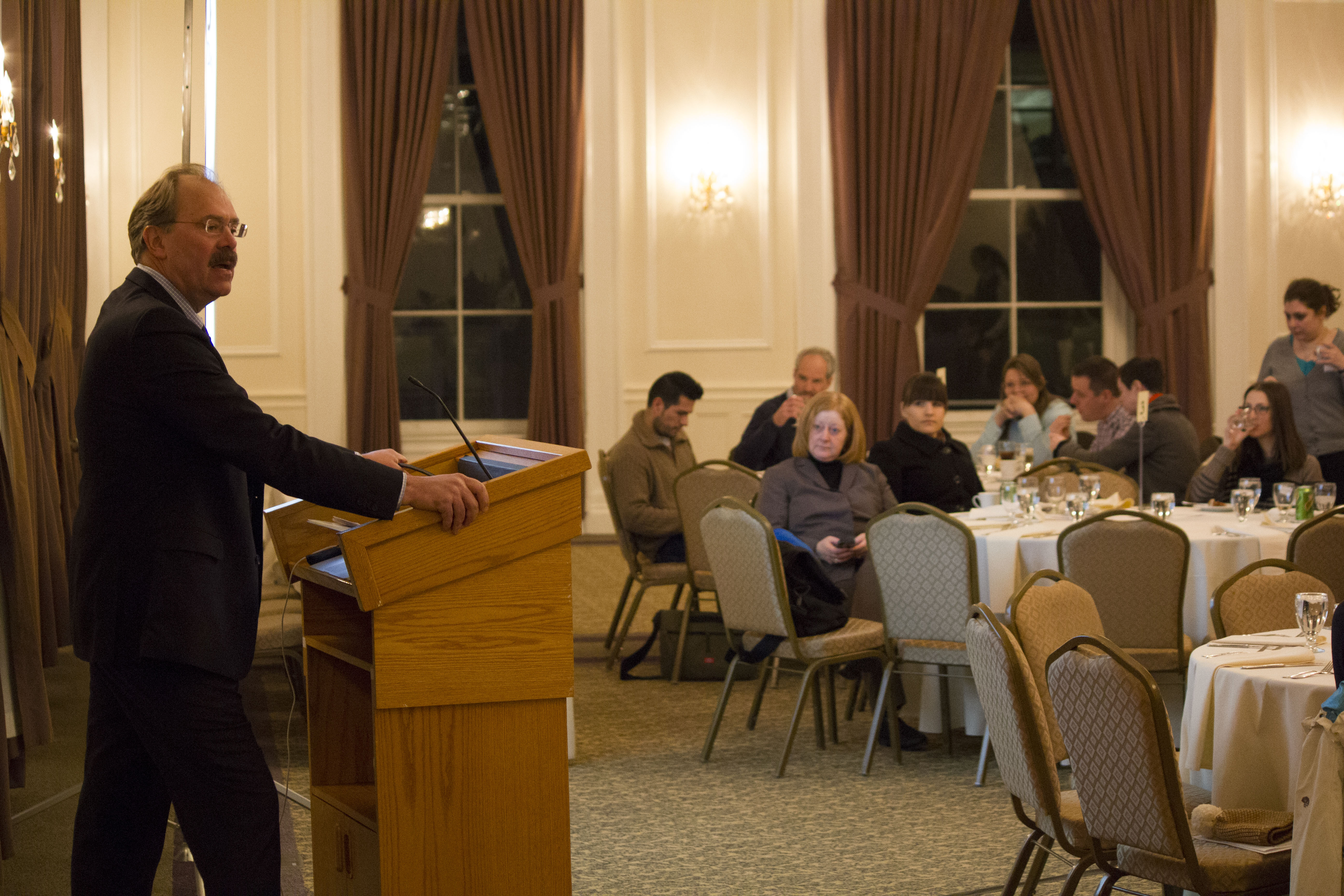
Dr. Wiley “Chip” Souba speaks at the Doctoral Directions conference, held March 5-6 at the University of Pittsburgh and co-organized by Alyce Anderson, Rachael Gordon, and Julie Boiko.{credit}Image credit: Jeremy Gale{/credit}
In an era when the career paths that PhD graduates will follow after graduation vary greatly, it is more important than ever that trainees are prepared to take on careers both inside and outside of the academy. The non-technical skills that are necessary to complete a PhD, including leadership, analytical skills, and time management, are useful in many career paths. However, it is often difficult for trainees to identify and nurture these skills while remaining focused on the technical skills required to complete their studies. Furthermore, the necessity for trainees to prepare themselves for a wide array of careers is unique to this generation of scientific trainees, and the mechanisms to prepare trainees to recognize and practice the skills needed to successfully navigate diverse career paths is lacking at many institutions.
One way that some students have found to take this task into their own hands is by organizing local scientific meetings. This provides not only the opportunity for trainees to present their work and connect with other members of the scientific community, but also to hone skills in networking, finance, and writing, among many professional skills that can translate to careers in and out of academia.
Networking
Conference planning provides opportunities for trainees to practice networking skills with more senior scientists. Alyce Anderson and Rachael Gordon, who for the past three years have been involved in organizing a professional development conference at the University of Pittsburgh, stress the importance of having an advisor involved in the conference planning committee. They recommend identifying a faculty member who has previously been involved in organizing meetings, to work with and learn from throughout the planning process. “Garner institutional support from people who work on professional development,” suggest Gordon and Anderson. Such faculty may support a conference by providing students access to their network of scientists outside of the home university as potential speakers, and guidance on the mechanics of putting together a successful meeting. Additionally, working with faculty is an opportunity for trainees to establish close relationships with them, opening the door to potential long-term benefits including further mentoring and letters of recommendation. Continue reading