Ageism in academic jobs in India

Farah Ishtiaq shares her experience on how age and success are linked in acquiring faculty positions in India

India has recently been portrayed as a land of abundant opportunity in academia, investing seriously in research and development to attract skilled scientists. The government has introduced several attractive funding opportunities, with the aim of bringing back scientists working abroad to establish a long-term career here, and improving the overall research infrastructure. Wellcome Trust/DBT India Alliance (WT/DBT) fellowships, for example, have no age or nationality restrictions, relying on qualifications, research experience, career trajectory and the candidate’s determination to establish their own independent research.

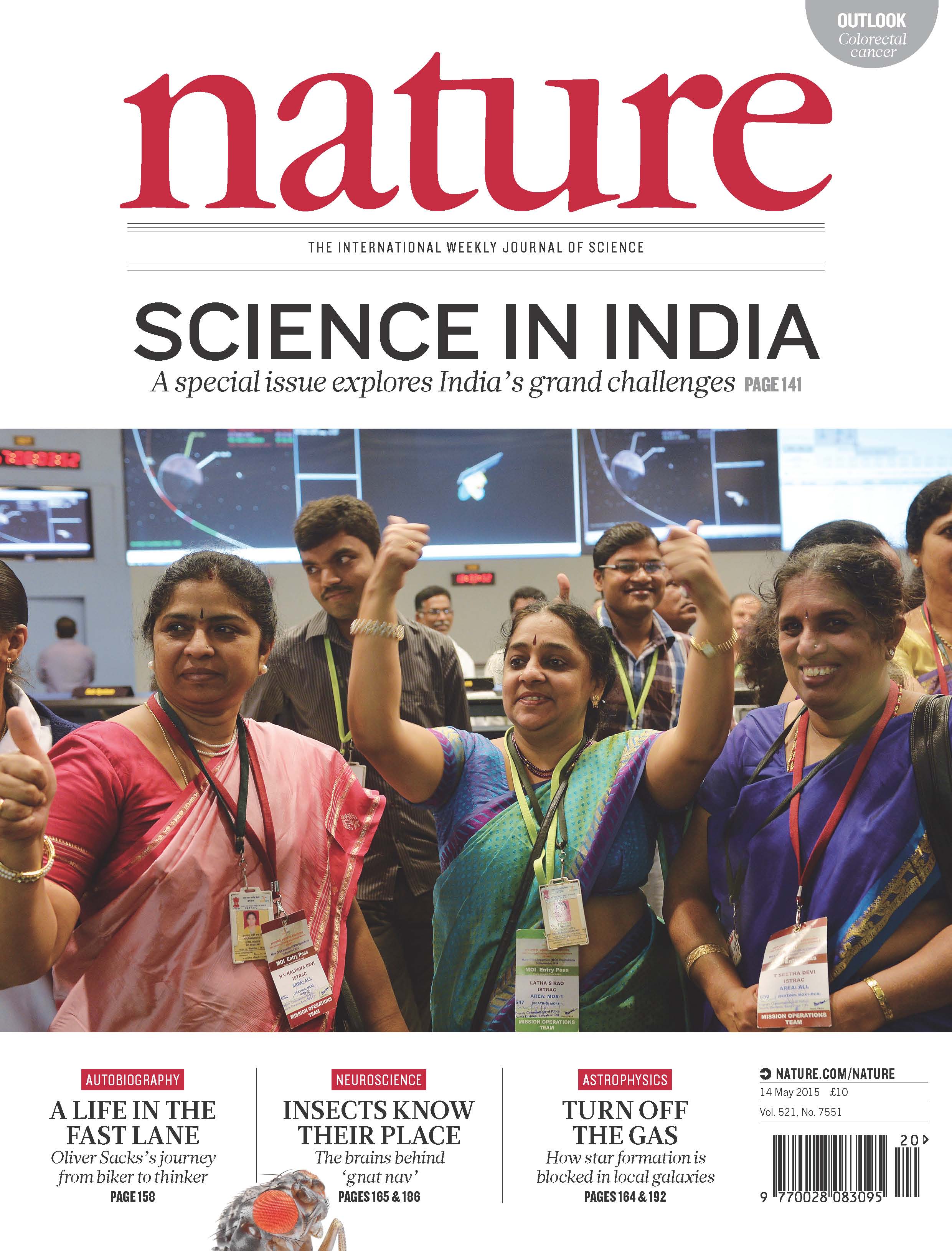
A Nature special issue in 2015 explored some of the unique opportunities - and the unique problems - of working as a scientist in India

A Nature special issue in 2015 explored some of the unique opportunities – and the unique problems – of working as a scientist in India

Continue reading

The way to success in science

Young people working in any variant of science face many challenges. However, some tips can increase your chances of success, says Naturejobs journalism competition winner Sofia Otero

A degree in science is just one stepping stone on a long path with varied exits, curves and about-turns. Choosing wisely is not always an easy task, but there’s no right way to success: there’s a whole lot out there to choose from.

pathway-1081989_1920

At the London Naturejobs career expo on September 16th, there was a lot of talk on how to succeed in science, and an interview with the editor-in-chief of Nature, Sir Philip Campbell. Some tips came up repeatedly and are worth listing. Continue reading

Why don’t scientists always share their data?

Reproducibility is the cornerstone of science, and it can be compromised by insufficient data in peer-reviewed publications. Should scientists reveal everything?

Publishing Better Science through Better Data writing competition winner Emma Vander Ende.

One of the foundations of science is its reproducibility. Without it, results are not verifiable and are therefore not believable. But even if a published result is true, there is a chance it might not be reproducible, which introduces a plethora of problems for science.

Irreproducible experiments severely limit the ability of the scientific community to build on results and advance the field. This can happen when scientists don’t share enough data, or details of their experiments in papers, and it happens quite frequently.

So why might a scientist not share their data?

drugs

{credit}Comstock/Thinkstock{/credit}

Continue reading

Eight things that are more important for success than intelligence

This week: a quick infographic explains why emotional intelligence is so important.

Continue reading

Bridging science and real world impact with confidence

What does it take for someone in science to make a difference in the world? We often seek success and validation through the rigour of our research and studies, but the key may be in our attitude.

Naturejobs career expo journalism competition winner Diane N.H. Kim

Confidence is not something we normally associate with science. In this field, grounded in facts and far from emotions, it’s no wonder we have trouble seeing how our attitudes affect our success. A confident attitude is considered much more important for an actress on the red carpet, or a politician delivering a speech. Scientists are still largely portrayed and perceived as solitary individuals with passive personalities, spurred by a media portrayal of a lone scientist in their basement lab.DK_profilepicture Continue reading

Careers in science: Celebrate the failures

The history and development of science is littered with failures, so early-career researchers should embrace, rather than be afraid of them.

Naturejobs-podcast“Success is advancing from failure to failure without loosing enthusiasm.” – Not said by either Winston Churchill or Abraham Lincoln.

“The things I remember best from college were the questions I got wrong on the exams.” – Kathryn Yatrakis, dean of academic affairs, Columbia College.

These are two of my favourite quotes from Stuart Firestein’s (professor of neuroscience at Columbia University, NY) new book, Failure: Why science is so successful.

Science’s history is littered with failures. Without them, science woudn’t have advanced to the point it’s at today. And yet a negative connotation goes hand-in-hand with it.

In this final Naturejobs podcast of 2015, I speak to Firestein about what failure in science means, what the negative connotations are, why they exist, why they impact young scientists and what they can do to overcome them.

How would you define a successful career in science?

Last week Naturejobs joined more than 100 representatives of funding agencies, research councils, universities and research institutes from across the globe for a workshop on how to track researchers’ careers. The workshop, held in Luxembourg and coordinated by the European Science Foundation (ESF) and Luxembourg’s National Research Fund (FNR), covered a wide range of topics – including how success in a science career should be defined for the purposes of career tracking.

It’s an important issue for both decision makers and scientists to consider because career-tracking studies can be used to judge the impact of funding. And although there have been surprisingly few studies to date – primarily due to running costs – the profile of attendees at the workshop suggests career tracking will play a larger role in funding considerations in the future. So how would you, as a working scientist, define a successful career in science?

Several factors for defining success were put forward by the attendees at the workshop, shown below in no particular order. Please vote for your top three in our poll, and let us know what you think of the suggestions by leaving a comment below. What would you prioritise or dismiss? What is missing? And would you agree or disagree that there are a variety of successful careers for researchers, including those outside academia?

The results of the poll and comments posted below will be considered for inclusion in the final report of the ESF-FNR workshop, and may influence future career-tracking studies, so please feel free to make your views known.

Factors for defining success in science careers

  • Generation of new research ideas (original research and methods)
  • Production of research relevant to society
  • The impact of research on society
  • Personal satisfaction/quality of life
  • (International) networking and professional contacts
  • Diversity (including gender)
  • Employment
  • Leadership position
  • Attractiveness to next generations
  • Salary/income (in relation to national system)
  • Independence
  • Flexibility
  • Security
  • Quality of working environment
  • Quality of research infrastructure
  • Publications
  • Awards
  • Funding