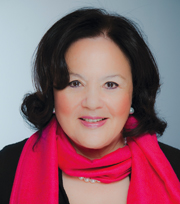
Spotlight on Women in Science with Una Ryan

Una Ryan

Una Ryan

Naturejobs is celebrating Women in Science. Every day this week we’re interviewing an inspirational female scientist. Yesterday, we spoke to Roma Agrawal, structural engineer at WSP.

Today we’re in conversation with Una Ryan, the Chair of the Bay Area Bioeconomy Initiative and an angel investor in the San Francisco Bay Area. I met Una at a SynBioBeta event at Imperial College London in April this year, where she chaired an all-male panel on the venture capital climate in the Bay Area, and how it differs to that in the UK. Una was disappointed that the panel was comprised entirely of men, but noted that unfortunately there aren’t many female biotech venture capital investors to choose from.

This is something that Una is hoping to change. She invests a huge amount of time in young scientists—both male and female—to support them through their careers. I spoke to Una after her panel event to find out about how she became interested in science, and how she is hoping to inspire others.

Continue reading

Using maths and IT to help tackle HIV

Maths and IT play an essential role in most public health campaigns, and offer the chance for mathematicians to use their skills for social good. 


Global health and statistics

{credit}Credit: iStock/Thinkstock{/credit}


Crispin Sapele is Director of Systems and Operations at CHAMP, a not for profit organisation which was set up to respond to the growing need for corporate HIV/AIDS programmes within Zambia. In December 2003 CHAMP set up a dedicated HIV hotline that offers a 24/7, 365 day counseling and information service. At CHAMP, Sapele’s role has been in planning, analyzing and evaluating the impact of such programmes, using his statistical background. Naturejobs spoke to Sapele about why maths is such a vital part of global health campaigns.

How did you get into global health?

I started off studying mathematics at the University of Zambia almost 20 years ago. I actually originally wanted to do engineering but after the first year I met one of the first mathematics professors here in Zambia and got inspired by him to do maths, so I made the switch.  After my degree, which lasted four years, I immediately got a job at the national statistics office (CSO). And with that I got my first taste of managing and running statistical health programmes, such as surveys and censuses.

How did you end up at CHAMP working on HIV prevention programmes? Continue reading