A survey suggests that junior researchers need guidance to properly maximise the value of a recommended training plan.
By Chris Woolston


By Chris Woolston
By David Bogle
You are coming towards the end of your PhD – so what next? There are many options open to you; one obvious one is to apply for a postdoc position. You should think carefully about what you want to do and not just pursue this through inertia. I have supervised many engineering PhDs and some postdocs in my 32 years as an academic. As Head of University College London’s Doctoral School, I oversee the environment and policy for 6000 doctoral candidates and 3200 postdocs.
Many can find good reasons to do a postdoc. {credit} Guy H/ Flickr CC-BY-2.0 {credit}
In a funding pitch, complexity is your enemy — no matter how significant the science
By David Rubenson, Wendie Johnston and Ned Perkins.
Many scientists hope to translate their discoveries into something useful and financially profitable. A biologist, for example, might hope to create a new line of health care products. Many use special grants or family resources to establish small companies. However, given the enormous challenges in the healthcare market, virtually every nascent enterprise needs outside funding; whether from wealthy “angel investors,” venture capital, or investment from large pharmaceutical and device developers. Continue reading
By Jessica Eise
I recently had a phone call with a frustrated colleague looking for some advice. She had two key pressure points, both common in the field of science communication.
First, she often couldn’t make sense of what scientists were telling her. They would explain their advanced, varied concepts increasingly quickly and impatiently as she struggled to understand them. Both parties would leave frustrated, having not achieved much. The scientists might wrongly assume she’s stupid to have not understood.
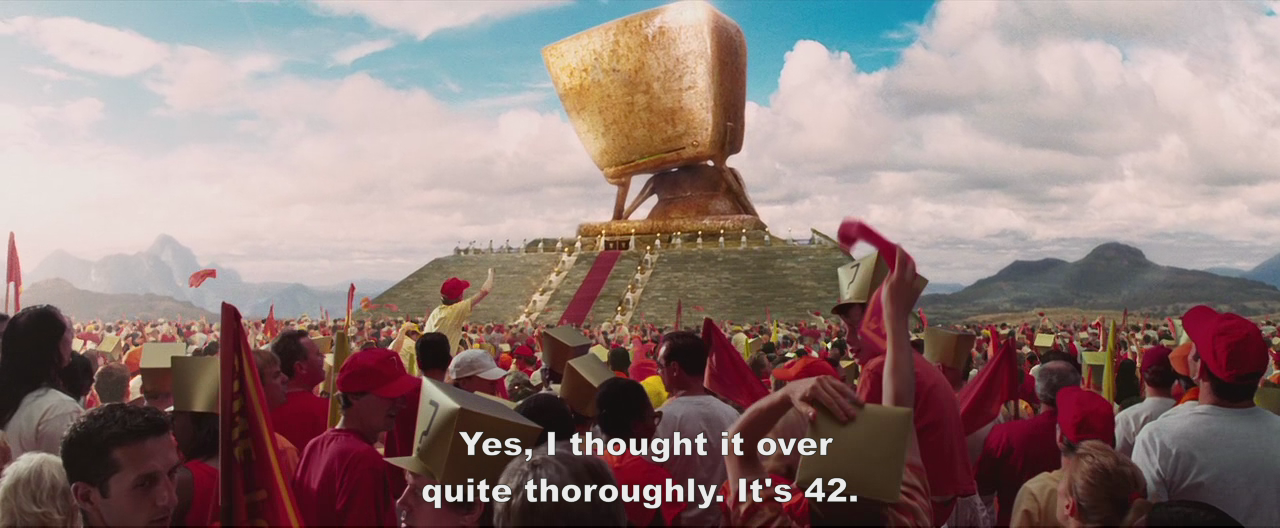
Douglas Adams’ The Hitchhiker’s Guide to the Galaxy asked “What is the answer to life, the universe and everything?” To communicate effectively, scientists should simply ask “So what?”{credit}By IllusionConscious [CC BY-SA 3.0 (https://creativecommons.org/licenses/by-sa/3.0)], from Wikimedia Commons {/credit}
To-do lists work for some, but a more holistic approach to researcher development may bring larger rewards.{credit}By FOTO:Fortepan — ID 2278: Adományozó/Donor: Unknown. [Public domain or Public domain], via Wikimedia Commons{/credit}
Put simply: I did not think about teaching in the lab.
Now, after guidance from recent research on mentoring, I realize that if graduate students like myself were more invested in mentoring, there would be many more small-but-important teaching opportunities.
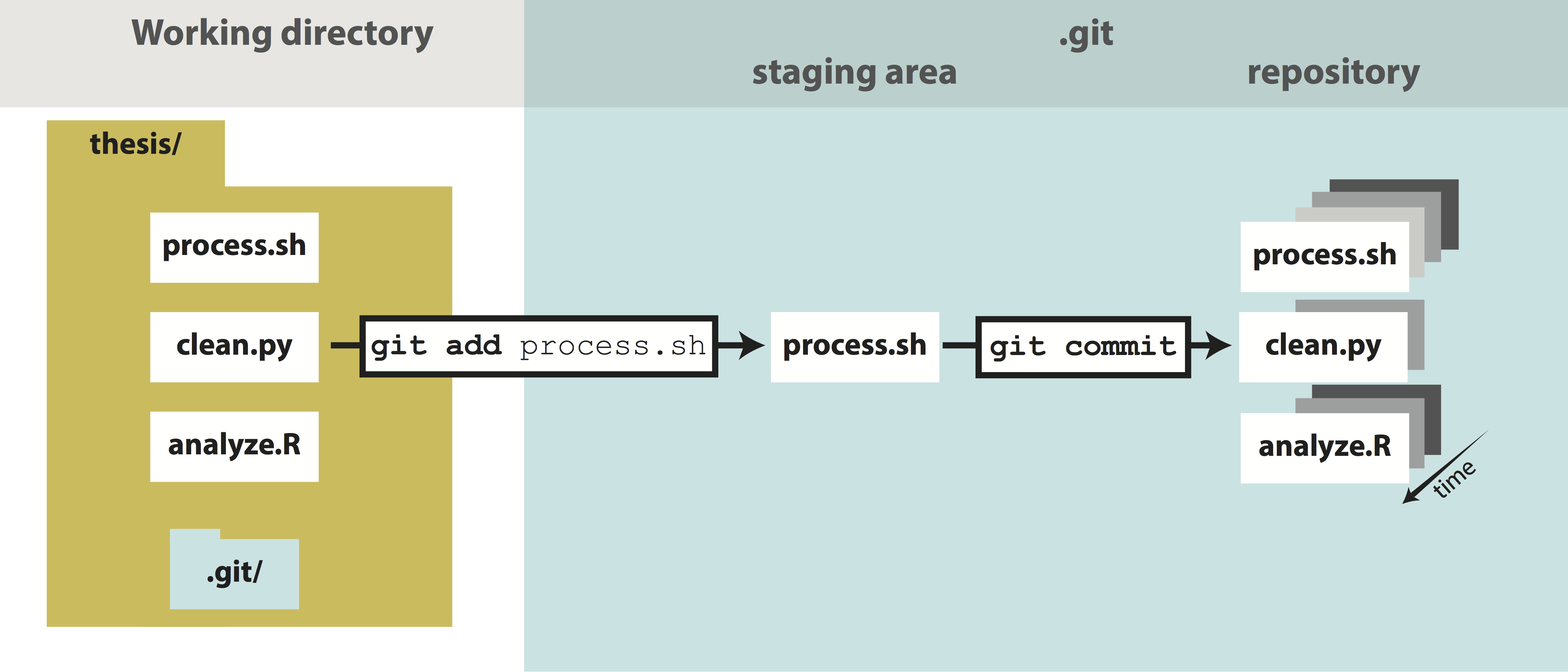
{credit}PLOS Comput Biol, 12, e1004668 (2016){/credit}
Early in his graduate career, John Blischak found himself creating figures for his advisor’s grant application.
Blischak was using the programming language R to generate the figures, and as he iterated and optimized his code, he ran into a familiar problem: Determined not to lose his work, he gave each new version a different filename — analysis_1, analysis_2, and so on, for instance — but failed to document how they had evolved.
“I had no idea what had changed between them,” says Blischak, who now is a postdoctoral scholar at the University of Chicago. “If the professor were to come back and say, ‘which version did you use to create this figure?’ I would have had no idea.”
Later, while attending a workshop on basic research computing skills, he discovered a better approach: Git.

{credit}Image credit: Getty Images/Mateusz Zagorski{/credit}
By Chris Woolston
The National Information Standards Organization (NISO), a Baltimore, Maryland-based non-profit that promotes standardization in publishing, has embraced a plan to make it easier for journals to share rejected manuscripts and manuscript reviews without forcing authors to go through another arduous submission process. Continue reading
Let’s face it. Job prospects for PhD candidates and postdoctoral scientists are dismal. In 2012, a study on the biomedical research workforce, conducted by the National Institutes of Health and pictorialized by the American Society for Cell Biology, showed that there is a significant number of biology PhDs in the US who have resorted to doing non-science jobs. Those who stay in science face financial penalties: one 2017 Nature Biotechnology study demonstrated postdocs, on average, forfeit 20% of their earning potential within the first 15 years of completing their PhD program. Continue reading
 In the June 2018 Naturejobs podcast we focus on women in science. Aashima Dogra and Nandita Jayaraj tell Harini Barath about Life of Science, the website they created to celebrate female scientists in India and highlight some of the career barriers they face. Also, stem cell researcher Cristina LoCelso describes the importance of mentoring, hobbies, work-life balance, and strong family networks after becoming the first woman to be awarded the prestigious Foulkes Foundation Medal by the UK Academy of Medical Sciences. And finally, Nana Lee, assistant professor in biochemistry at the University of Toronto, Canada, gives us her three top tips about career transitions between academia and industry, and how best to accommodate family life.

By Chris Woolston
In a 29 May report , Graduate STEM Education for the 20th Century, the National Academies of Science, Engineering and Medicine (NASEM) in Washington DC calls for providing faculty members with incentives for developing skills such as teaching and mentoring while de-emphasizing the importance of publications. The report recommends that institutions change their promotion and tenure policies and practices to recognise and reward faculty members’ contributions to graduate mentoring and education.