A survey suggests that junior researchers need guidance to properly maximise the value of a recommended training plan.
By Chris Woolston


By Chris Woolston
 The Naturejobs team looks at careers in sports science and life as a PhD student in 2017 following publication of Nature’s biennial PhD survey, which sought the views of 5700 students worldwide.
Jenny Kedros, research manager at Shift Learning, the educational research agency that helped analyse the data, talks about the survey’s main findings to chief careers editor David Payne.
You can read about the results in the article Graduate Survey: A love-hurt relationship. The underlying raw data available via this Figshare link.
 Time planning and goal setting can make your work and career planning more efficient, as well as help you prioritise what it is you love to do.
Guest contributor Naoimh O’Connor

{credit}Ratch/Shutterstock{/credit}
It is becoming more and more apparent that having a doctorate and being an expert in your field does not automatically set you on a fixed career path. In fact, devising a focused career strategy is now becoming part of the job of successful researchers.
Many postdocs I work with find that, because of the need to focus on day-to-day activities, there is little time or mental energy to consider the future. So, when it comes to completing the Career Development section of a fellowship application or answering the ‘where do you see yourself in five years?’ question at an interview, they feel unprepared and uninspired.
One of the workshops I facilitate is called ‘Creating a Job-seeking Strategy for Researchers’. In it I recommend a three-step process for beginning to structure your career-plan. It’s not so different to a research project in that it involves your imagination, collecting and analyzing facts, and then creating a timeline with short and long-term goals. The earlier you start, the more comfortable the process will be for you, but even if you only have a few months left, this model helps put you more in control. Continue reading
Contributor Prital Patel
{credit}Image credit: Shawna Lu{/credit}
As exciting as it is to see a sliver of light at the end of the tunnel, for me the future after my medical biophysics PhD is still an apprehensive unknown. Despite having spent over half a decade specializing in an infinitesimal aspect within the grand scope of science, in some ways, I do feel that the range of options of what I can pursue, be it entrepreneurship, academic science or law, are as open to me as they were before I started picking classes at 16. What I have repeatedly learnt from attending career talks is that a PhD arms you with a number of transferable skills that make you amenable to many jobs and job settings. This then begs the question: How can PhDs or postdocs be more strategic about their job search?
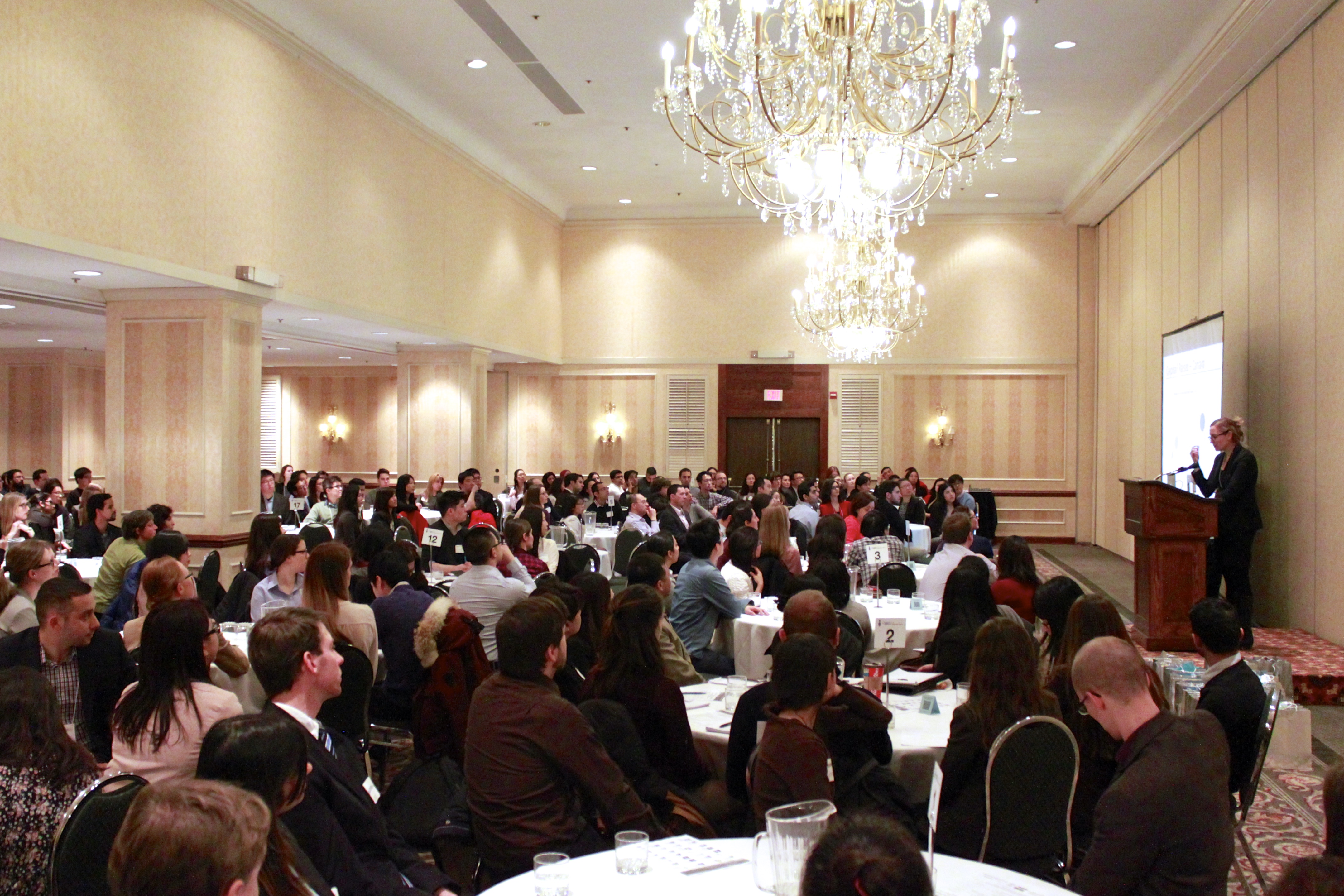
In February this year I co-chaired the 11th annual networking reception for the Life Sciences Career Development Society (LSCDS) at the University of Toronto. I invited Lauren Celano from Propel Careers to give a keynote speech on the job market and strategies for successful job searches (she also gave a great talk about informational interviewing). Although the scope of the talk centred on life sciences, many of the strategies discussed can be extrapolated to other fields of expertise.
A strategic job search requires an amalgamation of self-reflection, proactive skill building, research of job markets and organizations, and setting goals. Celano pointed out that PhDs have a whole ecosystem of companies in which they can secure employment, including companies of different sizes that they can work for (global, local, large, medium, and small) and different types of companies (biotechnology, venture capital, law firms, marketing and communications etc.). Celano articulated some useful strategies for making informed decisions in a job search. I found them particularly helpful, so I wanted to share them with you. Continue reading