Research 2.0.1: The future of research funding

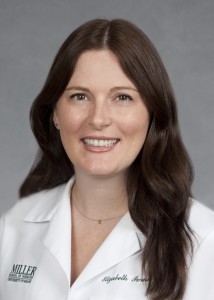
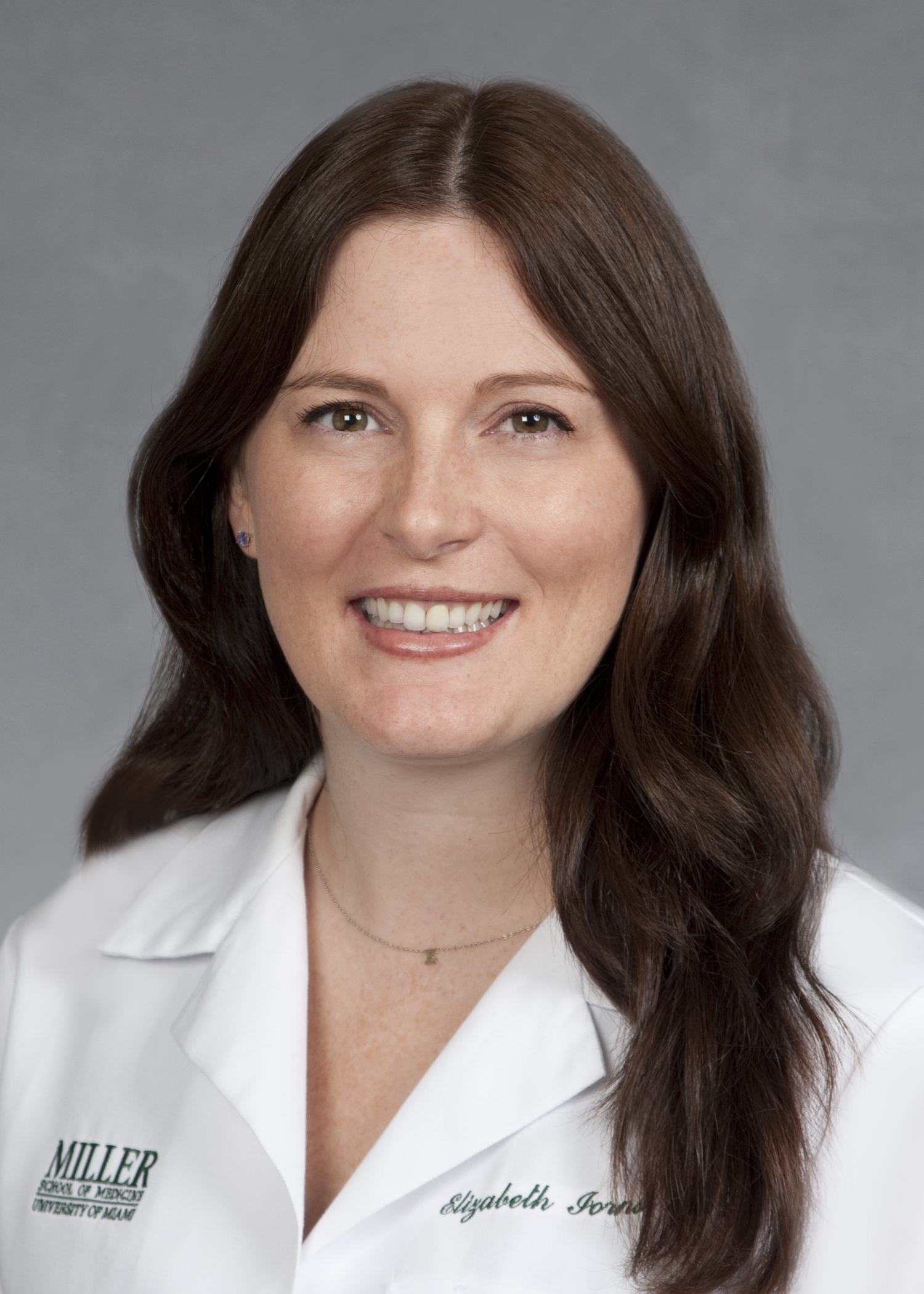
Elizabeth Iorns headshot (portrait)
Elizabeth Iorns is
 a breast cancer scientist and the Co-Founder & CEO of Science Exchange, an online marketplace for science experiments. 

This week Elizabeth is hosting a three part series all about the research cycle. Do share your thoughts in the comment thread.

Just as they have transformed many societal domains, digital tools are having a profound impact on the scientific process. As the co-founder and CEO of a company (Science Exchange) that is based on using digital tools to improve science, I am investing my livelihood and my passion in the belief that the next five years will see an unprecedented amount of change in the research landscape as the technology that connects and empowers scientists improves and as research institutions more fully embrace these digital advances.

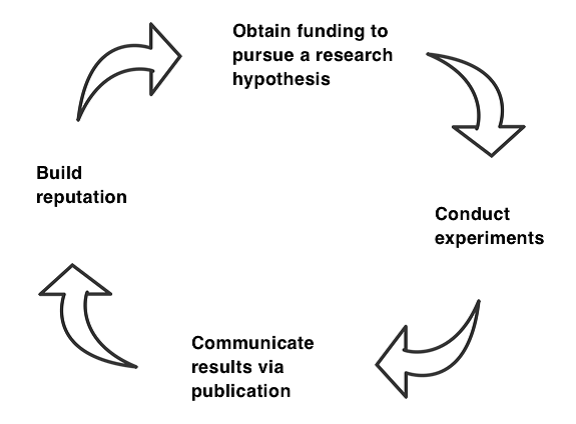
aThe modern scientific enterprise is a cyclical process. In most cases, it begins with a scientist obtaining funding to pursue a particular hypothesis – i.e., a grant, often from the federal government or a research foundation. The scientist then conducts the necessary observations, experiments or theoretical calculations, either directly or with the help of other scientists, technicians or clinicians. Once the scientist has completed a body of work that represents a novel finding, the results are communicated to the broader scientific community through conference presentations and journal publications, and in some cases to the general public through mainstream media. Scientists are mainly evaluated on the basis of the quality and quantity of publications they author; in particular, their publication record determines whether they will be funded to conduct further research. Continue reading

Scientific publishing 2.0: moving the compute to the data rather than moving the data to the computers

Adrian Giordani has a Masters in Science Communication from Imperial College London, where he was also the Editor-in-Chief of I, Science magazine. He was a science journalist and Interim Editor-in-Chief at CERN, Geneva, Switzerland. The publication he worked for, International Science Grid This Week, covers news about science and computing in Europe, the US and Asia Pacific regions. Adrian writes about technology such as supercomputing, grid computing, cloud computing, volunteer computing, networks, big data, software and the science it enables. You can follow him on Twitter.

Today, data-intensive science turns raw data into information and then knowledge. This represents the vision of the late and influential computer scientist, Jim Gray, who divided the evolution of science into four paradigms. One thousand years ago, science was experimental in nature, a few hundred years ago it became theoretical, a few decades ago it moved to a computational discipline, and today it’s data driven. Researchers are reliant on e-science tools to enable collaboration, federation, analysis, and exploration to address the data deluge, currently equal to about 1.2 zettabytes each year. If 11 ounces of coffee equalled one gigabyte, a zettabyte would be the same volume as the Great Wall of China.

So much data is produced that the journal Neuroscience stopped accepting supplementary files along with research manuscripts to enable them to better handle the peer review process. In an attempt to address the challenges presented by so much data, some are combing software, databases and infrastructures to transform the way scientific publishing is done, which has been little changed for centuries. Continue reading

Test, learn, adapt – a scientific approach to public policy

Dr. Prateek Buch is a research scientist and public engagement professional working to involve patients and the public in a world-leading research programme to develop gene and cell therapies for vision loss. Prateek is also a Liberal Democrat, the acting Director of the Social Liberal Forum (socialliberal.net), and is on the executive of Science is Vital, through which he advocates evidence-based policies and promotes the importance of science in public policy. He tweets @prateekbuch and blogs (occasionally) about science and politics at teekblog.blogspot.com

Most people are in favour of evidence-based policy. Or, to put it another way, very few people advocating or implementing public policy would admit to being in favour of evidence-free policy based on mere guesswork, hunches and ideology. So if evidence-based policy is what we want, and we want it now (there’s the beginnings of a campaign slogan in there somewhere), what’s the best way to make it happen? According to a Cabinet Office paper by Laura Haynes and Owain Service of the Behavioural Insights team, co-authored by Dr. Ben Goldacre and Prof David Torgerson, the best way is to conduct randomised controlled trials (RCTs) that pitch interventions against current best practice. Continue reading

Points of Science: A Cultural Proposal

Joshua Fouts is an anthropologist, photographer and writer whose work chronicles the cultural intersections of science, technology and art. He is the creator of “Points of Science,” a global initiative to make science education accessible to all, and executive director of Science House Foundation, an international New York City-based NGO that seeks to spark the imaginations of kids worldwide to the excitement of science and cultural collaboration. You can follow Joshua on Twitter @josholalia.

Late this May I found myself sitting on a corrugated metal bench in an aluminum skiff, traveling up the river Amônia in the middle of the Amazon forest. I was in Brazil’s state of Acre on a trip to deliver microscopes to a group of indigenous people called the Ashaninka. Already, I could tell that the journey would be equal parts brutal and inspiring. Continue reading

Science Mentoring: Journal of Emerging Investigators

The latest Soapbox Science mini-series focuses on the role of mentors in science. Tying in with this year’s Lindau Nobel Laureate meeting, where almost 600 young scientists have the opportunity to meet each other and 25 Nobel laureates, we’ll be looking at the importance of supportive relationships and role models. We’ll hear from a mix of mentors, mentees and projects set up to support scientists and we aim to explore not just the positive examples of good mentoring but what can happen when these key relationships are absent or break down. For more discussions around this year’s Lindau meeting, check out the Lindau Nobel Community site.

Sarah Fankhauser officially began her scientific career when she majored in biology at Georgia Tech.  While at Georgia Tech, she had the opportunity to work in a microbiology lab and completed her senior thesis on the chemotaxis system of the bacterium Bacillus subtilis.  After graduating with a BSc in 2007 she began her PhD.  work at Harvard Medical School studying the immune response to bacterial pathogens. While at Harvard, Sarah has taught a range of students, from graduate and medical students to middle and high school students, about a variety of scientific subjects.  In 2011 she founded the Journal of Emerging Investigators, a science journal dedicated to publishing the research performed by middle and high school students.  Sarah is passionate about science teaching and engaging more researchers in the classroom and she plans to teach at college or high school level.   Continue reading

A New Era of Science Funding – Part 3: Crowdfunding via Petridish

Over the years science funding has changed significantly. In the past, funding would have been obtained through private benefaction from wealthy individuals. Today, researchers are usually funded by a mixture of grants from government agencies, non-profit foundations and institutions. However, with the increasing popularity of social media and the internet, methods used to obtain money may be undergoing a shift. New routes linking funding sources with scientists are being increasingly explored. Tighter budgets and struggling economies are driving a need for new ways of funding and social media is proving to be invaluable in raising awareness of projects and linking like-minded people more effectively.

In this special Soapbox Science series, we focus on the new ways in which science groups and individuals are obtaining funding and how projects such as Tekla LabsKickstarter and the #scifundchallenge may change the future of scientific research.

In this post we will hear from three different groups who are using a new website, Petridish.org, to help fund their research. 

Geoff Gallice grew up in the suburbs of Baltimore, where he spent every available minute searching nearby fields and small forest patches for insects. At the University of Maryland, he quickly chose biology as his major and since making his first trip to the tropics during his third year, he has been unequivocally devoted to tropical ecology and conservation. He is currently a graduate student at the University of Florida’s McGuire Center.

After watching a documentary about the Amazon when I was child, I wanted desperately to visit. I finally got my chance just a few years ago, and the rainforest that I encountered both met and exceeded all of my expectations – I decided right then and there, without vacillation, that I would study tropical biology. Today, I am a graduate student at the University of Florida’s McGuire Center for Lepidoptera and Biodiversity, a leading center for tropical Lepidoptera research. I’m interested primarily in the large scale relationship between species abundance and distribution, as well as its underlying causes, using Neotropical butterflies as a model system.

A clearwing butterfly, Ithomia salapia, from Moyobamba, Peru

I’m planning a trip to Peru beginning in late 2012, where I will gather butterfly abundance and other ecological information to test this relationship, as well as potential underlying causes, including breadth of host-plant use. I’ve prepared thoroughly for the trip, first by conducting a similar brief project in Ecuador for my Master’s, and currently by teaching myself everything I can about ithomiine host-plants. I feel very well-equipped to see the project through – the only gaping hole in my plan at this moment is funding, and securing the relatively small amount of cash that I need to conduct my field study in Peru has indeed been a struggle.

Peruvian rainforest, Cordillera Escalera, near Tarapoto

Apart from a few comparatively well-studied groups, even the basic biology of nearly every species of tropical plant and animal remains almost completely unknown. Certainly a large number of causes are to blame for this situation, but two in particular stand out. First, most of the world’s biologists are trained, and therefore conduct research close to home in the temperate regions of Western Europe and North America. Second, and perhaps more importantly, there is an abysmal lack of funding for research in the tropics. But a ground-breaking new website, Petridish.org, aims to change that. The folks at Petridish recently launched their first round of projects and anyone is free to donate to a project that they wish to see completed.

This crowdfunding approach accomplishes two things simultaneously. It helps scientists raise funds by tapping a previously neglected resource, the interested public, while engaging said public in science from its incipient stage. Given both the scarcity of science funding and an alarming disconnect between science and the general public, the application of crowdfunding to science is a welcomed new approach. I’m excited to be part of the initial launch of Petridish.org, and not just because I envision a real chance to raise the funds needed for my research. I simply love the crowdfunding model and I hope to see Petridish usher in a new era of funding for tropical biology, and indeed science in general.

Credit: Marcelo Rotundo.

Morgan Gustison is a doctoral graduate student in the Psychology Department at the University of Michigan – Ann Arbor. She is a member of the University of Michigan Gelada Research Project, a team of researchers who have studied the behavior and biology of Ethiopian gelada monkeys in the Simien Mountains since 2005. Morgan studies the complexity of gelada monkey vocal communication.

There are two common questions I get when telling my friends, family and new acquaintances about what I do for a living. The first is, “Wait… why would you willingly go back to school for 5-7 years in order to study monkey behavior?” The second is, “Do you actually get paid for that?

“Wait… why would you willingly go back to school for 5-7 years in order to study monkey behavior?”

It’s always fun to answer the first question – I start by reliving some of my experiences as a cage-cleaner at the  Wisconsin Primate Research Center. At first, the rhesus macaques gave me lots of dirty looks, just as they would any newbie. After working there for several months, however, I began noticing a shift in their behavior – they started grooming each other. One monkey would sprawl out like a dog wanting a belly scratch and its partner would furiously weave through his or her hair to find items that only they can see. This affiliative social behavior was endearing and their trust in one another eerily ‘human-like’. I wondered whether primate behavior was like this in the wild. So, I sought out a series of experiences to learn more about naturalistic primate behavior, including following around owl monkeys in Formosa, Argentina.

Credit: Clay Wilton

Being a ‘field’ researcher is rewarding. We collect data on events that no one else is ever likely to see, like the hostile reactions of a family group to another family group on territory boundaries (think of the Jets and the Sharks from West Side Story), or the sexy calls of a solitary animal to locate potential mates. After observing our non-human primate relatives in the wild, it’s extremely difficult not to be hooked on wanting to know more about their similarities and differences with humans.  For instance, humans have language at our our disposal, but what about our primate relatives? This is the question driving my current research directions. Perhaps surprisingly, the wealth of research on primate communication suggests that overall, non-human primates have relatively simple ways of communicating vocally – using small repertoires of sounds and rarely combining these sounds into complex sequences. Preliminary observations and analysis carried out by my academic supervisor at the University of Michigan, Dr. Thore Bergman, collaborator Dr. Aliza le Roux and I suggest that gelada monkeys are one of the rare species that produce a large repertoire of vocalizations and express the special ability to combine these vocalizations. Gelada monkeys, a primate endemic to the highlands of Ethiopia, are particularly interesting because they  produce and combine together several unique vocalizations that do not have homologous versions produced by closely related monkey species.

“Do you actually get paid for that?”

To answer this question, I explain that funding for research comes from two sides: the first side is to cover your living expenses, or salary, and the second is to cover the research itself. Both types of funding have their own unique challenges to a budding scientist in the world of primate behaviour. Main sources of funding for U.S. graduate students to carry out research on primate behavior come from dissertation grants from the National Science Foundation, Fulbright, and the Leakey Foundation. As with most funding sources, these organizations were hit hard by the recession. With no choice but to restrict budgets, this means that researchers have to “apply for anything and everything” with the hope that at least 10% of their grant applications will succeed in the heightened competition from their peers’ applications. In a sense, the scene is becoming much more like individual-biased sport, with a greater and greater weaning of athlete scientists from the arena over time. Yet, science isn’t an individualistic sport, right? Shouldn’t we be working together as a team to enhance our understanding of the natural world?

This funding competition is what has driven some researchers to locate novel ways to fund their work. Recently, I have run into an idea called ‘crowdfunding’ – this basically means that you seek out sponsorship from the public. I just began advertising my proposed gelada monkey communication research on a newly launched crowdfunding website called Petridish.org.  Several of my colleagues and I are excited about Petridish because its benefits are two-fold. Not only is it a potential source for funding for projects that would be unaffordable otherwise, we also have the opportunity to interact directly with the public. This ‘outreach’ phase in science often happens after your projects are said and done, and Petridish gives us the chance to excite people one-on-one about our research right at the very beginning. It’s great that people can now be a part of scientific discovery from start to finish.

Already, 42 people have decided to back my project and I have reached 50% of my funding goal. There are still 4 weeks to go before my time is up and I leave for a 2-month field season in Ethiopia (to be followed by another 4-5 months next January). Seeing the enthusiasm from my backers on Petridish has only boosted my excitement about my upcoming fieldwork. It’s comforting to know that several people will be looking forward to email updates on the project when I am in the field and when I am back in the USA analyzing my data. I hope that this website is a success so that it can be a resource for future scientists to interact with the public and find support for their research. I encourage readers to check out the website and spread the news to friends and colleagues.

Often found hip-deep in Madagascar mud, Dr. Brian Fisher is a modern day explorer who has devoted his life to the study and conservation of ants and biodiversity around the world. He is Curator of Entomology at CAS and adjunct professor at UCB and SFSU.  He created the annual Ant Course in 2001, AntWeb in 2002, and the Madagascar Biodiversity Center in 2004. He has published over 90 articles on ants, and trains dozens of international graduate students in the taxonomy and natural history of ants, skills enabling them to use ants as an important indicator of biodiversity across the globe.

In the past, scientists could depend on just a few government sources such as NSF or NIH to support our programs. But as funding opportunities there have decreased, we have had no option but to develop alternative sources to keep our research programs moving forward as we wait for the next NSF grant. One way to deal with the current funding environment in science is to act more like an entrepreneur and cultivate a portfolio of investors to support research programs. Because I am often locked up in my office looking at ants, it was not apparent how I could meet potential donors. A recently launched site, Petridish, provides just the service I’d been looking for. It matches research ideas with interested members of the public willing to invest in projects.  Crowdsourcing, as such matchmaking services are called, could help locate patrons to support science activities. If the Medicis, who helped support Leonardo da Vinci, represent the patronage of the 1%, Petridish offers patronage to the 99%. When I first learned about Petridish, I realized this concept could be very helpful to those studying primates or maybe elephants. I was less certain the average person would be interested in supporting my research into organisms which most people consider “invisible” or see only as a kitchen pest.

Monormorium worker ant caring brood. Photo credit Brian L Fisher

My research on ant taxonomy and evolution starts with very simple question: what species exist and where? My goal is to place ants on equal footing with birds in ecological and conservation studies across the world. With only an estimated 15% of life  on Earth described, it’s clear that we need a renewed investment in species discovery and description to reach this vision. Convincing the general public to support this research is quite different than writing a proposal to colleagues at NSF. The challenge is to find a way to make them investment partners in the research. Some might be convinced once they realize that ants are the glue that holds ecosystems together. Others might care because species discovery improves our understanding of the history and evolution of life on this planet. Still others may be moved by the adventure of discovery (if you have any doubt that species discovery is one of the greatest adventures left on earth, check out these photos and images of Madagascar after cyclone Irina hit the island in early March of this year).

I recently gave Petridish.org a try and put together a request for backers for an expedition to discover new ant species in a remote region of Madagascar. The project is now almost completely funded and demonstrates that crowdsourcing has real potential to support my research program. For an NSF grant, we are used to devoting three weeks of writing aimed at other experts in the field to prepare the proposal. With crowdsourcing, we need to get used to developing text and video aimed at a much wider audience.  For me, this was not easy – I needed to figure out how to make a video and create and develop a compelling project description.

At a time when there is growing public concern about the role and importance of basic science, we need scientists who can also act as advocates. No longer can we afford to work in isolation without engaging the broader public in our endeavors. The public must understand the importance of funding science and the role of science in society.  Crowdsourcing, in addition to funding science, offers a great way for scientists to connect directly with the public. In the long run, methods that invite the community to take part will hopefully help to keep science funded.

To find out more about science funding you can read this special Nature News feature,  Finding philanthropy: Like it? Pay for it.

A New Era of Science Funding – Part 2: Kickstarter Success and #IamScience

Over the years science funding has changed significantly. In the past, funding would have been obtained through private benefaction from wealthy individuals. Today, researchers are usually funded by a mixture of grants from government agencies, non-profit foundations and institutions. However, with the increasing popularity of social media and the internet, methods used to obtain money may be undergoing a shift. New routes linking funding sources with scientists are being increasingly explored. Tighter budgets and struggling economies are driving a need for new ways of funding and social media is proving to be invaluable in raising awareness of projects and linking like-minded people more effectively.

In this special Soapbox Science series, we focus on the new ways in which science groups and individuals are obtaining funding and how projects such as Petridish, Tekla LabsKickstarter and the #scifundchallenge may change the future of scientific research.

Jessica Morrison earned her B.S. in geology from Middle Tennessee State University, and she is currently an actinide geochemistry Ph.D. candidate at the University of Notre Dame. She is a frequent contributor to the Scientific American guest blog, an editorial board member for Frontiers in Energy Research, and an accomplished Mario Kart player. She blogs with appreciation for creativity, communication, yoga, and uranium at I Heart the Road. Jessica can be found on Google+ and Twitter as @ihearttheroad.

The traditional image of a scientist is changing. No longer will the boring, white-coated stereotype represent a diverse population—at least not if Kevin Zelnio has his way. The independent scientist and communications strategist knows a lot about being non-traditional and since mid-January he’s used the Twitter hashtag #IamScience to spread the word that those who struggle are not alone; like wildfire, #IamScience jumped from Twitter to blogs to Tumblr.

The next step for Zelnio is a free e-book curating the stories—an endeavor he’ll pay for using Kickstarter, the largest online crowdfunding tool for creative projects.

Kickstarter has been around since 2008 and it works like this: an idea is born, a proposal is written and, with any luck, generous backers contribute to fund the idea. Kickstarter campaigns, however, are all or nothing, which means that a funding goal must be met by the proposed deadline or the project loses all backing. These campaigns are typically in the realm of creative endeavor and the most successful have funded a video game, an iPod dock and a webcomic re-print. These projects all have one thing in common: an engaged community of would-be backers.

The #IamScience Kickstarter campaign ends on Thursday and it has already exceeded its goal of $3500 by more than $2000. The campaign couldn’t have come at a better time to pull in community support. It kicked off in the month following ScienceOnline2012 —an un-conference which generated more than 30,000 tweets using the Twitter hashtag #scio12.

“This is a community effort and I’m just the one harnessing the energy,” says Kevin Zelnio. “While I’m the one taking charge of the project, it wouldn’t be anything without the contributions from everyone else involved.”

While the original goal was a free e-book weaving together #IamScience submissions, Kevin Zelnio is now planning a print-run to get books into the hands of high school students. The intention is to inspire them to become more involved in science and to show that anyone can become a scientist, regardless of background.

“There are people in high school who think that a career in science is out of their reach because they are a certain way—a punk rocker getting off drugs or an average person not doing well in a science course,” says Kevin Zelnio. “If you don’t do well in science at the high school level, there’s very little chance you’re going to stay interested or find a renewed interest later on in life.”

In a similar vein  and with like-minded goals to the #IamScience Kickstarter campaign,  another creative science project, Citizen Science Quarterly, also saw success in its launch. Jacob Shiach, a bioinformatics-trained advocate of independent science research, dreamed up Citizen Science Quarterly, a magazine dedicated to spreading the idea that anyone can do science.  He launched a Kickstarter campaign to fund the magazine and the campaign overshot its goal of $2500 by more than $5000—a good thing says Jacob Shiach.

“I grossly underestimated the cost,” says Jacob Shiach. “By having 300 percent, we had just enough money to cover all the prizes and print the magazine.”

Jacob Shiach raises an interesting point about Kickstarter, explaining that one of the ways to attract backers is to offer rewards at specific funding levels. Common rewards include bumper stickers, t-shirts, free products or the backer’s name listed as a sponsor. The rewards can be an expensive part of a Kickstarter campaign if they are not well thought out.

Kevin Zelnio’s top reward for backing #IamScience is a custom written and performed song that he’ll produce himself. Similarly, Jacob Shiach offered an original piece of cover artwork, a year-long subscription to Citizen Science Quarterly, a couple of t-shirts, merit badges and the backer’s name printed on the back cover of the magazine.

“I think a lot of people underestimate the cost of doing Kickstarter,” says Jacob Shiach. “Since it’s all or nothing, you really shouldn’t underestimate your costs.”

The first issue of Citizen Science Quarterly was funded by Kickstarter, but subsequent campaigns for the magazine have been less successful—failing for issues two, three and four. The magazine’s campaign seems to be missing the necessary community component.

“We haven’t really made the magazine as available as we would like. We aren’t doing advertisement and we depend on people to buy the magazine to produce the next issue,” says Jacob Shiach. “To get people excited about the magazine, they have to actually read it. It’s been a catch-22.”

While Jacob Shiach raises concerns about crowdfunding for science endeavors, Kevin Zelnio is hopeful.

“The speed at which crowdfunding works can be astonishing really. Kickstarter is a great model for small-scale science projects, but the problem is finding your audience,” says Kevin Zelnio. “I have the luxury of being a part of the ScienceOnline community. If you can get one or two major donors to bump up your funding it seems to create a pull-effect where the more people donate, more people want to donate.”

You can see some of the #IamScience tweets in the video below:

I Am Science from Mindy Weisberger on Vimeo.

The success of these endeavors is echoed in Kevin Zelnio’s words:

“Magical things can happen when you enthusiastically open your mouth on the internet.”

To find out more about science funding you can read this special Nature News feature,  Finding philanthropy: Like it? Pay for it.
A new era of Science Funding – Part 1: Individual Scientists as Active Global Citizens.

Over the years science funding has changed significantly. In the past, funding would have been obtained through private benefaction from wealthy individuals. Today, researchers are usually funded by a mixture of grants from government agencies, non-profit foundations and institutions. However, with the increasing popularity of social media and the internet, methods used to obtain money may be undergoing a shift. New routes linking funding sources with scientists are being increasingly explored. Tighter budgets and struggling economies are driving a need for new ways of funding and social media is proving to be invaluable in raising awareness of projects and linking like-minded people more effectively.

In this special Soapbox Science series, we focus on the new ways in which science groups and individuals are obtaining funding and how projects such as Petridish, Tekla LabsKickstarter and the #scifundchallenge may change the future of scientific research.

Lina Nilsson is a postdoctoral researcher at the University of California Berkeley, where she works on the development and evaluation of CellScope, a portable smartphone-based microscope that can be used to diagnose infectious diseases in low-resource rural settings worldwide. She is also the co-founder of Tekla Labs, an initiative to increase access to laboratory infrastructure globally. Tekla Labs is a community of researchers that creates easy-to-follow instructions for how to build research-grade laboratory equipment using locally available supplies.

To take part in Tekla Labs’ 3D printing for science competition, visit us at teklalabs.org. General comments, equipment building instructions and ideas for future initiatives are also welcome.

Individual Scientists as Active Global Citizens.

Meeting global challenges in health, environment and development will require breakthroughs from the entire global scientific community, not just a selected set of industrialized countries. Today, the potential of many scientists in developing countries is not being efficiently harnessed because they lack adequate hands-on training as well as the infrastructure to advance research in their own labs. These international capacity-gaps are generally tackled on the level of governments, NGOs and large institutions. In reality, to address the pressing global challenges, we do not have the luxury of time or money to rely solely on these conventional measures for capacity building. I argue here that the scientific community should also step up to address international inequities in science research by engaging individual scientists on a grassroots level. With crowd-based initiatives that allow many individuals to contribute in small and easy ways, scientists can become active members of a global science community.

My organization, Tekla Labs, is one small example of such a grassroots initiative. We provide a community platform where academic researchers, DIY enthusiasts and others can share their detailed in-house solutions to building standard laboratory equipment. These DIY solutions can range from the most basic (e.g. a kitchen blender adapted into a multi-speed benchtop centrifuge) to the more sophisticated (LED-light spectrophotometer). However, Tekla Labs is only one example of how individual researchers can help lift the global scientific research base.  Scientists are a creative and engaged group, and we should create a multitude of infrastructure options to channel some of this energy to support research in emerging-science regions of the world.  To start the dialogue, I propose ideas for three projects with a low energy-barrier for entry that could engage individuals to improve scientific research worldwide:

  • Kickstarter for Science. Online crowdfunding platforms like Kickstarter allow artists to solicit funding from individuals for creative projects in areas such as film and music. What if there was a similarly well-visited and well-supported site for scientific research projects, where researchers worldwide could pitch their research projects, large and small? Instead of having to convince a small set of expert reviewers (who tend to favor established scientists from well-known institutions and generally are limited to in-country solicitations), the proposals would be written to a larger online community of people interested in scientific inquiry. With a ‘Kickstarter for Science,’ individuals – whether academic researchers, company scientists or lay enthusiasts – could pool their donations (in money, expertise or time) to support research projects internationally in areas such as education, health and sustainability. A successful “Kickstarter for Science” could be an easy opportunity for individuals to support fellow researchers globally on specific, defined projects in areas that we care passionately about as scientists.
  • Buy Your Consumables, Sponsor a Lab. What if every time you bought basic supplies, like pipette tips or falcon tubes, a small donation was made by the supply company to a ‘sponsored’ laboratory in a developing country? Last year, Kate Lovero at Tekla Labs ran a small pilot program with the help of the local representative of one of the major laboratory supply companies.  The set up was simple: Based on a given percentage of the value of the purchases from our group of laboratories, the supply company allowed a partner laboratory in Peru to order reagents free of charge. In the U.S., companies that sell lab consumables often offer small incentives for university research groups, such as free coffee, pizza, or ‘buy 10 get 1 free’ promotions.  We get plenty of free pizza opportunities at our university as is, and one could say that we basically replaced the standard incentive system with an international donation program that was based on our purchases. I propose that some version of this sponsorship program should be more widely offered by laboratory supply companies. Many of us are scientists because we want to in some way have positive impact on the world, and this could be one small but easy way to do so as part of the every-day running of our laboratories.
  • PRINTmyLAB: 3D-printing for science. My organization, Tekla Labs, addresses the lack of laboratory infrastructure across the world by creating DIY blueprints for building your own equipment. Other organizations have extensive donation programs for used or new equipment.  For my last project proposal, I give you something more radical: PRINTmyLAB. What basic repairs, supplies and equipment could be made locally using a 3D printer? NASA is exploring 3D printing as a flexible approach for replacing spare parts in space on the principle that if you can simply bring the machine that makes the parts, then you bring all the different replacement parts you could possibly need? Not too long ago, even basic-functionality 3D printers cost tens of thousands of dollars. Today, the cheapest versions are well under $1000, and prices are continually dropping for all model levels. In PRINTmyLAB, a competition that Tekla Labs is currently running, we ask what science supplies could be printed on location in labs around the globe? Until April 30th, we are challenging researchers to submit their favorite 3D printer designs.  There are two categories: 1) alternatives to commercial options and 2) novel DIY designs. To learn more about rules, prizes and to submit designs, go to teklalabs.org/3Dprinting.

This article is a call for individual scientists to become more active global citizens and to work together to improve scientific research and education for all. While for some, this is a calling that defines their career, it does not have to be one’s main focus to be valuable. I want to show here that there are also small yet impactful ways in which we could all contribute to the global science community.  What we are missing are the platforms to enable simple and straightforward scientist-to-scientist sharing of resources, expertise and ideas.

Thanks go out to Tekla Labs’ members Kevin Lance, Kate Lovero, Bertram Koelsch, Javier Rosa, Todd Duncombe and Naomi Kort for their awesome work on Tekla Labs in general and the initiatives ‘PRINTmyLAB’ and ‘Buy Your Consumables, Sponsor a Lab’ in particular.

To find out more about science funding you can read this special Nature News feature,  Finding philanthropy: Like it? Pay for it.
Open Season

Misha Angrist is the author of Here is a Human Being: At the Dawn of Personal Genomics (HarperCollins), now out in paperback. He teaches at Duke University and blogs at blogs.plos.org/genomeboy.

Us…and Them

And after all we’re only ordinary men.

Roger Waters

As a graduate student, I studied the genetics of Hirschsprung disease, a congenital disorder of the nervous system in the gut (and, as I describe in my book, a disease that would affect my own family many years later). Among the things I found to be most gratifying (and yes, occasionally frustrating) in my doctoral studies were the interactions with Hirschsprung patients and families. We students had pledged our fealty to Science writ large, yes, but we weren’t studying roundworms or fruit flies. Our “subjects” (a descriptor of research participants that, in my opinion, is condescending and should be retired ASAP) were thinking feeling human beings. If we found a highly penetrant mutation in their DNA, it had the potential to alter their reproductive decisions and their lives. It meant something to them.

But even if it didn’t, shouldn’t life scientists-in-training, especially those whose model organism is Homo sapiens, have some sort of mandatory exposure to, you know, life? Should there not be some inevitable, meaningful exchange between researcher and researchee?

Increasingly, community members are beginning to assert this right in various ways: Open Science, PatientsLikeMe, the Society for Participatory Medicine and the Sage Bionetworks Commons are just a few manifestations. The recent ScienceOnline meeting, which embodies the same sort of grassroots ethos, is my favorite science gathering for exactly that reason.

But of course participants in these endeavors are self-selected. How do we reify their approaches on a massive scale? Virally spreading the word, certainly. But it will also require bravery and iconoclasm. Recently I read The Cure, Geeta Anand’s heartbreaking 2006 book about John Crowley’s tireless struggle in the early 2000s to get a treatment developed for his kids, two of whom have the devastating lysosomal storage disorder Pompe disease (the book was the basis for the movie Extraordinary Measures). At one point Crowley is trying to impress upon members of the drug development team at Genzyme the urgency of their task. He organizes a “Pompe Summit,” to which the 200 employees working on the disease are invited, as are patients and their families. “How many of you have ever met a patient?” he asks the Genzymers. Only a handful of hands go up. Even the doc leading the company’s Pompe trial had never met a patient.  Imagine an automotive design engineer never having driven a car. Extraordinary measures indeed.

Continue reading

Geology for Global Development

This week’s guest blogger is Joel Gill, Director/Founder of Geology for Global Development. Joel has been studying geology since the age of 14 and collecting rocks since long before that. His enthusiasm for the subject led him to study for an undergraduate degree in Natural Sciences at Cambridge University, specialising in Geological Sciences, and a postgraduate MSc in Engineering Geology at the University of Leeds.

As part of his study Joel undertook fieldwork across the UK, and overseas in Greece and Chile – applying his skills and knowledge to active seismic and volcanic regions, areas affected by modern and historic landslides, and areas with important economic geology. In addition to this Joel has also worked on water projects in East Africa (Tanzania and Uganda), overseeing evaluations of failed shallow wells and surveys for new wells. Since September 2011, Joel has been studying for a PhD within the Environmental Modelling and Monitoring Research Group, in the Department of Geography at King’s College London. His work hopes to reduce the impacts of natural disasters through developing multi-hazard models for small urban areas.

Across the world millions of people are living in severe poverty, without access to any of the basic needs that many of us take for granted – a clean water supply, a reliable food source, safe shelter and suitable infrastructure. This lack of basic needs can also mean communities are particularly vulnerable to devastating natural hazards, such as floods, earthquakes, volcanic eruptions and landslides. Geologists have a crucial role to play in supporting communities to overcome poverty. Their knowledge of subjects from hydrogeology, natural resources, engineering geology and geohazards mean they can make a significant contribution to global and sustainable development.

Though geoscientists possess many important and relevant skills, there are two major gaps which can hinder their engagement in the serious debates surrounding development. Firstly, there are very few cases where students are given the opportunity within their university education to think about issues related to development, such as vulnerability, sustainability, building technical capacity and communication to other cultures. These ‘soft-skills’ are fundamental to effective and long-lasting development. Secondly, there are very few opportunities to gain experience in the sector, working with NGOs in the UK or working overseas with universities, NGOs or governments, undertaking specific geo-related projects and building the technical capacity of local geologists, teachers and students.

Geology for Global Development (GfGD), established in 2011, is working to fill these gaps, with a particular focus on students and recent graduates. GfGD is working to inspire and engage young geologists from all backgrounds, supporting them to think about how they can apply their interdisciplinary knowledge and wide-ranging skills to generate solutions and resources which support NGOs, empower communities and help lift people out of poverty.

Through the establishment of GfGD University Groups, run and developed by student ambassadors, we are starting to outwork our vision and grow our membership. These groups give students of the geosciences and related subjects an opportunity to pursue and outwork their interest in development, through seminars, discussion groups, advocacy, fundraising, writing for our blog and getting involved in our national work. Our national work currently involves an advocacy programme, writing resources to support NGOs requiring some geological support, developing resources to support members thinking about relevant MSc courses and placements, and fundraising. We have exciting plans for the future which include fieldwork grants, supporting capacity-building work in developing countries, a GfGD conference for our members, and UK/Overseas placements to give members on the ground experience and skill development.

As Director of GfGD, I am tremendously excited by the enthusiastic response from geologists, and their willingness of those beginning their careers to use their skills to benefit society, fight poverty and improve the lives of many people for the better.

Local Tanzanian water engineer, working with the local community, to survey for water in Tanzania © Geology for Global Development 2011

When I visited Tanzania I saw the impacts on communities that are forced to walk several kilometres for a glass of clean water. I saw the impacts on communities whose hopes were raised as a well was dug – only to find it stopped working soon afterwards because of a lack of good geoscience knowledge and poor community engagement. I also saw the joy that a sustainable water supply brought, built with a thorough understanding of the local groundwater conditions and appropriate community involvement.

Through inspiring and engaging students in the UK with a deeper understanding of the applications of their work to fighting poverty, it is this latter scenario that we believe we can see replicated and become the norm. It is our long term aim to develop a generation of geologists recognised across many sectors for their role in improving the lives of communities across the world.

Young children in Tanzania, appreciating their newly repaired water supply © Geology for Global Development 2011

If you would like more information about Geology for Global Development, then please do get in touch through our website – www.gfgd.org – and you can also find us on Facebook.