Mobility: US VISA Options

Exemptions in the USA visa system make it easier for mobile scientists looking for work in the USA.

Contributor Susan Gelman

naturejobs-blog-visaThe H1-B is one of the least complicated visas one can have to work in the U.S. It is ubiquitous and fairly easily attainable for employees doing specialized work, at least at academic institutions.

Unfortunately, they are in high demand and granted in limited quantities in the corporate world. Each year, only 85,000 H1-B visas are allotted. By the first fiscal week of 2015, the U.S. government had received 230,000 petitions.

Fortunately there are loopholes (officially known as exemptions) to circumvent the quota, and an extremely important one is the academic exemption. This allows industry employers and universities to collaborate. Here the university can nominally hire an employee for part-time work, and the industry employer files for the visa. Some Boston-based universities are beginning to explore this option by renting out science centres for profit and in return allowing employers to piggyback off of university visa capabilities; other states are in the process of proposing similar models. Immigration attorney Richard Iandoli, who led the workshop, emphasized that while immigration policies are in desperate need of updating, these loopholes can be extremely useful. “The exemptions aren’t big enough, but they are significant enough.” Continue reading

Science communication: Let me explain

Science communication is everywhere; gone are the days where scientists could remain solely in the ivory tower.

Contributor Susan Gelman

scicomm-panel-NJCE15-gary-mcdowell

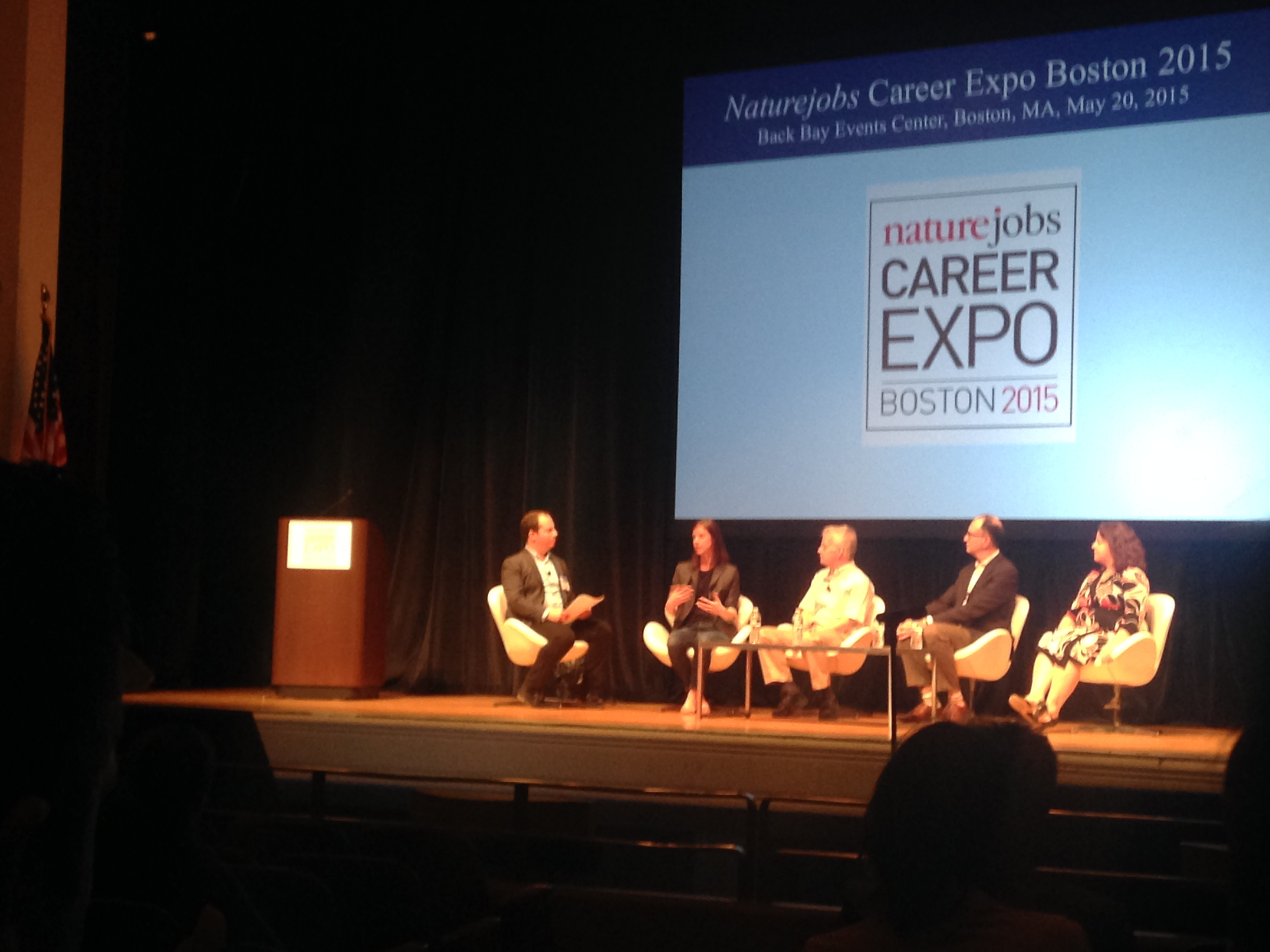
From L-R: Seth Fletcher (chair), Alyson Kenward, Don Monroe, Wade Roush and Bethany Halford{credit}Image credit: Gary McDowell (@biophysicalfrog){/credit}

Listening in on a panel of highly accomplished science writers, I was hoping to hear some golden words of wisdom that would somehow crack open the secret doors to science communication. One of the problems is that science communication can be nebulous and many PhD and post-doctoral fellows are left unsure how to parlay research training into a communication career. It is becoming increasingly apparent that there is no magic answer and science communication remains as vague as ever. But luckily the lack of definition is a disguised benefit, which allows for a great deal of flexibility in the field.

Scientific American senior editor Seth Fletcher moderated the panel. Panelists included Wade Roush (acting director of the Knight Science Journalism Fellowship), Alyson Kenward (research director at Climate Central), Don Monroe (freelance science and tech writer), and Beth Halford (senior editor at Chemical Engineering News). The panelists touched on options in communication such as technical writing, writing for a science audience, writing for the general public, and opportunities for working on infographics and videos. Yet despite the many possibilities classified under science communication, Kenward was careful to draw distinctions. “All science journalism is communication, but not all communication is journalism.” Continue reading

Work/life balance: New definitions

The scientific culture needs to redefine work/life balance so that each person can find their own route to it, says Susan Gelman.

Contributor Susan Gelman

Which way now?

Find your own way {credit}iStockphoto/Thinkstock{/credit}

Research science is an incentive-based career: journal publications, tenure, grant funding, fellowships, awards, etc. It is certainly not unique in this aspect, but its extreme competition does set it apart. When you commit to a research path you are not only committing to become proficient in a general subject area, but to become one of the most knowledgeable people in the world on a very specific topic, creating an environment of extreme pressure and induce tunnel vision. And so, there are many fears and anxieties that go hand-in-hand with being a scientist, including  getting ‘scooped,’ becoming the 8th year Ph.D. student, doing multi-year projects producing no valuable data. So as tempting as it can be to take a weekend off or leave the lab while it’s still light outside, we often remain in our windowless workspaces late into the night out of guilt. We worry that a scientific career won’t wait for us.

However a major problem is that science culture not only expects but also celebrates the dedicated lab rats. Many of us are secretly in awe of their work ethic, even if we don’t necessarily want it for ourselves. We hear whispers of legends renowned for spending 80 hours a week buried in the lab and wonder if we should be doing the same. And therein lies the rub: we can’t cry out for work/life balance and yet still yearn to be the ones always burning the midnight oil. Continue reading