 What do your heart and gut have in common? More than you might think. A new study by Gregor Andelfinger and colleagues has found that a single gene, SGOL1 (Shugoshin-like 1), is required for the normal rhythms of both the heart and intestine.
The study’s co-authors found 17 patients with dysrhythmias of both the heart and intestine, termed sick sinus syndrome (SSS) and Chronic intestinal pseudo-obstruction (CIPO), respectively. SSS is a term for a type of cardiac arrhythmia. Though it’s very rare in children or young adults, it is more common in the elderly and generally requires the patient to have a pacemaker implanted. CIPO occurs when the intestines stop their usual rhythmic pulses, and food can no longer pass through the digestive tract on its own. Both conditions are extremely rare as inherited disorders, so finding both disorders in these 17 patients was a truly remarkable discovery.
All affected patients in the study shared the same homozygous variant, which resulted in changing a lysine to a glutamic acid at a conserved residue. The new syndrome was named Chronic Atrial and Intestinal Dysrhythmia (CAID).
We asked one of the study’s lead authors, Gregor Andelfinger at Sainte-Justine University Hospital Research Center in Montreal, to tell us a little more about the work:
How did you become involved in studying CAID?
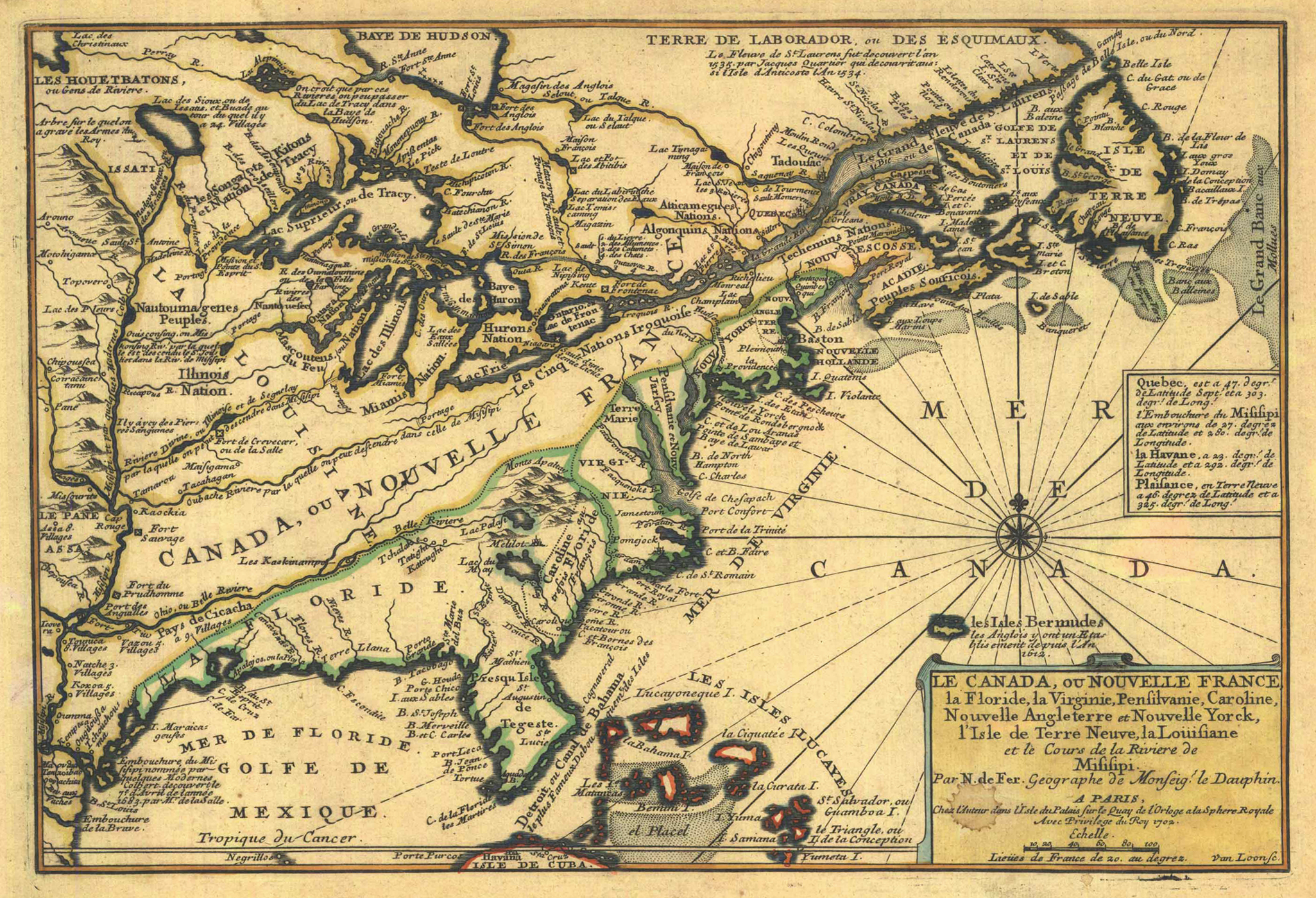
Map of Canada (New France) in North America 1703{credit}Wikipedia{/credit}
We have an excellent collaboration across our provincial biobank for congenital heart disease in Québec and exchange regularly among colleagues. We now have more than 3,000 deeply phenotyped participants in our biobank—both affected and unaffected family members—and when my colleagues told me about an unusual co-occurrence of SSS and CIPO in a couple of cases, we quickly fanned out and a side project suddenly got to center stage in the lab. We were surprised to see how many patients we found in relatively short time for a previously undescribed disease. Obviously, we would be very eager to learn from other groups whether they have encountered similar rare patients, and would love to cooperate! Let’s not forget that this type of research always has a human face, and this is what motivates our group in the first place.
What would you say was the most unexpected aspect of this research?
Everything in this project was unexpected! On the clinical side, the emergence of a generalized automaticity disorder in humans was totally unanticipated. On the molecular side, one of the biggest surprises certainly was how wrong we all were with our thoughts on what could be the causal gene. Virtually all members in the lab placed their bets on ion channels, a priori the most likely suspects. As you know, we were all proven wrong and had to go back to rethink how this disease arises. We were again surprised how a completely new picture emerged when we finally put all the pieces of the puzzle together—from genetics, populations and cell biology to disease.
How does the finding of SGOL1 mutations in these rare cases help inform the biology of CIPO and SSS more generally?
When doing my literature search, I was very surprised that one of the discoverers of the sinus node [the heart’s pacemaker tissue], Arthur Keith, had already drawn parallels between cardiac and gut pacemaking in an article in 1915 [PDF]. The recent literature suggests a role for TGF-β signaling as a driver for fibrosis in channelopathies and arrhythmias, and obviously this could very well be an important pathway through which a progressive destruction of pacemaking tissues takes place (for example, see papers here and here). Remember that we can clearly show that all patients in our series were normal at birth and developed disease only at later stages. On the other hand, we also have evidence that some ‘developmental anomalies’ are present in CAID patients, since the malformed gut pacemaking system probably was present from birth on, with initially normal function. I think that we are dealing with an overlap of developmental and acquired phenotypes, and that a similar process takes place in isolated SSS and CIPO, even if we could not detect SGOL1 mutations in the isolated forms of disease. Beyond this, I think the monogenic nature of the CAID phenotype tells us that all pacemaker cells need the cohesin complex. I would not be surprised if we found at least two non-canonical roles for SGOL1 in the future, one driving the developmental, and the other one driving the acquired part of disease, and that these disease pathways are at least partially shared in isolated SSS and CIPO. ‘Shugoshin’ means ‘guardian spirit’ in Japanese, so this is a very apt name for functions of this gene beyond its known function of protecting sister chromatids
What do cardiac and intestinal pacemakers have in common, and what could make them particularly vulnerable to mutations in a cohesin complex member?
First, they are both relatively small organs. An adult sinus node is approximately 15 x 5 x 1.5 mm long, probably not more than 50,000 cells. Second, both organs are non-uniform and comprise different cellular subtypes, and third, they have to be in a very particular place to efficiently perform their function. Fourth, and very importantly, cells in both organs are capable of automaticity. What could the cohesin complex have to do with these commonalities of different pacemakers in the human body? For the known functions of cohesin, in particular cell division, I speculate that a defect could directly influence how many cells will be available to form a certain organ. However, apart from the smaller myenteric plexuses we found in CAID patients, we do not have direct experimental evidence for this. Of course, this could also affect subpopulations within these organs, the second organ property I alluded to above. Ageing and loss of cells over time may also come into play in this intricate balance.
I am at a loss to come up with a valid hypothesis how a dysfunction of the cohesin complex would lead to the misplaced myenteric plexuses we found in CAID patients. As far as the fourth commonality between cardiac and intestinal pacemakers is concerned, we know that automaticity is mainly generated due to spontaneous depolarizations. The channels responsible for this phenomenon are mainly the HCN-channels and SCN5A, but calcium transients also participate in this. Given that cohesin plays an important role in transcriptional regulation, it is conceivable that some target genes are not correctly expressed when SGOL1 is mutated, either in time, space or quantity. Several recent studies on cohesinopathies point out that higher-order chromatin architecture organization has to be tightly regulated for normal gene expression, and I speculate that a dysfunction of SGOL1 could lead to problems with ion channel expression and thus be one of the key factors why we see this exquisite target organ specificity.
Can you say a little about the FORGE Canada consortium and how your research relates to its mission?
 The FORGE Canada (Finding of Rare Disease Genes) was launched on April 1, 2011 and brought together clinicians from all 21 Clinical Genetics Centres representing every province, as well as clinicians from 17 countries. From nation-wide requests for proposals, 264 disorders were selected for study from the 371 submitted; disease-causing variants (including in 67 genes not previously associated with human disease; 41 of these have been genetically or functionally validated, and 26 are currently under study) were identified for 146 disorders over a 2-year period. The outcome of this project was recently published in an article in AJHG. This project has a successor, Care4Rare, which is a pan-Canadian collaborative team building upon the infrastructure and discoveries of the FORGE Canada (Finding of Rare Disease Genes) project. The goal of CARE for RARE is to improve clinical care for patients and families affected by rare diseases. I think the great success of these projects also stems from their openness to collaborators like our group – this is the way it should be, and since my lab is working on several rare disease traits, we have benefited greatly from their help.
You can read the full paper here on the Nature Genetics website.