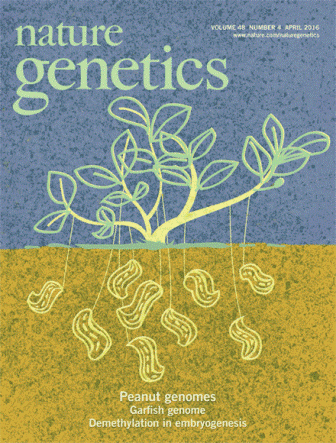
Tlalcacahuatl gold by Erin Dewalt
This month’s cover image is a visual tribute to the peanut and its importance to both the ancient civilizations of the Americas and modern agriculture. The genome sequences of the two progenitor species to the cultivated peanut were published in this month’s issue by David Bertioli and colleagues. The genome sequences are the first step to characterizing the genome of cultivated peanut, which was formed by the hybridization of these two species thousands of years ago. The genome sequences give us valuable clues about the evolution of these species. The authors also identified candidate genes for pest resistance, which could lead to advances in peanut cultivation in the future.
The image was inspired by a gold and silver necklace with beads in the shape of peanuts that was found in the tomb of the Great Lord of Sipan of the ancient Peruvian Moche culture. The necklace (c. 300) is now at the Museo Arqueológico Nacional Brüning in Peru. You can see an image of the necklace here and with more context here. The peanuts in the cover image have the same wavy shape as the beads in the necklace. The speckled texture and symmetric division of gold and silverish-blue in the cover image are also inspired by this ancient artifact.
Erin Dewalt, senior graphic designer for Nature Publishing Group, developed the image concept. She shows the peanuts underground, almost dangling from the plant above like beads. Peanut seeds develop underground after the flowers are fertilized. The ovary develops into a “peg” (gynophore) that drives back down into the soil, where it develops into the fruit that we cultivate as peanuts.
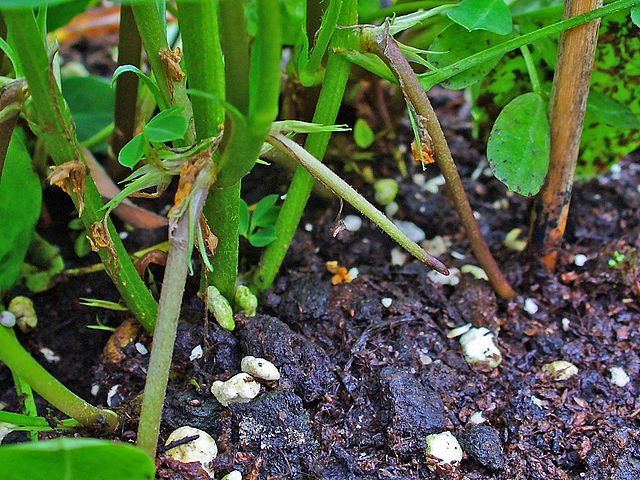
Peanut pegs growing into the soil. The tip of the peg, once buried, swells and develops into a peanut fruit. {credit}H. Zell via Wikimedia Commons{/credit}
The title of the image, Tlalcacahuatl gold, is a reference to the ancient Aztec name for peanut, tlalcacahuatl. But it is also a reference to the wealth represented by the peanut, both for ancient cultures and for modern agriculture. Because peanut plants fix nitrogen, thanks to the symbiotic bacteria in their root nodules, they return nutrients to the soil and improve cultivation of other crops (a fact famously advertised to farmers in the U.S. by George Washington Carver).
Tangential reading: The peanut necklace of the Great Lord of Sipan was almost lost to history forever. As this LA Times article from 1988 reported, grave robbers nearly made off with the treasures of the Lord of Sipan, including the necklace.