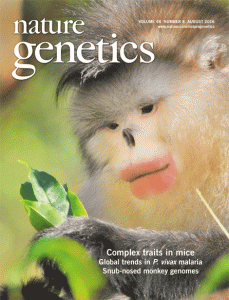
Rhinopithecus bieti{credit}Yong-cheng Long{/credit}
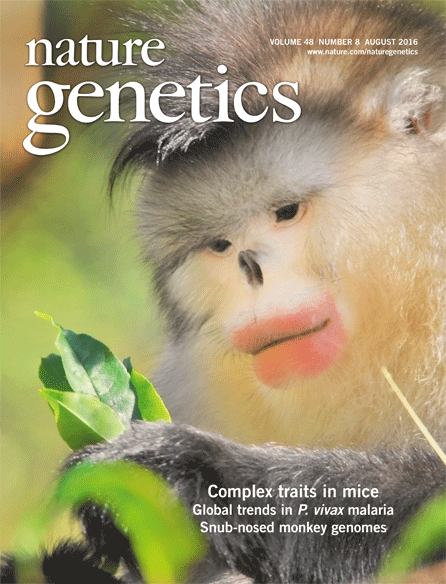
This month’s cover image is inspired by the paper on page 947 reporting the reference genome sequence of the black snub-nosed monkey, the second snub-nosed monkey genome paper published in Nature Genetics. The golden snub-nosed monkey genome was published in 2014.
In their paper, Li Yu and colleagues present the de novo genome sequence assembly of Rhinopithecus bieti as well as whole genome resequencing of all four other snub-nosed monkey species. All five species are among the world’s most endangered primate species. Three species, R. bieti, R. roxellana and R. strykeri, live at very high altitudes—above 3,000 meters. R. bieti lives exclusively on the Yunnan and Tibetan plateaus. The other two species, R. brelichi and R. avunculus, inhabit lowland regions. The authors compared the genome sequences between these species to identify genomic regions showing evidence of positive selection that could be related to living at high altitudes.
The photograph on the cover image was taken by one of the study’s co-authors, Dr. Yong-Cheng Long, who was profiled by the Nature Conservancy for his work on conservation of R. bieti (also called the Yunnan golden monkey by the locals). We asked Dr. Long to tell us a little about the monkey shown in the picture.
“The monkey is [a] male, whose name is ‘Big Guy’, and he is feeding on some leaves,” he said by email. “The Big Guy used to have 4 wives (about 6 years ago) and now has only 2, as he is getting old and is not strong enough to hold all of them because the females are more likely to find a strong shoulder to cry on.”
Dr. Long said there are 57 R. bieti individuals in the habituated “Yunnan snuby” group, which is open to the public. Because many of the individuals in the area are fully habituated to human presence, it is not difficult to get photographs of them. The group is only a small portion of the largest natural monkey troop (approximately 1,000 in total) in the world. Dr. Long emphasized the impact that illegal poaching has had on the monkeys. “This species has been endangered by human’s killing, and the monkeys can certainly survive once the killing is stopped.” In China, 2016 is the Year of the Monkey, and it has turned out to also be a lucky year for these particular monkeys. “We found the monkey group has boomed,” said Dr. Long. “12 of the 57 are the infants born this year.”
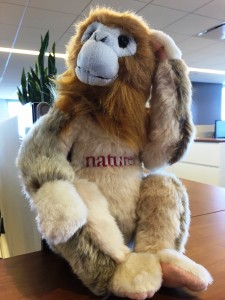
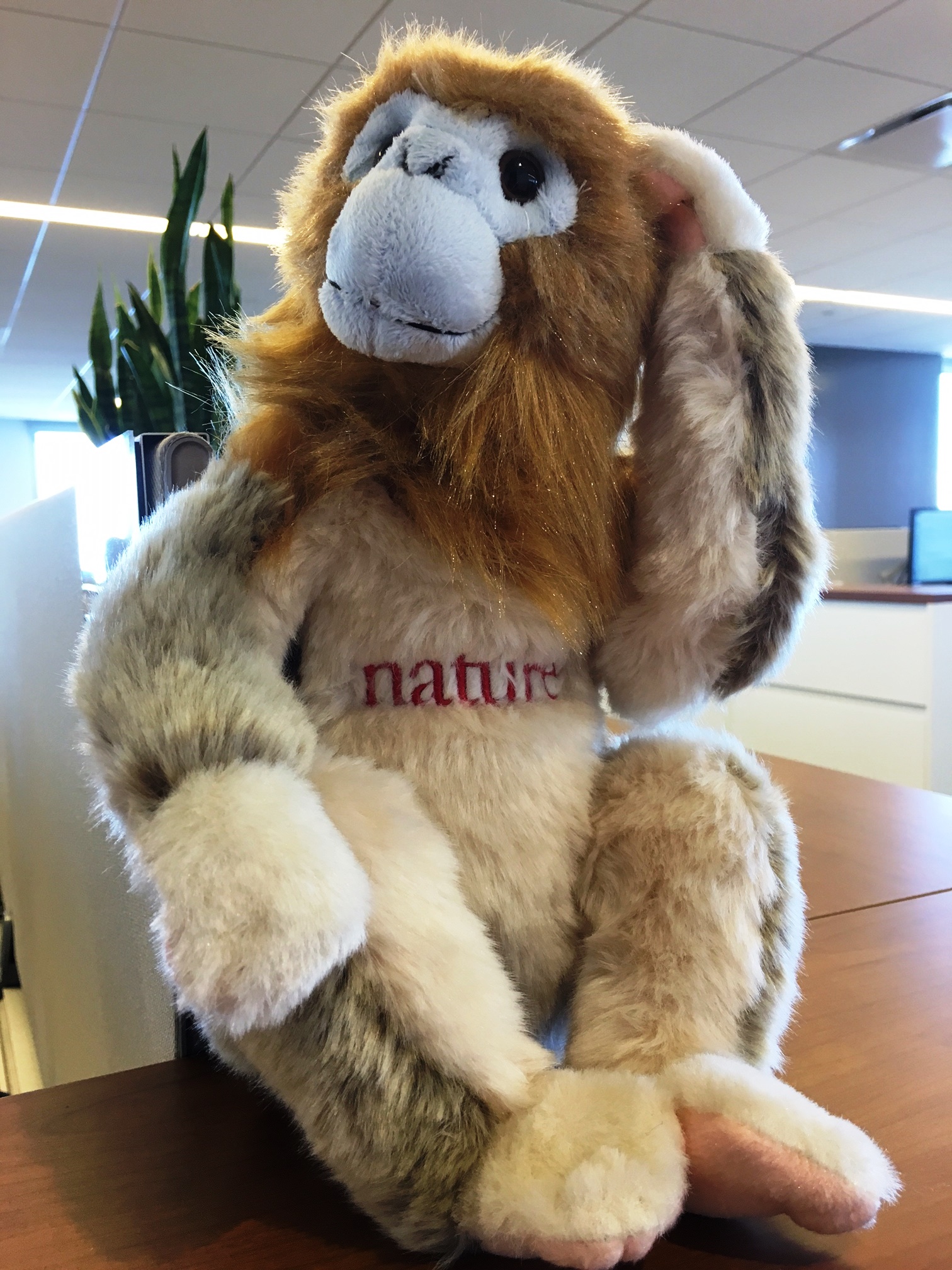
Nature Genetics office mascot
The lead author of the study, Dr. Yu, became interested in studying these species because of his focus on conservation genetics of endangered mammals distributed in Yunnan Province, China. This is one of the core regions of biodiversity in the world. “The most notable among the endangered mammals distributed in Yunnan Province is R. bieti, which is found exclusively on Yunnan and Tibetan Plateau”, said Dr. Yu by email. “It is unique in that it is the only primate having a red mouth like most humans, which [is why it’s called] one of the most beautiful animals.” Dr. Yu also noted that it is the highest altitude-dwelling nonhuman primate. It can survive in very cold and hypoxic environments that other primates cannot tolerate. “So, I was deeply attracted by this mysterious and interesting species, and was eager to come to understand it.”
 We at Nature Genetics are also celebrating the Chinese Year of the Monkey. Our office mascot is this golden snub-nosed monkey (right), which was produced for marketing purposes in China (I snagged one during a recent visit to the Shanghai office). Scanning a barcode on the monkey’s rear end (left) will take you to the publication of the R. roxellana (golden snub-nosed monkey) genome paper.