October issue cover: What’s going on here?

Oct

{credit}Convergent cabbages by Keyong Chang{/credit}

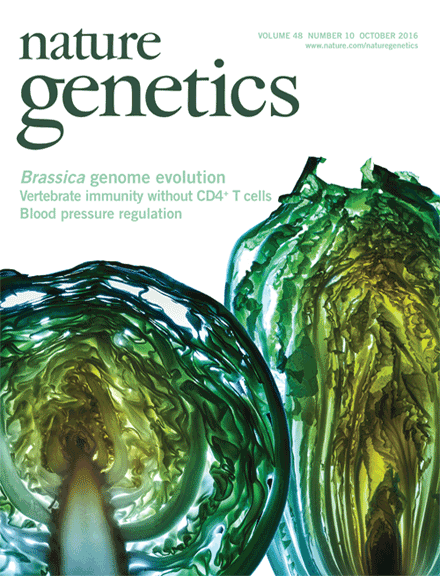
For all of October, we at Nature Genetics have been admiring the lovely cabbages on our cover. The image, created by photographer Keyong Chang, was contributed by the authors of the study on page 1218 of the issue.

But what is the story behind these pretty green cabbages?

Xiaowu Wang, corresponding author of the study, gave us a behind-the-scenes look at the process that led to the picture on our cover.

The image conveys the main idea of the study, namely that Brassica oleracea (cabbage, left) and Brassica rapa (Chinese cabbage, right) have taken similar evolutionary paths to arrive at their similar, but distinct, appearances. During domestication, farmers selected for cabbages of both species to have the large, leafy heads for which they are known. As shown in the study, the farmers were unknowingly selecting for orthologous genes in these two species. Continue reading

On the history of pigs

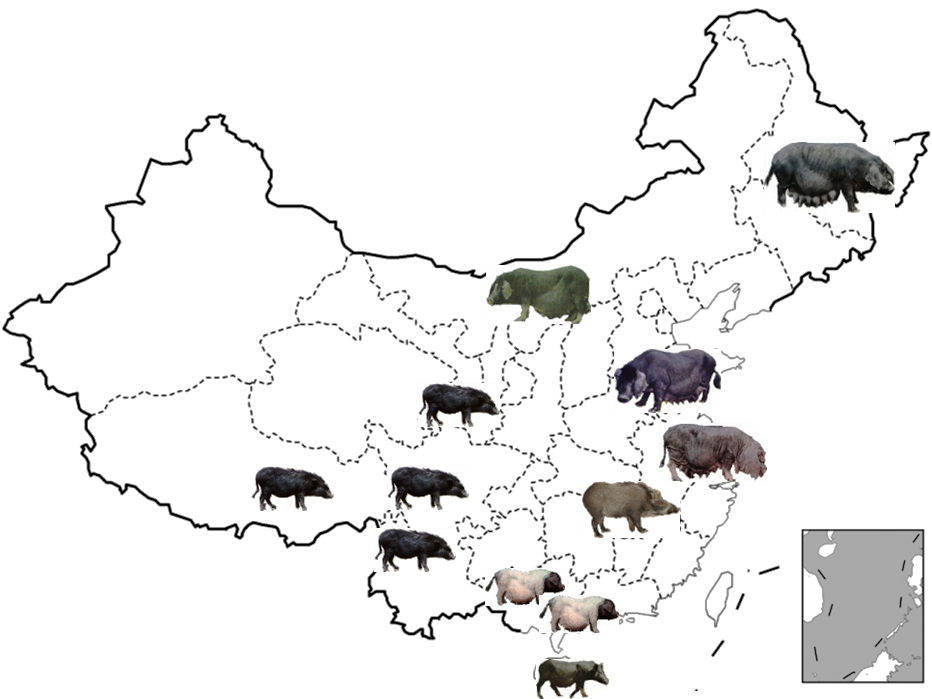
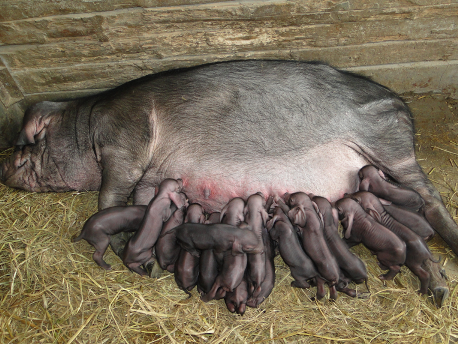
USDA_ARS_Meishan_pig-Cropped

{credit}Agricultural Research Service via Wikipedia{/credit}

Understanding the genomic changes that occurred during the domestication of animals and plants by humans is important on many levels. Such insights can provide information about human history and our interactions with other species, as is the case with genetic studies of dog and cat domestication. These studies can also help us to improve crop plants (such as tomato) and livestock (such as cattle) for human consumption or other use. Finally, genetic studies on domestication can help to identify disease-causing mutations that have been selected for as a by product of selection for beneficial traits (for example, in cats and dogs).

Though humans have a huge influence on important traits in domesticated species, those species are still responding to natural selection during the domestication process, which in turn may affect traits important for agricultural purposes. Identifying genomic regions influenced by positive natural selection in domesticated animals  can lead to important insights into the biology of specific breeds.

In this respect, the pig is an excellent model to study. Humans domesticated pigs approximately 10,000 years ago in the Near East and China, but a relatively open method of keeping pigs allowed for continued interbreeding with wild boars for some time. In a study published this week in Nature GeneticsLusheng Huang, Jun Ren and colleagues from Jiangxi Agricultural University sequenced the genomes of 69 diverse domestic and wild pigs in China to better understand their evolutionary history.

Pig sampling in China

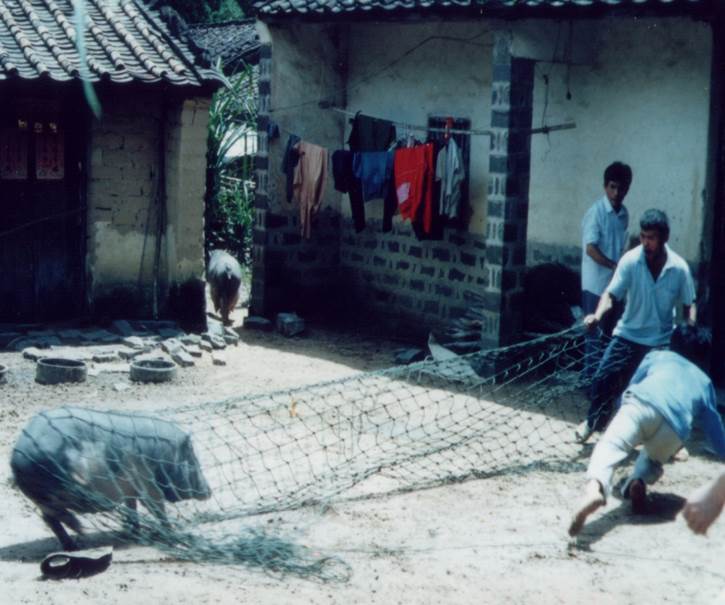
Pig sampling in China{credit}Lusheng Huang{/credit}

The study included pigs from 11 diverse breeds (and 3 populations of wild boar) within China in order to compare the adaptations in breeds from cold vs. hot areas. They identified over 700 genomic regions that showed evidence of selective sweeps. Many of the genes in these regions were involved in processes important for regulation of temperature during cold or heat stress, such as hair development, energy metabolism and blood circulation.

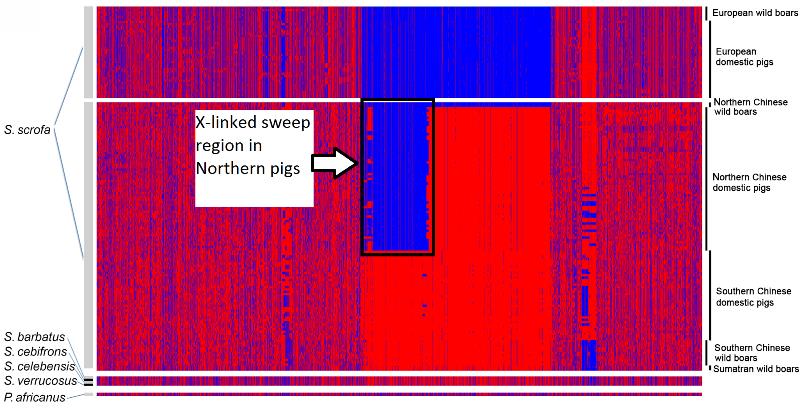
However, one of the most striking results was the identification of a large (~14Mb) sweep region on the X-chromosome. More than 94% of the single nucleotide polymorphisms (SNPs) in the 69 pig sample that had extreme allele frequency differences between North and South populations were located within the X-linked sweep region. All Northern Chinese samples showed a strong signature of selection in this region. Upon further analysis, the authors were able to determine that the most likely scenario, given their data, was that this region was introgressed from a now-extinct species of Sus. This region of the X-chromosome undergoes very little recombination. This fact, combined with the strong signal of positive selection in the region, meant the introgressed sequence remained mostly preserved for more than 8 million years.

We asked one of the study’s senior authors, Lusheng Huang, to tell us a little more about the work:

How did you collect the DNA samples from the pigs for your study? Were any of the samples difficult to get?

We collected DNA samples from 4,100 three-generation consangeneously unrelated pigs representing all 68 indigenous breeds that are distributed in 24 provinces of China. It took us four and half years to complete sample collections, Some native pigs lived in the high attitude regions (Yunnan, Guizhou, Sichuan and Tibet) were very hard to get. Afterwards, we constructed a DNA bank for Whole China indigenous pigs. As a pilot study, we first genotyped 520 unrelated pigs (no common ancestor within 3 generations) from 32 Chinese breeds for 60K SNPs in the Illumina porcine beadchip. Then, we selected 69 representative pigs from the 520 pigs according to their genetic relationships in the neighbor-joining tree constructed with the 60K SNP data. The 69 pigs selected for whole-genome sequencing are highly rep­resentative of populations at the geographical extremes of China.

pig sampling

{credit}Lusheng Huang{/credit}

Most of the sampled pigs were originally raised in government-sponsored conservation farms. We selected animals to cover a majority of consanguinity of each breed according to their pedigree information. However, samples of several breeds were collected from isolated villages or farms at rural areas. For example, it was a big challenge for us to collect samples of Tibetan pigs from different geographic populations in the vast region of the Tibet Plateau. To find purebred Tibetan pigs that were not influenced by human-mediated hybrid with exotic breeds, we had to travel to remote pastoral areas at high altitudes and make an in-depth field investigation with the kind help of local residents. To cover the consanguinity of each Tibetan population as broad as possible, we preferably collected samples from Tibetan boars that are usually aggressive like wild boars and were really difficult to get (see above picture).

What do the positively selected regions tell us about the history of pig domestication?

These regions clearly illustrate that pigs have experienced natural selection for local fitness before (ancient event) or after (recent event) domestication. The selection footprints in the pig genomes can be visualized by whole-genome sequencing, characterized by reduced heterozygosity, excess of low-frequency variants, extended and differentiated haplotypes. The selected sweep regions harbor functional genes that play a role in adaptation to local environments. DCF17 and VPS13A are two such examples highlighted in this study.

What do you think was the most unexpected result in this study? Did you believe it at first?

The extremely divergent haplotype in the X-linked sweep region between Southern and Northern Chinese pigs, an indication of a possible ancient interspecies introgression event, was the most unexpected result in this study. It is a big surprise. Frankly speaking, we did not believe it at first.

Adapted from Fig. 4a in Huashui Ai et al. 2014

The pattern of haplotype sharing in diverse populations. The haplotypes were reconstructed for each individual using all of the variants on the X chromosome. Alleles that are identical to or different from the ones in the Wuzhishan reference genome are indicated by red and blue, respectively. Adapted from Fig. 4a in Huashui Ai et al. 2014{credit}Nature Genetics{/credit}

Why is the finding of a large introgression region on the X chromosome important?

Although evidence of adaptive evolution driven by introgression from archaic species has been recently identified in some species including humans, the X-linked introgression region shows that adaptive introgression is not limited to closely related species, but in some cases, introgression with very divergent species can provide the basis for the evolution of radically new traits in a species. This radical example of so-called ‘reticulate evolution’ in mammals shakes the foundation of most modern evolutionary biology and provides a new view of adaptive evolution that emphasizes saltationist (sudden) processes driven by introgression. Moreover, as discussed in the paper, our ability to detect this, potentially quite old, introgression event is facilitated by the fact that the introgression fragment falls in a recombination-decreasing region. This has allowed the introgressed haplotype to be maintained for a prolonged period. Our results may suggest that introgression generally plays a much more dominant role in adaptive evolution than previously thought, but has been difficult to detect because introgression fragments in other systems degenerate quickly due to recombination.

Do you think similar ancient introgressions have occurred in other domesticated species? If so, how would you test this?

We cannot rule out the possibility. If one wants to test this hypothesis, we would suggest to use a research strategy similar to that used in this study. First, we would need to get the genome sequences of multiple species divergent from a domesticated species. Then, we can perform a genome-wide scan for possible introgression regions from another divergent species in the domestic species. Several statistics of ABBA, F4, haplotype sharing and phylogenetic analysis can be explored to identify such ancient introgressions.

Erhualian

{credit}Lusheng Huang{/credit}

Bonus question: What is your favorite breed of domestic pig?

Erhualian, the most prolific pig breed in the world.

How we built a better tomato

One species of wild tomato, Solanum lacerdae

One species of wild tomato, Solanum lacerdae{credit}Sandy Knapp{/credit}

Most wild tomato species bear little resemblance to the large, red fruits you’re used to seeing in the supermarket. This is because humans have been molding the tomato to their own taste for thousands of years, by selecting for larger, tastier and (of course) redder fruits.

As a consequence of this selective breeding, we have significantly altered the tomato genome. A new paper published online this week in Nature Genetics analyzed the genomes of 360 tomato accessions, including multiple wild species and cultivated varieties, to understand exactly how and where humans have left their mark on the tomato genome.

This study, the product of a collaboration between many groups around the world, found that human selection on the tomato has led to vast improvement in certain traits at the cost of dramatically reducing genetic variation in large swaths of the genome. An unintended consequence of historical selective breeding in tomato is that there is now little room for improvement on many traits that we care about. By identifying these regions, the study will allow tomato breeders to make more strategic plans for future crop improvement.

We asked one of the study’s senior authors, Sanwen Huang, to tell us a little more about the work and why it is important:

This study was obviously a huge undertaking. How did collaborations come about, and what were the major difficulties in the project?

As an international consortium, we sequenced the tomato genome together (Nature 2012) and this project was regarded as another milestone of tomato research. The difficulty in the current project was deciding what to sequence. Fortunately, our team includes experts who understand tomato germplasm and they studied the natural variation of tomatoes for a long time. As a corollary, we combined tomato lines from many well studied core collections from several countries, such as the US (Roger Chetelat), Israel (Dani Zamir), France (Mathilde Causse), Italy (Andea Mazzucato), and China (Yongchen Du, Zhibiao Ye, and Jingfu Li).

What do you see as the most important aspect of your study’s results?

There are several important results that came out of this work. First, the evolution of tomato fruit size had two stages, from the wild progenitor of the modern cultivated tomato, Solanum pimpinellifolium, to cherry tomato (from ~1g to ~10g), and from cherry tomato to big-fruited tomato (from ~10g to ~100g). We found that there are two independent sets of QTLs or genes that have been selected during the two evolutionary stages. Second, there is a huge genomic signature of the divergence between fresh tomato and processing tomato [tomatoes used for commercial canning], on chromosome 5. This genomic region harbors several genes related to higher soluble solid content and fruit firmness that were selected during breeding for processing tomato. And more interestingly, we noticed that in recent fresh tomato F1 breeding, this region was also exploited for better taste and longer shelf-life.  Third, we identified the causal variants for the pink tomato, which can be used for selective breeding. Pink tomato is a favorite in North China and I prefer it too, as it tastes better than the red ones. Finally, we found there have been costs to historical selection. For example, the near fixation of 25% of the tomato genome due genetic hitchhiking that occurred during domestication and improvement sweeps, as well as the linkage drags associated with wild introgression.

Cover of Nature, May 2012

Were you at all surprised to find such a large number of domestication and improvement sweeps? Did these results differ at all from other prominent vegetables, such as cucumber or potato?

The number and genomic proportion of domestication sweeps in tomato are similar to those in cucumber. However, the linkage disequilibrium blocks are bigger in tomato than in cucumber, possible due to the fact that tomato is a self-crossing species. Based on our data, we predict that the effective population size of tomato at domestication was about 300, similar to that of cucumber (~500), which is significantly smaller than that of maize (~150,000). This means these two vegetables have undergone much more severe bottlenecks during domestication as compared to maize.

How do you envision tomato breeders using the results of your study?

As a result of this work, tomato breeders will have a panoramic view of tomato variation and a better understanding of the raw materials used in their own breeding programs. From a practical standpoint, they will have access to a database of 11 million SNPs, from which they can pick the ones best suited to their molecular breeding programs. For example, they can combine the SNP dataset with their phenotypic data, to elucidate the genetic bases of important traits. Finally, and importantly I think, they will better understand the limitations of conventional breeding and the cost of historical selection, which will give them clues to improve their future programs.
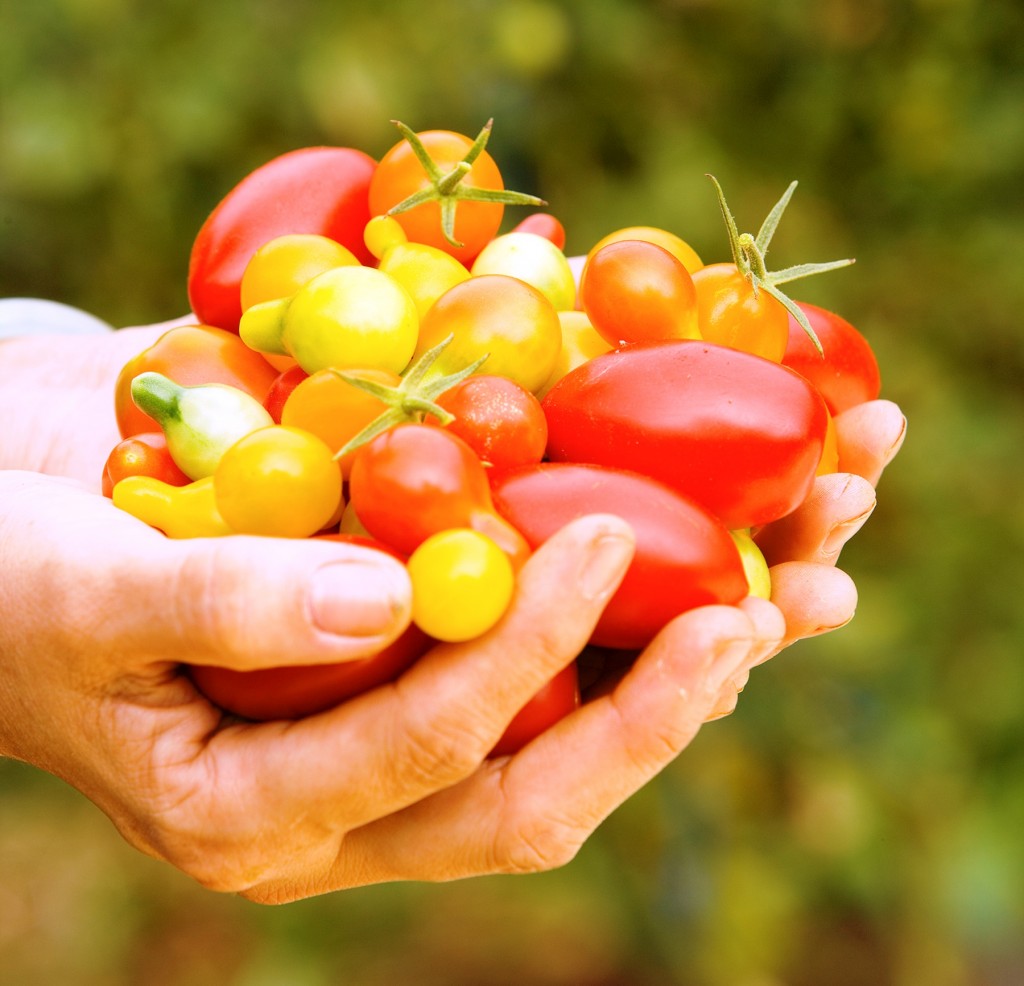
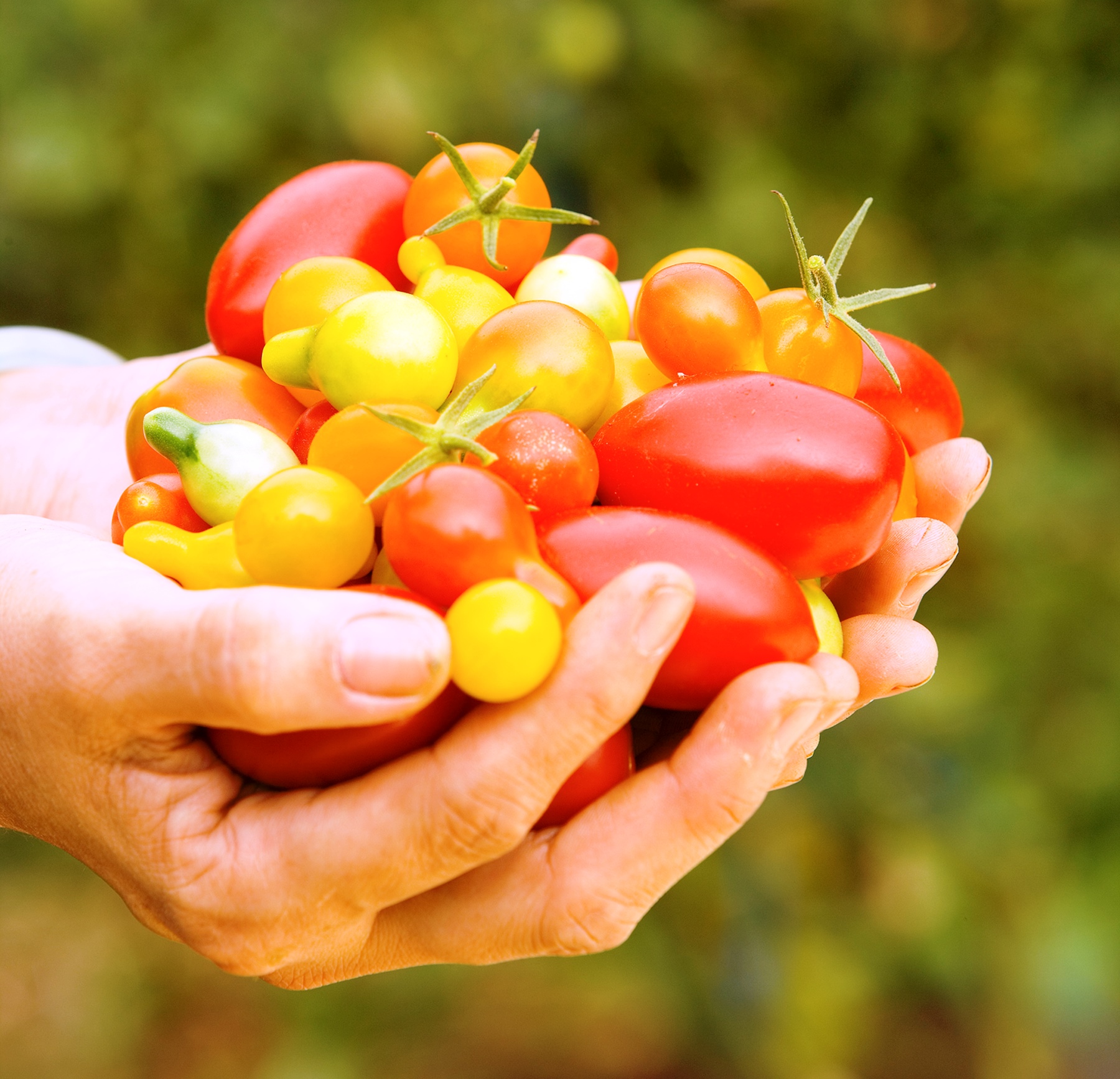
NRCSHI07018_-_Hawaii_(716072)(NRCS_Photo_Gallery)

{credit}Photo courtesy of USDA Natural Resources Conservation Service{/credit}

Congratulations on your recent move to the Agricultural Genome Institute at Shenzhen where you are a co-founding director. Can you tell us a little about this new institute and what its goals are?

Thanks! The leadership of the Chinese Academy of Agricultural Sciences set up the institute (AGIS) to innovate agricultural research using genomics.

AGIS is located at the Dapeng District of Shenzhen, a beautiful bay area. The Shenzhen municipal government is developing the Dapeng Peninsula as the International Bio-valley and high-tech agriculture is one of the highlights. AGIS will recruit ~200 scientists who will decode, analyze, and utilize agricultural genomes. There will be three themes of research: the first theme is to develop basic algorithms and bioinformatic tools tailored for agricultural genomes, many of which are quite different from the human genome that has been the focus for most bioinformatians; the second theme is to empower agricultural breeding with genomics, to increase the efficiency and effectiveness of breeding that is essential to global food security; and the third theme is to provide genomic surveillance of food safety and agricultural environment, which is a huge concern of society and a need for sustainable development.
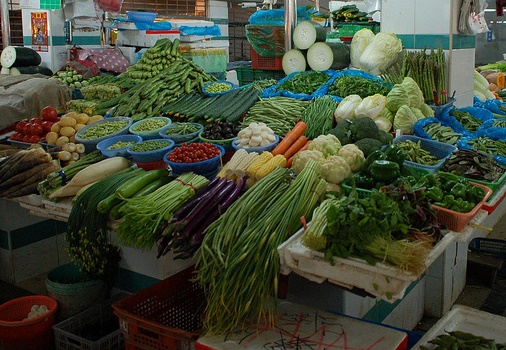
A vegetable market in Shanghai, China

A vegetable market in Shanghai, China{credit}nadja robot via Flickr.com{/credit}

Bonus question: What is your favorite vegetable?

China is a country of vegetables, as there are over 200 kinds of vegetables that are regularly consumed in the country. I enjoy the diversity. For fruit vegetables I like tomato, cucumber, and chili; for leaf vegetables, I like Chinese cabbage, lettuce, and coriander.


You can read more about this exciting study at The Scientist. Read the full paper here