Paper power

A study on research papers written by Indian researchers over 27 years (1981-2008) has revealed interesting results.

The good news first: India’s share of collaborative papers and the relative number of citations have both increased in the last few years. The bad news: India ranks seventh in terms of total output of papers among the group of countries surveyed (UK, USA, Germany, China, Japan, South Korea, France, Brazil, India and Australia). The country ranks 10th in terms of citation impact. Also, India has a relatively low share of global research publications.

The study commissioned by Research Councils, UK and conducted by a Thomson Reuters unit collates bibliometric data on India’s research output and international collaboration.

Across disciplines, India collaborates the most with USA followed by Germany and the UK. Physical sciences remain the strongest area of Indo-UK collaboration. Medical, health and biological sciences also produce a substantial volume of highly-cited research.

While in UK the Imperial College of London, Manchester University and Cambridge University remain the hotbed of UK-India co-authorship; In India, the Tata Institute of Fundamental Research (TIFR), Delhi University and Panjab University are the top three collaborative research hubs followed by the Indian Institute of Science and Indian Association for Cultivation of Science.

The study provides ample scope for policy makers and research collborators to identify emerging research areas, collaborative opportunities and potential sources of funding. On an optimistic note, the study infers that though the number of research papers written by Indian authors is relatively low in international terms, India’s research activity is growing and is likely to become increasingly important to the global research community. The low number of citations implies there are opportunities for high standard collaboration. It also leaves space for further analysis considering that the data is till 2008, after which the science funding in India has risen by 17 per cent.

First embryonic stem-cell trial back on again

Posted on behalf of Heidi Ledford

Human embryonic stem cells made it one step closer to clinical trials last Friday when the US Food and Drug Administration (FDA) lifted its hold on a study of a stem-cell-derived therapy for severe spinal cord injuries.

It was promising but familiar news to the therapy’s developer, biotechnology firm Geron, headquartered in Menlo Park, California. After Geron filed its famous 21,000-page application to the FDA, the agency put the trial on hold in May 2008. The FDA then informed Geron on 23 January 2009 that the trial was free to proceed, only to freeze it again in August after learning that animals treated with the therapy developed cysts near the site of injury. Geron says the cysts did not harm the animals, and were only observed in one of many animal studies. It has developed new markers and assays to ensure the therapy’s safety.

Continue reading

Technology for the masses

Kamil Crater.jpg

Not too long ago, the deserts of the Middle East were largely unexplored. The rough conditions didn’t exactly make them ideal locales for exploration.

Satellite imagery, coupled with the increased usage of remote sensing techniques, made such exploration much easier. Vast areas of desert were mapped, and underground water resources were discovered. Scientists, from different backgrounds, were pouring over images coming from space to study Earth.

But then Google Earth happened. Suddenly, such imagery was not available to scientists alone. Satellite imagery of the whole planet became available at the fingertips of every person with an active internet connection. Updates to Google Earth then also brought space, planets and stars in the picture, allowing millions interested in astronomy around the world to see space like never before.

The availability of these tools so readily has the potential of changing the picture. Scientists are quickly seeing the potential of knowledge crowdsourcing. With millions of people scanning the Earth, there is a true potential to find things that we never did before. And with these tools becoming even better and more accurate, enthusiasts are spending hours everyday exploring, waiting to find “the next big thing.”

A recently discovered meteorite crater in the Western deserts of Egypt was done using Google Earth. Ahmed El-Barkooky, one of the researchers who published a paper in Science studying the crater, said this discovery would not have been possible without Google Earth. The same area where the crater was discovered has been swiped in the 70’s, but low-resolution images meant it was impossible to really make out the crater. The high-resolution images coming up now show the crater in deep detail, with even the ejecta rays showing.

Now, Ahmed El-Fakahany, a developer at IBM in Egypt and astronomy enthusiast, spends hours every day pouring over images of the Sahara desert in Google Earth looking for similar crates. El-Fakahany says he found quite a few craters -as well as several peculiar formations – in the desert in Egypt, though they still need to be verified.

Now Fakahany would like to work with scientists to verify if his finds hold weight or not.

With a few million serious enthusiasts around the world like Fakahany, we might just understand our planet like never possible before.

If the saying that “two minds are better than one” is true, then it is safe to assume that “a million minds are better than one.”

Crowd-sourcing science funding

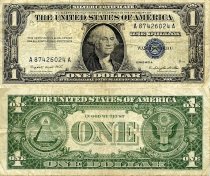
US_SilvercertSM.jpg Attention, scientists: got any friends who might want to make a donation to a broke biologist… or two or three? They can do so over at FundScience, a nonprofit organization which today is announcing three projects that you, your next-door neighbor, or anyone at all can help fund with the click of a mouse.

The idea behind FundScience is two-fold, says David Vitrant, the organization’s executive director: providing a novel system of support for young researchers with innovative ideas, and engaging the public more directly in science. Sure, people who want to support cancer research can make a donation to a foundation, but that money disappears into a black hole, and the donor remains completely disconnected from the science that money supports. “At some point it gets to researchers, but you have no idea who it is,” says Vitrant.

He and a partner, Mark Friedgan, created FundScience on the model of organizations like the microlending web site Kiva, where people can scroll through a list of small-scale endeavors, most based in the developing world, and contribute a chosen amount of money to those that strike their fancy.

Continue reading

Improving NN Blogs: An Update

Ladies and gentlemen, we have progress.

As previously acknowledged on this blog, and discussed at length elsewhere, an unacceptable number of flaws remain in our blog software – for readers, commenters and bloggers themselves. So, to help us turn Nature Network into the blogging platform you all deserve, we recently hired an expert in Movable Type 4, the software that underlies our platform. He’s now deployed the first round of fixes to our test server. We thought we’d share a few screen grabs with you, to show that we have made substantial and quick progress from where we were just a week ago.

Note: Ian’s Meandering Scholar blog was chosen purely at random for these mock-ups.

Custom banners

Currently, every Nature Network blog looks pretty much the same, topped and tailed with the standard red livery. Come the new release, you’ll have full access rights to upload any banner image you like to spruce up the top of your pages and give your blog its own distinctive look. Matt and Lou will provide full instructions on how to do this and will be happy to assist with selecting, resizing or adding the banner.

Custom header.jpg

Comment Editor

Some people have experienced problems with adding images and formatting in the comments section. With the new release, not only will you be able to add these elements with either HTML or Textile markup, you’ll also be presented with a handy box of icons like this:

Comment editor.jpg

All you need to do then is highlight the text and click the appropriate icon. The box can be hidden if you’d rather stick to typing.

Blog rolls

Some bloggers like to maintain a visible list of their favourite blogs and other web sites, a feature commonly referred to as a blog roll. With the new release, this will become possible on Nature Network.

When can you expect these changes?

The next scheduled release is in about two weeks, which gives us time to add still more improvements (such as speeding up load times) and thoroughly testing all these changes. It may be that the custom headers take slightly longer to implement on the live site as they have other dependencies, but we’ll keep you updated with exact dates as soon as we know them. If there are any small delays with the headers, they won’t delay getting the other features to you.

Then what?

This is just a starting point. We are utterly committed to turning things around and setting up all the features you’ve asked for that we can reasonably support. The next thing we’ll move on to is better stats reporting, so bloggers have a clearer idea of their traffic. We’ve already identified a module for Movable Type that will help with this, and we hope to have it running on our test servers soon. We’ll also look at the various options for lowering the barrier to commenting. We hear loud and clear that this is a priority for many of you, and so we’ll make it a priority to investigate a range of potential solutions. We have also identified a possible solution that may resolve the issue with needing to login to each individual blog to comment – more updates on these features next week. Finally, ongoing bugs that are affecting individuals are also being investigated – you will receive personal email updates as we make progress on the particular issue you reported.

The Best of Nature Network: 24-30 July 2010

Blogs

In the wake of the recent troubles over on Science Blogs, Nature Network contributors have also been grappling with the pros and cons of blogging on a network rather than a solo blog. Dan Pollock, Associate Director of Nature.com, provides Nature’s official response to the ongoing conversation. Several Nature Network bloggers have taken this opportunity to retire their blogs. We would like to say another thank you to Heather Etchevers, Alyssa Gilbert and Cath Ennis for all their ponderings, comments and comradeship over the years. For those waiting for more details on improvements to Nature Network blogs, we have some much-asked-for features ready on our test server and will post an update about these in the next day or two.

Tuning to science, and ecologist Tom Webb writes poetically about the marine environment, and the challenges of perceiving it as a habitat.

Conceptually, that can be difficult to grasp, particularly if you have grown accustomed to seeing species ranges, and other patterns of biodiversity, represented on flat maps. But for me, visualising an ecological problem is very often a great help, if not an essential prerequiste, to solving it. So in Wales, gazing out to sea, I practised the following thought experiment: imagine if you could see through the sea, as if it were air.

He then goes on to describe what you might see, from the sandy plains to the clouds of algae to the air-breathing predators. On a very different note, Andrew Sun discusses the teaching of lab safety protocols. He recommends compiling videos of when experiments go hazardously wrong, to help poke students out of safety complacency:

Let them see the disasters in a centralized manner. We should collect from all over the world videos and photos of “lab FAIL”, each with concise description of the causes, and maintain a blog with them. Syndicating all the “oops” and “ouch” in the lab can create a special powerful culture that every student deem the sense of safety most wise rather than unnecessary.

Finally, Bob O’Hara is looking for people’s notions of how to define a biological niche, Viktor Poór offers a floral cartoon, and Frank Norman wants to know your favourite lookalike favicons (tiny icons used by web sites on browser tabs).

Forums

Places for Science Online London are filling up quickly now. Anyone with an interest in scientific communication and collaboration online will be interested. To discuss the conference ahead of time, join the dedicated forum, where current talk centres around one of the fringe events.

Facebook

Nature Network stories are now being featured regularly on Nature’s Facebook page, which has over 12,000 fans. We’ll be highlighting the more opinionated, discussion-provoking or otherwise cool content, so this is your chance to reach a wider audience via blog posts and forum topics. Don’t forget to check if we’ve included you or if anyone’s left feedback about your blog there!

And Finally…

How’s your ornithology? GrrlScientist has been continuing her series of mystery birds for readers to identify. See how many you can guess.

Kenji Doya

Okinawa Institute of Science and Technology, Japan

A neuroscientist explores what brain imaging can reveal about deliberative and intuitive decision-making.

When you pick a dish from a menu, do you select it for its taste or its calculated nutritional benefits? The decision-making processes of intuition and deliberation can be considered as, respectively, model-free learning, which involves trial and error, and model-based learning — evaluating future outcomes using a pre-learned model of the results of choices. A big question is how these complementary processes are realized in the brain.

Using functional magnetic resonance imaging (fMRI) in humans, Jan Gläscher at the California Institute of Technology in Pasadena and his co-authors found neural signatures for these two modes of learning (J. Gläscher et al. Neuron 66, 585–595; 2010). The team scanned the brains of volunteers as they learned a two-step choice task. During the first part of the study, volunteers were presented with an abstract image and had to choose a left- or right-button press. Depending on which button they chose, they were then presented with another image and asked to make a second left-or-right choice to see a third image.

Over many trials, the volunteers learned the probability of a certain image resulting from a particular choice. During the half-time break, they were told that each final image would have a specific monetary reward (0, 10 or 25 cents). During the second half of the study, volunteers could use what they had learned in the first half to make profitable choices.

Analysis of the fMRI data revealed involvement of the brain’s intraparietal and lateral prefrontal cortices in model-based learning, and the ventral striatum in model-free learning. The study paints a new picture of the neuroscience of deliberation versus intuition. We should now be able to ask not only where in the brain but also by what algorithms we make decisions.

Kenji Doya

Okinawa Institute of Science and Technology, Japan

A neuroscientist explores what brain imaging can reveal about deliberative and intuitive decision-making.

When you pick a dish from a menu, do you select it for its taste or its calculated nutritional benefits? The decision-making processes of intuition and deliberation can be considered as, respectively, model-free learning, which involves trial and error, and model-based learning — evaluating future outcomes using a pre-learned model of the results of choices. A big question is how these complementary processes are realized in the brain.

Using functional magnetic resonance imaging (fMRI) in humans, Jan Gläscher at the California Institute of Technology in Pasadena and his co-authors found neural signatures for these two modes of learning (J. Gläscher et al. Neuron 66, 585–595; 2010). The team scanned the brains of volunteers as they learned a two-step choice task. During the first part of the study, volunteers were presented with an abstract image and had to choose a left- or right-button press. Depending on which button they chose, they were then presented with another image and asked to make a second left-or-right choice to see a third image.

Over many trials, the volunteers learned the probability of a certain image resulting from a particular choice. During the half-time break, they were told that each final image would have a specific monetary reward (0, 10 or 25 cents). During the second half of the study, volunteers could use what they had learned in the first half to make profitable choices.

Analysis of the fMRI data revealed involvement of the brain’s intraparietal and lateral prefrontal cortices in model-based learning, and the ventral striatum in model-free learning. The study paints a new picture of the neuroscience of deliberation versus intuition. We should now be able to ask not only where in the brain but also by what algorithms we make decisions.

Are you interested in helping NYU Courant’s research on Motion Capture and Gaming this Saturday?

Looks like fun! #NYCMLFTW!!

At NYU’s Movement Lab, we’re using our motion capture systems to experiment with large-scale crowd games. We can track the position of many beach balls in a room as a crowd of people throws and whacks them around. We’re learning how to map this ‘input device’ to interesting applications and games. We’re still in the development phase, trying to figure out what works the best and what’s the most fun. This is exciting research that pushes the limits of state of the art motion capture. We are seeking volunteers to come in for two hours to help us with a series of mini games and exercises. We will be projecting our software onto the wall so you can watch live as we test and explore our software. Help us improvise with beach balls ranging in size from 1 to 12 feet.

Check out a video of the giant helium ball in action: https://vimeo.com/13573104

Check out more pictures and videos at our website: https://movement.nyu.edu/c2c/

Location: NYU Coles Gym, corner of Mercer & Bleecker

Time: Saturday July 31, 2 PM to 4 PM

For security reasons, we need to provide a list of names. If you are planning to come, please send an email to info@movement.nyu.edu with your name and anyone you’ll be bringing.

We will provide refreshments too. Hope to see you there!

New vaccines set for upcoming flu season

sneezehanky.jpgSummer’s still in full swing, but the US Food and Drug Administration (FDA) is already thinking about flu season. The regulatory agency just announced that it has approved the flu vaccine for 2010-2011, and it includes protection against the 2009 pandemic H1N1 ‘swine flu’ strain as well as regular seasonal influenza.

Nearly 20% of the population in the US suffers some form of influenza each year, leading to more than 200,000 hospitalizations and 36,000 deaths, according to estimates from the US Centers for Disease Control (CDC).

This year’s crop of flu vaccines includes: Afluria by CSL Limited; Agriflu and Fluvirin from Novartis; GlaxoSmithKline’s Fluarix; FluLaval, manufactured by the ID Biomedical Corporation; FluMist, from MedImmune; and Fluzone and Fluzone High-Dose from Sanofi-Pasteur. The vaccines contain two strains of influenza A virus&mdash H3N2 and the “swine flu” strain of H1N1&mdash as well as influenza B virus.

For this flu season, the FDA recommends that all people six months or older get vaccinated. Previous guidelines focused on vaccinating the subset of the population most at risk for serious complications resulting from influenza: children, the elderly, people with existing health issues and those likely to come into contact with these high-risk groups.

Image by mcfarlandmo via Flickr Creative Commons