Baby steps towards rescue of Human Brain Project

HBP

{credit}Human Brain Project{/credit}

Cautious efforts to restore unity to the billion-euro Human Brain Project have begun. Both the European Commission and the project’s leaders have now responded to a scorching open letter in which angry neuroscientists condemn the flagship project, and pledge to boycott it.

Signed by 156 top neuroscientists, including many research institute directors in Europe, the letter was sent on 7 July to the European Commission, which is funding the project’s first phase. The letter’s authors express concern about both the scientific approach in the neuroscience arm of the project, which aims to simulate brain function in supercomputers, and the general project management.

The authors make a series of demands for changes that they say are needed to make the management and governance of the Human Brain Project more transparent and representative of the scientific views of the whole community. Since the letter was sent, a further 408 neuroscientists have added their signatures.

On 10 July, the European Commission sent a bland statement to Nature,  stating that “it is too early to draw conclusions on the success or failure of the project”, given that it has only been running for nine months. The Commission’s response also says that a “divergence of views” is not unusual in large-scale projects, particularly at their beginnings and that the Commission will “continue to engage with all partners in this ambitious project”.

However, on the same day, officials met with some of the letter’s organizers for what were, according to a cautious source, “the beginnings of discussions of some of the issues”.

Later that day the leaders of the Human Brain Project published a four-page statement acknowledging that “the signatories have important concerns about the project”. The document gives no revealing details of how these concerns are likely to be addressed, but does refer to an evolution of governance as the project moves into its next phase.


Chimps from controversial lab move to retirement home

Posted on behalf of Katia Moskvitch.

Juliussohappy_AF-300x199

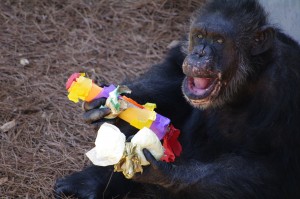
Julius, 46, is one of 110 research chimps who are now permanently retired at a sanctuary in Louisiana.
Credit: Chimp Haven

Tosha, Sassy, Paula, Julius and their 106 friends will now be munching peppers and bananas without worries of being used to test new drugs. The chimpanzees, formerly used for biomedical research by the US National Institutes of Health (NIH) facility New Iberia Research Center (NIRC) in Louisiana, have now arrived at Chimp Haven, a federally funded sanctuary in Keithville, Louisiana.

“Our dreams have finally been realized for these amazing animals,” said Chimp Haven’s president Cathy Willis Spraetz in a statement.

The move comes two years after the NIH announced it would retire the NIRC’s 110 chimps, following an undercover video investigation by the Humane Society of the United States that exposed animal mistreatment at the facility (see ‘NIH retires research chimps at troubled facility‘).

Initially, the NIH had planned to send only ten of the animals to Chimp Haven and the rest to the Texas Biomedical Research Institute in San Antonio. The NIH changed its mind after the sanctuary embarked on an extensive campaign that resulted in making extra room at Chimp Haven to accommodate many more animals and raising money for their care.

Although experiments on chimps contributed to several medical breakthroughs, such as vaccines against hepatitis B and polio, recent scientific developments have created viable alternatives to primate research.

The retirement plan for the NIRC’s chimps was just the first step in scaling back the NIH’s primate research. In June 2013, the NIH announced it would retire to sanctuary nearly all of its research chimpanzees, about 310 of them, leaving only up to 50 for scientific experiments. NIH director Francis Collins said at the time that chimps, as humans’ closest living relatives in the animal kingdom, “deserve special respect”.

The decision followed a landmark report by the US Institute of Medicine published in December 2011, which outlined strict criteria for the use of chimps in biomedical and behavioural research.


Imperial College under renewed pressure over animal research

Government inspections of animal research in the UK should be reviewed, an independent advisory group said today, in a report which also adds to pressure on Imperial College London over its work in this area.

The Animals in Science Committee, a group including respected scientists, lay persons, animal welfare experts and others which advises the government on animal research, says the minister in charge of the area “should consider whether he can continue to have confidence” in John Neilson, the senior figure at the university who is the licence holder for such work.

The Committee’s report also reveals that inspectors from the UK Home Office expressed concerns about animal research at Imperial before allegations of poor practice were made by London-based animal rights group the British Union for the Abolition of Vivisection in 2013 after an undercover investigation.

In a statement today, the Home Office minister Norman Baker said, “I regard this as a very serious matter and will consider the report carefully. The Government will publish its response as soon as possible.”

Imperial has responded strongly to the report. It says that Neilson, “who has served in this role since May 2012, has strengthened the College’s governance and operational management of animal research”. In a statement, the university added, “Imperial fully supports his leadership and handling of responsibilities as [the licence holder].”

Imperial has already been subjected to an independent review it commissioned in the wake of the allegations. The university has accepted the conclusions of that review — including that animal-research facilities were understaffed and systems related to management, training and ethical review should be improved – and produced an action plan to work on this.

Imperial says it was “surprised” that today’s report did not refer to this action plan, and that it is “disappointed” that its offer to meet the authors of the report was not taken up.

“The College has made substantial progress in implementing changes set out in the Plan,” it says. “These build on the good standards of animal husbandry identified in the Brown Review and are enabling the College to build a new culture around animal research by establishing and promoting best practice, and taking ethical, welfare and 3Rs issues into account at every level.”

Continue reading

Last remaining support for controversial stem-cell papers collapses

Posted on behalf of David Cyranoski.

UPDATE: The first sentence of the final paragraph of this story was changed on 5 June to clarify a source.

The retraction of two controversial papers that promised a simple way to create embryonic-like stem cells seems to be imminent today after the lead author unexpectedly gave her full consent. Haruko Obokata, of the RIKEN Center for Developmental Biology in Kobe, Japan, had been the last obstacle to the retraction of both papers.

She agreed to retract the second of the two studies last week, but her agreement yesterday to retract the first one, which detailed the fundamental mechanism behind her claims, paves the way for the unravelling of what was heralded as one of the biggest scientific discoveries of the year.

All co-authors of the papers, which claimed to have created a new type of stem cell, known as stimulus-triggered activation of pluripotency (STAP) cells, now appear to have consented to the retraction. This leaves the papers’ fate in the hands of Nature, the journal that published the two studies in January. Requests for retractions with the unanimous support of the co-authors are usually authorized by the publisher. (Note: Nature’s news and comment team is editorially independent of its research editorial team.)

In the STAP studies, Obokata claimed that when she stressed cells by exposing them to acid or putting pressure on their membranes, they underwent a transformation to an embryonic-like cell. The STAP cells therefore shared the ability of embryonic stem cells and induced pluripotent stem (iPS) cells to convert into any of the body’s cell types, promising a huge advance to biomedical research and clinical applications.

But Obokata’s papers quickly came under fire after various manipulated and duplicated images were found in them. After an investigation into the allegations, RIKEN found Obokata guilty of misconduct on 1 April. Earlier this month, it rejected her appeal of the judgement, and asked her to retract both papers. In the meantime, at least a dozen other research groups reported that they were unable to replicate her findings.

As the controversy escalated, several co-authors publicly stated their desire for a retraction. But Obokata and a senior co-author on the papers, Charles Vacanti, of the Brigham and Women’s Hospital in Boston, Massachusetts, stood by the papers.

However, in an unexpected move on 28 May, Obokata consented to the retraction of the second paper, which describes how STAP cells can form placental cells as well as embryonic-like and iPS cells. But she remained resolutely behind the main paper, considering the second “just an extension”, her lawyer Hideo Miki said.

Then, out of the blue on 30 May, Vacanti sent a letter to Nature asking for a retraction of the first paper, according to a source in Japan who is close to the story and has seen Vacanti’s letter. This move may have broken Obokata’s resistance. On 3 June she signed an agreement to retract the first paper and handed it to RIKEN, a spokesperson confirmed. The spokesperson says that the authors are now in discussion with Nature with regard to retraction of both papers. Nature does not discuss retractions until final decisions are made.

Genetic tests suggest STAP stem cells ‘never existed’

Reports of a new kind of stem cell, produced by simply stressing mature mouse cells, kicked up a storm of controversy soon after their publication in Nature on 30 January. Duplicated and manipulated images as well as plagiarism were found in the two papers, which led to a verdict of misconduct for the lead author, Haruko Obokata of the RIKEN Center for Developmental Biology in Kobe, Japan. There have also been calls for a retraction (which, for at least one of the papers, looks increasingly likely). But the controversy has left open a key question: does the phenomenon, known as stimulus-triggered acquisition of pluripotency, or STAP, exist?

The answer, according to Japanese media reports today on the results of genetic tests on the cells used in the STAP experiments, is no.

STAP cells were claimed to be made by exposing bodily cells to acid or subjecting them to physical pressure. These cells take on characteristics of embryonic stem cells. If further manipulated, they will also form self-renewing stem cell lines, called STAP stem cells, which share most properties of the embryonic stem cell lines. The Nature papers reported the creation of eight STAP stem cell lines. (Note: Nature’s news and comment team is editorially independent of its research editorial team.)

In March, one of the co-authors of the STAP papers, Teruhiko Wakayama of Yamanashi University, did a simple genetic analysis and found that some of the supposed STAP stem cell lines he had produced outside of the experiments described in the papers did not match the strain of mouse from which they were supposed to have been derived. This would mean that the cells came from a different mouse to that claimed, suggesting contamination. But he did not find a problem with the STAP stem cell lines that were reported in the Nature papers. To verify his results, Wakayama sent some 20 stem cell lines, including samples of the eight reported in the papers, to an independent, but unnamed, genetic analysis team for more precise tests.

According to Japanese media reports quoting “multiple sources”, the results of those tests have now been sent to RIKEN, Obokata’s employer and the institution that found her guilty of misconduct. They conclude that none of the STAP stem cell lines match the original mouse strains from which they were supposedly taken, calling into question whether the STAP phenomenon has ever been demonstrated. Wakayama says he will release detailed results at a press conference soon.

It was also reported that RIKEN will likely enlist Obokata in its ongoing efforts to try to reproduce the STAP results.

WHO postpones decision on destruction of smallpox stocks — again

The stalemate continues over the question of when to destroy the last stocks of the virus that causes smallpox, a killer disease that was eradicated in 1980. One of the World Health Organization’s (WHO) two advisory committees on smallpox supports the stocks’ destruction, and the other opposes it. Last weekend, health ministers of the WHO’s 194 member states again postponed a decision and decided to set up a third WHO smallpox advisory committee in a bid to broker a consensus.

The issue came up again on the agenda of the annual meeting of the World Health Assembly, the WHO’s top decision-making body, which was held in Geneva, Switzerland, from 19 to 24 May. It was last discussed at the 2011 assembly, which reaffirmed that the stocks of the variola virus should be destroyed but deferred to this year’s meeting discussion on any date of destruction.

A central question remains whether research of public-health importance is still needed on the virus, or whether the last stocks should be destroyed to eliminate the threat of an accidental release from the two labs where they are held — at the US Centers for Disease Control and Prevention in Atlanta, Georgia, and the Russian State Research Center of Virology and Biotechnology in Koltsovo, near Novosibirsk.

The final agenda of this year’s meeting, however,  asked ministers only to take note of a WHO update report to the assembly on progress on completing needed research. The WHO’s ‘advisory committee on variola virus research’ (ACVVR), which oversees and approves any research using the stocks, felt that live virus was no longer needed to develop diagnostics and vaccines, but was still needed to develop antiviral drugs. By contrast, its ‘advisory group of independent experts to review the smallpox research programme’ (AGIES) felt that there was no research justification for holding on to the stocks.

Although the ACVVR reached a consensus on antivirals, there was considerable debate about this among its members. Some argued, for example, that with two promising drugs — tecovirimat and brincidofovir — close to licensing, virus stocks were no longer needed. Others felt that the virus should be kept in case these drugs failed to get licensed, requiring the development of other compounds.

The AGIES considered the same issues but swung towards virus being no longer needed to develop antivirals — it also suggested that should a future need arise to develop new drugs, live virus could in any case be recreated from viral DNA. The ACVVR is often perceived as being more focused on research interests, and the AGIES on public-health aspects.

By the time the WHO assembly got to discussion of destruction of smallpox stocks, it was near the end of the last day of the meeting. It quickly became clear that there were sharply divided opinions and no consensus, according to Glenn Thomas, a WHO spokesman. The decision to setup a third expert group is intended to bring together a mix of scientists and public-health and other experts to review all the elements of the debate and take the issue forward, says Thomas.

For the moment, the precise terms of reference of the group, or its composition, have yet to be decided. The latter will be important, as the destruction of the variola stocks is also a political issue. The United State is strongly opposed to destruction of the virus stocks, largely because — like many other developed countries — it wants to pursue research that it believes might help to protect against a bioweapons attack by rogue states or terrorists, who may have access to undeclared stocks (see ‘WHO to decide fate of smallpox stocks‘).

Some scientists are also keen for smallpox research using live virus not to be stopped, but continued and expanded. Two members of the ACVVR, Clarissa Damaso, of the Federal University of Rio de Janeiro in Brazil, and Grant McFadden, of the University of Florida in Gainesville, have argued, for example, that the WHO’s restricting of smallpox research to tightly circumscribed public-health applications has limited fundamental research that could advance public health. In an opinion piece published 1 May in the journal PLoS Pathogens, along with Inger Damon, head of the poxvirus and rabies branch of the Centers for Disease Control and Prevention in Atlanta, Georgia, they argue that: “the research agenda with live variola virus is not yet finished and that significant gaps still remain”.

But the majority of the health ministers of the WHO member states — including those of many poorer countries, who view the risks of an accidental release as outweighing any research benefits — want the stocks of virus destroyed at some point. The question for the WHO assembly is, as always, when? But yet again, it has kicked that can down the road.

Lead author agrees to retract controversial stem-cell paper

Reports in Japan suggest Haruko Obokata, of the RIKEN Center for Developmental Biology in Kobe, has agreed to retract one of two controversial papers in which she claimed to have created a new type of stem cell, known as stimulus-triggered activation of pluripotency (STAP) cells. The development means that the path may now be clear for the full retraction of one of the biggest science papers of the year.

The studies, published in Nature in January, promised a surprisingly straightforward path to creating pluripotent stem cells, which can turn into any cell in the body, by stressing bodily cells with acid or physical pressure. Such an easy process for creating pluripotent stem cells would be a huge boon for biomedical research and potentially useful for clinical transplants. (Note: Nature’s news and comment team is editorially independent of its research editorial team.)

But Obokata’s papers quickly came under fire after various manipulated and duplicated images were found in them. After an investigation into the allegations, RIKEN found Obokata guilty of misconduct on 1 April. Earlier this month, it rejected her appeal of the judgment, and asked her to retract both papers. In the meantime, at least a dozen other research groups reported that they were unable to replicate her findings.

Several of Obokata’s co-authors have stated their desire to retract the papers. But Obokata has adamantly stood by her research, insisting that the STAP phenomenon is real and defying RIKEN’s request to retract.

Today, however, all of Japan’s major newspapers reported that Obokata had finally agreed to retract the second of the two papers. The Asahi Shimbun quotes Obokata’s lawyer as saying Obokata contacted Yoshiki Sasai, a co-author and colleague at the Center for Developmental Biology who has expressed his willingness to retract, and said, “I will not oppose the retraction.” The Mainichi Shimbun quotes lawyer Hideo Miki as calling it a “passive agreement“.

Ironically, the paper that Obokata has agreed to retract was not the one found by RIKEN to contain  manipulation. Obokata still stands by that paper, which establishes the basic technology for creating STAP cells.

In the paper that Obokata has agreed to retract, she and her team claimed that STAP cells cannot only form pluripotent stem cells but can also form placental cell lines – something other forms of pluripotent stem cells, like induced pluripotent stem cells and embryonic stem cells, cannot do.

“To  Obokata, the paper that made clear the existence of STAP is the important one. The other [which she has agreed to retract] is nothing more than an extension,” says Miki.

Customarily, all authors of a paper must agree to a request for its retraction, although retractions without the assent of all authors are possible. A source at RIKEN told Nature‘s news team that a retraction request was sent on 26 May, and that all the co-authors either stated that they agreed to it or did not oppose it. The other senior co-author who has steadfastly refused to retract the papers, Charles Vacanti of Brigham and Women’s Hospital in Boston, Massachusetts, would not comment on the reports of a retraction request. “There is no updated statement from Dr Vacanti,” a media relations officer wrote in an e-mail.

A spokesperson for Nature could not verify the status of the request. “Nature does not comment on corrections or retractions that may or may not be under consideration, nor does it comment on correspondence with authors, which is confidential,” she said. “We are currently conducting our own evaluation and we hope that we are close to reaching a conclusion and taking action. We take all issues related to any Nature paper very seriously and look into them in detail. We cannot comment further at this time.”

European Commission rejects petition on embryonic stem cells

The European Commission has, as predicted, turned down a request from more than 1.7 million citizens for new legislation to ban the funding of research using human embryonic stem cells, including those that do not involve destruction of new embryos.

Scientists are relieved. “It is a good decision for us and for Europe,” says stem-cell researcher Elena Cattaneo of the University of Milan, Italy, who works on Huntington’s disease. But One of Us, the organization that led the petition, claims on its website that the Commission has exercised an “unjustifiable veto which flouts the democratic procedure”.

The One of Us petition was among the first to be presented within the Commission’s new European Citizens’ Initiatives (ECIs) scheme, launched two years ago in a bid to widen participatory democracy. The ECIs have drawn criticism for their potential to be exploited by pressure groups wishing to reopen recently closed debates. (Nature‘s editorial pages joined the critics: see ‘The democracy carousel‘.)

Any ECI that can muster more than 1 million signatures across at least seven European Union countries automatically triggers a parliamentary hearing and a formal response from the Commission.

The parliamentary hearing for the One of Us initiative took place on 10 April.

Today the Commission published its reasoning for not proposing new legislation. It said that the EU Council of Member States and the European Parliament had last year debated the issue thoroughly, and no new information was available to warrant a return to the debate so soon. At the time, member states and parliament both agreed that stem-cell research held great promise for currently incurable diseases such as Parkinson’s disease, and it was thus in the public interest to support it. They also agreed that human embryonic stem cells are still sometimes required in such research.

In its statement, the Commission further pointed out that its funding rules already preclude active destruction of new embryos and require strict oversight of experiments.

The petitioners had referred to a 2011 judgement of the European Court of Justice, which ruled that patenting of inventions involving cells derived from human embryos was illegal. But the Commission said that ruling did not apply to research.

US and UK scientists dominate the ‘Hong Kong Nobels’

200px-Shaw_Prize_Medal

The Shaw Prize medal.

The Hong Kong-based Shaw Prize Foundation announced the winners of the annual Shaw Prize today. Three prizes, in astronomy, life science and medicine, and mathematical sciences, each carry US$1 million. This is the eleventh year in which the prizes have been awarded.

The astronomy prize celebrated pioneering measurements of key cosmological features, such as waves originating in the early Universe called baryonic acoustic oscillations, that have furthered our understanding of how galaxies clumped together and how dark energy is distributedDaniel Eisenstein of Harvard University in Cambridge, Massachusetts, took half the prize, and Shaun Cole of Durham University, UK, split the remainder with John Peacock of the University of Edinburgh, UK.

Kazutoshi Mori of Kyoto University in Japan and Peter Walter, a German-born Howard Hughes Medical Institute researcher at the University of California in San Francisco, shared the life-science and medicine prize for discovering a response mechanism that cells use when stressed by an excess of misshapen proteins, known as the unfolded-protein response. Although vital as a quality-control process in maintaining healthy cells, when used for a prolonged period, the mechanism is suspected of having a role in some degenerative diseases, such as Parkinson’s disease, and cancer.

Romanian-born George Lusztig of the Massachusetts Institute of Technology in Cambridge captured the entire mathematical-sciences prize for weaving together mathematical ideas, including representation theory, “to solve old problems and reveal beautiful new connections”.

Run Run Shaw, a media mogul famous for popularizing martial-arts actions who passed away at age 106 this January, established the prize to honour scientists who have recently achieved “significant breakthroughs in academic and scientific research or applications and whose work has resulted in a positive and profound impact on mankind”.

The prizes will be awarded at a ceremony in Hong Kong on 24 September.

Nimble amoebas battle for world supremacy

dicty race

{credit}H. Ledford{/credit}

“Whoosh!” bragged geneticist Michael Myre, spreading his fingers and pushing his hands away from his body. “That’s what they’ll do.”

‘Whoosh’ is not a word often applied to the slime mould Dictyostelium discoideum — affectionately called ‘Dicty’ by its devoted following of cell biologists and geneticists — but Myre, a researcher at Harvard Medical School in Boston, Massachusetts, was feeling confident. It was 16 May, the start of the great Dicty World Race, and Myre had faith that his entry would be the first to glide across the finish line of the 800-micrometre-long track.

The results, announced today, show that Myre was not far off in his prediction. His strains, which lack a Dicty gene that is similar to a human gene linked to a childhood neurological disorder called Batten disease, placed fourth in the race. The champion was a strain from the Netherlands, engineered to be more sensitive to a signaling molecule used in the race as a chemical attractant.

D. discoideum is called a ‘social amoeba’ because single cells swarm together to form multi-cellular structures. That behaviour also makes the cells ideal models of cell movement and migration. Biochemist Arjan Kortholt of the University of Groningen, a member of the team that submitted the fleet-pseudopodded winning strain, says that when Dicty hits its stride it moves like an ice skater, with a right-then-left gliding motion.

The Dicty World Race encouraged genetic and chemical doping — anything that would help researchers learn more about what makes the slime moulds swift and smart as they scurried through the maze-like race track and dashed towards high concentrations of a signaling molecule called cyclic-AMP.

The race also pitted Dicty against leukemia cells called HL60 cells. Those cells are typically faster than Dicty but have more difficulty negotiating complex mazes.

Bioengineer Daniel Irimia of the Massachusetts General Hospital in Boston hosted the race in his lab, and said he hoped the effort would call attention to the research while also introducing the community to tools they could use to standardize their cell migration assays. Kortholt says the race particularly captured the imagination of students, and he thinks may have attracted a few to his laboratory.

The winning team gets US$5000 and an opportunity to speak at the annual Dicty meeting in Germany this August. Kortholt says his team also plans to celebrate with drinks this week, and a barbeque, weather permitting.

Videos of all the contestants are available at the Dicty World Race site.