UN Security Council says Ebola is security threat

The Ebola outbreak in West Africa is “a threat to international peace and security”, the United Nations (UN) Security Council said on 18 September, in a resolution calling for a massive increase in the resources devoted to stemming the virus’s spread.
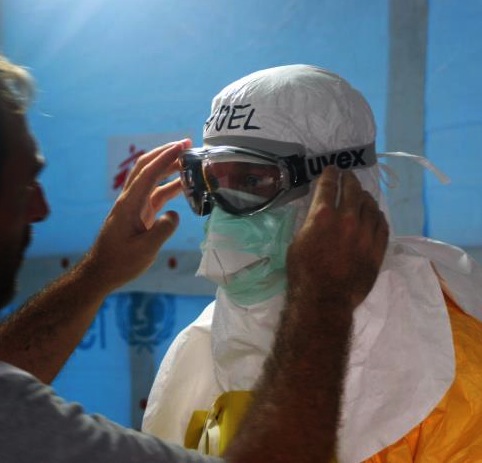
EbolaMask

{credit}Centers for Disease Control and Prevention{/credit}

The council is asking countries to send supplies and medical personnel to Liberia, Guinea and Sierra Leone, and seeks to loosen travel restrictions that have hampered outbreak response in those countries. The unusual resolution was co-sponsored by 131 nations and approved at the first emergency council meeting organized in response to a health crisis.

More than 5,300 people are thought to have been infected with Ebola during the current epidemic, and more than 2,600 have died, according to the World Health Organization (WHO) in Geneva, Switzerland.

The pace of the disease’s spread seems to be increasing, with the number of Ebola cases now doubling every three weeks, UN secretary general Ban Ki-moon told the council. “The gravity and scale of the situation now require a level of international action unprecedented for a health emergency,” he said.

WHO director-general Margaret Chan sounded a similarly dire warning. “This is likely the greatest peace-time challenge that the United Nations and its agencies have ever faced,” Chan told the security council.

The UN estimates that an effective response to the Ebola outbreak will cost nearly US$1 billion, double the $490 million figure put forth by the WHO on 28 August. The United States has promised a major influx of resources, with US President Barack Obama announcing on 16 September that he would send 3,000 military personnel and spend roughly $750 million to aid the Ebola fight.

Lasker Award goes to breast-cancer researcher

Posted on behalf of Mark Zastrow. 

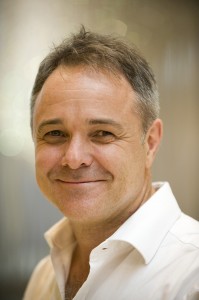
The 2014 Albert Lasker Special Achievement Award has been awarded to the geneticist Mary-Claire King. King, of the University of Washington in Seattle, is the leader of the team that discovered the BRCA genes, mutations in which are linked to breast cancer. King’s team found that the 10% of women affected by such mutations have nearly an 80% chance of developing breast cancer. The rush to develop tests for the mutations triggered a legal dispute in the United States that ended with a US Supreme Court ruling prohibiting the patenting of naturally occurring genes.

King was also recognized for her contributions to human rights in developing DNA analysis to prove genetic relationships. These have have been used to find the ‘lost children’ of Argentina — who were kidnapped and separated from their biological families as infants — and to identify the remains of soldiers missing in action and of disaster victims.

Other winners of this year’s Lasker awards, often referred to as ‘the American Nobels’, include molecular biologists Kazutoshi Mori of Kyoto University in Japan and Peter Walter of the University of California in San Francisco, in the category of basic medical research. They independently uncovered how cells correct proteins that are improperly folded by activating the transcription of certain genes.

The winners for clinical medical research were neurologists Alim Louis Benabid of Joseph Fourier University in Grenoble, France, and Mahlon R. DeLong of the Emory University School of Medicine in Atlanta, Georgia, for their work in high-frequency deep-brain stimulation. By targeting an area of the brain involved in motor functions called the subthalamic nucleus, they found the technique could be used to treat those with Parkinson’s disease to alleviate tremors and motor problems.

NIH finds forgotten ricin during lab sweep

A laboratory sweep at the US National Institutes of Health (NIH) has turned up forgotten stores of the toxin ricin and four pathogens, according to a 5 September agency memo.

The agency undertook the search after discovering improperly stored vials of deadly smallpox virus in a refrigerator at its Bethesda, Maryland, campus in July. That news came just weeks after the US Centers for Disease Control and Prevention (CDC) said that employees at one of its labs in Atlanta, Georgia, were potentially exposed to anthrax because they did not follow established safety guidelines. And in March, CDC employees shipped samples of the dangerous H5N1 influenza virus to another government laboratory without taking proper precautions.

The NIH says that its lab-safety sweeps revealed small amounts of improperly stored ricin and pathogens that cause tularemia, plague, botulism and the tropical disease melioidosis. All five substances are classified as ‘select agents’ — pathogens and toxins that the US government considers to pose a severe threat to public health and safety.

The ricin was discovered in a historical sample collection dating from 1914 and may be 85–100 years old, the agency memo says.

“All of the agents were found in sealed and intact containers and there were no personnel exposures associated with the storage or discovery of these vials or samples,” NIH director Francis Collins said in the memo. Collins added that the agents were reported to the CDC and destroyed.

Meanwhile, the US Food and Drug Administration said on 5 September that it had found improperly stored samples of Staphylococcus enterotoxin, a pathogen that can cause food poisoning. The discovery was first reported by the Associated Press.


Critics say WHO e-cigarette report was ‘misleading’

The latest salvo in an ongoing row over the safety of electronic cigarettes has branded a major World Health Organization-commissioned report guilty of misrepresenting and misinterpreting key evidence.

The fight over whether e-cigarettes curb or encourage tobacco use has reached new heights in recent weeks after the WHO released a report calling for tougher regulation of the devices, which vaporise nicotine-laced liquid for inhalation (see the news feature article ‘E-cigarettes: The Lingering Questions’).

These arguments are being splashed across many media sources today following the publication of a new paper in Addiction.

In the latest development a group of leading researchers on the pro-e-cigarette side take aim at a review commissioned by the WHO, and a version of it later published in Circulation, from a team including leading e-cig sceptic Stanton Glantz, director of the Center for Tobacco Control Research and Education at the University of California, San Francisco.

In the article published today, Ann McNeill of King’s College London and her co-authors write: “We identify important errors in the description and interpretation of the studies reviewed, and find many of its key conclusions misleading.”

Among the claims from Glantz’s team they dispute are that “marketing is back” on TV as a result of e-cigarettes. “Use of the language ‘marketing is back’ is polemic and has no place in an academic report. Reference to placement near ‘candy’ and ‘medicines’ similarly seems intended to create an emotional response and lacks reference to evidence on what the significance of such placement might be,” says the new paper.

McNeill’s group also takes issue with the statement that it has not been proven that these products actually help people stop smoking. “The statement misrepresents the consistent picture emerging from a variety of studies using different designs, that e-cigarettes can help smokers to stop, even though the effect is not strong,” they write.

Expect the other side to issue a strong rebuttal in short order. As Michael Siegel, a tobacco control researcher at Boston University School of Public Health in Massachusetts says in the Nature news feature, “These devices have really polarized the tobacco-control community. You now have two completely opposite extremes with almost no common ground between them.”

Journal retracts paper linking vaccine and narcolepsy

A paper that once promised to help unravel a medical mystery — why some children developed narcolepsy after receiving an influenza vaccine — has been retracted.

Narcolepsy is a disorder that causes extreme sleepiness, sometimes inducing uncontrollable ‘sleep attacks’ that can strike at any time of day. In 2010, a puzzling cluster of sudden-onset narcolepsy cases was reported in Europe among children vaccinated with GlaxoSmithKline’s Pandemrix flu vaccine against the H1N1 ‘swine flu’ that had caused a pandemic in 2009.

On 18 December 2013, researchers reported a possible connection between the vaccine and narcolepsy. In a paper published in Science Translational Medicine, they showed that people with narcolepsy produce immune cells called T cells that recognize hypocretin, a neurotransmitter that regulates wakefulness. People with narcolepsy tend to have low levels of hypocretin in neurons that control wakefulness, and the results supported the notion that autoimmune responses could be destroying the neurotransmitter.

The authors, led by immunologist Elizabeth Mellins and narcolepsy researcher Emmanuel Mignot of the Stanford School of Medicine in Palo Alto, California, went on to demonstrate that pieces of a flu protein often used in vaccines stimulated immune cells that recognize hypocretin. This suggested a mechanism by which the vaccine could contribute to narcolepsy in some people.

But on 31 July, the authors announced that they have been unable to repeat a key finding: that immune cells from people with narcolepsy respond to hypocretin more so than immune cells from people who do not have narcolepsy. “Because the validity of the conclusions reported in the study cannot be confirmed, we are retracting the article,” the team wrote.

The retraction is a setback for a field struggling to find an answer. “We continue to believe that the original scientific hypothesis remains a valid one that needs to be further explored,” said GlaxoSmithKline, a London-based pharmaceutical firm, in a statement. The company says that it is supporting research, including in its own labs, to explore the possible link between its vaccine and narcolepsy, and particularly to learn more about interactions between the vaccine and other risk factors in the people who developed the condition.

Those risk factors were a mystery even before the retraction. And although the paper suggested a possible link between flu vaccines and narcolepsy, it did not clarify why Pandemrix, in particular, would be problematic. The original study was also conducted in a relatively small number of people.

Given such small numbers, the retraction comes as little surprise, says immunologist Outi Vaarala of the Finland National Institute for Health and Welfare in Helsinki. Vaarala, who praises the authors for openly addressing the problems with their paper, also notes that the methods use to assay immune responses are difficult to reproduce, and says reviewers should demand that researchers repeat their experiments using multiple methods. “If you can show differences in T-cell reactivity between patients and controls when different read-outs are used,” she says, “the findings are likely to be reliable.”

NIH advocates gear up for budget fight

The US National Institutes of Health (NIH) would see its budget worries eased if a long-time political champion gets his way.

Senator Tom Harkin, the Iowa Democrat who leads the Senate panel that oversees the NIH, introduced legislation on 24 July that would ensure that the NIH’s budget never drops below its current US$29.9 billion. The bill also proposes that Congress increase the NIH’s budget by up to 10% for the next two years, and 5% each year for the next five years. By 2021, the agency’s budget would rise to $46.2 billion.

The legislation is unusual in that it sets a minimum level for NIH funding regardless of the government’s total budget for a given year. That approach could pit the NIH against other agencies when money is scarce, a scenario that some agency supporters worry is not so hypothetical. A 2011 law known as the Budget Control Act caps total government spending to 2021 (although the caps have since been relaxed for 2014 and 2015).

The Harkin bill would allow increases for NIH beyond this cap. Some advocacy groups say that NIH is not the only biomedical agency that is in need of a boost. “The painful effects of austerity span beyond NIH across the entire health continuum,”  Emily Holubowich, senior vice-president of the Coalition for Health Funding wrote to Nature. “We support a balanced, comprehensive, permanent solution to end this era of austerity for all public health and core government functions.”

The legislation’s future is uncertain, however. Harkin is retiring at the end of this year, and Congress is working on a schedule shortened by the federal election in November. Lawmakers are not expected to finish work on a funding plan for the 2015 budget year — which begins on 1 October — until after the election.

Three HIV insights from sombre global meeting

virologyPosted on behalf of Erika Check Hayden. 

The run-up to the 20th International AIDS Meeting, scheduled to wrap up on 25 July in Melbourne, Australia, was overshadowed by news that a three-year-old child once thought to be cured of HIV still harbours the virus — and by the horrific crash of Malaysian Airlines flight 17, which claimed the lives of six conference delegates.

Here Nature rounds up three major cure stories that unfolded at the conference.

1. HIV establishes secure hiding places from the immune system extremely early after infection — a huge obstacle to developing a cure for HIV infection, scientists say. Researchers reported in Nature on 20 July that monkeys treated starting three days after infection with simian immunodeficiency virus (SIV) appeared to be free of virus after two years. But after treatment was stopped, the virus escaped from its hiding places, or “reservoirs”, and the infections resurged in the monkeys.

2. Still, finding a way to eliminate such reservoirs seems the only way to a cure, and scientists reported a degree of progress in this direction on 22 July. A team from Aarhus University in Denmark used a cancer drug called romidepsin to re-activate dormant HIV  in six infected patients. HIV then surged to detectable levels in five of the patients. The next step in this ‘kick and kill’ strategy is to find a way to eliminate the resurgent virus and the cells that produce it — perhaps by using a therapeutic vaccine to boost the patients’ immune systems.

3. Other researchers are testing gene therapy to cure HIV — for instance, by modifying immune cells so that they become resistant to the virus. A team at the University of New South Wales in Australia is examining whether inducing lab-grown cells to make proteins that target HIV can block infection. Another Australian group infused HIV-infected cells with molecules that prevented cells from becoming activated by drugs such as romidepsin. This raises the possibility of a strategy that reverses the kick-and-kill approach: it would prevent resting cells from leaving their dormant state. Neither strategy is yet being tested in patients, but against this week’s suite of dispiriting news, they offer a reminder that the HIV cure field is far from exhausting all options.

Wellcome Trust looks to youth and ‘high-risk’ research

C0058571 Jeremy Farrar

Jeremy Farrar
{credit}Wellcome Library, London{/credit}

The United Kingdom’s largest biomedical charity is to shake up the way it forks out its funding, with an increased emphasis on ‘high-risk’ research and stronger support for less-experienced scientists.

The director of the Wellcome Trust, Jeremy Farrar, announced today that his charity would seek to “significantly improve” certain areas of research funding. Farrar took charge of the trust nine months ago, and this is the first indication of how he may shake up grants from the United Kingdom’s largest non-governmental biomedical funder.

As well as boosting support for early- and mid-career researchers, the trust will launch what Farrar called a “major new scheme for collaborative research” and a programme of smaller grants “to promote the development of innovative or high-risk research ideas”.

“Our plans remain a work in progress, and I hope you will understand that we have not yet worked through the details of what they will mean for specific funding schemes,” he wrote on the trust’s website. “I thought though that the research community would find it helpful to know a little more now about our direction of travel.”

Read an interview with Farrar at Nature Medicine.

Antibiotic resistance focus of UK Longitude Prize

The people have spoken. Antibiotic resistance has been voted by the UK public as the subject of the government’s £10-million (US$17-million) Longitude Prize — an initiative aimed at tackling society’s greatest issues.

Competing teams will now have five years to create a cost-effective, accurate, rapid and easy-to-use test for bacterial infections to win the prize. The organizers hope that such a test will help health workers to better target the use of antibiotics, which will prevent the rise of drug-resistant strains.

Bacteria’s growing resistance to life-saving antibiotics was the subject of a stark warning by the World Health Organization, leading to calls (including by Nature) to create an intergovernmental panel to tackle the issue.

In the public vote, collected on the webpage of the BBC2 television show Horizon, the issue beat challenges involving food, water scarcity, climate change, paralysis and dementia to become the focus of the prize.

This autumn the prize organizers, the Longitude Committee and London-based innovation charity Nesta, will publish the criteria entrants must fulfil, following consultation with the scientific community. Groups with “creditable ideas” will be invited to review sessions throughout the five years, starting in autumn 2015.

Launched by UK Prime Minister David Cameron last year and opened for public voting last month, the initiative is named after a competition the British government launched 300 years ago, and has parallels with modern ‘challenge prizes’, such as those administered by the Culver City, California-based X-Prize Foundation.

Writing in Nature last month, chairman of the Longitude Committee, Martin Rees, said that he hoped both the prize fund and publicity generated by a well-designed prize would “unleash investment from many quarters, amounting to much more than the prize itself”. (Philip Campbell, Nature‘s editor-in-chief, is also a member of the prize committee.)

Human-rights court rules that evidence must support compassionate therapy

Patients do not have an automatic right to a compassionate therapy for which there is no scientific evidence of efficacy, according to a landmark ruling of the European Court of Human Rights in Strasbourg, France.

The 28 May ruling referred to the case of Nivio Durisotto, whose daughter has a degenerative brain disease. He wished her to be treated with a controversial stem-cell-based therapy offered by the Stamina Foundation, based in Brescia, Italy.

But more generally, it will guide any judge facing requests from desperate patients for access to unproved therapies promoted from outside the regulated medical sector.

The judgement is yet another blow for the Stamina Foundation, whose president, Davide Vannoni, is now facing charges of fraudulently obtaining public money to support his therapy.

The Italian Medicines Agency had closed down the Stamina operations in August 2012 on safety grounds (see ‘Leaked files slam stem-cell therapy‘). In March 2013, the government issued a decree allowing patients to continue Stamina treatment if they had already begun.

Then on 11 September 2013, an expert committee appointed by the health ministry to examine the Stamina method concluded that there was no evidence to indicate that it might be efficacious (see ‘Advisers declare Italian stem-cell therapy ‘unscientific’ ‘). The committee further warned that it could be dangerous.

With encouragement from Vannoni, some patients appealed to courts for the right to treatment with the Stamina method. Some judges ruled that the treatment should be given on compassionate grounds, while others — including the judge in the Durisotto case — ruled that compassionate therapy was not justified because there was no scientific evidence of efficacy.

Durisotto brought his appeal to the European Court of Human Rights on 28 September 2013, a month after losing his case in Italy.

The European Court dismissed Durisotto’s claim, saying that the Italian court’s ruling had “pursued the legitimate aim of protecting health and was proportionate to that aim”. It further said that the Italian court’s decision had been “properly reasoned and was not arbitrary”, and that “the therapeutic value of the Stamina method had, to date, not yet been proven scientifically”. Because the case had been appropriately reasoned, it said, Durisotto’s daughter had not been discriminated against — even if some other national courts had allowed the therapy for similar medical conditions.

Munich-based patent lawyer Clara Sattler de Sousa e Brito, an expert in biomedical laws, says that this “clear ruling that scientific proof is necessary will help avoid the use of unproven therapies for so-called compassionate purposes in the future”.