London Naturejobs Career Expo 2014 journalism competition

Naturejobs-Career-Expo-Boston

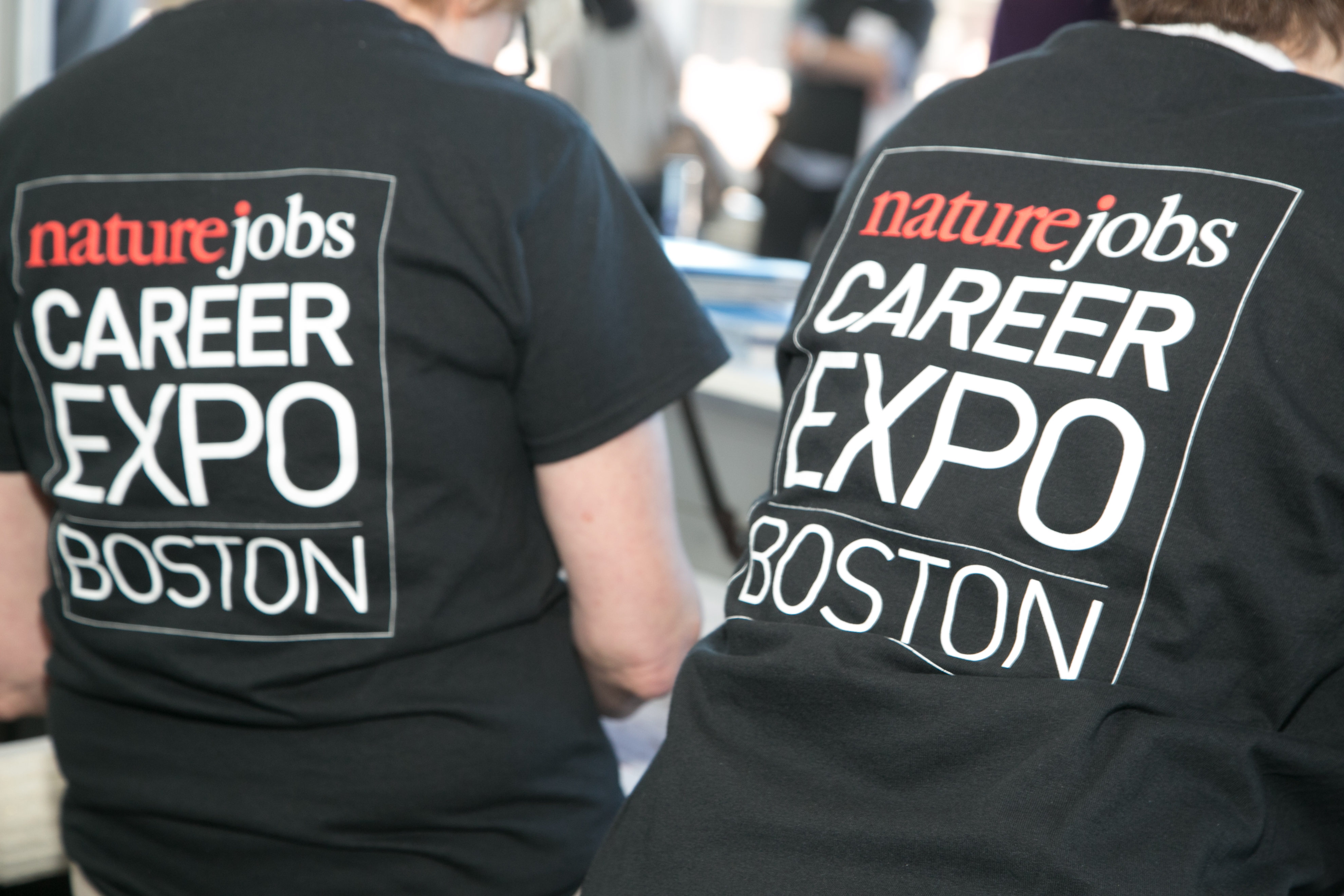
Following the success of the Boston Naturejobs Career Expo journalism competition (you can read all the articles from the competition in the #NJCEBoston category), we have decided to repeat it for the London Expo, which takes place on 19th September  2014 at the Business Design Centre in Islington.

We are looking for five budding science writers to help us with our coverage of the Naturejobs Career Expo conference sessions and workshops. The conference will explore career paths in industry, academia and science communication,  entrepreneurship, structuring a CV and transferable skills, amongst other things. The five winners will have the opportunity to attend the Expo and write up at least two of the sessions or workshops for our readers, sharing the advice and expertise of the speakers with those who cannot attend in person. Winners will work closely with our editors, and their articles will be published on the Naturejobs blog.
Continue reading

How to prepare for a science careers fair: After the event

_NJCE(Long)eps
The fair is over and you were a glowing success. Now it’s time to capitalise on the networking you did, those business cards you collected and CVs you handed out.

Always follow up with people you spoke to. Many of the recruiters will base their impressions of you on your continued conversation. Here are our top Do’s and Don’ts when it comes to follow-up letters:

  • DO send the email within 48 hours.
  • DON’T do it as you’re leaving the building: you don’t want to be too keen.
  • DO make it specific: mention something from the conversation that was memorable (e.g., a project that you did your homework on).
  • DON’T warble on about how amazing the science career fair was (although the Naturejobs Career Expo will be awesome).
  • DO proofread all emails you send out: spelling and grammatical mistakes will completely undermine all your efforts from the day.
  • DON’T send the wrong email: make sure you’ve got the name and organisation correct.
  • DO attach a CV where appropriate: if you didn’t have one on the day, and the recruiter asked for one, then it would be appropriate to attach one.
  • DON’T send a generic one: tailor it to the job role and company.

An example email may look like:

Dear Mr/Mrs/Dr [INSERT SURNAME],

It was great to meet you at the Naturejobs Career Expo in Boston yesterday. I’d like to thank you for taking some time to talk to me about [INSERT PROJECT NAME]; it’s a fascinating piece of work that I have been following for some time now. As I mentioned, this is a field that I am keen to enter, and your organisation appears to offer excellent opportunities for someone at my level.

I have followed your suggestion of [INSERT SUGGESTION – might be attach a CV, upload CV online etc]. I do hope this brings me one step closer to the job as a [INSERT JOB TITLE] you mentioned.

If you need anything else from me, please do not hesitate to call me at [INSERT PHONE NUMBER] or use this email address.

Yours sincerely,

[INSERT YOUR NAME]

Following these simple tips will hopefully get responses from all your conversations. And, fingers crossed, an interview or two.

Good luck!

Windback Wednesdays round-up: the Career Expo is back

windbackweds

{credit}Naturejobs{/credit}


Over the last four weeks, as we gear up to this year’s Naturejobs Career Expo and conference in London next Thursday 19th September, we’ve been revisiting some of the best tips and advice to come out of past expos.

We kicked off with a post on top tips for getting recruited abroad, before finding out how to identify those ever-elusive transferable skills.

This was followed by some great advice in our podcast all about the art of networking, and last week we revisited some vital tips from last year’s conference on social media for scientists.

The programme this year is as packed as ever, and there’s still time to register your place. All new this year will be the CV checking service, and an interactive room which lets you spend face-to-face time with our speakers and exhibitors. There will be two streams, covering academia and industry, but delegates are free to switch between the two.

Speakers include nutritionist Claire Hughes from Marks and Spencer talking about science jobs in the food and retail sector, Andrew Mackintosh from the Royal Society Enterprise Fund talking about entrepreneurship, and Nessa Carey from Pfizer speaking about careers in industry.

In the ‘Academia: the reality’ sessions delegates will have the chance to ask those in the know about the nitty-gritty of the job, from running a lab to successful grant submissions and juggling the demands of a career in science and a family. In our panel on science communication, Alok Jha from The Guardian, Jenny Gimpel from Great Ormond Street Hospital, Marek Kukula from the Royal Observatory Greenwich, and Chris Tyler from the Parliamentary Office of Science and Technology,will be speaking about how to get into science journalism, PR, public engagement/museums, and science policy. And of course there’s the keynote from Eva Amsen, Outreach Director for F1000Research.

That’s a mere taster – for the full programme, visit the Career Expo website here.

The expo itself is free to attend, and will feature over 60 companies from around the world, representing both industry and academia, public and private sectors.

We will be blogging and live-tweeting from the event, using the hashtag #NJCE so do join us, either in person or online – and send in any questions for our speakers. You can do so via twitter @naturejobs or on facebook, or by emailing the editor: naturejobseditor@nature.com

See you then!

Robert Winston: Why students should bother with science communication

By Chandrika Nair, contributor

RobertWinston

{credit}Imperial College London{/credit}

As a PhD student myself,  I know too well that taking ‘time out’ from your research to gain so-called soft skills like communication might feel like an unwanted distraction, or a waste of time. Which was why I turned up to listen to Robert Winston – medical doctor, scientist, and science communicator – address PhD students at Imperial College London last week, where he strongly advised us to brush up on our storytelling skills.

Better science communication means better papers.

During the talk, Winston pointed out that storytelling is a powerful and innate communication tool.“We’ve been telling stories around campfires since the early days of human evolution,” he said, and scientists need to take that tool and apply it to their research. In order to publish in top journals, we must get the narrative right. Leading them through the story, we first convince readers and editors that the rationale behind our work is sound. Then, we strive to remain intelligible as we walk them through how we obtained our data. Finally and crucially, we persuade them that our results are relevant and that our research was worth doing at all. So stories matter, even in science.

Science ‘miscommunication’ is dangerous. Continue reading

Learn how to become a bio-entrepreneur

Cross-posted from Trade Secrets blog

Brady Huggett

The word entrepreneur is thrown around so much, it can begin to lose its meaning. The term sounds vaguely swashbuckling, as if every person it applies to is flippantly quitting a secure academic job to roll the dice on a sexy, but probably doomed, start-up.

That may or may not be accurate, but the best way to define an entrepreneur is to go talk to one. Or several. Along those lines, Index Ventures (with support from Nature Biotechnology), is hosting a day-long event on October 18 in London, bringing together five experienced biotech entrepreneurs to explain just what it’s like to be at the forefront of biotech company formation.

The event will include personal perspectives from those who have already made the leap, as well as a business pitch workshop.

The event is free to students and academics. Read more about the event, and how to sign up, on the Trade Secrets blog.


Summer science events this week in Boston

Monday

The Boston area has Geek Week – comedy – and Nerd Fun – a meet up –and this week, Nerd Night. The lectures – and music – take place at the Middlesex Lounge in Cambridge.  The event is described as “ an informal gathering at which nerds get together for nerdery of all sorts (well, mostly presentations and drinking). Nerds and non-nerds alike gather to meet, drink and learn something new.” Monday topics: immunology and the wonders of silk.

Tuesday

Science camps and children events abound this summer, with too many to list here. But, note that the Mass Audubon’s Broadmoor Wildlife Sanctuary in Natick is hosting a night nature program that combines ice cream and critters – frog, fireflies and this week, bats. Registration required.

Wednesday

The last of the Midsummer Nights’ Science lectures covers “Harnessing genomics to decipher fundamental differences” with Stacey Gabriel: “Since the days of the Human Genome Project, the Broad’s Genomics Platform has harnessed DNA sequencing and genotyping technologies …. Stacey Gabriel will discuss the implications of using these techniques to compare DNA from cancerous cells to normal cells, from one person to another, and from humans to other animals.” (Nerd Fun will meet up there.)

 Click here for the full Nature Boston calendar.