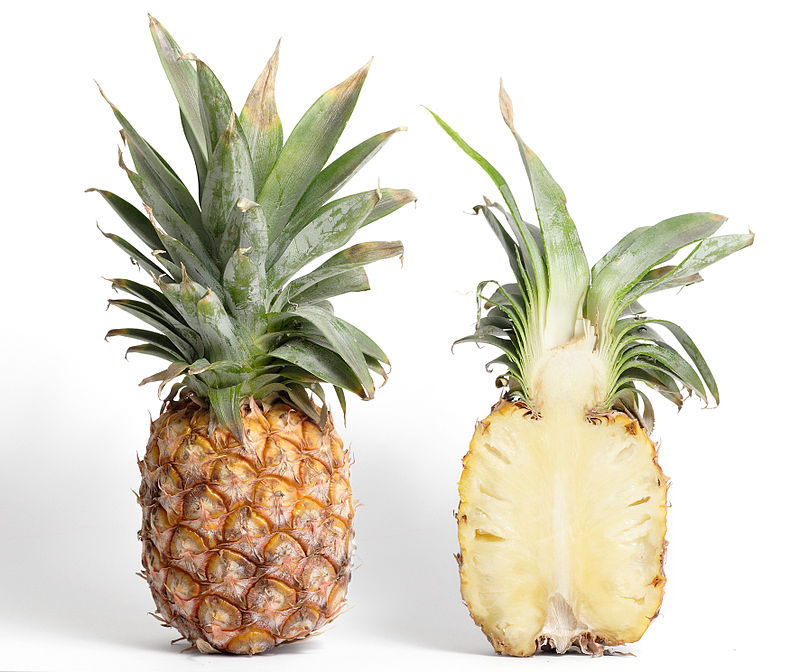
“Pineapple and cross section” by Taken byfir0002 | flagstaffotos.com.auCanon 20D + Sigma 150mm f/2.8 – Own work. Licensed under GFDL 1.2 via Commons
The genome sequences of cultivated pineapple (Ananas comosus) and a related wild species (Ananas bracteatus) were published last week by Ming et al. in Nature Genetics. The genome has already led to insights into monocot evolution and CAM photosynthesis. In the future, studies that use the pineapple genome have the potential to lead to innovations in engineering drought resistant crops.
Every species, plant, animal or microorganism, that is sequenced is a useful resource for the research community. But each time a new genome is sequenced, we ask “what is really new about this one” and “what are we learning about biology”? Pineapple is of course a delicious and economically important crop, but what makes its genome special?
There are a number of important aspects of pineapple biology that make it an important genome to sequence. First, pineapple uses a metabolic strategy known as crassulacean acid metabolism (CAM). CAM allows the plant to conserve water, making it more resistant to drought. Only one other CAM plant has had its genome sequenced, the orchid Phalaenopsis equestris.
{credit}Zhong-Jian Liu, National Orchid Conservation Center of China {/credit}
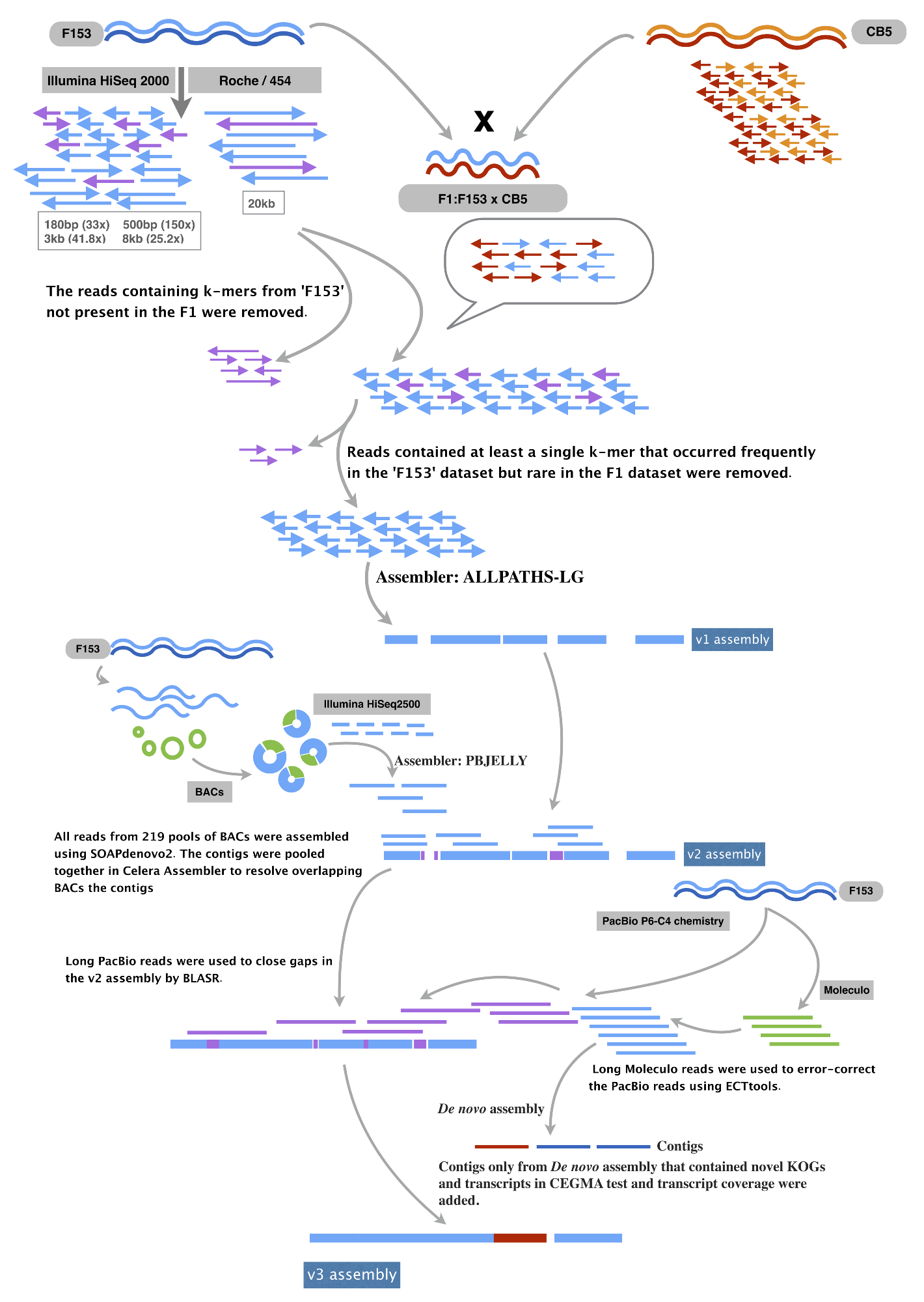
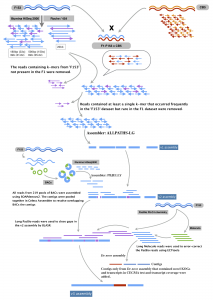
Another reason to study the pineapple’s genome is to understand how self-incompatibility has evolved in monocotyledon plants. Wild pineapple species are self-compatible, but cultivated pineapples are not. As a result, cultivated pineapple is highly heterozygous. This aspect of pineapple biology also makes sequencing its genome technically challenging. Fortunately, the authors of the study devised a way around this potential problem to generate an extremely high-quality genome assembly (see the image on the right, courtesy of Zhong-Jian Liu, who was not affiliated with the study. Click for a larger view).
One of the most interesting aspects of the pineapple genome was only discovered after the genome was assembled. As the study’s authors found, pineapple has conserved the order of genes on its chromosomes more so than any other monocot studied to date. This high degree of synteny with the hypothetical ancestral monocot makes pineapple an ideal outgroup for comparative evolutionary studies involving other monocot species, such as grasses.
We spoke to the lead author of the study, Ray Ming, to learn a little more about how the study was conducted.
The genomes of many plants have been sequenced, or are in the process of being sequenced. Why did you decided to focus on pineapple?
I started my career at the Hawaii Agriculture Research Center and have been working on genomics of Hawaiian crops, including papaya, pineapple, sugarcane, and coffee. We sequenced the papaya genome first. It is a logical choice to sequence the smallest genome of the remaining three next. In addition, pineapple is the most economically important CAM plant crop, the second most important tropical fruit, is self-incompatible, and prone to somatic mutations.
How was the idea arrived at to use hybrids (the F153 x CB5 F1 cross) to overcome issues of high heterozygosity in the assembly process? Was this the initial plan, or were there other ideas as well?
We anticipated the difficulty of assembling the heterozygous pineapple genome. Before we started the genome project, I discussed this issue with co-author John Bowers during the International Plant and Animal Genome Conference in San Diego, and John was the one who came up with the idea to sequence an F1 individual at deep coverage to have a single molecule from each parent for phasing to improve the assembly of the reference genome F153. Co-author Michael Schatz implemented this strategy, and also designed sophisticated approaches to improve the assembly of this heterozygous genome as detailed in the method section. Mike’s team did an outstanding job to produce a high quality assembly of this highly heterozygous genome. Mike is a pioneer and a leading scientist in assembling complicated and complex plant genomes.
We also tried to sequence the genome from single sperm cell to generate haploid genome sequences, but it wasn’t successful. The long reads from Moleculo and PacBio improved the genome assembly, and the ultra-high density map of re-sequencing F1 individual genomes substantially improved the quality of the genome assembly and corrected 199 chimeric scaffolds.
Did you expect to see such high levels of conservation of synteny with ancestral monocots in the pineapple?
No. It was a surprise, but it makes sense since pineapple is self-incompatible and vegetatively propagated, hence having fewer generations of sexual reproduction in its evolutionary history.
How do you envision others using the pineapple genome sequence in their research?
The pineapple genome will be used for CAM photosynthesis research as a model system, and it will be used as a reference genome or even the reference genome for comparative genomics in monocots.
 Bonus question: What is your favorite fruit?
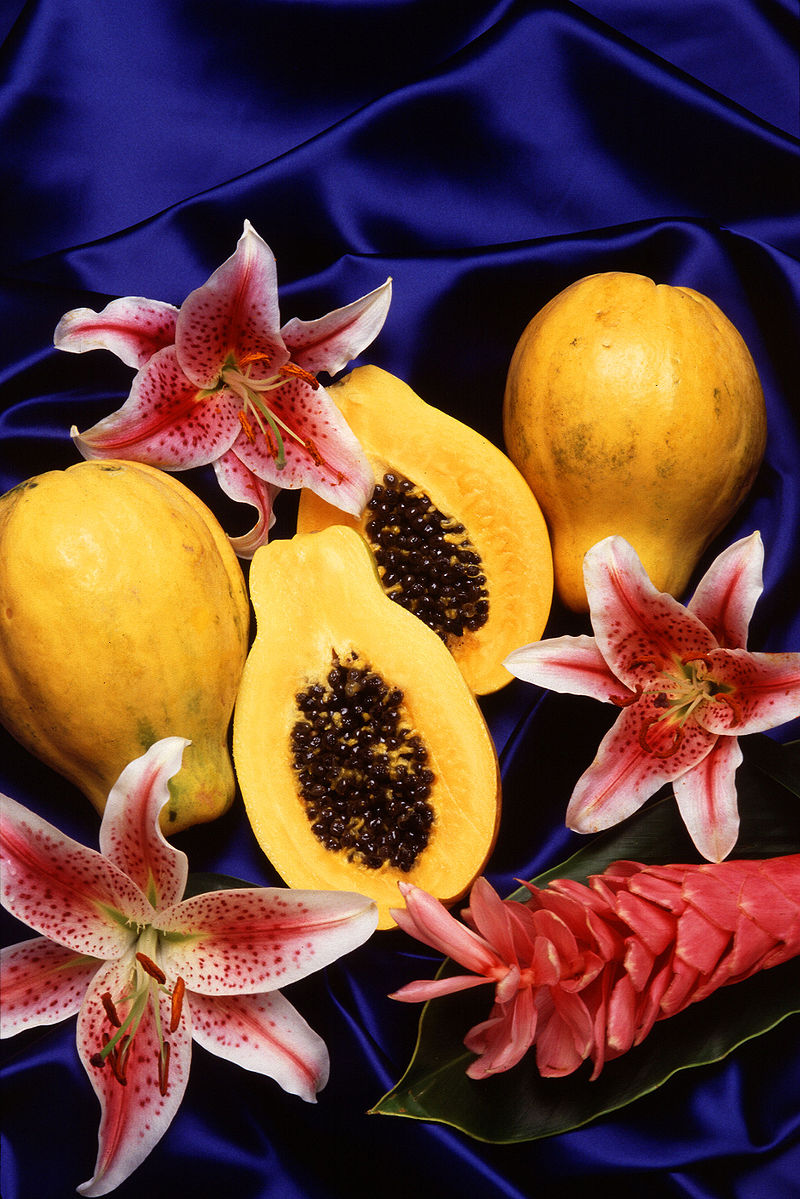
Pineapple for its extraordinary flavor and aroma, and papaya for its number 1 nutritional value among fruits, and for its flavor.