Some resources and tools related to noncoding RNAs

In ‘Meet some code-breakers of noncoding RNAs,’ the technology feature in the February issue of Nature Methods, we speak with a few scientists about the path ahead in methods for characterize the noncoding RNAs.

With their input, we compiled a list of some of resources and tools in this field.

We can gladly include additional resources. Please comment on this page. You can also tweet us: @naturemethods or @metricausa

Some resources and tools related to noncoding RNAs:


Resource Description Publication
DASHR Database of small human noncoding RNAs

Leung, Y.Y et al DASHR:database of small human noncoding RNAs. Nucleic Acids Res. 44:D216-22. (2016)

FANTOM CAT Functional Annotation of the mammalian genome (FANTOM) is an international consortium.

This resource is an atlas of human long noncoding RNAs with accurate 5’ ends


Chung-Chau, H. et al Annotation of noncoding transcripts for example to find functional lncRNAs that show an effect on global expression after knockout/knockdown Nature 543,  199–204  (2017).

Okazaki, Y. et al.Analysis of the mouse transcriptome based on functional annotation of 60,770 full-length cDNAs.
420(6915):563-73 (2002).

Gencode Resource about human and mouse noncoding RNAs, drawing on data generated by the Encyclopedia of DNA Elements (ENCODE) consortium.Information about the noncoding RNA species and their annotations are here Harrow J, et al. GENCODE: The reference human genome annotation for The ENCODE ProjectGenome Research doi: 10.1101/gr.135350.111. (2012)
LNCipedia Database of annotations of  functional long noncoding RNAs manually curated from the scientific literature Clark MB, et al. lncRNAdb: a reference database for long noncoding RNAs. Nucleic Acids Res 39: D146-151 (2011).
 lncRNAdb  Database of annotations of  functional long noncoding RNAs manually curated from the scientific literature Amaral, P.P et al lncRNAdb: a reference database for long noncoding RNAs. Nucleic Acids Res 39: D146-151.(2011).
lncRNAWiki A Wiki to encourage community-based curation of human long noncoding RNAs. Ma, L et al. LncRNAWiki: harnessing community knowledge in collaborative curation of human long non-coding RNAs Nucleic Acids Research43, D1, p. Pages D187–D192, (2015).


lncRNAtor A portal for long noncoding RNA with information such as expression profiles and coding potential. Data sources include TCGA, GEO, ENCODE and modENCODE. Park, C. et al. lncRNAtor: a comprehensive resource for functional investigation of long non-coding RNAs. Bioinformatics. 30(17):2480-5. (2014).
MINTbase Database of tRNA fragments from 11,000 people and 32 cancer types Pliatsika, V.et al. Nucleic Acids Res. 46, D1, D152–D159 (2018).
miRBase Database of published miRNA sequences and annotations Griffiths-Jones S. et al. Nucleic Acids Res. 36, D154-158 (2008).
miRDip A resource with human data; for finding microRNAs that target a gene; or genes targeted by a microRNA Tokar, T. et al mirDIP 4.1- integrative database of human microRNA target predictions, Nucleic Acids Res. 46(D1):D360-D370. (2018).
miRGeneDB A database of validated and anotated human microRNA genes Fromm, B. et al et al. MirGene DB2.0: the curated microRNA GeneDatabase, manuscript in bioarXiv. doi: https://doi.org/10.1101/258749
Noncode A noncoding RNA database with information from 17 species especially long noncoding RNAs. The information is mined from the scientific literature and data resources such as lncRNAdb, and lncipedia.

It includes links to literature about tools such as ncFANs for functional annotation of lncRNAs,

Liu C, et al. NONCODE: an integrated knowledge database of non-coding RNAs. Nucleic Acids Research, 2005, 33 (Database issue):D112-D115. (2005)
Regulome resources and data  Resources and data from the Center for Personal Dynamic Regulomes, including the ATAQ-Seq protocol and transcriptional landscape data from 13 cell types from healthy people and 3 cell types from people afflicted by leukemia. Corces MR, et al. Lineage-specific and single-cell chromatin accessibility charts human hematopoiesis and leukemia evolution. Nature Genetics  48(10):1193-203 (2016).
RNA central Resource hosted at the European Bioinformatics Institute that draws on a number of other database resources, such as

LncBase

This resource includes, for example, a database of experimentally supported miRNA:gene interactions and analysis tools and pipelines such as for miRNA pathway analysis

snOPY

snoRNA orthological gene database with information abut snoRNAs, snoRNA gene loci and target RNAs.

TarBase

Manually curated experimentally validated miRNA-gene interactions


 Tools 
miRDeep
miRDeep2
Tools for miRNA identification from RNA-seq data An, J et al miRDeep*: an integrated application tool for miRNA identification from RNA sequencing data.Nucleic Acids Res.41(2):727-37 (2013).

Friedländer MR et al. miRDeep2 accurately identifies known and hundreds of novel microRNA genes in seven animal clades. Nucleic Acids Res. 40(1):37-52. (2012)

 MiRNA prediction tool   miRNA prediction Miranda, KC et al. A pattern-based method for the identification of MicroRNA binding sites and their corresponding heteroduplexes Cell126, 1203-1217, (2006).
 OASIS  Small non-coding RNA detection and expression analysis tool Capece, V. et al. Oasis: online analysis of small RNA deep sequencing data. Bioinformatics 31, 2205–2207 (2015).
Datasets
Analysis of 13 cell types; expression of primate and tissue-specific microRNAs Human miRNAs, their targets, and visualization of the loci on the human genome browser Londin, E, et al. Analysis of 13 cell types reveals evidence for the expression of numerous novel primate- and tissue-specific microRNAs Proc. Natl. Acad. Sci.U.S.A. 112(10):E1106-15. (2015).

Sources: H. Chang, Stanford University School of Medicine; Rory Johnson, University of Bern, E. Marshall, BC Cancer Agency; M. Turner, Babraham Institute; U. Ohler, Max Delbrück Center for Molecular Medicine; I. Rigoutsos, Philadelphia University + Thomas Jefferson University; Nature Research.


A conversation about neuroscience

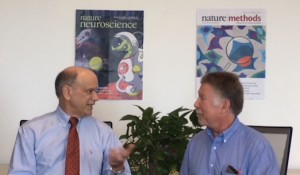
Nature research journal editors speak with Eric Nestler and Robert Greene about neurobiology and the Society for Neuroscience (SfN) 2017 annual meeting.

A conversation about neuroscience
presented by Nature Methods, Nature Neuroscience & Nature Communications

Sachin Ranade and Jean Zarate

eric_nestler_robert_greene


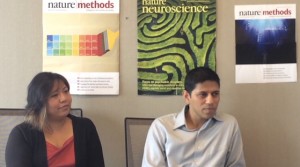
In advance of the 2017 annual meeting of the Society for Neuroscience, Jean Mary Zarate, an editor at Nature Neuroscience and Sachin Ranade , an editor at Nature Communications (photo, upper left) had the opportunity to speak with Eric Nestler, President of the Society for Neuroscience and researcher at the Icahn School of Medicine at Mt. Sinai and Robert Greene, a scientist at the University of Texas Southwestern Medical Center (photo, upper right).

Watch the video here

XFEL projects, tools, data portals

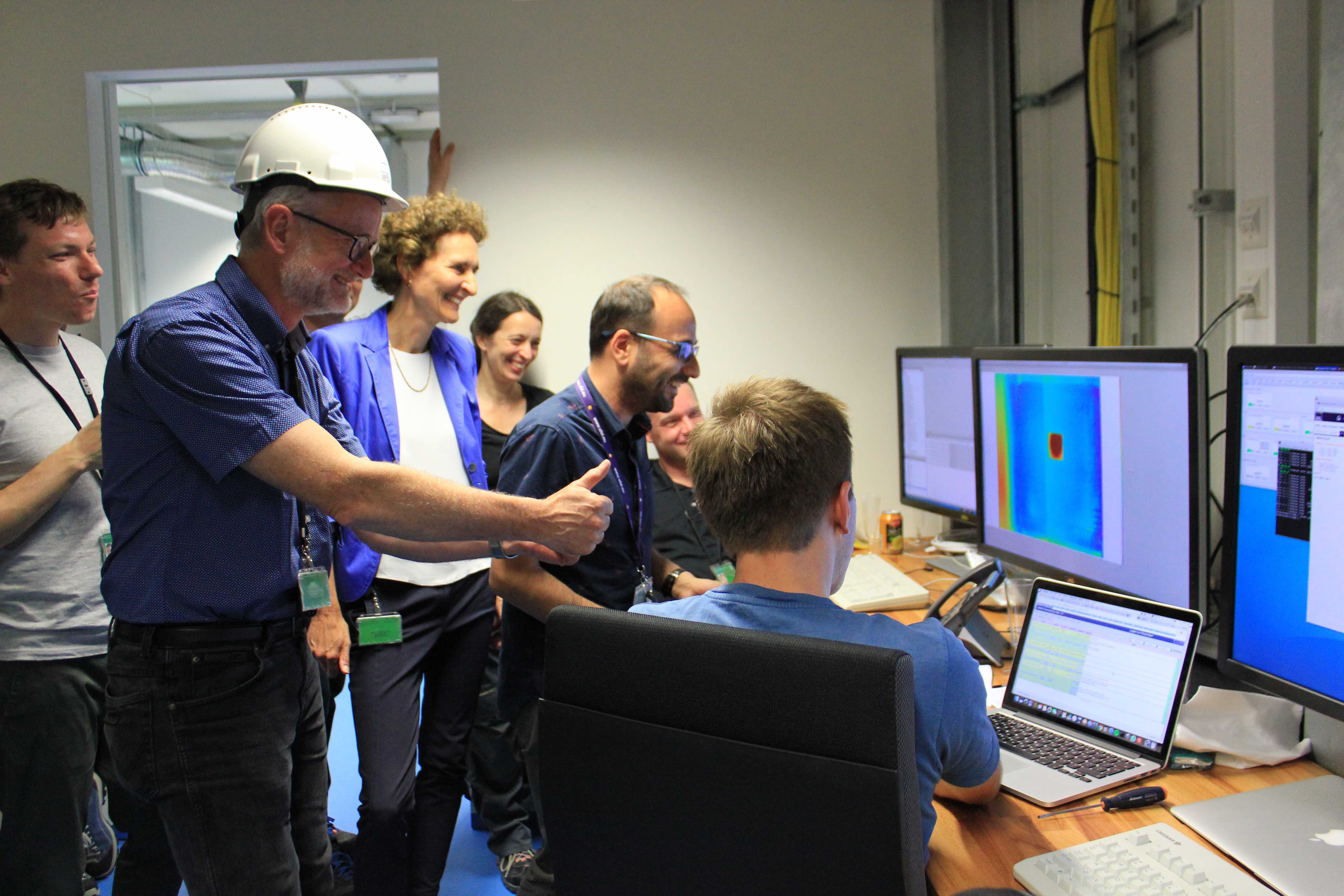
Earlier this year, the EuXFEL’s first laser beam reached the ‘hutch’.

Earlier this year, the EuXFEL’s first laser beam
reached the ‘hutch’.{credit}Jessica Mancuso{/credit}

As of September 1, the European X-ray free-electron laser (EuXFEL) is ready for the research community’s experiments; the user page is here.

In the September issue of Nature Methodswe present some of the experimental ideas researchers are exploring in that facility.

Other XFELs are operational or in the works: FERMI facilityLinac Coherent Light Source at Stanford (LCLS)Pohang Accelerator Laboratory (PAL) X-ray Free-Electron Laser, SPring-8 Angstrom Compact Free ElectronLaser (SACLA)Swiss Free-Electron Laser (SwissFEL).

One day, there might even be a XFEL that fits on a table-top (see below). The day is already here when scientists need to analyze mountains of XFEL-data. The EuXFEL will likely make those mountains grow in height. There are tools for that and likely more tools to come (see far below for a list of some tools).

Tabletop XFEL

To complement the large XFEL facilities, a number of research groups are developing benchtop XFELs9,10. Such projects involve miniaturization of all aspects of the technology, including the accelerator. Some groups explore ways to pass a laser through plasma to produce bright, high-energy, short-pulsed beams. Separately, some researchers use a terahertz generator, which can provide sufficiently high pulse energies, says Franz Kärtner, a physicist at the University of Hamburg who also holds an appointment at MIT. His team, along with Petra Fromme of Arizona State University, is developing such a tabletop XFEL instrument.

The scientists would like to use the instrument for coherent diffractive imaging and spectroscopy experiments on photosystem II, a protein complex involved in photosynthesis. Their compact XFEL approach, which will use a terahertz generator, lasers and nonlinear optics, is calculated to achieve photon energies between 10 and 12 keV, hard X-rays that can be harnessed for imaging at atomic resolution, says Kärtner.

Although this compact XFEL will generate fewer photons per shot than a large-scale FEL—106 to 109 photons per shot as opposed to 1012 photons or more—the machine will be able to produce very short pulses, on the order of 0.5 femtoseconds. That is 10–100 times shorter than current FEL pulses. And if that comes to be, says Kärtner, the peak power of the instrument may be almost on par with that of an XFEL.

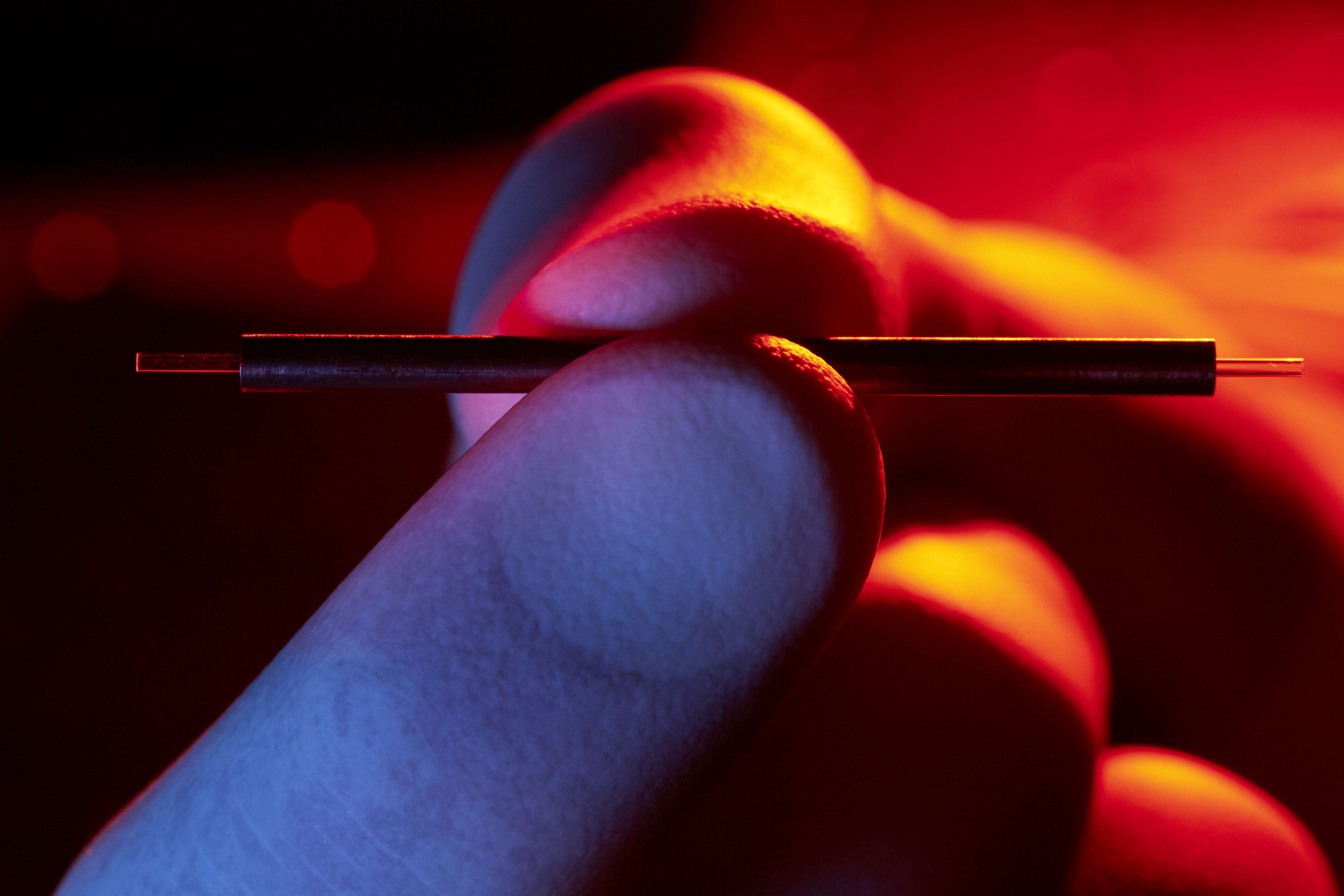
A terahertz accelerator module for a table-top XFEL in the making

A terahertz accelerator module for a table-top XFEL in the making
{credit}DESY/Heiner Müller-Elsner{/credit}

In the instrument’s terahertz-driven accelerator there will be acceleration gradients between 500 MV/m to 1GV/m. It’s this high frequency that helps to compress electron bunches over short distances and that will let the developers to use compact electron guns. In this fashion, they will be able to shoot a coherent electron beam directly from a gun and emit an X-ray beam much like a FEL, says Kärtner.

Tabletop XFELs fill an important experimental gap between Röntgen’s X-ray tube and the large-scale FELs. “There is nothing in between,” says Kärtner. That’s akin to a situation in optical science in which researchers need to choose between a light bulb and a large-scale optical laser such as the one at the National Ignition Facility at Lawrence Livermore National Laboratory. If the developers of the compact XFEL succeed at packing enough photons into each shot, the instrument will have potential applications in many fields, he says, including enhanced characterization of materials or higher-resolution medical and structural biology imaging.

  1.  Kneip, et al. Nat. Phys. 6, 980–983 (2010).
  2.  Kärtner, X. et al. Nucl. Instrum. Methods Phys. Res. A 829, 24–29 (2016)

Data mountains

XFEL-based experiments produce mountains of data. At EuXFEL, there are two two-dimensional pixel detectors, which will each deliver 10-40 gigabytes of data every second of an experiment.

Experimental data will be housed in the facility’s online systems and then moved to offline disk-based systems also at the facility where researchers can access and analyze it, says Filipe Maia, a biophysicist at the Uppsala University.

The data torrent makes for “a daunting problem,” says Maia, “and currently there’s clearly a lack of user friendly tools.” This issue is a general trend and not unique to XFEL-based research, but researchers are getting better at handling datasets, which happens also as they familiarize themselves with the increasingly available tools. After publication, he hopes the XFEL-data will be transmitted to an online repository to share it with the community. One such resource is the Coherent X-ray Imaging Data Bank (CXIDB), which he built.


Here are some tools for analyzing and managing XFEL data                             

 Resource Description
CASS-CFEL-ASG Suite of tools for real-time monitoring of XFEL experiments, data analysis and visualization, raw data correction, crystal hit finding.
cctbx.xfel Suite of tools for processing measurements made during SFX experiments at an XFEL. Built on Computational Crystallographic Toolbox.
CrystFEL Software suite for processing SFX data.
 Cheetah Data analysis and high-throughput data reduction tools for SFX data.
 Condor Simulation of Flash X-ray imaging to help solve structures without needing crystallization
 Dragonfly  Software/algorithm for single-particle imaging with XFELs
 Hummingbird  Real-time monitoring of XFEL experiments
 Hawk  Package for analyzing and phasing diffraction patterns from single particle-based experiments
 IOTA Spot-finding software for XFEL-based diffraction images. Part of the cctbx.xfel suite.
 OnDA  Real-time monitoring and data analysis of XFEL experiments
 psana  A data analysis framework at LCLS
 SACLA analysis  framework Real-time data processing pipeline at SACLA for serial femtosecond crystallography; it uses modified Cheetah and CrystFEL.
WavePropaGator Software framework for simulating XFEL experiments.
 XATOM  Software calculating and simulating X-ray atom interaction.
Part of the software package Xraypac.
 XMDYN  Simulation tool for modeling dynamics of matter that is exposed to high-intensity X-rays. Part of the software package Xraypac.
 Resources and Portals 
 Coherent X-ray Imaging Data Bank (CXIDB) A database for coherent X-ray imaging experiments.
 LCLS data  analysis  Data analysis resources at LCLS.
 Protein Data  Bank (PDB)  Data repository for protein structures.
 SIMEX  A project that aims to develop an experimental simulation platform for use at XFELs

Sources: Henry Chapman, DESY; Janos Hajdu, Filipe Maia, Uppsala University; Sébastien Boutet, LCLS

LCLS: Stanford Linac Coherent Light Source; Linac Coherent Light Source, SLAC National Accelerator Laboratory (formerly named Stanford Linear Accelerator Center)
SACLA: Spring-8 Angstrom Compact Free Electron Laser
SFX: Serial Femtosecond Crystallography
XFEL: X-ray free-electron laser

Stem cells: a conversation with Sally Temple and Lorenz Studer

Sally_LorenzFrom June 14-17, scientists convened in Boston for the annual meeting of the International Society for Stem Cell Research (ISSCR). Here is the browsable program.

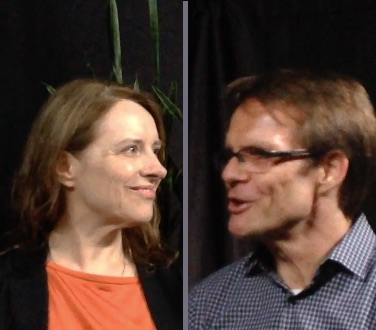
In advance of the meeting, we had the opportunity to chat with Sally Temple, president of ISSCR, co-founder and scientific director of the Neural Stem Cell Institute and Lorenz Studer, founder and director of the Center for Stem Cell Biology at Memorial Sloan Kettering Cancer Center to hear about some of the sessions but also to learn about some larger trends shaping the stem cell biology field.

Here is a video (19 minutes).

And here is a podcast of this conversation, both moderated by Tal Nawy, a senior editor at Nature Methods.


Computable sugars: some computational resources in glycoscience

Glycoscience is sweet science

Glycoscience is sweet science{credit}PhotoDisc/ Getty Images{/credit}

As glycoscience advances, labs will increasingly want to ask questions about glycosylation sites on a protein or the structure of a sugar, says Raja Mazumder, a bioinformatician at George Washington University. They might ask for example: are there glycosyltransferases that are expressed in liver but not in the heart, or, which ones are overexpressed by a factor of three in more than two cancers. Such questions require infrastructure building, he says, because right now there is no mechanism to allow such queries. But he and others are building such capabilities. Mazumder along with William York at the University of Georgia are starting to build a glycoscience informatics portal.

Mazumder wants to leverage existing ontologies in the developer community in order to build systems that can be queried on a large-scale. For example, Mazumder is working with Cathy Wu at Georgetown University, who is developing the Protein Ontology. Such ontologies are collected, for example, by the non-profit OBO Foundry. To allow flexible querying, the computational resources will draw on different ontologies; ones that relate to glycans, genes, proteins, tissues, diseases and more.

Ontologies are part the team’s effort to build application program interfaces (APIs) that expose the data in a given database to incoming queries. Given how complex sugars are, the informatics framework has to be well-organized for both human and machine-based querying, says Mazumder.

When using the resource, a researcher will receive results that also document the search process itself such as the version of the queried database. “You need to be able to tell where you got that information from,” says Mazumder. Tracking data provenance matters especially in an age when databases continuously integrate information emerging in the literature.

For the Food and Drug Administration, Mazumder is developing computational standards for high-throughput sequencing, which he wants to also apply to glycoscience. His ‘biocompute object’ captures the given computational workflow a lab might have used to generate results: the software used, the databases queried and their version, and identifiers of data inputs and outputs. These biocompute objects are intended to help regulatory scientists interpret submitted work. It can also help scientists generally see if, for example, the version of software they used worked as it should, says Mazumder.

Too often labs use computational tools without benchmarking them, says Mazumder. “It would be unthinkable for a wet-lab scientist to not have a positive and negative control,” he says.  In informatics, developers benchmark their software but users often do not have these habits. “They don’t even know: if I don’t find anything, is it because my software did not run well or not?”

As labs move to big data analysis in genomics and also, eventually, in glycoscience, this aspect is ever more important, says Mazumder. In his view, biocompute objects will help glycobiology researchers communicate with one another about their results, such as where on a protein they found a sugar with a given structure. More generally, it will help glycoscientists to have a better way to connect the available sugar resources as they pursue their questions of interest.


Here are some resources that glycoscientists can tap into:                             

 Category Resource Description
General resources and funding information
Transforming Glycoscience: A Roadmap for the Future Report by the National Research Council of the National Academies of Science
NIH Common Fund program in glycoscience  Funding opportunities from the NIH Common Fund program in glycoscience
A roadmap for Glycoscience In Europe by BBSRC, EGSF, European Science Foundation   Glycoscience roadmap for Europe
GlycoNet Resources related to glycoscience research in Canada, based at the University of Alberta where the Alberta Glycomics Centre is located
National Center for Functional Glycomics A Glycomics-related Biomedical Technology Resource Center based at Beth Israel Deaconess Medical Center, Harvard Medical School with resources on, for example, microarrays and microarray services, protocols, training and databases
Databases and  portals 
CAZy Carbohydrate-Active Enzymes, a database of enzyme families that degrade, modify or create glycosidic bonds
Consortium for Functional Glycomics Resources and glycoscience data. Part of the National Center for Functional Glycomics.
ExPASy Software tools and databases to simulate, predict and visualize glycans, glycoproteins and glycan-binding proteins
Glycan Library  A list of lipid-linked sequence-defined glycan probes
Glyco3D A portal for structural glycoscience
GlycoBase 3.2 A database of N– and O-linked glycan structures with HPLC, UPLC, exoglycosidase sequencing and mass spectrometry data
GlycoPattern Portal for glycan array experimental results from the Consortium for Functional Glycomics
Glycosciences.de Collection of databases and tools in glycoscience
GlyToucan Repository for glycan structures based in Japan
MatrixDB A database of experimental data of interactions by proteoglycans, polysaccharides and extracellular matrix proteins
Repository of Glyco-enzyme expression constructs University of Georgia Complex Carbohydrate Research Center repository for glyco-enzyme constructs
SugarBind A database of carbohydrate sequences to which bacteria, toxins and viruses adhere
UniCarbKB A resource curated by scientists in in five countries. It includes GlycoSuiteDB, a database of glycan structures; EUROCarbDB, an experimental and structural database and UniCarb-DB, a mass spec database of glycan structures
Software tools
CASPER Web-based tool to calculate NMR chemical shifts of oligo- and polysaccharides
Glycan Builder An online tool at ExPASy for predicting possible oligosaccharide structures on proteins
GlycoMiner/GlycoPattern Software tools to automatically identify mass spec spectra of N-glycopeptides
GlyMAP An online resource for mapping glyco-active enzymes
NetOGlyc Software tool for predicting O--glycosylation sites on proteins
SweetUnityMol Molecular visualization software

Sources: NIH, R. Mazumder, George Washington University; New England Biolabs, Thermo Fisher Scientific, Nature Research

Building OpenSPIM systems

Tuning reagents, software, or equipment is all in a day’s work in the lab. Building instruments from scratch, however, is a task more typical for physicists who might 3D print or machine the parts they need and then assemble them into the instrument they want. They might construct an instrument for a specific experiment or develop a design that helps hundreds of labs. That model could go on to be modified and hacked in a variety of ways.

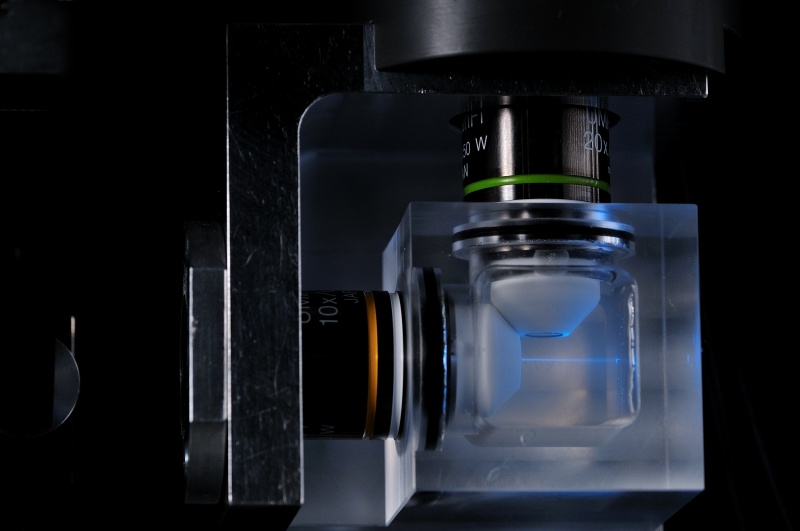
In light-sheet microscopy, a sample is illuminated with a thin sheet of light and fluorescence is detected by a separate lens placed orthogonally to the excitation light.

In light-sheet microscopy, a sample is illuminated with a thin sheet of light and fluorescence is detected by a separate lens placed orthogonally to the excitation light. {credit}Vineeth Surendranath{/credit}

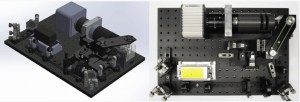
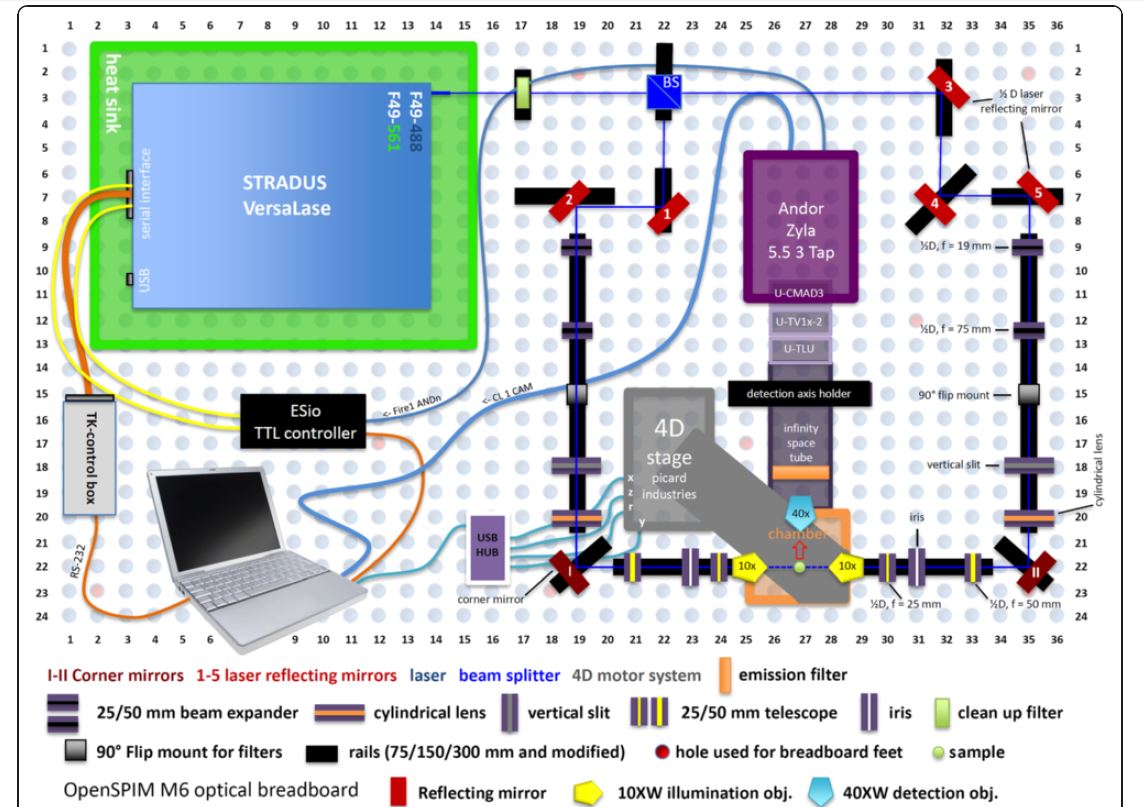
Build your own OpenSPIM system

Build your own OpenSPIM system{credit}Michael Weber, Peter Pitrone, Pavel Tomancak{/credit}


In microscopy, biologists as well as physicists and computer scientists are building the hardware and software they want and sharing the blue-prints with others.

Building an OpenSPIM model is not quite this fast, but this shows the parts needed for those who want to give it a try.

Here are some user experiences from the OpenSPIM community. You can read more in the December issue of Nature Methods.

Perspectives from users, builders and one-day-maybe OpenSPIM builders

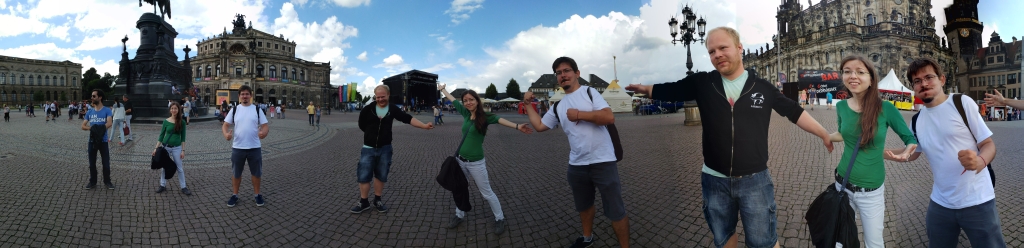
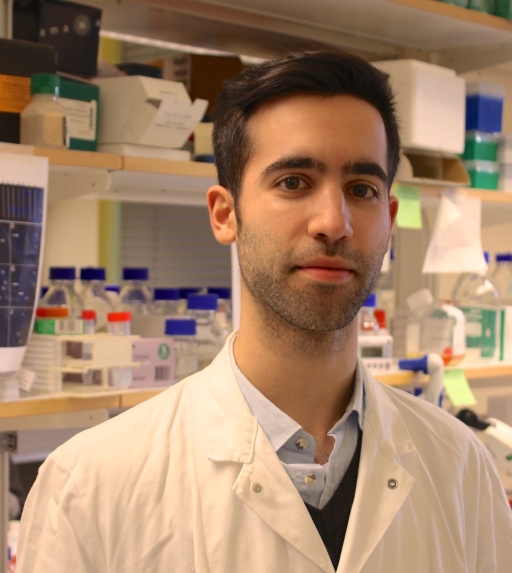
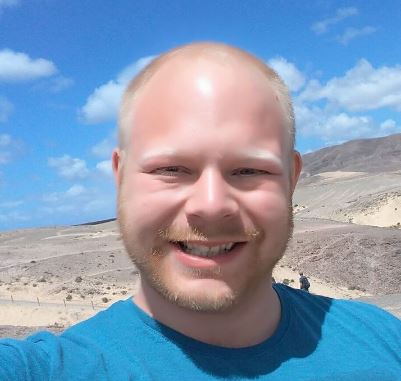
From left to right: Tiago Pinheiro, Johanna Gassler, Radoslav Aleksandrov, Florian Vollrath et al.


An OpenSPIM community has evolved to address the needs of researchers setting out to build their own systems.

Johanna Gassler, Tiago Pinheiro, Florian Vollrath worked together during the European Molecular Biology Organization (EMBO) course on light-sheet microscopy in August. Separately, Johannes Girstmair at University College London built an OpenSPIM microscope.

Johanna Gassler, Tiago Pinheiro, Florian Vollrath and Radoslav Aleksandrov worked together during the European Molecular Biology Organization (EMBO) course on light-sheet microscopy in August. Separately, Johannes Girstmair at University College London built an OpenSPIM microscope.

Johanna Gassler

Johanna Gassler
PhD student in the lab of
Kikue Tachibana-Konwalski
Institute of Molecular Biotechnology
of the Austrian Academy of Sciences
Vienna, Austria {credit}Philippe Laissue{/credit}


Her thoughts on using light-sheet microscopy…

Gassler works with  mouse oocytes and early embryos in a lab that looks at many facets of how an oocyte transforms into a zygote after fertilization. She does live-cell imaging with confocal microscopy and phototoxicity is a constant concern. Light-sheet microscopy lets her take a closer look, especially in terms of temporal resolution, at the dynamic processes inside an egg or an early embryo without having the types of phototoxicity worries she would have with other forms of microscopy.

In her view, light-sheet microscopy is one of the most exciting technologies of the last decade, “and it is really great to be a scientist in a time where these systems are still in their developing stage and to see how fast progress is made. “

“When imaging samples with confocal microscopy one does not tend to think so much about the specific characteristics of your sample compared to your neighbors. You just use the same microscope to image both, of course imaging settings change, but the hardware doesn’t. When taking the route of building your own microscope like with OpenSPIM, one is way more flexible in what pieces of hardware you would like to add to improve the imaging of your sample specifically. This flexibility is a huge advantage of OpenSPIM, but also a disadvantage at the same time. “

“If an OpenSPIM is built for a special application and the group that used it moved or for some reason or other doesn’t use it anymore, then it is really hard to just use it for something very different. So in the worst case scenario the microscope would not be used anymore. Of course one could just use the parts of the old one to build a new one for a different application, but then you also need a person willing to do that. The movement of OpenSPIM is just starting to arrive in the minds of biologists, so attempting to build your own is still somewhat rare. That said, the light-sheet microscopy and OpenSPIM community make it really easy to start into this adventure.”

About those data mountains…

The data output of a light-sheet microscope is several order of magnitudes higher than in conventional microscopy, says Gassler, making it necessary to invest in data storage and to explore ways to immediately reduce the data size. That can be done by omitting unnecessary data right after imaging or even during imaging sessions. And, she says, “to get the most out of light-sheet microscopy as a biologist, it is very valuable to team up with physicists and computer scientists.”

Tiago Pinheiro PhD student in neuroscience and regenerative medicine in the lab of Andras Simon in the department of cell and molecular biology Karolinska Institute Stockholm, Sweden

Tiago Pinheiro
PhD student in neuroscience and regenerative medicine
in the lab of Andras Simon in the
department of cell and molecular biology
Karolinska Institute
Stockholm, Sweden
{credit}Benny Coyac{/credit}


What he likes about light-sheet microscopy…

In his work with fixed, cleared salamander brains to study dopamine neuron regeneration, Tiago Pinheiro likes the speed with which images can be captured with light-sheet microscopy. Here is a video he made of stitched and processed images he generated on the ZEISS Z.1 microscope of glial protein fibers in the brain of a developing salamander. The brain had been cleared with Advanced CUBIC.

What is also beneficial about light-sheet microscopy, says Pinheiro, is being able to rotate the sample with just the right orientation. With confocal microscopy and 3D mounted samples that is a big hurdle. It takes many hands and much time to image a brain slice by slice to then find the paths of neurite fibers from slice to slice.

The advantage of OpenSPIM, in Pinheiro’s view, is that he can do experiments instead of waiting for the rather overbooked commercial light-sheet microscopes. If you know the OpenSPIM works for your specific application, he says, then a scientist could build  several of these microscopes on a budget and speed up image acquisition for their experiment.

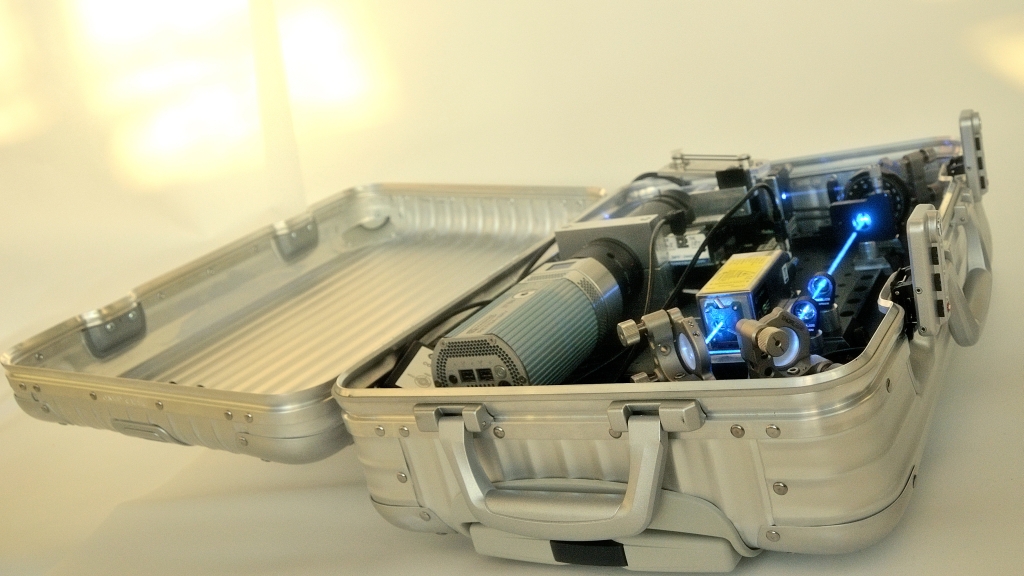
OpenSPIM suitcase

{credit}Vineeth Surendranath{/credit}

About being able to pack a microscope in a suitcase…

“It is great for education purposes,” says Pinheiro, who would love to have an OpenSPIM at Karolinska to show his colleagues and to make people aware of the potential of light sheet microscopy has and so they can see how it works. “As confocal microscopy made its way to every biology lab I am convinced light sheet microscopy will as well. A microscope in a suitcase is helping that happen.”

About the bigger scheme….

Research centers in biology and medicine have a growing need for staff with knowledge of physics and computing, says Pinheiro. A biologist can build an OpenSPIM after attending the EMBO course, as he has, but he or she will still need expertise at a home institution to trouble-shoot any issues such as assembly or software. More generally, he says not everyone will be able to take the course. But at the same time there is an urgent need to more quickly and extensively merge the fields of biology, computer science and physics. “I believe not doing that means falling behind in answering essential scientific questions in a better way,” he says.

Florian Vollrath Physicist, programmer Research associate in the imaging facility at the Max Planck Institute for Brain Research Frankfurt, Germany

Florian Vollrath
Physicist, programmer,
research associate in
the imaging facility at the
Max Planck Institute for Brain Research
Frankfurt, Germany


What he likes most about light-sheet microscopy…

Florian Vollrath helps scientists at the Max Planck Institute for Brain Research with their experiments and their data analysis. Vollrath and colleagues are ramping up to build a light-sheet microscope for the imaging facility. The model will have a different camera, stage and objectives than the basic OpenSPIM setup.

The institute mainly works with fixed samples where phototoxicity isn’t a problem but bleaching can be. What matter most about light sheet microscopy to him is its advanced measurement speed compared to confocal microscopes, he says. “Our dream is to image as fast as possible complete brains and being able to analyze their neuronal structure afterwards, without the need of slicing them in many pieces and imaging them one by one,” he says. Light sheet microscopes have a trade-off, their resolution is not as good as what can be achieved with confocal microscopes. “Our main question is now if it is still good enough.”

Being part of a community…

With an OpenSPIM community in place, it helps those with less or even no experience get on their way to working with light-sheet microscopy, says Vollrath. The open source software works, but it is not as advanced as the software in commercial systems, he says. It takes programming experience to adjust it if one wants to use components other than the ones on the OpenSPIM website.

Johannes Girstmair PhD student in the lab of Maximilian Telford in the department of genetics, evolution and environment University College London

Johannes Girstmair
PhD student
in the lab of Maximilian Telford
in the department of genetics, evolution
and environment
University College London{credit}Armin Märk{/credit}


About tapping into curiousity…

For biologists who are curious to get a start with OpenSPIM, Johannes Girstmair recommends taking one’s own samples to one of the around 70 OpenSPIM set-ups in labs around the world and finding someone who will “let you play around a little bit.”

About angles and speed …

“Speed does not always matter,” says Girstmair. It all depends on the question one is pursuing, he says. Speed matters with live imaging. For example he has looked at cellular behavior and cytoskeleton dynamics and tracked the nuclei of the developing embryos to create an early cell lineage. With a slow imaging system he can miss important information. He mainly uses one angle for time-lapse movies but time matters especially if someone is doing time-lapse live-imaging with multiple angles, “you don’t want to wait 2-3 min for each angle to be acquired simply because it would mean that with 5 angles you would need to wait almost 15 minutes per time-point,” he says. “A lot of development can happen in between.” And once the images from the previous angle are acquired, they risk not fitting well anymore with the acquired first angle. “That’s not good and might give you funny results once you fuse angles that are shifted in time quite a lot.”

He has also found that a faster, more smoothly running system can be better for the living embryos because a slow system may well delay the laser shutter, although he has not measured this, which means that the embryo might be exposed longer to the light-sheet, thereby increasing the chance of phototoxicity.  If you can make a system faster and it does not cost much to do so, why not do it, he says.

The configuration of the OpenSPIM model that Johannes Girstmair built.

The configuration of the OpenSPIM model that Johannes Girstmair built.{credit}J. Girstmair{/credit}

About alignment…

Aligning the light sheet with the focal plane of the detection objective is tricky because the acquisition chamber has to be water tight. That limits the possibility of moving the detection objective that could otherwise be moved forward and backward to align the light-sheet well, says Girstmair. “We can cheat a bit by using the large corner mirrors to align the light-sheet to the focal plane,” he says. Information about how he assembled and aligned his system and videos of continuous imaging experiments are in his BMC Developmental Biology paper.

Also, he says, there are ways to nudge the detection objective a bit forward and backward in a way that the O-rings can tolerate and which are used to make the detection objective watertight. “People have a little wheel for this purpose, which doesn’t seem to be super hard to install if somebody insists on this,” he says.

About some questions that tempt him…

Girstmair studies evo-devo questions using, for example, the polyclad flatworm Maritigrella crozieri. These lophotrochozoans, or Spiralians as they are sometimes called, are interesting because so many phyla, including the flatworms, show a very similar developmental pattern early on, which is called spiral cleavage. This likely ancestral cleavage program allows scientists to compare the development of different phyla even though they have branched millions of years ago. Most flatworms don’t have a stereotypic spiral cleavage nor do they exhibit a free-swimming larval stage as are found in other lophotrochozoan phyla. M. crozieri has both the very stereotypic spiral cleavage pattern and a free-swimming planktotrophic larval stage, says Girstmair, making these embryos a good starting point for comparative studies.

The polyclad flatworm Maritigrella crozieri imaged with different techniques

The polyclad flatworm Maritigrella crozieri imaged with different techniques{credit}J. Girstmair{/credit}

About needing a ‘Pavel’…

Pavel Tomancak, one of the co-founders of OpenSPIM, is a co-author on Girstmair’s paper about building OpenSPIM and using it to study Maritigrella. Tomancak’s presence might make his project look a little less like a do-it-yourself one. “Of course not everybody can have a ‘Pavel’ close by,” as he did, says Girstmair. But for starters they can travel to a lab with an OpenSPIM set-up and work there with their own samples.

“As for the assembly in London I really put everything together myself and more importantly hardware-configured the microscope myself,” says Girstmair. Several people offered plenty of advice, which is why, he says, they also deserve to be on the paper. They include Tomancak, former Tomancak lab member Peter Pitrone now a light-sheet microscopy consultant and Mette Handberg-Thorsager, a developmental biologist also in Dresden with whom Girstmair tested microinjection techniques.

For the OpenSPIM setup, Girstmair and his colleagues used some parts that differ from the basic set-up such as a multi- laser system, controller boxes and other components, which also meant there was “a lot more to learn and sometimes even get frustrated about,” he says.

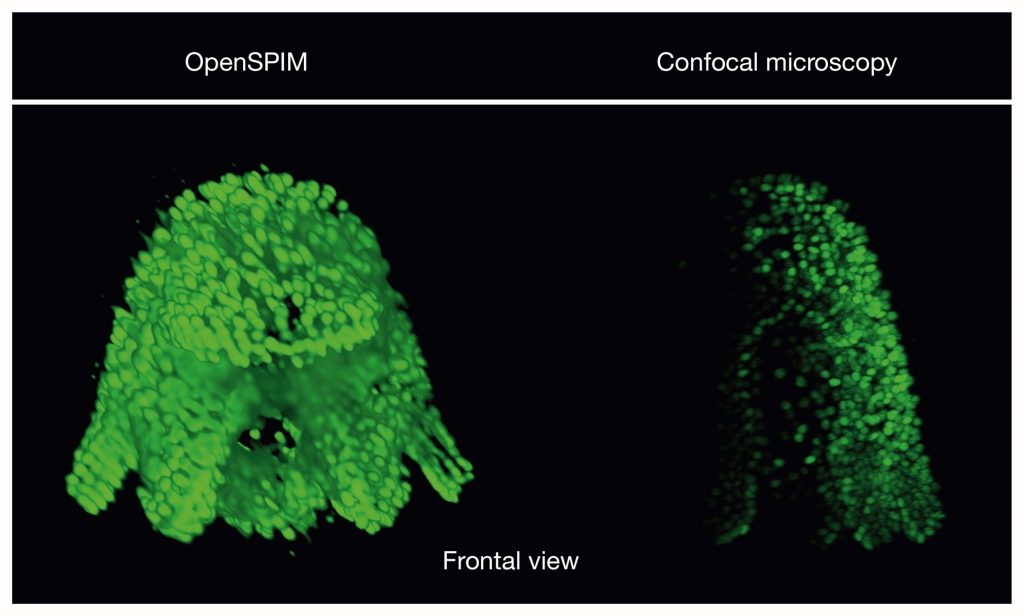
This OpenSPIM image comes from a fixed embryo and imaged with multiple views. The nuclei of each cell are stained with the nucleic acid stain SytoxGreen. The first angle will also be the orientation of the 3D reconstructed embryo when all the different views are combined into a single image file using software called Fiji.

“I think the images made with the OpenSPIM are not particularly better than the confocal images,” says Girsstmair. The confocal images are crisper and have better resolution. But they can’t contain all the information contained in an image captured from multiple angles. Imaging at multiple angles is very difficult with a conventional confocal microscope due to the different ways specimens are mounted, he says.

Fixed specimens imaged with OpenSPIM are usually embedded in agarose and therefore keep their natural shape. “With the confocal I would try to squeeze a stained Mueller’s larva as much as possible in order to get the most out of the staining from a single view and thereby I also loose the specimen’s natural shape,” he says. When it comes to capturing the development of Maritigrella embryos, OpenSPIM is much better: it is faster and the embryos are exposed to much less light. Another advantage: the freely available software tools for 3D reconstructions.

OpenSPIM is a crowd-sourced movement propelled by the crowd, among them, these people:

OpenSPIM_developers and students

{credit}Vineeth Surendranath{/credit}

Peter Pitrone (top), is first author on the paper presenting OpenSPIM, Pavel Tomancak (third from the top), a researcher at Max Planck Institute (MPI) for Molecular Cell Biology and Genetics in Dresden co-developed OpenSPIM. The others in this photo are PhD students who took a course on OpenSPIM and who put together the OpenSPIM web site.


Neurobiology: what marmosets can teach us

Marmosets are big vocalizers

Marmosets are big vocalizers {credit}C. Heise, Alamy Stock Photo{/credit}

Marmosets are drawing new attention as models of human disease and social behavior

The Society for Neuroscience annual meeting is underway in San Diego, California with nearly 30,000 attendees and around 13,500 posters. Some of the research being presented relates to this small, long-tailed New World monkey–Callithrix jacchus, native to the dense forests of Eastern Brazil and a promising model organism in neuroscience. Mice continue to be helpful models in neuroscience. They have a prefrontal cortex but, for example, they lack the dorsolateral prefrontal cortex that humans and primates share and that is involved in cognition, learning and memory.

One large-scale project in Japan, Brain Mapping by Integrated Neurotechnologies for Disease Studies (Brain/MINDS), is focused on marmosets. In this month’s Technology Feature, we hear from some Brain/MINDS scientists about their work and their plans. We also talk with scientists elsewhere to find out more about why they believe marmosets are promising models. A number of these researchers head to the wild to study marmosets in their natural habitat.

“Humans talk a lot,” says neuroscientist Cory Miller of the University of California at San Diego who studies social and vocal behavior in primates. “For apes, we talk a preposterous amount, other apes don’t talk as much,” he says. Miller, who has also studied vervet monkeys and macaques as well as simakobu monkeys, cotton-top tamarins, macaques, and capuchins, appreciates how vocal and social marmosets are. This monkey’s vocal and social traits as well as the fact that females usually give birth twice a year, usually to non-identical twins, all likely evolved as an adaptation to life in the dense forest and intense predation. “Everything eats marmosets,” says Miller.

Marmosets are cooperative breeders: both parents take care of the young along with an extended family of relatives and unrelated group members. These monkeys can learn to complete all sorts of cognitive tests. These aspects are but some of this animal’s attributes drawing attention in labs around the world.

Marmosets are not complete strangers to neuroscience labs, says Miller, who points to work by Angela Roberts at the University of Cambridge, Marcello Rosa at Monash University, Xiaoqin Wang at Johns Hopkins University, Miller’s post-doctoral advisor  and many others. This work has spanned a wide breadth: basic neuroscience, motor control, social behavior, neuropsychiatry.

Marmosets are highly social primates

Marmosets are highly social primates {credit}L. Serebrennikov/Alamy Stock Photo{/credit}

Being social

As a model for human behavior and the human brain, labs draw on primates, for example macaques. But, says a neuroscientist who wishes to remain unnamed,  many universities do not wish to have macaque labs on campus and there are too few positions for postdoctoral fellows leaving labs, ready to  continue primate research. ‘Marmosets will save the primate model in biology’ is a phrase the scientist has heard from a number of neuroscientists.

Overall, the idea, says UCSD’s Miller, is not to repeat with marmosets what has already been done with macaques, but rather to have a complementary primate model that will allow an expansion of the types of questions that can be asked.

A number of marmoset researchers connect work they do in the lab with work in the wild. Miller’s group along with scientists at the Federal University of Pernambuco in Recife, Brazil are equipping nearby wild marmosets with a collar to record vocalization data, ambient sound and information, such as how high the animals sit in the trees when they vocalize.

Atsushi Iriki, who directs the laboratory for symbolic cognitive development at Riken Brain Science Institute and who is also part of Brain/MINDS has also spent time in Brazil observing marmosets in the wild and he noted how different they are from wild Japanese macaques that are more familiar to him. What struck him was how cooperative marmosets are in their group as they spend all day together, as they move around or forage for food. They are always keeping track of one another in the dense bush by calling out to one another and they are always helping one another. They might, for example, share food with one another or help the younger ones jump from one branch to another.

Atsushi Iriki, a RIKEN neuroscientist in Brazil observing marmosets in the wild.

Atsushi Iriki, a RIKEN neuroscientist, in Brazil observing marmosets in the wild.

Iriki has encountered wild macaques in Japan while hiking, biking or skiing. Macaques vocalize but much less than marmosets do and usually only when they are in tense situation such as when they are frightened, trying to scare others or competing with others in some way. “Another difference is that marmosets are female dominant, while macaques are male dominant like most of other primate species,” says Iriki.

Given that it is much harder transport primates than people, Charles Jennings who directs the neurotechnology development program at the McGovern Institute for Brain Research at MIT has proposed the idea of setting up ‘hotel space’ for researchers at major primate research centers so they can work with marmosets on site. There may even be ways to telecommute to work with marmosets remotely.  “It would seem almost necessary for people who want to do work with the actual animals but are at an institute that doesn’t have the resources,” says his colleague Rogier Landman who is in Guoping Feng’s lab at the McGovern Institute.

The idea of research ‘hotel space “might be ideal, especially academically, if it could be realized,” says Iriki. But, he says, this approach also means that agreements about cross-border collaboration, data-sharing, data-security and intellectual property must be put in place.

Transgenic marmosets will help scientists parse molecular and genetic mechanisms in comparative primatology, says Iriki. He studies fundamental neuroscience and the emergence of human traits such as intelligence in primate evolution. He began studying marmosets around ten years ago and continues to also work with macaques and people.

Landman and others who have started working with marmosets are finding that these monkeys are hard to train. New types of cognitive tests are needed, says Landman, ones that are adapted to the needs of these animals. Iriki believes that some of these issues crop up because existing tasks and tests have been refined and adapted to the needs of macaque monkeys. For some tasks, such as vocal communication, social cooperation, altruism and others, Iriki sees advantages with marmosets in that their behavior is more akin to human behavior.

In Iriki’s view, the human brain has evolved in an interaction with an ecosystem and has been shaped by tool-making and the use of language. He believes that higher-order cognition both in humans and primates may derive from information-processing mechanisms related to navigating a spatial environment. Some of these aspects can be studied in the lab. Japanese macaques in the wild don’t use tools but can be trained in the lab to of a rake to extend their reach to grab food. Analysis of voxel-based morphometry of MRI imaging has shown that such tool-use in experimental settings increases cortical gray matter in monkeys.

Iriki cautions against an anthropocentric view of marmoset intelligence. These primates might appear less intelligent than other monkeys in some ways. Then again, he jests, humans might appear to monkeys as animals with intermediate intelligence.


Sequencing: Ship-Seq sails the seas

To study a primordial nervous system, Leonid Moroz brings the tools of biology to the open sea. Nature Methods spoke with the neurobiologist turned sea adventurer.

Leonid Moroz diving in Palau, collecting Nautilus.

Leonid Moroz diving in Palau, collecting Nautilus.{credit}Aggressor Fleet / L.L. Moroz{/credit}

Meet neurobiologist Leonid Moroz of the University of Florida, the inventor of Ship-Seq. His hair is not always this wild, although his ideas tend to be.

Ship-Seq is a boat with a sequencing lab on board. On the high seas, Moroz and his crew of sailor-scientists do high-throughput sequencing of DNA and RNA from single cells, as well as neurobiology experiments. And they analyze results, too.

The ctenophore Beroe ovata.

The ctenophore Beroe ovata.{credit}J. Netherton/ L.L. Moroz{/credit}

He is especially intrigued by ctenophores, now believed to be the first multicellular organisms, which also have a nervous system but it is utterly unlike ours. It is likely, he says, that their ‘elementary brains,’ their neural and muscular systems, such as the ones found in molluscs and basal metazonas, have evolved independently from all other animal lineages.

In his Nature paper recently published, he and his colleagues present the genome of the ctenophore of the Pacific sea gooseberry (Pleurobrachia bachei)—the data are here—along with transcriptome analysis of other ctenophores. He and his colleagues also present metabolic and physiological data about these organisms. The authors describe how ctenophores have evolved neuronal organizations that show ‘molecular innovations.’ There is also an accompanying News and Views piece by Andreas Hejnol of the University of Bergen in Norway and a Nature news story by Ewen Callaway.

Labs can be outdoors and on-ship.

Labs can be outdoors and on-ship. {credit}L.L. Moroz{/credit}

Although organisms can be taken from the sea to the lab, they often need ocean depths or a certain temperature to survive. And when samples are prepared for travel, they need optimized conditions to not degrade. Three decades of dealing with dead organisms, degraded samples, delayed shipments and customs snafus have led Moroz to try something new: Ship-Seq. “We cannot bring the sea to the lab, but we can bring a whole lab to the sea,” he says.

After completing two proof-of-concept Ship-Seq voyages—one to the Bahamas and another near the Florida Keys and one to Palau to prepare those voyages—Moroz shares some of his findings here, offers a glimpse at his logistics and future plans. He hopes others can follow his example, because probing and analyzing nature while in and around nature is an adventure with biomedical value.

Leonid Moroz

Leonid Moroz wanted to bring the lab to the sea. {credit}L.L. Moroz{/credit}

Biologist and entrepreneur Craig Venter and his Global Ocean Sampling Expedition in some ways parted the seas for Moroz’s project. Moroz wanted to explore biodiversity through sequencing but also take an extra step to do on-site ‘integrative experimental biology,’ which is about using many types of tools to study whole organisms, their behavior and their cells and genomes.

Field biology tends to be an observational science, because in the field, biologists do not usually have an entire high-tech molecular biology lab in tow. And, says Moroz, field scientists may not be completely familiar with new genomics tools, which is too bad since nature has performed genetics experiments waiting to be evaluated. On the boat he studied regeneration, which is hard or even impossible to accomplish “in a dish,” he says, because the animals he studies are incredibly fragile.

King of Regeneration
Meet the comb jelly Bolinopsis, which Moroz calls ‘the king of regeneration.’

Bolinopsis can regenerate its brain in three to five days.

Bolinopsis can regenerate its brain in three to five days. {credit}L.L. Moroz{/credit}

These transparent organisms from the phylum Ctenophora propel themselves through the water with rows of iridescent combs of tiny hairs. Though they may be small and unassuming, they perform an amazing feat: they can regenerate their entire ‘elementary’ brain in three to five days.

Moroz calls their aboral organ with gravity sensors an ‘elementary’ brain; it is not homologous to the human brain. But it is a control center with many neuron types and it coordinates behaviors and motions. In that sense it is an “analog” of the human brain, he says. What astounded Moroz is that when it is dissected from the animal, it grows back.

Other marine organisms such as Hydra are known to regenerate organs, but examples are limited, particularly for organisms that can be maintained in the lab. Finding models for such biological phenomena are crucial in neurobiology, he says. And for regenerative medicine, too. Aplysia, the marine sea slug, has long been helping scientists study memory. And there are more such organisms to find and with which he wants to do ‘real-time’ experiments and analysis, for example look at the dialogue between pre- and post-synaptic neurons.

Bolinopsis has another intriguing trait that Moroz discovered by accident. He was making some small incisions and then briefly interrupted his work. “When I came back around 40 minutes or an hour later, I couldn’t find my cut,“ he says. He made another incision and watched the wound begin to close before his eyes. Overnight, the wound became invisible. “It’s very cool,” says Moroz.

Sequencing team on the first ShipSeq voyage, from feft to right: Tatiana Moroz, Andrea Kohn, Rachel Sanford

Sequencing team on the first ShipSeq voyage, from left to right: Tatiana Moroz, Andrea Kohn, Rachel Sanford{credit}L.L. Moroz{/credit}

He found this wound-healing ability in five or six ctenophore species. It is likely an adaptation to life close to the water surface, where there are predators and formidable waves that can inflict bodily harm on these organisms. A related ctenophore species that lives in deeper waters appears to have lost this wound-healing ability. In this sense, he says, “nature already performed knock-out experiments for us,” inviting researchers to investigate which genes might play a role in these instances. Some species in the same lineage are slow regenerators, others fast, another aspect that invites genomic analysis.

Traditional ways of exploring the biochemical underpinnings of physiology and behavior can be slow. With new technologies such as high-throughput sequencing, it is possible to connect data types more quickly. For example, one can see an organism behave and use genomics to see molecular changes, for example in gene expression or epigenetic markers. Being on the boat lets scientists directly address observed biology; “you basically follow up with what nature suggests to you,” says Moroz.

One-way ticket

The Ship-Seq sequencing team for the second trip (from left to right Suzette,  Lauran, Rachel, Gabby, Andrea, Greg, Emily, Leonid, Gustav).

The Ship-Seq sequencing team for the second trip (from left to right Suzette,Lauran, Rachel, Gabby, Andrea, Greg, Emily, Leonid, Gustav).{credit}L.Moroz{/credit}

ShipSeq is also an environmental research project. Roughly every six hours a species is lost, he says. The disappearance of these organisms means ecological harm and the loss of important molecular blueprints, which is not unlike losing precious art and heritage sites, he says.

Comparative biologists face the criticism that their work does not have ‘translational value’ for biomedicine. But Moroz believes Ship-Seq shows that marine organisms have tremendous biomedical value. Bolinopsis is one example of many.

A small volcanic island in Antarctica. Moroz nicknamed it  Aplysia Island given that it looks like a model organism,  the sea slug, Aplysia.

A small volcanic island in Antarctica. Moroz nicknamed it Aplysia Island because it looks like the sea slug, Aplysia, a model organism. {credit}L.L. Moroz {/credit}

Too many human diseases are “a one way ticket,” he says, such as age-related memory loss. Spinal cord injury and stroke lead to irreparable damage. But genomic analysis, including genome-wide expression studies can help researchers explore how to lessen the impact of these diseases and injuries. Scientists need to “jump” from the genome to complex functions and brain circuits, which recruit many parts of the genome.

By delivering the basic alphabet of an organism, sequencing is a boon to many fields. What scientists also need is the grammar with which this alphabet creates the biological equivalent of language, which is behavior and physiology.

With his approach to ‘real-time genomics,’ he wants to help expose this grammar, says Moroz. For example, scientists might want to capture epigenetic changes over the course of learning or regeneration.

Ship-Seq logistics

Copasetic with the mobile sequencing lab aboard

Copasetic with the mobile sequencing lab aboard{credit}Ian van der Watt{/credit}

This is Leonid Moroz’s boat, the Copasetic, a 141-foot yacht. Actually it isn’t his boat. And the story about how he gained access to it, is a tale of Moroz’s brand of determination.

Logistics expenses for field expeditions are usually not covered by traditional grants, so Moroz built a collaboration between companies and non-profits to make Ship-Seq a reality.Over the years, he found opportunities, but the tide was against him. One time, everything was ready to go, but the boat’s owner decided to sell the boat, a mere week before the scientists wanted to set sail. Ship-Seq’s maiden voyage was cancelled.

Then Moroz came across the Florida-based International Seakeepers Society, through which yacht-owners loan out their boats for research purposes when they are not using them.

In late 2012, Moroz was invited to an International Seakeepers Society dinner. He had a semiconductor chip in his pocket that is used in semiconductor-based sequencers from Life Technologies, now a part of Thermo Fisher. The scheduled presentation was delayed due to a glitch with the projector. Until the projector was fixed, Moroz gave an impromptu talk about how the small chip could help save the oceans’ heritage and tell the world about the genomic blueprints of marine organisms. He had already been using the technology in his lab and saw how the instrument was accelerating his work.

Some of the listeners smiled politely and ignored him, he says, but a few were excited. Around nine months after that dinner, finally an opportunity presented itself that allowed Ship-Seq to leave the dock.

Boat, crew, captain

Steven Sablotsky designed the Copasetic

Steven Sablotsky designed the Copasetic{credit}L.L. Moroz{/credit}

Steven Sablotsky, a University of Florida alumnus, engineer, businessperson, yacht owner and member of the International Seakeepers Society approached Moroz. Sablotsky had designed his own boat, the 141-foot Copasetic, with marine research in mind. Sablonsky offered his boat for Moroz’s “proof-of concept” trips for free, including his crew.

The added crew was important. Private boat owners can be their own skippers, but large boats are legally obliged to have a competent crew. “It’s pretty complicated machinery,” says Moroz. “You really have to work around the clock.”

The Copasetic crew

The Copasetic crew{credit}L.L. Moroz{/credit}

At the time, Moroz was also speaking with sequencer manufacturers. He had set up a Life Technologies’ Personal Genome Machine (PGM), which is a bench-top, semiconductor-based sequencer. The instrument’s semiconductor chip uses millions of wells to capture DNA sequence information. DNA is fragmented and each fragment is attached to a bead, and copied such that each bead is covered with copies of the same fragment. One bead is deposited into each one of many wells on the chip, which is then flooded with one of the four DNA bases. When a base is incorporated into DNA, a hydrogen ion is released, leading to a chemical change in the well. The instrument detects the change, converts the signal to voltage, which registers that the base was incorporated and adds it to the growing sequence of the fragment. Another base floods the wells and the process repeats.

After testing the PGM, Moroz decided that it should be the sequencer for Ship-Seq. He was not sure where to install it along with the other necessary lab equipment. It was the Copasetic’s captain Ian van der Watt who suggested housing the lab in a shipping container. A construction manager at Florida Biodiversity Institute helped to organize one such container and design the mobile lab with Moroz. A few weeks later it was ready to be placed on the boat’s deck.

The mobile lab contained is transferred to the Copasetic’s deck.

The mobile lab is placed on the boat’s deck….{credit}L.L. Moroz{/credit}

The lab is mobile

…and is ready to travel anywhere. {credit}L.L. Moroz{/credit}

The advantage of a container, says Moroz, is that it offers a completely controlled environment. He and his lab collected the supplies and instruments they needed such as benches, anti-vibration tables, PCR machine, and enrichment systems to measure RNA and DNA and run quality controls.

They needed a high-quality water purification system for the sequencing. It is, he says “somewhat ironic” that the team needed to produce ‘clean pure water’ even though they were in the middle of the ocean. Thermo Fisher engineers got the sequencer ship-shape for a seafaring environment. “Basically we made a full-scale molecular lab” for genomics and imaging, says Moroz.

He still had concerns about variables such as temperature and vibration. They set up the lab and tested all the instruments. While at the dock, he asked the captain to power the motor forwards and backwards, simulating high waves. The lab aced the test.

ShipSeq set sail on its first voyage and the lab was humming from the moment they left, Moroz says. Sablotsky came along, too. Every day they did two sequencing runs and sent the data via a satellite link to HiPerGator, which is a high performance computer with 24,000 core processing units installed at the University of Florida.

mobile lab inside for web

Ship-Seq’s core lab. {credit}L.L. Moroz{/credit}

Moroz had set up an analysis pipeline with computational tools and scripts to assemble and annotate the incoming sequence information. After automated analysis, data was beamed back to the boat. The sailor-scientists had considered taking a Thermo Fisher engineer along but that did not pan out “so we were on our own,” says Moroz. The good news was “everything worked.”

The second trip, to the Gulf Stream and Florida Keys was windy and through rough seas. Seasickness immobilized half of the lab staff for part of the trip, says Moroz, including his wife. “People could not cope with the field conditions but the PGM machine could,” he says of the sequencer on board. Actually, he says, the Ship-Seq’s sequencing runs were higher quality than in the lab on land. He speculates that the waves enhanced the mixing of chemicals.

“The versatility of our bench top sequencers is only limited by the imagination of today’s scientists,” says Mark Stevenson, executive vice president of Thermo Fisher Scientific in an e-mail to Nature Methods. “Clearly, Dr. Moroz has taken an ingenious idea to a new level and demonstrated that great data can be attained and analyzed in real time – even on a ship that’s rocking on the high seas.”

Seasick but happy
On both trips and despite the seasickness on the second venture, the lab’s team was especially motivated, says Moroz. “It is easy to work a 16-18 hour day when you have the beautiful sea, beautiful creatures around.” People have been important for the overall success of the venture, he says.

Moroz wants to do more trips and expand Ship-Seq’s scientific scope. Using a prototype of the PII chip (which is not yet on the market), he performed single neuron RNA-sequencing in the lab. He projects it might cost around $3 per individual neuronal transcriptome, if one wanted to do a census of neuronal cell types in the brain of a marine organism such as Bolinopsis or others ctenophores, plankton and other, as he calls them, ‘aliens of the sea.’

setting sail for web

It took a while before Ship-Seq could set sail. {credit}L.L. Moroz{/credit}

Ship-Seq and its ‘lab-in-a-container’ offers many opportunities, he says. “The beauty is that it is mobile.” The container could be put on a ship in Florida or it could be sent to Palau or Antarctica and placed on a boat there for not much greater cost. “You can get anywhere,” he says, maybe even set up a “sequencing fleet.”

The planning for the next Ship-Seq trips is underway—but the geographic and scientific directions are not yet finalized. And the finances, too, need to be organized. The trip might focus on more complex marine organisms. For example, cephalopods have complex brains, lending them their nickname ‘primates of the sea.’ Moroz hopes to one day study their neurobiology, integrating field biology, behavior, and genomics. He also wants to be part of the ongoing ‘race to save species,’ to not only study but also “preserve our planet.”

Moroz has encountered plenty of detractors and skeptics. Whenever he is criticized and told he should stick to the traditional way of doing science, his path of taking the lab to the sea feels right. He says it reinforces his sense: “I must do it.” To him, doing science on Ship-Seq feels like “the investigation of a new planet.”

Ship-Seq Protocol
1 x 141-foot boat
1 x generous entrepreneur
1 x ship’s crew
1 x mobile molecular biology lab equipped with lab benches, a sequencer, reagents
1 x manufacturer of a high-throughput sequencer willing to donate an instrument
1 x satellite link to a supercomputer
1 x lab staff and scientist/wife willing to be scientist-sailors
1 x diving equipment
1 x funding National Institutes of Health (NIH), National Science Foundation (NSF), National Aeronautics and Space Administration (NASA)
3 x support from non-profit organizations: Florida Biodiversity Institute, Florida Museum of Natural History, the International Seakeepers Society
1,000 international units of patience
Several remedies for seasickness

People, publishing, and policy: Q&A with Janet Thornton, director of the European Bioinformatics Institute.

Janet Thornton has been named Dame Commander of the Order of the British Empire. She feels it is an important recognition of bioinformatics.

Janet Thornton has been named Dame Commander of the Order of the British Empire. She feels it is an important recognition of bioinformatics.{credit}EMBL-EBI{/credit}

The scientist profiled in the February issue of Nature Methods (the Author File) is Janet Thornton, the director of the European Bioinformatics Institute.

Here, she shares some additional insight about publishing, science policy, and mentoring. What follows is an edited excerpt of her conversation with Nature Methods. Read more here.

VM: In an era of not-so-plentiful funds, ELIXIR (interviewer looks up acronym…)—the European life-sciences Infrastructure for biological Information—and other initiatives takes you deep into policy-making. Which tends to not resemble a picnic on a sunny Nottinghamshire day. What motivates you?

JT: ELIXIR was launched Dec 18 and now has its own director. It does feel a bit that it’s my child. But it’s a child that has grown up and is really on its way to becoming independent and moving forward to being an independent adult. It’s still got a long way to go. It’s a bit like a teenager, actually. (laughs)

I honestly believe that these initiatives are the best way forward because, despite the setbacks, everyone broadly agrees. So it is a case of getting through the politics and making the science happen. As we know, science has no borders—and all scientists agree with this—so in the end, common sense will win and we can go forward.

VM: You have published around 400 papers. What does a paper mean to you?

JT: Probably for me the most important part of the process of science is publishing a paper. Because it’s the time when you really sort out what matters, why you did it, what you discovered and then you try and make it understandable for other people. And I have to say I get really upset when my papers are rejected.

VM: What types of papers do you enjoy reading?

JT: I love reading good solid papers, which are logical and explain how the results are obtained and why they are important. I used to spend hours in the library, like a detective tracking down information and knowledge.

VM: Rumor has it, you still present posters.

I don’t often present posters but there was one particular occasion when the University of Cambridge organized an event and they asked all the senior staff throughout the university to present posters. That was the last sort of official poster presentation. Of course, my students and post-docs have posters all the time. And I do man those posters as appropriate. It’s fun. You talk about your work.

VM: What is the best way for a scientist to select members most suited to his or her lab?

JT: Five things I look for: a) Bright/clever, b) Committed and interested in a project or area of research, c) Relevant expertise – though this is not the most important thing, d) What does the lab think? e) Would I like to have a meeting at 9am on a Monday morning with this person?

VM: Computational resources in the life sciences are not always appreciated. What do you recommend to scientists keen on being and staying tool-builders and resource-providers?

JT: Find a good place to go to follow your dream; find someone you want to work with and prepare yourself for the future. Not all scientists can be principal investigators (PIs), nor indeed want to be, so the key is to find your own niche.

VM: You studied physics at the University of Nottingham, then shifted to biophysics for your PhD at the National Institute for Medical Research. What do you advise when students of any stripe wonder: ‘Shall I choose physics? Computer science? Biology?’

JT: I am afraid I am biased—go with biology—it is amazing, beautiful, complex, but still an open book with lots to discover. And even if this were not enough, it has so many really important applications —many of the so-called grand challenges that will literally affect the future of this planet and everyone on it.

A star is born: the updated Human Reference Genome

The release of the 38th build of the human reference genome gets a well-deserved rock-star greeting by the scientific community.

The new GRCh38 is already a rock-star

The new GRCh38 is already a rock-star{credit}Wikimedia Commons/Flickr:Starman/K.Spencer{/credit}

Fans know it is worth the effort to camp out for tickets to a concert by a beloved rock, pop or country star. GRCh38, the newest build of the human reference genome, is that kind of star. Delayed by a few snags and also held up by the US government shut-down, the sequence has just traveled to GenBank for use by the scientific community.

Not only has Genome Reference Consortium build 38 (GRCh38) eliminated some pesky previous gaps, it will be the first human reference assembly to have sequence information for centromeres. Up until now, centromeres, which are specialized structural components of chromosomes, have been represented in the reference by gaps of 3 million base pairs. The news about centromere sequence will be of interest to cell biologists and genomics researchers alike.

“This will be a major boon to evolutionary studies of human populations and to the many groups doing mechanistic work on human centromeres and kinetochores,” says Stanford University researcher Aaron Straight, whose work focuses on cell division and chromosome segregation. “Finally, now we can stop saying ‘mind the gap’.”

The reference genome finishers are the members of the Genome Reference Consortium (GRC) at the European Bioinformatics Institute, the US National Center for Biotechnology Information, The Wellcome Trust Sanger Institute and The Genome Institute at Washington University.

Scientists may not have physically camped like concert-goers in front of the buildings where genome finishers scurry to get the sequence out the door. But the throngs have been virtually present. The GRC, which works on human, mouse and zebrafish reference genomes, is “having to field a lot of questions from folks who want to know the minute they can have the assembly,” says Deanna Church, a genomicist formerly at the US National Center for Biotechnology Information and who has, since this interview, moved to Personalis, a genetic testing and analysis company.

The din has faded from the 2001 celebration marking the end of the Human Genome Project. But the sequence was not complete nor is it complete now. As colleagues at Nature Methods have pointed out here and here, the sequence originally had around 150,000 gaps.

The most recent reference genome, Genome Reference Consortium build 37 (GRCh37), has 357 gaps. And is missing sequence around the centromeres. No longer.

Come here, centromere
The structure and repetitive nature of centromeric regions has made them largely inaccessible to methods used to create the reference assembly, says Church. The concept and the methods to produce the centromere sequences for this reference build were developed by a research team at University of California at Santa Cruz (UCSC). They constructed sequences using the Sanger technique and the data helped the team behind GRCh38 to fill in these important gaps.

The centromere community will be happy to no longer say this.

The centromere community will be happy to no longer say this.{credit}Wikimedia Commons/Clicsouris{/credit}

In a paper, the UCSC team, led by Karen Miga and Jim Kent, a member of GRC’s scientific advisory board, noted that centromeric regions are replete with near-identical tandem repeats—satellite DNA. Difficult assembly of these regions have led them frequently to be excluded from genomic studies. In the new reference genome, the scientists used reads generated during the Venter genome assembly and created models for the centromeres, says Church.

“These models don’t exactly represent the centromere sequences in the Venter assembly, but they are a good approximation of the ‘average’ centromere in this genome,” she says. And these sequence models are not exact representations of any one centromere, either. But including these sequences in the reference assembly “will likely improve genome analysis using current methods, and allow for some further study of population variation in centromere sequences,” says Church.

Continue reading