NI Photo Contest 2015: Finalist #6

Here’s the finalist number six in the Nature India Photo Contest 2015:

Subrata Bal, Rourkela, Odisha, India

Photo Caption: ‘Wooden Frames’

{credit}Subrata Bal{/credit}

Subrata Bal

Subrata shot this black and white frame while staying in a hotel in Kargil, Jammu and Kashmir. At a glance, the picture gives an illusion of a conical rooftop in the background when seen through the wooden planks in the foreground. The rather simple architecture gets another clever dimension when seen through this angle. He says this about the picture: “Most part of this hotel was made of wood. While sipping a cup of tea in the balcony, I saw the wooden pattern and a queue of white towels being dried on a string. I liked the frame and captured the moment.

Congratulations Subrata and all the best for the final round!

The Nature India photo contest 2015 with the theme ‘Patterns’ has received a huge number of entries. The theme was conceived with the idea of appreciating the art in all things science — geometric, natural, abstract, under the microscope, in/on the human body or in space.

Both amateurs and professional photographers, scientists and non-scientists have sent in entries shot on mobile cameras, point and shoot cameras to high-end DSLRs. Choosing the final three from across countries, landscapes, demographics and cultures will be a tough job for the Nature India design and editorial team.

As a run up to the final announcement of three winners, we are rolling out the top 15 finalists (in no particular order of merit) this fortnight on the Indigenus blog as well as our social media platforms (Twitter and Facebook). The final results will be announced within November 2015.

Nature India’s final decision to chose the winner will be partly influenced by the engagement and reception he/she receives here at the Indigenus blog, on Twitter and on Facebook. To give all finalists a fair chance, we will take into consideration the social media engagement of each picture only during the first seven days of its announcement.

So watch out for the rest of the finalists. Promote, share and like your favourite entries with the hashtag #NatureIndphoto.

The faculty series: An introduction

New faculty share their experiences on their transition in the first of a new series on being part of the academic elite.

Lab-naturejobs-blog

{credit} Getty Images Ryan Mcvay{/credit}

Being a member of a faculty means being a lot of things all at once, according to assistant professor Mike Lee, who became a member of the team at the School of Biomedical Sciences at the University of Massachusetts (UMass), Boston in late 2013. “It encompasses lab vision, grant writing, and the organisational tasks of your lab. You’re also your lab’s head postdoc, lab manager, technician and the EHS [Environmental Health and Safety] adviser. And you teach.”

Clearly, science has moved on from single-minded lab work: being university faculty today certainly doesn’t mean burying yourself in research and not having to worry about anything or anyone else. What really struck Brian Kelch, assistant professor of biochemistry & molecular pharmacology, also at UMass, when he started his faculty position in 2012, was how quickly he needed to adapt to the more personal side of the job. Continue reading

NI Photo Contest 2015: Finalist #5

Congratulations to finalist number five in the Nature India Photo Contest 2015:

Dhwani Jhala, Ahmedabad, Gujarat, India

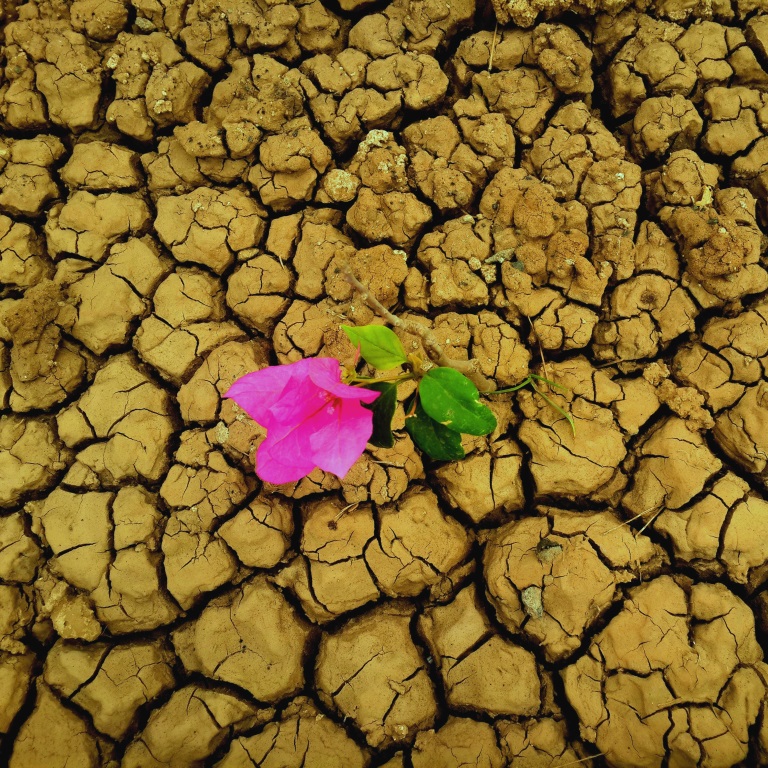
Photo Caption: ‘Desert Dreams’

{credit}Dhwani Jhala{/credit}

Dhwani clicked this picture on her cellphone but that does not take away from the appeal of her subject, which fits in just fine with our theme “Patterns”. She describes her picture thus:

Dhwani Jhala

Dhwani Jhala

I was in Bharuch, Gujarat for work and was walking around the city when I saw this little flower shining in the middle of dry clay. I immediately pull out my phone and clicked it. I am not a professional photographer but the colours and patterns in this image appealed to me.

Well done Dhwani and welcome to the top 15!

This year’s contest has received hundreds of entries from around the world. The theme ‘Patterns’ was conceived with the idea of appreciating the art in all things science — geometric, natural, abstract, under the microscope, in/on the human body or in space.

The entries have been from amateur and professional photographers, scientists and non-scientists and have been shot on a variety of equipment, from mobile cameras to high-end DSLRs. All these elements have made the photo contest a great experience in looking at patterns across landscapes, demographics and cultures.

As a run up to the final announcement of three winners, we are rolling out the top 15 finalists (in no particular order of merit) this fortnight on the Indigenus blog as well as our social media platforms (Twitter and Facebook). The final results will be announced within November 2015.

Nature India’s final decision to chose the winner will be partly influenced by the engagement and reception he/she receives here at the Indigenus blog, on Twitter and on Facebook. To give all finalists a fair chance, we will take into consideration the social media engagement of each picture only during the first seven days of its announcement.

Watch this space for the rest of the finalists and feel free to promote, share and like your favourite entries with the hashtag #NatureIndphoto.

NI Photo Contest 2015: Finalist #4

And here’s the Nature India photo contest 2015 finalist number four:

Ravi Hegde, Bengaluru, India

Photo caption: “Sandy Peaks”

{credit}Ravi Hegde{/credit}

Ravi’s description of his picture is what caught our attention more than the seemingly simplistic image:

Ravi Hegde

Ravi Hegde

“Nature is always enigmatic, poses confrontations, fuels curiosity, and gives considerable opportunity for mankind to explore the treasures in it. This photograph depicts the sand patterns created by water currents on seashore. Not just that the patterns can be unlimited; they hold physics, chemistry, mathematics, geography as well as art in them! I captured these sandy peaks at the Dhareshwara seashore, near Honavar, Uttara Kannada district, Karnataka.”

Congratulations Ravi for making it to the top 15!

The Nature India Photo Contest has received hundreds of entries from around the world this year. The theme for 2015 was ‘Patterns’, conceived with the idea of appreciating the art in all things science — geometric, natural, abstract, under the microscope, in/on the human body or in space.

The entries have been from amateur and professional photographers, scientists and non-scientists and have been shot on a variety of equipment, from mobile cameras to high-end DSLRs. All these elements have made the photo contest a great experience in looking at patterns across landscapes, demographics and cultures.

The Nature India editorial and design team has a tough job at hand — of choosing just three winners.

As a run up to the final announcement, we are rolling out the top 15 finalists (in no particular order of merit) this fortnight on the Indigenus blog as well as our social media platforms (Twitter and Facebook). The final results will be announced in November 2015.

Nature India’s final decision to chose the winner will be partly influenced by the engagement and reception he/she receives here at the Indigenus blog, on Twitter and on Facebook. To give all finalists a fair chance, we will take into consideration the social media engagement of each picture only during the first seven days of its announcement.

So watch out for our other finalists and feel free to promote, share and like your favourite entries with the hashtag #NatureIndphoto.

NI Photo Contest 2015: Finalist #3

Announcing the Nature India photo contest 2015 finalist number three:

Kanika Bansal, New York, USA

Photo caption: “Half Filled with Light”

{credit}Kanika Bansal{/credit}

Kanika shared her thought behind this image:

Kanika Bansal

Kanika Bansal

2015 is the International Year of Light, designated by the United Nations to learn and appreciate optical phenomena. In this top shot of a glass of water, the structure of the glass container produces an interesting pattern when light is partly reflected and scattered by the walls and the liquid inside. Slight asymmetry in the picture reverses the effect of depth, giving the illusion of an elevated object.”

Congratulations Kanika for making it to the top 15!

In its second year, the Nature India Photo Contest received hundreds of entries from around the world. The theme for 2015 was ‘Patterns’, conceived with the idea of appreciating the art in all things science — geometric, natural, abstract, under the microscope, in/on the human body or in space.

The entries have been from amateur and professional photographers, scientists and non-scientists and have been shot on a variety of equipment, from mobile cameras to high-end DSLRs. All these elements have made the photo contest a great experience in looking at patterns across landscapes, demographics and cultures.

The Nature India editorial and design team has a tough job at hand — of choosing just three winners, whose entries will grace the cover page of one of our forthcoming print publications. The winner and two runners-up will receive a copy of the just released Nature India Special Annual Volume and a bag of goodies from the Nature Publishing Group.

As a run up to the final announcement, we are now rolling out the top 15 finalists (in no particular order of merit) this fortnight on the Indigenus blog as well as our social media platforms (Twitter and Facebook). The final results will be announced in November 2015.

Nature India’s final decision to chose the winner will be partly influenced by the engagement and reception he/she receives here at the Indigenus blog, on Twitter and on Facebook. To give all finalists a fair chance, we will take into consideration the social media engagement of each picture only during the first seven days of its announcement.

So watch out for our other finalists and feel free to promote, share and like your favourite entries with the hashtag #NatureIndphoto.

Most read on Naturejobs: October 2015

Career uncertainty, industrial postdocs, writing for highly-selective journals and more!

naturejobs-readsThank you to everyone for reading our posts this month. We’ve been working closely with a lot of new writers, and we’re pleased that you’ve enjoyed what they have to say! Here’s a list of your top ten favourite reads from October.

This year Nature have been running their Graduate Student Survey, trying to understand what careers graduates are looking to do when they finish their training, and how they are preparing for them. In Graduate survey: Uncertain futures, Chris Woolston gives a great summary of the results, and shares some stories from graduate students around the world.

Industrial postdocs: A bridge between two worlds is a report from the Naturejobs Career Expo in London earlier this year, where Roche presented a workshop on the postdoctoral opportunities they offer.

The traditional route in academia – PhD, a postdoc or two (or three) and then professor – is one everyone is familiar with. But there are other options, as Careers in academia: Different options explores. This is another report from the 2015 Naturejobs Career Expo in London, where different types of academics gave an insight into their different roles.

The Naturejobs Career Expo reports are popular this month! Nature Masterclasses: Writing for highly-selective journals, is another report from the event, this time about one of the workshops run by the Nature Masterclasses team. Continue reading

November issue cover: What’s going on here?

NovemberFor October, we explained the concept and meaning behind the image on our October issue cover. Continuing with this new feature on the blog, here is a little background about the image for November.

This month’s concept is somewhat more obvious. The cover shows a stylized map of Sardinia based on a map from 1550 drawn by the Sardinian scholar, theologian, jurist and geographer Sigismund Arquer. And this month’s issue features 3 research papers, and editorial and a News and Views article about the genetics of Sardinians.

The artistic concept behind the cover image came from Dr. Giangiorgio Crisponi, a geneticist and artist, who also happens to be Sardinian. Dr. Crisponi, among other work, described a pediatric disorder in 1996 known now as Crisponi syndrome. He is also an excellent photographer, and examples of his work can be found here. With assistance from Michele Marongiu, Dr. Crisponi modified a photograph of his own copy of the 1550 map of Sardinia. He had the idea (implemented by our own in-house graphic designer) to expand the cartouche into a stylized DNA molecule. Our designer also added the nice touch of presenting the cover features on a piece of “parchment” to fit the overall design.

For an overview of the Sardinia genetics papers, see the News and Views by Guillaume Lettre & Joel Hirschhorn here.

NI Photo Contest 2015: Finalist #2

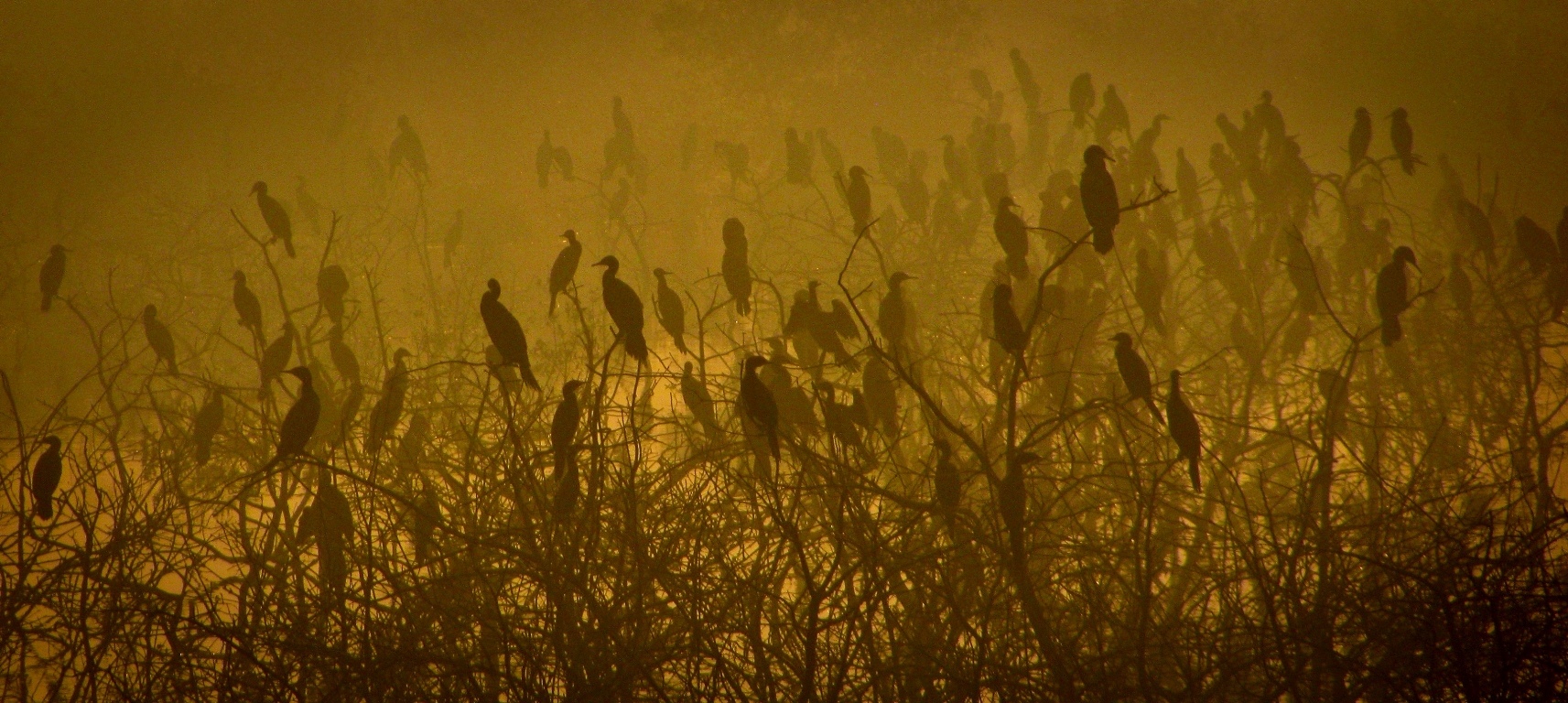
Drum rolls for the second finalist of the Nature India photo contest 2015!

Hemant Dhamne, Navi Mumbai, India

Caption: ‘Pollution vs. Population’

{credit}Hemant Dhamne{/credit}

Hemant describes the photo he shot at dawn with a simple point & shoot camera (Canon Powershot) near Mumbai:

2. Hemant Dhamne

Hemant Dhamne

“These are cormorants perched on treetops that I captured against the morning smog. The picture shows how pollution from big cities is affecting us and our wildlife. I was fortunate to get this silhouette of so many birds forming a beautiful light and shade pattern.”

Congratulations Hemant for getting into the longlist!

The Nature India photo contest is in it’s second year. It has received an overwhelming response with hundreds of entries from around the world. Conceived with the idea of appreciating the art in all things science, the theme for 2015 was ‘Patterns’ — geometric, natural, abstract, under the microscope, in/on the human body or in space.

The quality and novelty of some of the entries this year has been exceptional. Amateur and professional photographers, scientists and non-scientists, mobile cameras to high-end DSLRs — everything seems to have come together in looking for patterns across landscapes, demographics and cultures.

The Nature India editorial and design team is sure having a tough time selecting just three winners, who stand a chance of seeing their entries grace the cover page of one of our forthcoming print publications. The winner and two runners-up will receive a copy of the just released Nature India Special Annual Volume and a bag of goodies (which includes Collector’s issues of the first ever print copy of Nature from November 1869, the first ever issue of Scientific American from August 1845 and some other keepsakes) from the Nature Publishing Group.

As a run up to the final announcement, we will be rolling out the top 15 finalists of the photo competition (in no particular order of merit) over the next few days on the Indigenus blog as well as our social media platforms (Twitter and Facebook). The final results will be announced in November 2015.

Nature India’s final decision to chose the winner will be partly influenced by the engagement and reception he/she receives here at the Indigenus blog, on Twitter and on Facebook. To give all finalists a fair chance, we will take into consideration the social media engagement of each picture only during the first seven days of its announcement.

So watch out for our other finalists and feel free to promote, share and like your favourite entries with the hashtag #NatureIndphoto.

Academia to industry and back again

Eric Betzig, one of three chemistry Nobel laureates from 2014, shares what he learned from working in both academia and industry, and how he applies it to his career now.


Naturejobs-podcast
It’s often said that being a science graduate is a great thing: it opens so many doors and gives you the chance to take on any career. Although this might be true, it also makes deciding what career to focus on, and train for, very difficult.

This month, Nature Careers published a great piece based on the 2015 Nature Graduate Student Survey, where Nature tried to uncover what careers early career researchers were hoping to get, and how they were preparing themselves. In this podcast I was joined by Monya Baker, one of the Nature Careers editors, to give us some further insight into the survey.

The second part of the podcast is an interview I did with Eric Betzig, one of the three chemistry Nobel prize winners in 2014. In our chat we talk about his work in breaking the diffraction limit, what it’s like to see living cells move and his transitions from academia to industry and back again.