Raising Horizons: women in science reframed

Posted on behalf of Elizabeth Gibney
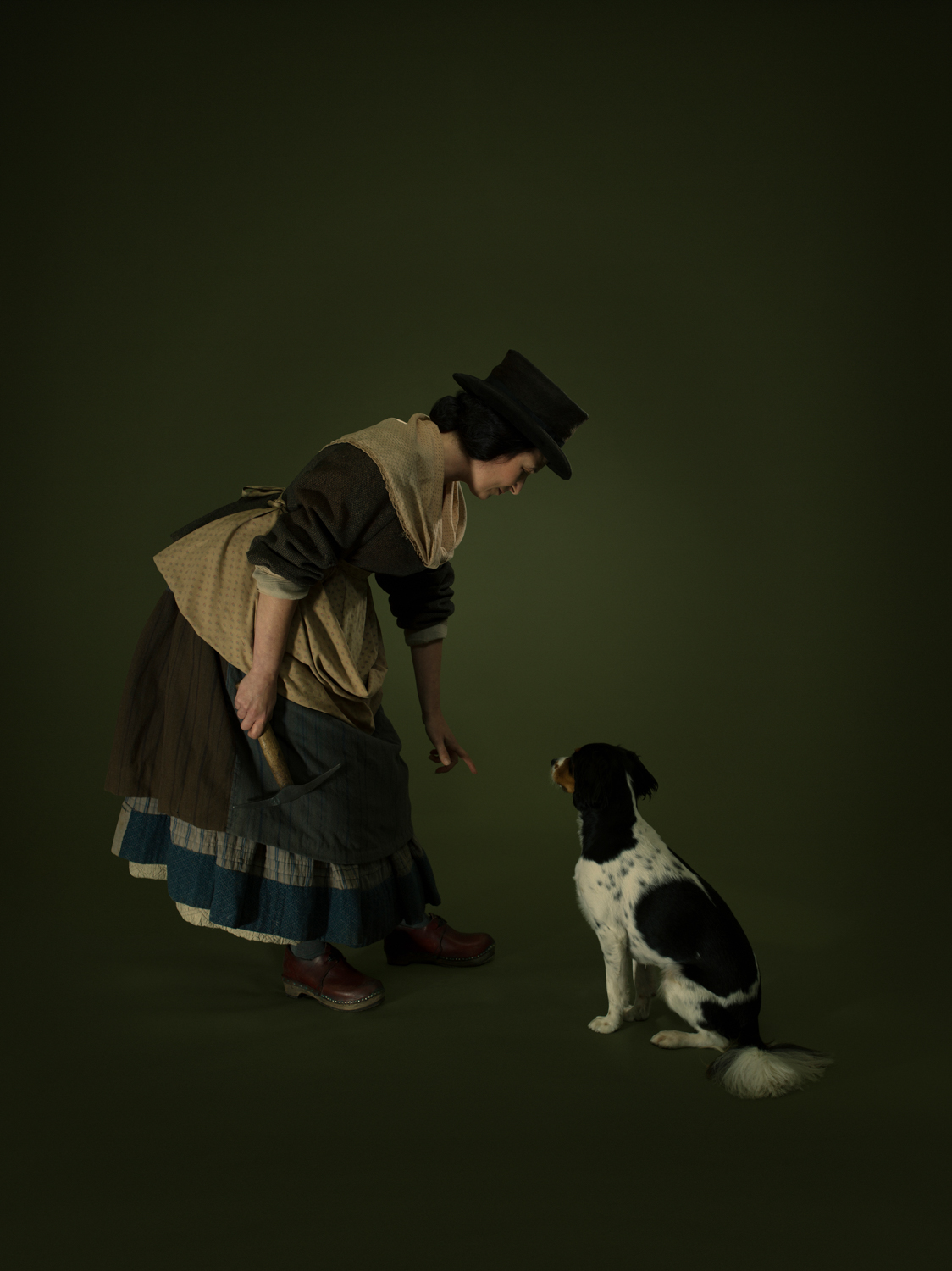
Mary Anning

Victorian fossil hunter Mary Anning, posed by earth sciences curator Lorna Steel.{credit}Leonora Saunders{/credit}

Women in geoscience today can be struck by the paucity of their predecessors in the scientific record. This month, an exhibition helps to redress the balance: portraits celebrating 200 years of pioneering work by women archaeologists, palaeontologists and geologists, on display at London’s Geological Society library.

Raising Horizons — created by photographer Leonora Saunders and science outreach group TrowelBlazers — celebrates 14 women scientists, from fossil-hunter Mary Anning (1799-1847) to underwater archaeologist Honor Frost (1917-2010). The twist is that the portraits are photographs in which present-day scientific counterparts enact these historical luminaries. Thus Lorna Steel, senior curator in earth sciences at London’s Natural History Museum, is dressed as Anning out collecting with her dog Tray, and maritime archaeologist Rachel Bynoe is shown as Frost emerging dripping after a ‘wreck dive’ in the Mediterranean.

Underwater archaeology pioneer Honor Frost, portrayed by scientific counterpart Rachel Bynoe.

Underwater archaeology pioneer Honor Frost, portrayed by scientific counterpart Rachel Bynoe.{credit}Leonora Saunders{/credit}

Saunders, known for her work on gender and equality, has shot these portrayals of glass-ceiling smashers and adventurous field scientists in rich hues and with deep-green backdrops. They evoke oil paintings — an honour accorded to few of these formidable professionals during their lifetimes.

Most are portrayed at work. Geologist Catherine Raisin (1855-1945), modelled by pioneering geoconservationist Cynthia Burek, scrutinises a geological map. Archaeologist Shahina Farid — who was field director at Turkey’s Neolithic site Çatalhöyük for 17 years — appears as renowned archaeologist of Neolithic culture Kathleen Kenyon (1906-1978), pausing for breath at the excavation of Great Zimbabwe in the 1930s.

Archaeologist Shahina Farid - former field director at Turkey's Çatalhöyük site - as Kathleen Kenyon, who helped to excavate Great Zimbabwe.

Archaeologist Shahina Farid – former field director at Turkey’s Çatalhöyük site – as Kathleen Kenyon, who helped to excavate Great Zimbabwe.{credit}Leonora Saunders {/credit}

With Saunders, the four TrowelBlazers scientists — archaeologists Suzanne Pilaar Birch and Rebecca Wragg Sykes, bioarchaeologist Brenna Hassett and palaeobiologist Victoria Herridge — dug into archives for each portrayal. Period artefacts, such as the 1930s field camera Farid is holding, were used in some of the photos. The period class system is also on show. Geologist Charlotte Murchison (1788-1869), portrayed by earth scientist Natasha Stephen, wears a glamorous evening gown; Murchison’s contemporary, the working-class Anning, a simple dress and clogs.

“There are so many other people I could have chosen,” says Wragg Sykes, who selected subjects from almost 150 biographies accumulated by Trowelblazers. Although many of the women featured in the press, their names rarely made it into scientific publications, says Amara Thornton, the social historian of archaeology who portrays Margaret Murray (1863-1963), Britain’s first female archaeology lecturer.

Mary Leakey, the archaeologist who found the famous “Zinjanthropus” fossil, portrayed by specialist in Neanderthals Ella Al-Shamahi.

Mary Leakey, the archaeologist who found the famous “Zinjanthropus” fossil, portrayed by specialist in Neanderthals Ella Al-Shamahi.{credit}Leonora Saunders{/credit}

A highlight is Dorothy Garrod (1892-1968), an archaeologist who led digs at the prehistoric Mount Carmel site in Palestine and discovered an important Neanderthal skull at Gibraltar in the 1920s. Archaeologist Nicky Milner captures Garrod in intense concentration, examining a stone tool.

The exhibition does a fine job of emphasising just how long women have made key advances in these arduous fields. Like the Bearded Lady Project — which also celebrates female earth scientists — Raising Horizons indicates that the Indiana Jones stereotype could be on the wane. And the success of the Academy Award-nominated film Hidden Figures – about African-American female mathematicians whose calculations were crucial to the space race – shows a public appetite for such stories.

Social historian of archaeology Amara Thornton as archaeologist Margaret Murray, shown in the process of unwrapping a mummy.

Social historian of archaeology Amara Thornton as archaeologist Margaret Murray, shown in the process of unwrapping a mummy.{credit}Leonora Saunders{/credit}

The lives of many of Raising Horizons’ subjects are intertwined, as the women taught, mentored or worked alongside each other. A large part of Trowelblazers is about encouraging such networks today, says Wragg Sykes. Judging from the lively launch event – which, refreshingly, buzzed with children and babies, as well as women and men – they seem to be succeeding.

The scientists in these portraits are a diverse group representing generally white, wealthy historical predecessors. In terms of inspiring a new generation of trowel-wielding women, diversity in role models is essential, says Wragg Sykes. As the Trowelblazers put it, “If you can’t see it, you can’t be it”.

Geologist Catherine Raisin scrutinising a geological map, posed by geoconservationist Cynthia Burek.

Geologist Catherine Raisin scrutinising a geological map, posed by geoconservationist Cynthia Burek.{credit}Leonora Saunders{/credit}

Saunders says the photos were designed with the learned society setting in mind. Mounted high around the rail of the library, the intent is literally to ‘raise horizons’, slipping these scientists’ legacies back into positions in history they should already hold. But these images are so absorbing that I’d also hope to see them in larger formats when the exhibition tours Britain, and at eye level. That way young women contemplating the life scientific can ‘meet’ these inspiring researchers face to face.

Elizabeth Gibney is a reporter on physics for Nature based in London. She tweets at @LizzieGibney. Raising Horizons will run at The Geological Society, London, until 28 February. It will then set off on a UK tour, to include the University Women’s Club, London, the Lyme Regis Fossil Festival and the Women of the World festival in Chester.


For Nature’s full coverage of science in culture, visit www.nature.com/news/booksandarts.
From tin men to Terminator: Robots reviewed

Posted on behalf of Celeste Biever

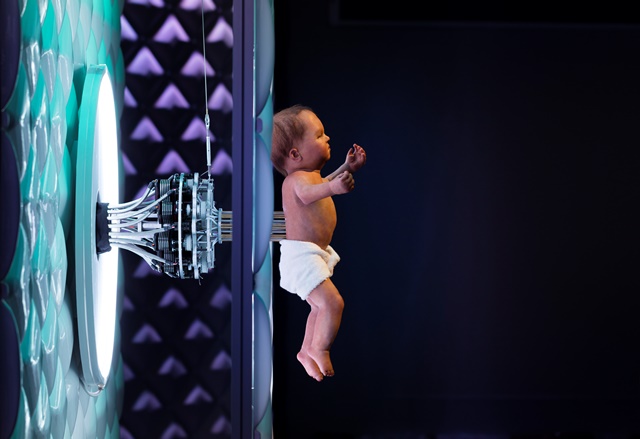
Animatronic baby, John Nolan Studio

Animatronic baby, John Nolan Studio.{credit}Plastiques Photography, courtesy of the Science Museum{/credit}

The baby’s skin looks soft and its hair downy as it blinks and stretches out its arms. Then I spot the plug and mass of wires protruding from its back.

Brainchild of London-based John Nolan Studio, the animatronic infant is a fitting start to the blockbuster Robots exhibition at London’s Science Museum. Its impressively comprehensive array of automatons is a reminder both of machine-like qualities in people, and of the challenges of imitating humans in mechanical form.

Historical automata crowd the first section, ‘Marvel’. A small, hand-carved mechanical monk from the 1560s was crafted to walk and beat its breast in contrition. Is this really a robot? Yes, says chief curator Ben Russell, who has long pondered this question: “A robot is a machine that looks life-like or behaves in life-like ways.” This summary proved a tough but useful curatorial filter, he says.

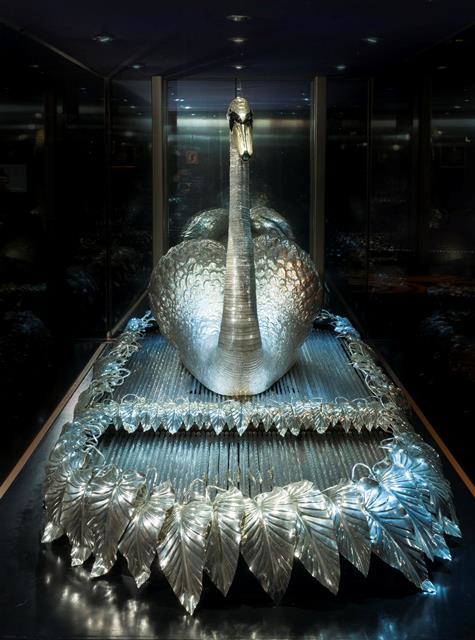
Clockwork 'Silver Swan', John Joseph Merlin, 1773.

Clockwork ‘Silver Swan’, John Joseph Merlin, 1773.{credit}The Board of Trustees of the Science Museum{/credit}

Another highlight here is the Silver Swan, a life-sized clockwork bird on a glass pool crafted in 1773 by Belgian inventor and instrument-maker John Joseph Merlin, whose work inspired Charles Babbage. (The automaton is on loan from the Bowes Museum in county Durham, northern England.) In his 1869 travelogue The Innocents Abroad, American writer Mark Twain noted the avian wonder ‘swimming’ as “comfortably and unconcernedly as if he had been born in a morass instead of a jeweller’s shop”. The lifelike movements of its serpentine neck still impress – but visitors beware: to preserve the delicate machine, it will only play at certain times.

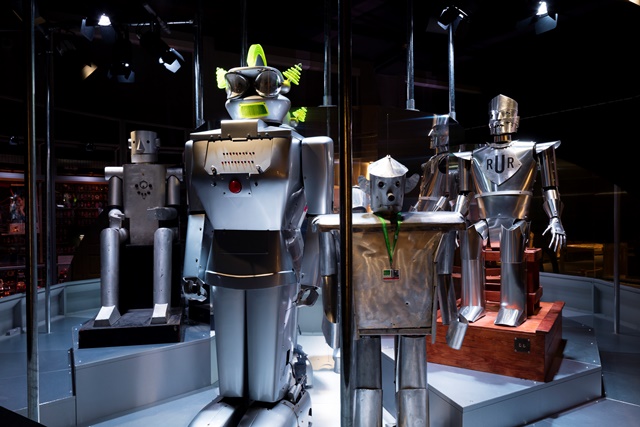
Classic twentieth-century robots Sitting Robot, Cygan, George and Eric (left to right).

Classic twentieth-century robots Sitting Robot, Cygan, George and Eric (left to right).{credit}Plastiques Photography, courtesy of the Science Museum.{/credit}

A clutch of robots classiques includes an impressive collection of dumb but engaging tin-giants dating back to the 1920s. Eric is arguably the star. The replica we see was commissioned for the exhibition and paid for by a Kickstarter campaign. Amateur engineer William Richards and mechanic Alan Reffell built the original Eric in 1928 for the annual Society of Model Engineers exhibition in London, where it a gave a speech as a stand-in for the Duke of York. Its feet bolted to a 12-volt electric motor, Eric could also stand, sit down and move its arms.

As I gaze at a Terminator from 2009 film Terminator Salvation, I’m reminded of how popular culture, as well as science and engineering, shaped the modern concept of a robot. The intimidating android “had to be there”, says Russell. “This is what people think a robot is like.”  Another delight for aficionados is a 1923 first-edition copy of Czech writer Karel Čapek’s play R.U.R. (Rossum’s Universal Robots), which coined the word ‘robot’.

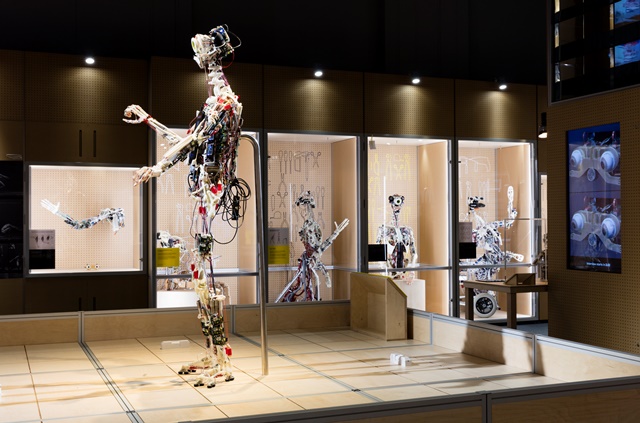
ECCEROBOT, Rob Knight and Owen Holland, 2004-2011.

ECCEROBOT, Rob Knight and Owen Holland, 2004-2011.{credit}Plastiques Photography, courtesy of the Science Museum.{/credit}

It’s one thing to dream, quite another to construct. The reality check is a gaggle of bots from a range of top labs — experiments shedding light on what it means to be human. Here are multiple versions of the life-sized ECCEROBOT (Embodied Cognition in a Compliantly Engineered Robot), each a skeletal display of tendons and bones. Built by robotics engineer Rob Knight, cognitive roboticist Owen Holland and the ECCEROBOT Consortium between 2004 and 2011, the series explores embodied cognition: how the structure of the human body shapes the evolution of intelligence and consciousness.

Juxtaposing several attempts at creating bipeds, this section also showcases the joy of tinkering. Honda’s well-resourced P2, unveiled in 1996, was the first full-bodied robot to walk on two legs. It stands next to the Shadow Biped — a pair of legs snaked through with wires and gauges, developed by inventor Richard Greenhill and other members of the Shadow Robot Project Group in a London attic from 1987 to 1997. (It managed a few wobbling steps.) The group evolved into the Shadow Robot Company, makers of the dexterous robotic hand on display.

Nexi, Cynthia Breazeal, 2008.

Nexi, Cynthia Breazeal, 2008.{credit}The Board of Trustees of the Science Museum.{/credit}

The show’s research chops are also evident in the inclusion of Cog, the Massachusetts Institute of Technology project led by robotics pioneer Rodney Brooks that ended in 2003. The exhibit only features Cog’s head – a mess of wires and metal. While it’s not visually arresting, I was thrilled to see Cog: it was built to address the fascinating, once radical, question of whether human level intelligence could emerge from physical interactions with the environment, without any higher-level programming.

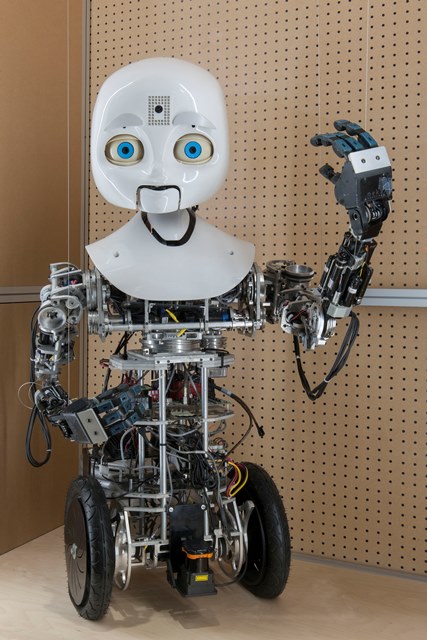
The emerging field of human-robot interaction gets a look-in with Inkha, built by Matthew Walker and Peter Longyear at King’s College London. A pair of bulbous eyes and rubbery lips attached to a metal frame, it served as a receptionist at King’s between 2003 and 2014. And the freakish, blue-eyed Nexi was built in 2008 by human-robot interaction pioneer Cynthia Breazeal of MIT. Through its ability to carefully control movements such as face-touching, Nexi was used to study the role of non-verbal communication.

Robot child Kodomoroid, Hiroshi Ishiguro Laboratories.

Robot child Kodomoroid, Hiroshi Ishiguro Laboratories.{credit}Plastiques Photography, courtesy of the Science Museum.{/credit}

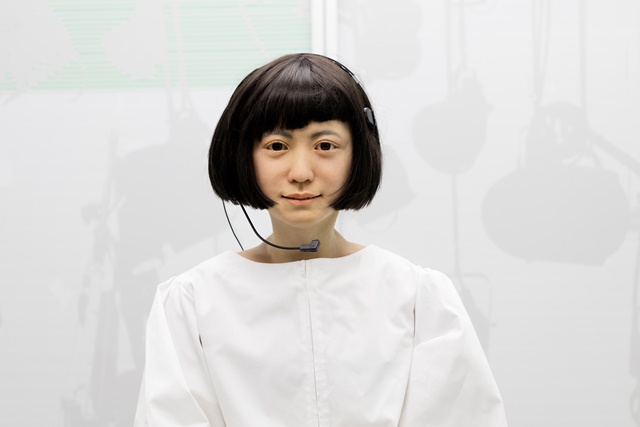
Today, of course, robots have escaped the lab, showing up in factories, homes and even clinics.  As I trek through the last room, a corridor lined with a range of humanoids already out in the real world, I ponder how robots will evolve next. Will they become ever more realistic, like the alarmingly life-like robot child Kodomoroid? Its creators at Hiroshi Ishiguro Laboratories in Japan have used such ‘geminoids’ — android ‘twins’ of real individuals — to monitor reactions when compared with the human originals. Robo-toddler Kaspar, by contrast, makes a virtue of robotic limitations. Its creators at the University of Hertfordshire are examining how children with autism,  who can be overwhelmed by diverse facial expressions, react to Kaspar’s much simpler, carefully controlled mannerisms.

This is a timely show, in a society now grappling with the implications of the robot invasion, enabled by speedily evolving, hyper-sophisticated machines. It does a beautiful job of demonstrating robotics’ embarrassment of riches and how humanity got here, powered at first by belief, then dreams and most recently hardcore research and engineering. The question that scientists, engineers, consumers and industry now have to answer is: where do we point this formidable engine?

Celeste Biever is Nature’s chief news and features editor. She tweets at @celestebiever.

Robots runs at London’s Science Museum from 8 February to 3 September.


For Nature’s full coverage of science in culture, visit www.nature.com/news/booksandarts.
Waltzing for science

Posted on behalf of Quirin Schiermeier

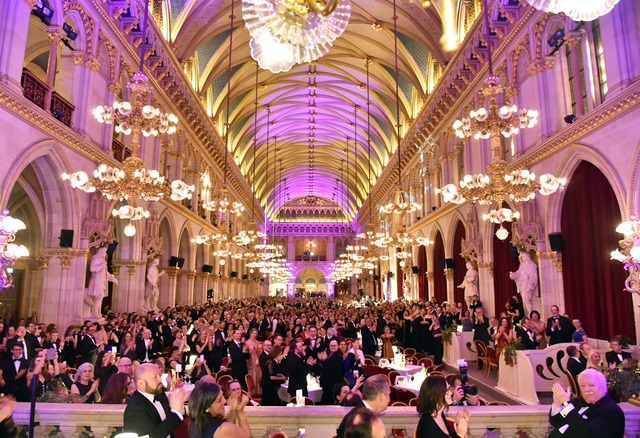
The Vienna Science Ball 2017, in the city's Town Hall.

The Vienna Ball of Sciences 2017, in the City Hall.{credit}©PID/Christian Jobst{/credit}

Around midnight on 28 January, hundreds of couples lined up in the splendid ballroom of the Vienna City Hall for the quadrilles — and the Vienna Ball of Sciences became tangibly interdisciplinary. Students, scientists and scholars of myriad fields whose paths would scarcely cross in daily academic life moved gracefully to the waltzes of the younger Johann Strauss. Laughter filled the air as rows of elegantly clad dancers performed (in reasonably perfect composure) the bows and figures of the traditional courtly dance.

Balls are the very hallmark of Vienna’s social life and an essential part of its cultural identity. Some 450 take place during January and February. Many trades and professions – from hunters to physicians – proudly hold their own in splendid venues such as the Hofburg, Vienna’s imperial palace. However, the city’s growing and increasingly international research community, currently numbering about 220,000 people, had long been standing aloof from the parallel world of its ball society.

That changed in 2015 when Oliver Lehmann and Alexander Van der Bellen launched an annual Vienna science ball. “We wanted to set a counterpoint to ultra-conservative student corps and the academic ball they organize,” says Van der Bellen, the former Green politician and economist who last week took office as Austria’s new president. “Vienna’s liberal science community absolutely deserves a wonderful ball of their own, we thought.”

Promoting diversity

Lehmann, a public relation expert with the Institute of Science and Technology (IST Austria) in Klosterneuburg near Vienna, says that Vienna’s balls tend to be high-level political affairs that have in the past drawn violent protests from some on the extreme left, who deem them elitist. But the science ball promotes diversity, reaching out to students and researchers from all academic disciplines and institutions. Like Berlin’s Falling Walls conference, held every November to commemorate the divided German city’s 1989 reunification, it is a clever attempt to associate a big city’s science base with its most distinguished cultural characteristics.

And the sold-out event was ample proof that the organizers had hit a nerve. The 3,000-strong crowd happily waltzed, tangoed and foxtrotted the night away in environs that subtly alluded to science. Light-emitting diodes illuminated dancers’ moves to stunning effect; tables were decorated with supposedly aphrodisiac plants (pomegranate, celery, orchids) selected by botanists at the University of Vienna’s department of pharmacognosy; and young artists with Vienna’s Academy of Fine Arts had covered the walls with expressive paintings.

Bundespräsident Van der Bellen, Bürgermeister Häupl und Stadtrat Mailath-Pokorny eröffnen den Ball der Wiener Wissenschaft

Austrian president Alexander Van der Bellen opens the Vienna science Ball. In the background are Oliver Lehmann of the Institute of Science and Technology (right), and Wolfgang Ortner, the conductor of the ball’s orchestra (left).{credit}©PID/Christian Jobst{/credit}

Those more inclined to test the laws of probability theory were offered a chance to do so at two roulette wheels. On large screens, researchers with the Ludwig Boltzmann Institute of Archaeological Prospection and Virtual Archaeology displayed the results of their geomagnetic prospection and ground-penetrating radar measurements of Stonehenge. And at the tables, animated discussions ranged over science and the arts. How often does it happen in academe that a pensive researcher on African cultural identity exchanges ideas with a tipsy quantum physicist about Arthur Schopenhauer’s philosophy of pessimism?

Computer scientist Thomas Henzinger, director of IST Austria and a member of the ball’s honorary committee, is not someone inclined to indulge in rambling sophism. He says he doesn’t even care much for ballroom entertainment, but he does agree that the ball raises Vienna’s profile as a cosmopolitan city of science. Vienna and Austria, he says, benefit a lot from the influx of talent from Eastern Europe and other countries. At the IST, launched in 2009, less than a fifth of 600 staff — and only 5% of postdocs — are Austrian, he says.

Isn’t a ball a bit jingoistic for such a global profession? “Nationalism is the very last thing I support,” Van der Bellen told me, speculating that Europe could soon become a haven for US scientists and intellectuals escaping the Trump administration. “I do appeal to all young scientists, here and around the world, to resist chauvinism and stand up for liberal values.”

As the scientists had a ball, anxiety about world politics became distant concerns — for a few hours. Some had travelled from as far as China to join the fun; many pledged to come again. Tickets for next year’s Science Ball go on sale on 15 November.

 Quirin Schiermeier is senior reporter for Nature in Munich. He tweets at @tomboy180463.


For Nature’s full coverage of science in culture, visit www.nature.com/news/booksandarts.
Tracking the propulsive power of science books

station-839208_960_720What makes a science tome so audacious, original and right that it kickstarts a life’s journey, propelling someone to the bench or field? Science writer Ann Finkbeiner (of The Last Word on Nothing) has written about that for A View from the Bridge. And when Academic Book Week fired up on 23 January, I started musing anew about encounters with remarkable books.

Academic Book Week celebrates “the diversity, innovation and influence of academic books” as forces shaping modern Britain. The popular vote went to economist John Maynard Keynes‘s 1936 The General Theory of Employment, Interest and Money. But despite the inclusion of works by Stephen Hawking, Richard Dawkins and James Watson in the ABW top 20, I saw a relative dearth of science in there. (No mention, for instance, of Charles Darwin’s On the Origin of Species or D’Arcy Thompson’s On Growth and Form.) Books that reveal the complexities of a culture to itself are essential. Books that unpick the complexities of nature seem as key.

So we asked readers to vote for their top science read – broadening the discussion by including any in the English language. Science writer David Quammen, for instance, cites David Hull’s 1988 Science as a Process and Horace Judson’s The Eighth Day of Creation (1979). Dawkins and Hawking are a noted presence, while Carl Sagan looms largest. Here’s a sampling:

12346789101112131415161718

A straw poll among colleagues yielded more rich pickings. US news editor Lauren Morello recalls reading The New York Times Guide to the Return of Halley’s Comet (1985) cover to cover at age seven, while James Gleick’s 1992 Genius: The Life and Science of Richard Feynman proved a beacon in high school. Podcast editor Kerri Smith extols Oliver Sacks‘s 1985 The Man Who Mistook His Wife for a Hat, “which made science feel like storytelling and was so much more pleasurable to read than the classic but quite dense pop science I had read before”. She notes further: “Maybe not a causal relationship, but I did a MSc in neuroscience a couple of years later.”

Nature reporters reported no less galvanising reads. Heidi Ledford recalls encountering Cosmos early on – and “how excited I felt whenever I picked it up”. As a teenager, Lizzie Gibney found that Hawking’s A Brief History of Time “really made me think science. The Time and Space of Uncle Albert had a huge influence too.” Ewen Callaway names thrilleresque 1995 The Hot Zone – Richard Preston’s non-fiction tome on viral haemorrhagic fever – as key. And Amy Maxmen opts for E.O. Wilson’s 1994 Naturalist, which she writes “made me get serious about bug collecting in high school, which resulted in a 10-year detour in science”.

What science classic pried open the door to your life in science? We’d love to know: answers either to the comments on A View from the Bridge, or to @naturenews with the hashtag #AcBookWeek.


For Nature’s full coverage of science in culture, visit www.nature.com/news/booksandarts.
Thomas Bayrle: mesmerising machines

Posted on behalf of Lisa Vincenz-Donnelly

Rosenkranz (mixed media: VW engine, electric drive, sound), 2009.

Rosenkranz (mixed media: VW engine, electric drive, sound), 2009.{credit}Private Collection, Vienna. Photo: Werner Kaligofsky, VG Bild-Kunst, Bonn 2016{/credit}

In the 1950s, when the German Pop Art pioneer Thomas Bayrle first trained as a weaver, he says he was “put into a state of trance by the loud and monotonous noise of the machines — until they began to sing”. His more recent artworks, currently on display at an exhibition of wall pieces, light projections, videos and electronically driven sculptures at the Kunstbau gallery in Munich, have a similar mesmeric effect. The ‘continuous-loop’ animations and smoothly moving sculptures, accompanied by monotonous sounds, are hypnotic portrayals of mass production and the complexities of society.

In 1958, Bayrle moved on from textiles to become one of Germany’s most important post-war artists. Since the 1970s, he has famously engaged with subjects such as motorways, car and airplane engines and the nexus of humans and technology in a range of media — including silkscreen, lithography and etching – and in works such as Flugzeug (not in the exhibition). This huge collage of an airplane is made up of many thousands of depictions of airplanes. Bayrle was among the first in Germany to adopt Pop Art in the 1960s, and to create computer-generated art in the 1970s.

Thomas Bayrle with Autobahn, 2016.

Thomas Bayrle with Autobahn, 2016.{credit}Kunstbau gallery, Munich/VG Bild-Kunst, Bonn{/credit}

The unusually long Kunstbau gallery space is located at a metro station, in the underground mezzanine storey directly above the tracks. Bayrle, now 79, was inspired by the “architectural brutality” of the space to create an immense wall sculpture 30 metres long, Autobahn (which he describes as his ‘last Autobahn’ — true to his love of repetition, he has created many similar sculptures). It’s a massive grey construction of intertwined angular loops, echoing the never-ending movement of traffic. Bayrle sees motorways as the centre of humanity’s gigantic cycle of production, distribution and consumption — a dynamic that has now evolved into the main surveillance body of human mobility, the information highway.

One of the most impressive pieces, a 16-millimetre film of montages of black and white stills, Autobahnkopf, appears at first glance to be an image of an anatomical human head turning its face in all directions. A closer look reveals the image as constructed from many loops of footage of busy highways.

Monstranz, 2010 (mixed media: radial engine, electric drive, sound)

Monstranz, 2010 (mixed media: radial engine, electric drive, sound), with Autobahn (mixed media) in the background.{credit}© Thomas Bayrle and Museum Ludwig, Köln VG Bild-Kunst, Bonn 2016.{/credit}

Most compelling are sculptures created from scrap automobile parts, such as engines. Bayrle restores their working parts, exposing their solemn beauty in action, and supplies each with a unique soundtrack mixing the sound of the original machine with recordings of prayer groups. Bayrle first noticed parallels between religion and machines during his childhood. He used to live near a church, where a group of housewives stopped every Thursday to rattle off rosaries in a monotonous, yet powerful, manner. To Bayre, the rosary is like a type of machine – one that you power yourself as you work your way through its beads. And as he has noted, Tibetan prayer wheels mesh religion with machinery. In Monstranz, a nine-cylinder radial engine that once powered various utility aircrafts rotates to heavy hissing and grinding noises, merged with the recording of a church service from Cologne Cathedral. A Citroën car engine is matched to the chants of French prayer groups. The words blend into a multi-layered, repetitive, soothing soundtrack. In some pieces, the machines take on a life of their own: a Vespa engine seems to sing; a pair of windscreen wipers appears to wave.

In these extraordinary works, Bayrle captures the never-ending circle of production, distribution and consumption. As individuals, we come together in multitudes to form this massive system – like the threads that make up a fabric.

Lisa Vincenz-Donnelly is an editorial intern at Nature in Munich. She studied biochemistry in Galway, Ireland, and completed a doctoral degree at the Max-Planck-Institute of Biochemistry in Martinsried near Munich.  

 Thomas Bayrle runs at the Kunstbau, Munich to 5 March. A concurrent show, Thomas Bayrle, runs at the Institute of Contemporary Art, Miami, Florida, to 26 March.


For Nature’s full coverage of science in culture, visit www.nature.com/news/booksandarts.
Hidden Figures: the movie

Posted on behalf of Elizabeth Gibney

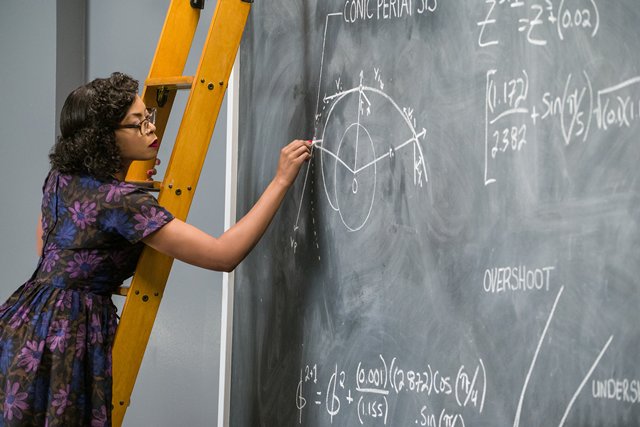
Taraji P. Henson as NASA ‘human computer’ Katherine Johnson. Over the course of her career, Johnson calculated the trajectories and launch windows for flights including the early missions of John Glenn and the Apollo 11 flight to the Moon, and did early work on the Mars mission.{credit}Courtesy of Twentieth Century Fox{/credit}

High-profile protests dominated the media during the civil rights era in 1960s America. At NASA, a quieter struggle was already underway. From the 1940s, African-American women had been chipping away at perceptions and making incursions into the early space programme — that otherwise very white, male world.

The stories of three of these scientific whizzes – Dorothy VaughanKatherine Johnson and Mary Jackson – are now told in Hidden Figures, a film directed by Theodore Melfi and based on a book of the same name by Margot Lee Shetterly (reviewed here for Nature by Alexandra Witze).

This sharp, witty triple biopic captures the focused frenzy of the United States’ space race with the Soviet Union, when NASA was trying to figure out how to achieve the remarkable feat of launching a man into orbit atop a rocket and returning him safely. That all-out effort meant opening the doors to the best people — which in turn created an opportunity for these pioneering African-American women to take on roles previously barred to them.

xxx

The Langley band of ‘human computers’ led by Dorothy Vaughan (played by Octavia Spencer).{credit}Courtesy of Twentieth Century Fox{/credit}

The movie recreates NASA’s Langley Research Center in Virginia, a state that in the early 1960s remained segregated. Vaughan, Johnson and Jackson are among Langley’s human “computers”: women hired to do the mathematics behind space flight, in the days just before the room-sized first IBM machine did it for them. This smart, passionate band, who made up the West Computing group, spend their days calculating launch and landing trajectories and air flow around capsules, armed only with pencils and reams of paper.

The trio were truly extraordinary. Vaughan, played by Academy Award-winner Octavia Spencer, is the matriarch. Although head of the computing group, she is not initially recognised as such for racist reasons. The film shows her initiative over the years in becoming an expert programmer of computing machines as the march of technology sees electronic counterparts to human computers emerge. Meanwhile Jackson, played with spirit by singer Janelle Monáe, wants to be an engineer. She struggles to reach ever-moving goalposts, including segregation laws that prevent her from attending the only school where she could get the necessary qualifications. Monáe’s vivacity earns her most of the film’s best lines.

xxx

Octavia Spencer as ‘human computer’ supervisor Dorothy Vaughan.{credit}Courtesy of Twentieth Century Fox{/credit}

The main focus in on Johnson, perhaps the most remarkable of the three. Her work stands at the very heart of US success in space. The film opens with her as a child prodigy, then zips past degrees in mathematics and French, and graduate school at West Virginia University — where she was one of the first black students to attend. At NASA she was soon picked to join the Space Task Force, who needed her talents in calculating the geometries of parabolic and, later, orbital flight. So indispensable was she that astronaut John Glenn asked for her to personally check the calculations of his trajectory by hand, ahead of the first US orbital flight in 1962.

Johnson is portrayed by Taraji P. Henson as quiet, tenacious and warm-hearted. The character could not be more different from Henson’s role as gangster Cookie Lyon in the music-industry television drama Empire. Johnson is a whizz with the chalk, often seen up a ladder scrawling calculations on a giant blackboard. She carves out her own position in the team, and in colourful outfits and heels offers a human face as often the only woman in a sea of white-shirted, pencil-tied men. (Among many excellent supporting actors, such as The Big Bang Theory’s Jim Parsons, Kevin Costner as a fictional amalgamation of several real NASA leaders deserves special mention. Gum-chewing and hard-nosed, he insists on referring to his team as “gentlemen” despite Johnson’s presence; but his desire to reach the heavens is what gives her her chance.)

xxx

Janelle Monáe as Mary Jackson, who later became a NASA engineer.{credit}Courtesy of Twentieth Century Fox{/credit}

Hidden Figures succeeds in revealing the institutionalised racism faced by the women and their families. Bathrooms, drinking fountains, schools, libraries — all were segregated. One of the best exchanges is between Vaughan and computing pool supervisor Vivian Mitchell (Kirsten Dunst), who insists, “I have nothing against y’all”. To this, Vaughan kindly replies: “I know you probably believe that.” And the women’s status as invisible engines driving the space programme contrasts clearly with the pomp surrounding the astronauts, who as the faces of NASA seem constantly showered with red, white and blue confetti.

Yet the upbeat film can sometimes come across as sanitised. There are no real baddies: even the racist characters, flawed with conscious or unconscious bias, seem ultimately good. A touch more anger wouldn’t have detracted from the enjoyable feel-goodness, epitomised by a bouncing soundtrack  by co-producer Pharrell Williams (composer of mega-hit Happy).

On another level, this may be an effort to avoid the film being solely about race. Rather, it is about women and their love of science. Vaughan, Johnson and Jackson had families to support and could not risk everything in the political fight for equality. In chasing their passions, these three chose to foment change from the inside. Hidden Figures fleshes its characters out into real human beings, and tells their cracking story with grace.

Elizabeth Gibney is a reporter on physics for Nature based in London. She tweets at @LizzieGibney. Hidden Figures’ US premiere is 25 December 2016; general release is on 6 January. The film’s UK premiere is 10 February 2017; general release is on 17 February.  


For Nature’s full coverage of science in culture, visit www.nature.com/news/booksandarts.
Picturing science: top 5 illustrated books

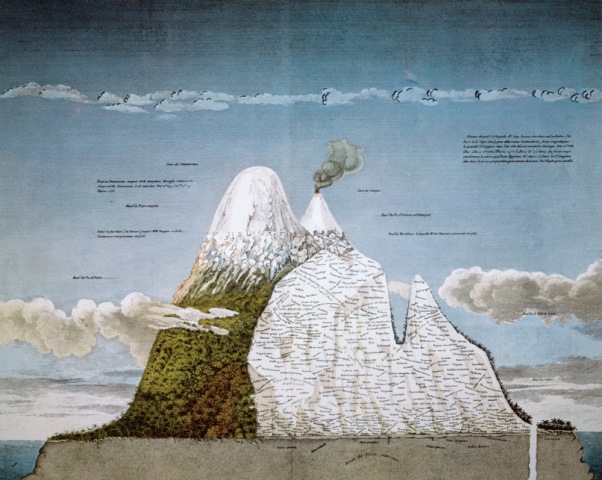
A study from Alexander von Humboldt's detailed expedition notebooks. This cross-sectional study of Chimborazo in Ecuador (1805) shows flora growing at different altitudes.

Alexander von Humboldt kept immensely detailed expedition notebooks. This cross-sectional study of Chimborazo in Ecuador (1805), derived from a sketch, shows flora growing at different altitudes on the volcano.{credit}akg-images. Reproduced in Explorers’ Sketchbooks. {/credit}

We live in illustrated times — a golden age for science graphics, data visualisation and scientific illustration generally. Photography has become positively eye-popping — from the cosmoscapes of Hubble to the Earthly delights of nature photography and photo archives the world over. And luckily for us, this gargantuan trove is being steadily funnelled into science-oriented coffee-table books.

I confess that in early in 2016 I was hanging around waiting for one. Then, like a fleet of barouches, several came along at once. In them I’ve found aesthetic thrills, deep insights and unexpected hilarity. Here are five of the best.

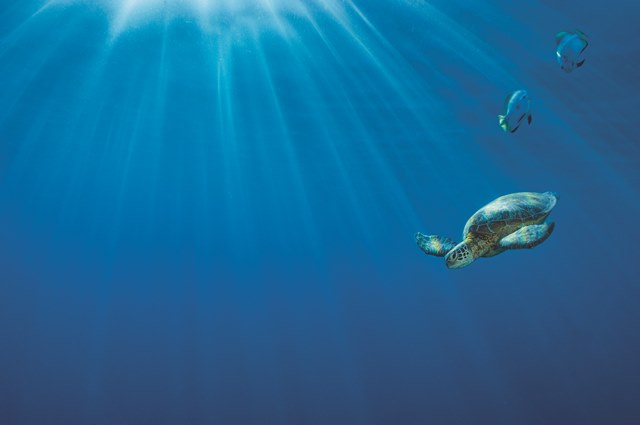
xxx turtle in xxx.

A green turtle (Chelonia mydas).{credit}Alex Mustard, in Secrets of the Sea.{/credit}

Animals proved a draw  — archival menageries and photo-surveys playing on our unquenchable fascination with other species. Secrets of the Seas: A Journey into the Heart of the Oceans (Bloomsbury), with text by marine biologist Callum Roberts and photographs by underwater adept Alex Mustard, explores the wild beneath the waves. It begins in the Coral Triangle, where 4 million square kilometres of tropical ocean support three-quarters of the world’s corals and 2,500 fish species. One denizen, the paddle-flap scorpionfish Rhinopias eschmeyeri of Indonesia, is a cartoon in bubble-gum pink. Beauties throng here too, from the sinuous ballets of California sealions Zalophus californianus to silver blizzards of shoaling fish — mackerel to barracuda.

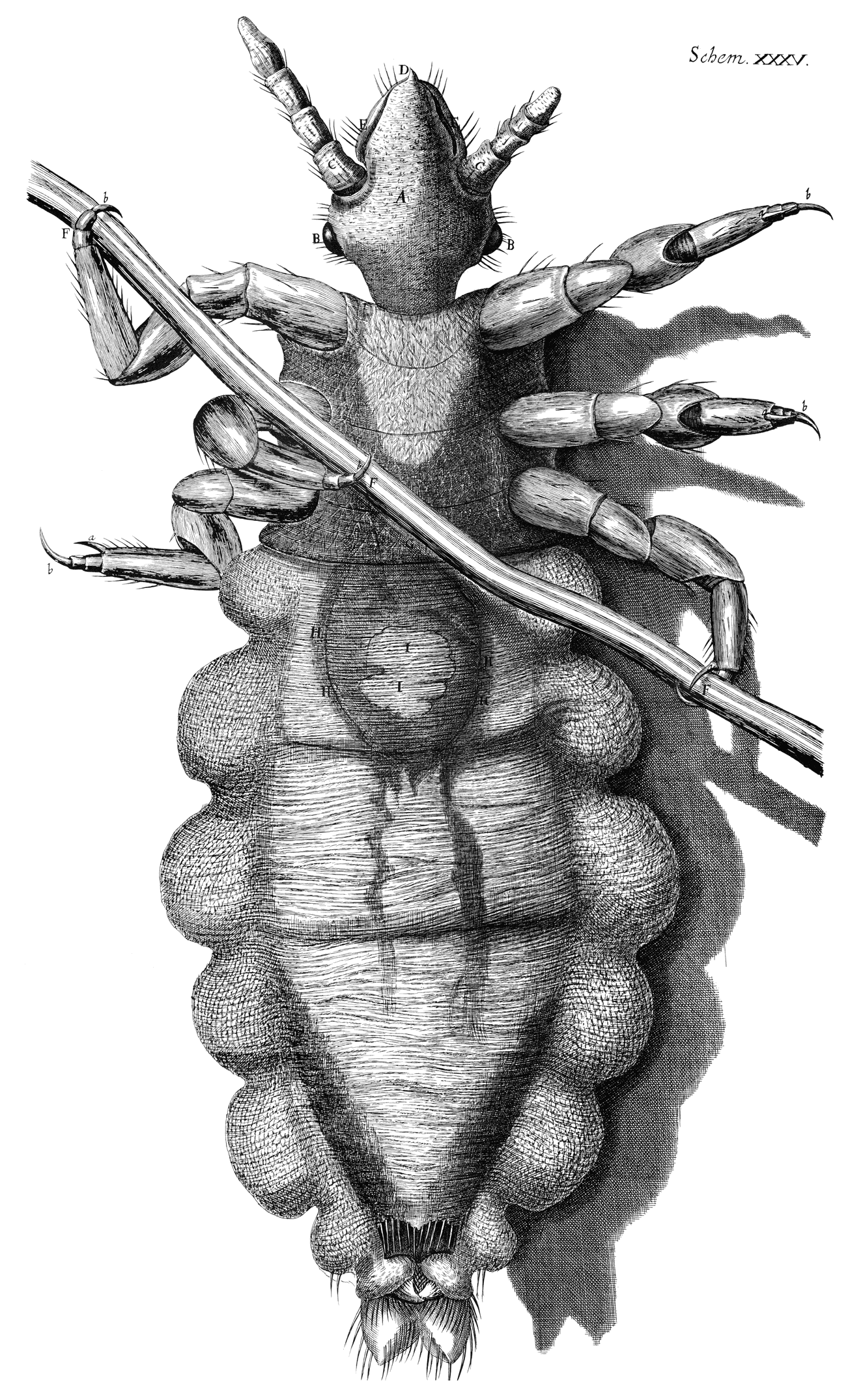
Robert Hooke's 1665 drawing of a louse on a human hair, from Micrographia.

Robert Hooke’s 1665 engraving of a louse on a human hair, from Micrographia.{credit}National Library of Wales. Reproduced in The Paper Zoo.{/credit}

Roberts’s urgent text underlines the state of play for today’s beleaguered marine animals. The Paper Zoo focuses firmly on the planet’s biodiverse past, rummaging through the British Library’s wealth of natural history illustrations spanning 500 years. Science historian Charlotte Sleigh leads us through an ark of beasts from the exotic to the ‘paradoxical’, limned by greats of scientific illustration. Robert Hooke’s eighteenth-century microscopic menagerie of drone flies and lice jostle with natural historian John Ray’s Dürer-like renderings of fish from the 1680s. The nineteenth-century art ranges further South; my favourite is an anonymous double portrait of langurs (one black, one white) staring sagely out in mid-snack.

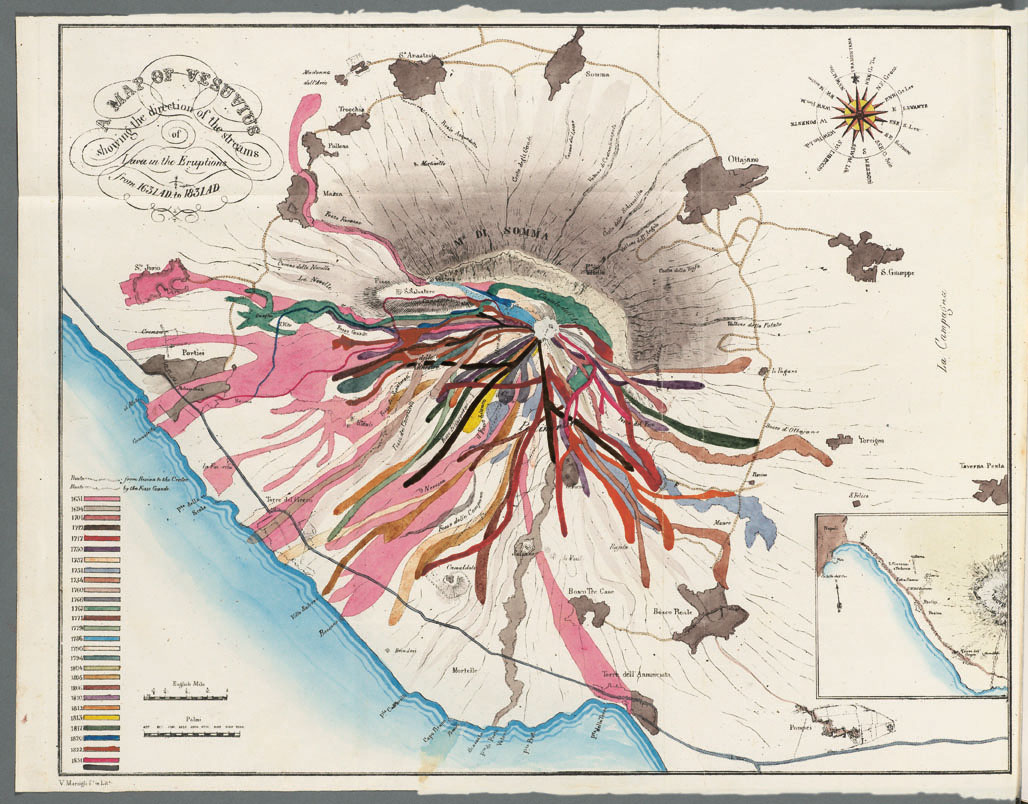
By necessity, many explorers were illustrators manqué — before the advent of reliable cameras, sketches were essential records of the geological, zoological and meteorological wonders they encountered. Explorers’ Sketchbooks: the Art of Discovery and Adventure (Thames & Hudson), by cultural historians Huw Lewis-Jones and Kari Herbert, is a mesmerising multiverse of them. Facsimile pages from the notebooks of 70 ‘terranauts’ give a stunning immediacy to distant time and space. Edward Wilson’s dreamlike evocations of the Antarctic, Maria Sibylla Merian’s caiman chomping on a false coral snake, the lava streams on Vesuvius mapped by John Auldjo, Alexander von Humboldt’s bold cross-section of Chimborazo — every turn of the page is a subtle thrill.

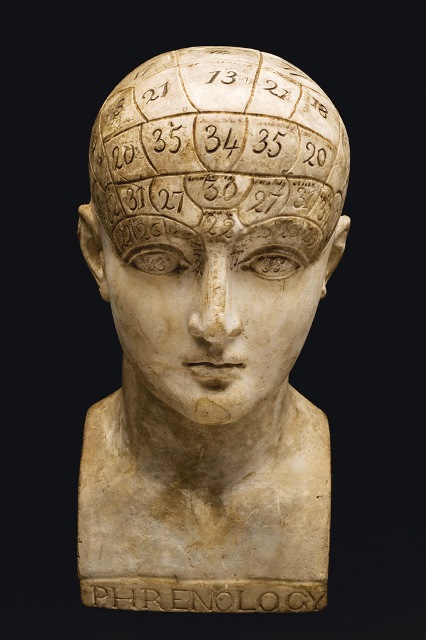
A phrenological bust.

A phrenological bust.{credit}Wellcome Library, London. Pictured in This Way Madness Lies.{/credit}

There are outer, and inner, journeys. Mike Jay’s This Way Madness Lies (Thames & Hudson) peers into the history of mental illness and its treatment as ‘madhouses’ gradually morphed into mental hospitals. (The book accompanies the Wellcome Collection show Bedlam.) Many of the more than 600 images, gleaned from European and US archives, are harrowing portraits of marginalised people further marginalised by experimental treatments ranging from the bizarrely exploitative to the ineffectual. Yet, as Jay notes, there were countercurrents. Franco Basaglia’s 1960s-70s psychiatric revolution in Italy sought to reinstate patient autonomy and social integration. Community refuges from Geel, Belgium, to Gould Farm, Massachusetts, offer treatment based on acceptance and occupation. And the science advances — even as depression and psychoses remain very much with us. A gallery features astounding art by the diagnosed, from proto-surrealist and Victorian parricide Richard Dadd to Adolf Wölfi, a talented abstractionist confined to a Bern asylum for life in 1895.

Finally, there are journeys into myth. The Un-Discovered Islands: An Archipelago of Myths and Mysteries, Phantoms and Fakes (Polygon) by travel writer Malachy Tallack and artist Katie Scott relates the stories of islands that never were. The Terra Novas off East Antarctica spotted by expedition leader Phillip Law in the 1960s were probably icebergs. The Auroras, a trio of islands halfway between the Falklands and South Georgia, were discovered in 1762, actually surveyed in 1796, and finally declared non-existent in the nineteenth century. There are more, from Hy Brasil to Bermeja, and all embellished by Scott’s strange and powerful images of whales, rabbits and jellyfish — species inhabiting what Tallack calls the “geography of the mind”.

John Auldjo's nineteenth-century map of successive lava flows on Vesuvius.

John Auldjo’s nineteenth-century map of successive lava flows on Vesuvius.{credit}Houghton Library, Harvard University, Cambridge, Massachusetts. Reproduced in Explorers’ Sketchbooks. {/credit}


For Nature’s full coverage of science in culture, visit www.nature.com/news/booksandarts.
Top 20 books: a year that made waves

beach-1836366_960_720This was a year that made waves — some so steep that I found myself reaching for a psychological surfboard. I skimmed along the discovery of gravitational waves (featured in Janna Levin’s Black Hole Blues and Other Songs of Outer Space), and rode the CRISPR tsunami. The political turbulence stateside, in Britain and beyond had me scrabbling for balance — and historical precedents. Yet amid all the Sturm und Drang, it has been a terrific year for science and culture.

In Nature’s first sci-fi special, we celebrated two anniversaries that stand as reminders of profound — and much-needed — humanistic vision. One was the 150th of the birth of H.G. Wells, ‘Shakespeare of science fiction’, prolific author and frequent Nature contributor; the other, the 50th of Gene Roddenberry’s pioneering franchise Star Trek. And as ever I was able to trace bright currents in the bookish deeps.

Oncologist and writer Siddhartha Mukherjee plunged into the genetics riptide with The Gene — fortuitously, in a year when Richard Dawkins’s name-making classic The Selfish Gene hit 40 and a pod of genome-editing studies surfaced. There was a glut of big physics, notably Roger Penrose’s trenchant Fashion, Faith, and Fantasy in the New Physics of the Universe. And forests, earthquakes, biomechanics and military technology were all ‘trending’. But in trawling hundreds of books for my top 20, one of the more astonishing confluences was in the history of women in science — specifically, the ‘computers’ or number-crunchers behind key astronomical discoveries and space missions. (I’ve cheated here by counting three books on this phenomenon as one — as they are both important self-contained stories and part of a great historical trajectory.) The rest are pretty wonderful too. Enjoy.

The Glass Universe: How the Ladies of the Harvard Observatory Took the Measure of the Stars, Dava Sobel. Viking. The science writer traces the stories of pioneering women ‘computers’ who, from the late nineteenth century, made astronomical history at Harvard College Observatory. (Reviewed here.) 
Hidden Figures:
The American Dream and the Untold Story of the Black Women Mathematicians Who Helped Win the Space Race, Margot Lee Shetterly. William Morrow. A historian extols the brilliant African-American women mathematicians at NASA’s Langley Research Center who helped propel postwar America to the Moon and beyond. (Reviewed here.)
Rise of the Rocket Girls: The Women Who Propelled Us, from Missiles to the Moon to Mars, Nathalia Holt. Little, Brown. The HIV researcher on the women at NASA’s Jet Propulsion Lab who from the 1940s number-crunched in near-secrecy to launch missiles and the first US satellite. (Reviewed here.)

Lab Girl, Hope Jahren. Knopf. A palaeobiologist reveals the joy (and strangeness) of field and lab life through the lens of a woman in science. (Reviewed here.)

Half-Earth: Our Planet’s Fight for Life, Edward O. Wilson. Liveright. The eminent biologist issues a compelling call to commit half the planet to the rest of nature. (Reviewed here.)

Reality Is Not What It Seems, Carlo Rovelli. Allen Lane. The theoretical physicist invites us to gaze through a window at a world where space is granular and time does not exist. (Reviewed here.)

The Serengeti Rules: The Quest to Discover How Life Works and Why It Matters, Sean B. Carroll. Princeton University Press. An evolutionary biologist distils a vast body of biological research into six rules of regulation for the restoration of ecosystems and management of the biosphere. (Reviewed here.)

The Shock of the Anthropocene: The Earth, History and Us, Christophe Bonneuil and Jean-Baptiste Fressoz, trans. David Fernbach. Verso. Two historians dig into technological history, economics and climate science to reveal the role of imperialist ideology in today’s planetary crises. (Reviewed here.)

Serendipity: An Ecologist’s Quest to Understand Nature, James A. Estes. University of California Press. An innovative ecologist unpacks his life’s work tracing the top-down control of ecosystems by sea otters as apex predators. (Reviewed here.)

The Life Project: The Extraordinary Story of Our Ordinary Lives, Helen Pearson. Allen Lane. The Nature editor unravels the 70-year history of the British cohort studies and the crucial insights they offer on socioeconomic inequities. (Reviewed here.)

White Trash: The 400-Year Untold History of Class in America, Nancy Isenberg. Viking.  A historian delivers a searing indictment of the US political forces that persistently marginalise poor whites. (Reviewed here.)

Imbeciles: The Supreme Court, American Eugenics, and the Sterilization of Carrie Buck, Adam Cohen. Penguin. The award-winning writer revisits Buck vs Bell, the notorious 1920s case highlighting the dark history of US eugenics. (Reviewed here.)

Weapons of Math Destruction, Cathy O’Neil. Crown. A data scientist and former Wall Street quant uncovers the biases in the algorithmic overlords that micromanage the US economy. (Reviewed here.)

Bellevue: Three Centuries of Medicine and Mayhem at America’s Most Storied Hospital, David Oshinsky. Doubleday. The historian surveys the key advances and bold open-door policy that have made the New York public hospital a medical beacon. (Reviewed here.)

The Cyber Effect, Mary Aiken. John Murray. A forensic cyberpsychologist examines the mental lures built into sociotechnology and their impact on individuals and society. (Reviewed here.)

The Most Wanted Man in China: My Journey from Scientist to Enemy of the State, Fang Lizhi, trans. Perry Link. Henry Holt. The late astrophysicist and dissident on the scientific passion and quest for freedom of expression that drove his extraordinary life. (Reviewed here.)

Marconi: The Man Who Networked the World, Marc Raboy. Oxford University Press.  The communications scholar investigates the complexities of a giant of technology devoted to both science and fascism. (Reviewed here.)

How Not to Network a Nation: The Uneasy History of the Soviet Internet, Benjamin Peters. MIT Press. A communications specialist plumbs the messy and engrossing history of a Soviet technological failure on the grand scale. (Reviewed here.)

The Great Departure: Mass Migration from Eastern Europe and the Making of the Free World, Tara Zahra. W.W. Norton. An accomplished historian busts myths and adds nuance to the story of the 58 million Europeans who poured into the Americas from 1846 to 1940. (Reviewed here.)

Fine Lines: Vladimir Nabokov’s Scientific Art, edited by Stephen H. Blackwell and Kurt Johnson. Yale University Press. In this collection, a Russian scholar and entomologist trace the novelist’s significant contribution to lepidoptery and how that played out through his fiction. (Reviewed here.)

Bone Rooms: From Scientific Racism to Human Prehistory in Museums, Samuel J. Redman. Harvard University Press. A historian harks back to the nineteenth-century ‘skull wars’ and after, which packed US museums with human remains and fired ethical debates that still burn. (Reviewed here.)

The Euro: How a Common Currency Threatens the Future of Europe, Joseph E. Stiglitz. W.W. Norton. The Nobel laureate and economist analyses the failures of eurozone policymakers and the shape radical reform might take. (Reviewed here.)

Listen to my Nature Podcast interview on the top 20 books with Scientific American’s Steve Mirsky here.


For Nature’s full coverage of science in culture, visit www.nature.com/news/booksandarts.

The making of science

Posted on behalf of Jo Baker

Make-Shift-lock-up-1_eps fin4Scientists are makers. The specialized skills they hone in the lab over many years – from assembling robots and circuits to growing microbes and cells – mirror the practices of artisans such as seamstresses and potters. Chemists may melt, stretch and snap a glass tube to make a pipette. Jewellers rearrange silver atoms each time they warm the metal to anneal or soften it.

Bringing together makers of all stripes to innovate was the focus of MAKE:SHIFT, a two-day biennial conference this month in Manchester’s Museum of Science and Industry, home to Charles Babbage’s loom-inspired computing machines. Scientists and designers explored in talks, panel discussions and demonstrations how joint working can advance sustainability, healthcare and communities.

Across smart materials, biodesign, wearable electronics and more, the speakers showed how such collaborations have led them to think and work differently. They explored emerging trends, such as 3D printing and small-scale production. And they asked big questions, such as how the concepts of craft and making have become lost in today’s digital world of instant gratification, yet remain central to hatching new models and cultures of innovation. The following insights and individuals stood out.

Tools and workshops are increasingly accessible, linked and powerful. Fabrication labs or ‘fab labs’ – where members of the public and skilled experts recycle furniture or even edit genes – are proliferating. There are now 700 around the world. And 16 cities (including Barcelona, Boston in the US and Shenzhen) have signed up to become ‘fab cities’– aiming to produce locally 50% of what they consume by 2054. Online networking and exchanges of experience between make spaces is increasing, linking know-how in California with needs in Cape Town, for example.

Small-scale manufacturing is on the rise, aided by the Internet and cheaper production technologies such as 3D printers. Digital blueprints allow anyone with such means to construct furniture or even houses locally. Generic designs can be customized. Garment patterns that can be tweaked and knitted on demand avoid wastage. Customers increasingly care where their products come from, and value sustainability, social good and ethical work practices.

The nature of materials is being rethought. Bio-materials such as fungal webs (mycelium) can be used to ‘grow’ bricks, pots and even dresses on wood-chip, clay or textile frames. Amsterdam-based ecodesigner Maurizio Montalti of Officina Corpuscoli described how, after working with University of Utrecht microbiologists on scaling up these fungal creations, his studio began to look more like a lab. University College London materials scientist Mark Miodownik invoked a future devoid of roadworks if self-healing asphalt becomes reality.

Fungal Futures: a selection of mycorrhyzal materials by Maurizio Montalti for Officina Corpuscoli.

A selection of materials grown directly from fungi by Maurizio Montalti for Officina Corpuscoli.{credit}Fungal Futures © Maurizio Montalti-Officina Corpuscoli, 2016{/credit}

The Anthropocene offers new geologically inspired materials. ‘Fordite’, or ‘detroit agate’,  is made from fine layers of hardened car paint and can be cut and polished like semi-precious stone. We may one day dig up deposits of ‘bone marble’, retrieved from the metamorphosed skeletons of culled farm animals. The fashion industry is the second most polluting in the world, but sportswear company Adidas is scooping waste plastics out of the ocean to make its knitted footwear.

Crafts people are sensitive to people’s emotional responses to materials and objects. Yet few designers are included in research teams examining interactions between robots and humans, for example. Caroline Yan Zheng from London’s Royal College of Art is using soft robotics to make wall panels and accessories that swell or reshape in response to facial emotions. People tell her they find them comforting; one day they might be used to promote calm in hospitals.

Caroline Yan Zheng's soft robotic artefact prototype #4, exploring the performativity of kinetic silicone soft robotics.

Caroline Yan Zheng’s soft robotic artefact prototype #4, exploring the performativity of kinetic silicone.{credit}Caroline Yan Zheng, 2016{/credit}

Surgery is a craft – you don’t want your operation done by someone who has only read a book. Richard Arm from Nottingham Trent University brought in gorily realistic models of parts of the thoracic cavity that he has been making in silicone for surgeons to train on – complete with slimy finish, spurting arteries and the slash across the chest for you to dig your hand into. But introducing design innovations into the healthcare sector is difficult, Jeremy Myerson from the Royal College of Art noted; the sector is risk averse. His redesigned ambulance interior reduces the time it takes for paramedics to treat a patient’s wounds, by giving them better access to the patient and equipment. Yet, despite running it through ‘clinical trials’ successfully, it has yet to be taken up.

For making to drive innovation, many challenges need to be overcome. Craft has an old-fashioned hobbyist image, and many courses are closing as universities struggle to attract students. Yet jewellers and textile and industrial designers are open to new materials and technologies as never before, while few scientists are trained in metalworking or AutoCAD. And it is hard even to define what tacit skills and knowledge are.

Gravity Stool (detail) by Jólan van der Wiel, 2012. Photo

Jólan van der Wiel’s Gravity Stool (detail), created from magnetic plastic compounds, 2012.

That said, some technologies are overhyped. 3D printing remains expensive and impractical with many materials, such as porcelain. While printing is useful to make a detailed prototype, traditional processes like casting are often better for mass production. Also, the software needs to become more intuitive. Ann Marie Shillito of Edinburgh College of Art showed how she is using touch-sensitive ‘haptic’ computer design software to form organic shapes.

So how far can this model of local production be scaled? Ways must be found to promote collaboration between workshops, and optimize who makes what, where. And new business models are needed so that small-scale manufacturers can make a living; most workspaces depend on government grants. Nonetheless, MAKE:SHIFT was a heartening experience that highlighted what science and design have in common rather than, as is too often the case, what divides them. After all, even graphene (carbon that is 1 atomic layer thick) has been linked to traditional craft: the Japanese paper-cutting art of kirigami have been applied to graphene sheets to make stretchable electrodes, hinges and springs.

Jo Baker is senior Comment editor at Nature.


For Nature’s full coverage of science in culture, visit www.nature.com/news/booksandarts.
O brave new world of fantastic beasts

Posted on behalf of Stuart Pimm and his research group

Fantastic BeastsFrom the start, European visitors to the New World have celebrated its fantastic biodiversity. What looks like a scarlet macaw embellishes German cartographer Martin Waldseemüller’s 1507 world map, the first to name these lands “America”. Eighty years later the English artist John White, a governor during England’s first attempt at settling North Carolina, was painting fireflies, “which in the night [emit] a flame of fire” (a sight of pure magic on a warm summer’s evening).

And in the 1920s, magizoologist Newt Scamander — with portable menagerie in tow — visited New York with the entirely laudable aim of returning a thunderbird to its home in Arizona. Thus begins Fantastic Beasts and Where to Find Them, the David Yates-directed film based on J.K. Rowling’s book of the same name – one of the set texts her boy wizard, Harry Potter, must study at school.

With my research group, including graduate students Alexandra Sutton, Ryan Huang and Rubén Palacio, I had waited anxiously for this new treatment of Scamander’s classic work on the natural history, biogeography and conservation status of the world’s biodiversity invisible to muggles. (That’s you non-wizards.) We entered the seminar room (transformed to resemble a movie theatre), surrounded by young wizards in Hogwarts’ school uniforms. We had many questions in mind.

Would this hidden biodiversity be as diverse and unexpected as that encountered by the first European settlers in the Americas? How would species be distributed across different biomes? Rowling’s previous accounts of the fauna around Hogwarts have merely hinted at the range of possible species, obviously limited to the school’s location in Scotland. Northern, island ecosystems have few species, albeit a plethora of owls.

Here be dragons

Scamander’s ‘zoo’ fits into a single suitcase, which like Doctor Who’s Tardis is very much larger on the inside. And in we go, where we quickly learn of a wide variety of species mostly unknown to the muggle world. We expected dragons, of course. The theoretical ecologist Robert May and colleagues have discussed them in the pages of this journal and, indeed, predicted their resurgence with global warming (Nature 264, 16-17 (1976); Nature 520, 42-43 (2015).

There are many other species. We see the range of ecosystems occupied, extending beyond the Americas and ranging from frozen Arctic wastes to African savannahs. In the latter, we encounter what could be a horned relative of the gargantuan rhinoceros Paraceratherium, long thought to be extinct. Nor does Scamander neglect those world rulers, the arthropods: there are stag beetles as big as dogs. And a relative of the praying mantis, though it does not pray and, despite exhortations, cannot even be persuaded to smile. Australian fauna are also included, with an engaging duck-billed platypus relative that has a bowerbird’s propensity to collect things — in this case, shiny coins and jewellery.

Dan Fogler as Jacob, Eddie Redmayne as Newt Scamander and a beast called a Bowtruckle in Warner Bros. Pictures' fantasy adventure Fantastic Beasts and Where to Find Them.

Dan Fogler as Jacob, Eddie Redmayne as Newt Scamander and a beast called a Bowtruckle in Warner Bros. Pictures’ fantasy adventure Fantastic Beasts and Where to Find Them.{credit}© 2016 Warner Bros. Fantastic Beasts © JKR{/credit}

Following the presentation, I asked my students: What were the key management issues in the magical world? And how do they compare and contrast to those that muggles experience in their world?

Alexandra noted Scamander’s contradictions: “He’s often the conservationist and he advocates the education of fellow wizards about the value of these magical beasts in their world. But he’s also the collector, keeping wild animals as pets in an environment that’s not necessarily suited to them”. The tension here recalls the species-bagging of early naturalists such as the eccentric Lionel Walter Rothschild, whose vast collection is now held at London’s Natural History Museum.

Species in Scamander’s zoo escape and cause considerable physical damage to New York. It takes much magic to undo the damage, an option unavailable to muggle professionals facing invasive species. As Ryan put it, the movie is also a reminder that “with keeping animals captive comes the callousness by which people traffic in beasts”.

Much of this callousness is borne of our growing separation from the natural world. Rubén reflected: “Some species are mighty, and if not treated correctly, can be dangerous, but this comes from our ignorance. Scamander…understands and engages the animals.” Ryan agreed: “Even though there have been very few wolf attacks on humans, people still fear wolves. Scamander affirms that we humans are the most dangerous beasts of all. When we are scared, we lash out.”

And my view? It tallies with Scamander’s. He asks why “magical beasts, even those that are savage and untameable”, are protected. The answer? To “ensure that future generations enjoy their strange beauty…as we have been privileged to do”.

Stuart Pimm is professor of conservation at the Nicholas School of the Environment, Duke University, Durham, North Carolina, and directs the non-profit SavingSpecies, www.savingspecies.orgHe tweets at @StuartPimm.


For Nature’s full coverage of science in culture, visit www.nature.com/news/booksandarts.