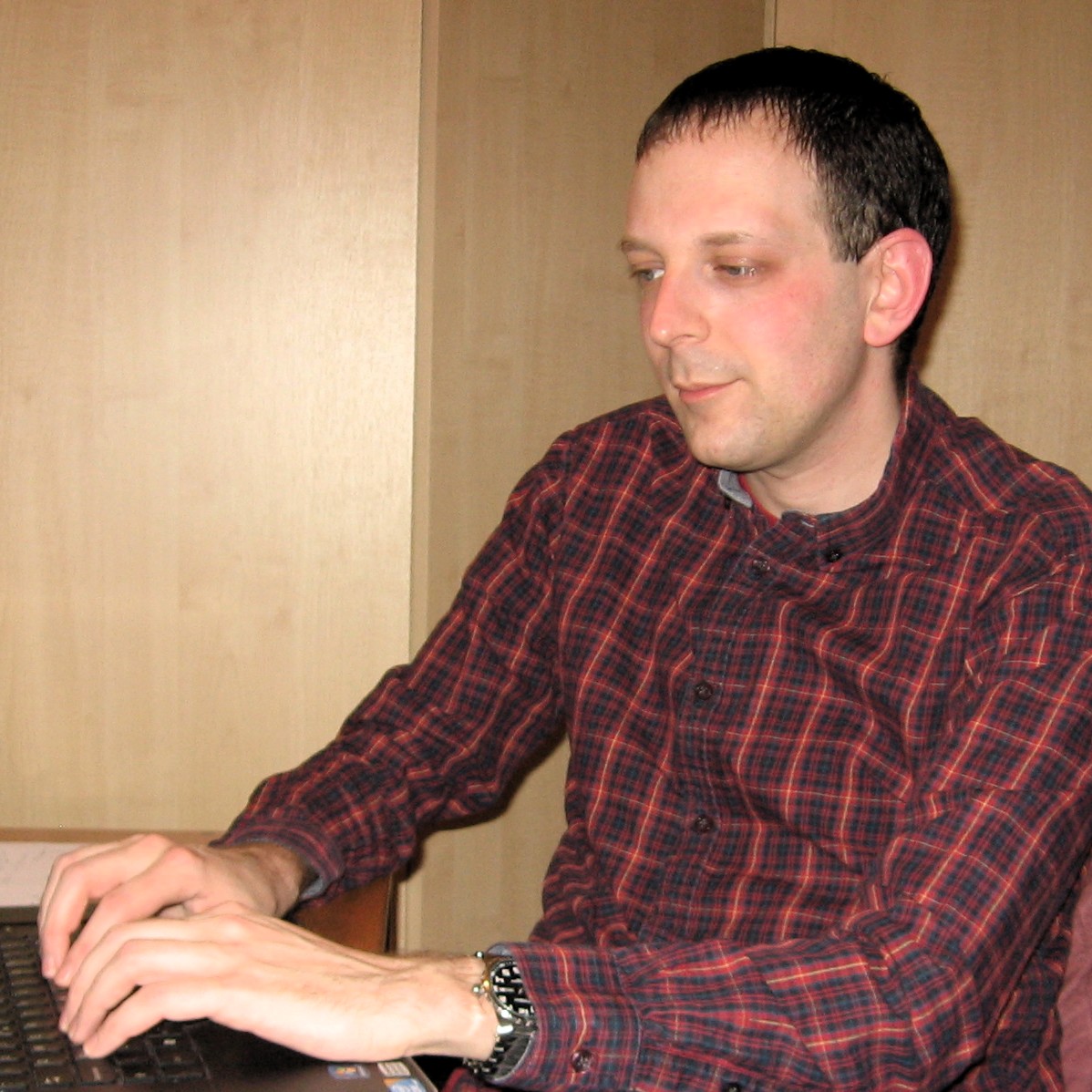
Introduction to Tool Tales: Using Science Tools in the Classroom

Science Online New York (SoNYC) encourages audience participation in the discussion of how science is carried out and communicated online. To celebrate our first birthday, we are handing the mic over to the audience so that anyone who would like to participate will get five minutes to show off their favourite online tool, application or website that makes science online fun. To complement the celebrations, we’re hosting a series of guest posts on Soapbox Science where a range of scientists share details about what’s in their online science toolkits.  Why not let us know how they compare to the tools that you use in the comment threads?

This is cross-posted on Soapbox Science. 

My favorite thing about all the online science apps and tools is that they make real science accessible to anyone – even sixth graders.  Last fall, I taught a course through Citizen Schools, an after school program for middle schoolers. Part of the program includes what is called “apprenticeships”, in which people come in and teach something about their job or profession. As a scientist, I decided I wanted to teach the kids about structure-based drug design.

The goal of the class was to teach the kids a little bit about what proteins look like and how they can use that knowledge to design drugs. I wanted to show students that they can do real scientific research, similar to what scientists are doing now. Using HIV-1 protease as our model system, we used the program Pymol to visualize the protein bound to different HIV drugs and decided on what types of changes we could make to those drugs to hopefully make them bind better.

Next, the kids went into the computer lab and drew their new drugs in MarvinSketch (a great, intuitive, easy-to-use chem drawing software). There are a lot of great chem drawing programs out there, but I chose MarvinSketch because it’s free, it’s easy to use, and it has some fun features. The kids got a kick out of using the molecular dynamics feature and seeing their molecules wiggle and dance.

After drawing their drugs, we docked the molecules onto the HIV-1 protease structure using the Autodock/Vina plugin for Pymol. I spent a lot of time looking for a docking software that I thought sixth graders could use, and I picked Autodock/Vina because it’s easy to use, has a decent GUI interface, and works with Pymol, which I already knew how to use. With Autodock/Vina, you take a PDB structure of a protein and a PDB structure of a small molecule, define a binding site, and the program determines and ranks the top ten conformations of the molecule docked onto the protein.

Drug bound to HIV-1 protease (designed by sixth grade student)

The overall goal was to have students look at how current drugs interact with HIV-1 protease, generate hypotheses on how to change the drugs to make them better and then make those drugs with the computer and see if they bind. All the while, the students would be using tools and programs that real scientists use in the lab.

So, did it work? I knew going in that I had my work cut out for me. The concepts of atoms and molecules are so abstract and esoteric that it’s hard to conceptualize them, but using the tools above really helped the kids visualize these things. I know there was some disconnect on what molecules actually are, like how big they are, where they’re found, how they are a part of living things but not themselves living. Also, because we didn’t go into depth about things like salt bridges, hydrogen bonds, and hydrophobic interactions, the “design” part of the structure-based drug design was a little more random than rational.

But for me, the most important lesson that every student walked away with was that they could be scientists and that they could actually help solve the problems of the world.

While I thought that my approach to teach structure-based drug design was kind of clever, it seems that an upcoming version of Fold-it may do something similar, all in one program.

You can follow the online conversation on Twitter with the #ToolTales hashtag and you can read Mary Mangan’s Tool Tale here, Dr Peter Etchells’s Tool Tale here, Alan Cann’s here, Jerry Sheehan’s here, Boris Adryan’s here, Anthony Salvagno’s here, Daniel Burgarth and Matt Leifer’s here, Zen Faulkes’s here, Mike Biocchi’s here, Susanna Speier’s here, Derek Hennen’s here, Musa Akbari’s here, Benedict Noel’s hereChris Surridge’s here and Gerd Moe-Behrens’s here 

Tool Tales: The Calit2 Research Intelligence Project

Science Online New York (SoNYC) encourages audience participation in the discussion of how science is carried out and communicated online. To celebrate our first birthday, we are handing the mic over to the audience so that anyone who would like to participate will get five minutes to show off their favourite online tool, application or website that makes science online fun. To complement the celebrations, we’re hosting a series of guest posts on Soapbox Science where a range of scientists share details about what’s in their online science toolkits.  Why not let us know how they compare to the tools that you use in the comment threads?

Jerry Sheehan serves as the Chief of Staff for the California Institute for Telecommunications and Information Technology (Calit2), a UC San Diego/UC Irvine partnership. In his this capacity, Mr. Sheehan has responsibility for strategic planning, metrics, institute governance, and strategic initiatives. During his career Jerry has focused on the intersection of public policy and information technology with a particular interest in applying academic innovation to “real world” problems. In addition to his executive management responsibilities, Jerry served as Senior Personnel on the National Science Foundation’s GreenLight Project, a major research instrument effort focused on improving computer energy efficiency. Sheehan served as a member of the California Emerging Technology Fund Panel of Experts and as staff has supported the work of Governor Schwarzenegger’s California Broadband Task Force and President Clinton’s Information Technology Advisory Committee on Open Source Software for High Performance Computing. He received a Masters of Science degree in Political Science from Eastern Illinois University in 1991 and is a member of the American Association for the Advancement of Science (AAAS), and Educause.  Continue reading

Tool Tales: A computational biologist’s personal toolbox

Science Online New York (SoNYC) encourages audience participation in the discussion of how science is carried out and communicated online. To celebrate our first birthday, we are handing the mic over to the audience so that anyone who would like to participate will get five minutes to show off their favourite online tool, application or website that makes science online fun. To complement the celebrations, we’re hosting a series of guest posts on Soapbox Science where a range of scientists share details about what’s in their online science toolkits.  Why not let us know how they compare to the tools that you use in the comment threads?

Boris Adryan is a biologist by training (studies at Mainz, Germany, and Charleston, USA). He obtained a PhD at the Max-Planck-Institute for Biophysical Chemistry (Göttingen, Germany) for work on the development of the Drosophila tracheal system. Postdoctoral work at the University of Cambridge (UK) and the MRC Laboratory of Molecular Biology exposed him to both the wet- and dry-bench sides of modern genomics and computational biology. As a Royal Society University Research Fellow at the Cambridge Systems Biology Centre, his team of currently six biologists, computer scientists  and mathematicians works on experimental and theoretical studies of transcriptional regulation and transcription factors. In his spare time he enjoys playing computer games with his children, running and boxing. Continue reading

Tool Tales: figshare & Open Science – Making Your Impact Remain

Science Online New York (SoNYC) encourages audience participation in the discussion of how science is carried out and communicated online. To celebrate our first birthday, we are handing the mic over to the audience so that anyone who would like to participate will get five minutes to show off their favourite online tool, application or website that makes science online fun. To complement the celebrations, we’re hosting a series of guest posts on Soapbox Science where a range of scientists share details about what’s in their online science toolkits.  Why not let us know how they compare to the tools that you use in the comment threads?

Anthony Salvagno is a biophysics PhD student at the University of New Mexico and a graphic designer for IheartAnthony. His research is the perfect mixture of design and science and he publishes his findings in real-time in his open notebook. He is an open science advocate and educator.

figshare and Open Notebook Science – the perfect marriage

I am an open notebook scientist, which simply means that I share all of my research online in an open format in real-time. I share everything about my research that I can including: ideas, project plans, methods and protocols, raw data, interpreted data, and conclusions. I publish my notebook using WordPress and use a slew of online tools to handle whatever WordPress cannot. figshare is one of those tools. Continue reading

Tool Tales: Online Seminars – Making Physics Accessible

Science Online New York (SoNYC) encourages audience participation in the discussion of how science is carried out and communicated online. To celebrate our first birthday, we are handing the mic over to the audience so that anyone who would like to participate will get five minutes to show off their favourite online tool, application or website that makes science online fun. To complement the celebrations, we’re hosting a series of guest posts on Soapbox Science where a range of scientists share details about what’s in their online science toolkits.  Why not let us know how they compare to the tools that you use in the comment threads?

Daniel Burgarth
Matt Leifer

Daniel Burgarth is a lecturer in Mathematics and Physics at Aberystwyth University. His research interests are in many-body physics, control theory and quantum information. He obtained his Ph.D. at University College London in 2007.

Matt Leifer works on problems at the intersection of quantum foundations and quantum information theory and has recently completed a postdoc at University College London.  He obtained his Ph.D. in Mathematics from the University of Bristol in 2004, and has since worked at the University of Cambridge and at Perimeter Institute and the University of Waterloo in Canada.  See https://mattleifer.info for more details.

Q+ hangouts is a monthly online seminar series in quantum information and the foundations of quantum theory that we have been organizing since August 2011.  We use Google+ hangouts for the seminars, and all the organization is done using free online tools and services. Continue reading

Tool Tales: A sunny future for cloud collaboration?

Science Online New York (SoNYC) encourages audience participation in the discussion of how science is carried out and communicated online. To celebrate our first birthday, we are handing the mic over to the audience so that anyone who would like to participate will get five minutes to show off their favourite online tool, application or website that makes science online fun. To complement the celebrations, we’re hosting a series of guest posts on Soapbox Science where a range of scientists share details about what’s in their online science toolkits.  Why not let us know how they compare to the tools that you use in the comment threads?

Zen Faulkes is Associate Professor of Biology at The University of Texas-Pan American. He studies neuroethology, mainly using crustaceans. He blogs at NeuroDojo, Better Posters, Marmorkrebs, and Sunday Matinee. Because you can never have enough blogs.

The city I live in doesn’t always get shown on the weather maps on TV. The southern end of the state is often cut off the screen. The nearest major city is four hour drive north of here. Continue reading

Tool Tales: Google+? It’s very simple

Science Online New York (SoNYC) encourages audience participation in the discussion of how science is carried out and communicated online. To celebrate our first birthday, we are handing the mic over to the audience so that anyone who would like to participate will get five minutes to show off their favourite online tool, application or website that makes science online fun. To complement the celebrations, we’re hosting a series of guest posts on Soapbox Science where a range of scientists share details about what’s in their online science toolkits.  Why not let us know how they compare to the tools that you use in the comment threads?

Alan Cann is a senior lecturer in the School of Biological Sciences at the University of Leicester. His interests are science education and exploiting emerging social technologies to enhance the student experience and maximise student and researcher development. He is the author of two highly successful textbooks, has served on the editorial boards of several scientific journals, is creator of MicrobiologyBytes.com, and is Internet Consulting Editor of the Annals of Botany. He has worked as a consultant for numerous educational and scientific institutions, and has published extensively in the area of educational research. More information  Continue reading

Tool Tales: Science Writing Made Easy

Science Online New York (SoNYC) encourages audience participation in the discussion of how science is carried out and communicated online. To celebrate our first birthday, we are handing the mic over to the audience so that anyone who would like to participate will get five minutes to show off their favourite online tool, application or website that makes science online fun. To complement the celebrations, we’re hosting a series of guest posts on Soapbox Science where a range of scientists share details about what’s in their online science toolkits.  Why not let us know how they compare to the tools that you use in the comment threads?

Dr Peter Etchells is a post-doctoral research assistant in the School of Experimental Psychology at the University of Bristol, UK. His current research looks at the psychological, evolutionary, and biomechanical factors that underpin the perception of attractiveness, and attribution of personality traits in human walking movements. In his spare time, he writes the Nature Network blog ‘Counterbalanced’, and is currently taking part in ‘I’m a Scientist: In the Zone’, a Wellcome Trust public engagment competition. Continue reading

Tool Tales: SciVee – Making Science Visible

Science Online New York (SoNYC) encourages audience participation in the discussion of how science is carried out and communicated online. To celebrate our first birthday, we are handing the mic over to the audience so that anyone who would like to participate will get five minutes to show off their favourite online tool, application or website that makes science online fun. To complement the celebrations, we’re hosting a series of guest posts on Soapbox Science where a range of scientists share details about what’s in their online science toolkits.  Why not let us know how they compare to the tools that you use in the comment threads?

Mary Mangan has been fascinated with biology since spending summers at the beach engrossed by the tide pools. This led to degrees in Microbiology, Plant Cell Biology, and eventually a PhD in Cell, Molecular, and Developmental Biology. Moving to computational biology, bioinformatics and genomics as those fields emerged, Mary finds databases are the new tide pools for her. And new waves keep washing interesting things in! Mary is currently the President of OpenHelix since its founding in 2003. OpenHelix provides online and onsite training on bioinformatics and genomics resources. Previously, she successfully founded and operated Biological Software Testing Services, Inc. This company provided software testing from a biological scientist’s perspective for the bioinformatics industry. For some publications, you can see her Google Scholar profile. Continue reading