
Nuclear fusion: Creating artificial stars

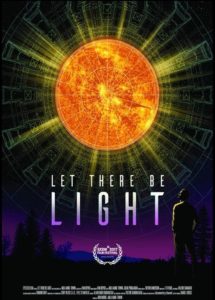
Too little does the public hear about nuclear fusion — a process in which two light nuclei collide at high speed and fuse into a heavier nucleus — which is surprising considering the need for alternative energy sources and fusion’s promise to deliver limitless clean and safe energy. If the word fusion brings anything to the mind of the wider public, this is likely related to ITER, a research reactor under construction in France that has repeatedly made the news by over blowing its budget and being substantially behind schedule. Is this all there is to know about fusion? By all means, no. “Let there be light – the 100 years journey to fusion” brings the audience on a fascinating journey across time and ideas into the complex landscape of past and present fusion research.

The documentary, directed by Mila Aung-Thwin and Van Ryoko, was released in March 2017, and explores the world of fusion mainly through the eyes of four of its protagonists, each bringing a different point of view.
Credit: Heath Cairns

Mark Henderson works at ITER, a reactor based on a tokamak design, in which a powerful magnetic field confines the plasma in a toroidal shape. ITER is poised to become the biggest fusion reactor in the world, and its goal is to demonstrate that fusion at the power-plant scale is feasible. At ITER, Henderson is in charge of the systems heating the plasma.

Eric Lerner develops a fusion concept called dense plasma focus, in which large electrical currents run through the plasma, harnessing its natural instabilities to confine and compress it; this type of reactor has the advantage of being much smaller and cheaper than other designs, but technologically is not as advanced. “The first error of the governments in the 1970s was to put all their eggs in the tokamak basket”, he comments. “But actually we still don’t know which route will lead to practical and economical fusion: you should invest not in ideas you think will work, but in all ideas you can’t prove won’t work”.

Michel Laberge is the founder of General Fusion, a private company developing a fusion power device that, instead of employing magnetic fields, uses pistons to compress liquid metal surrounding the plasma to create fusion conditions. “It’s pistons and its’ rings, it’s metal and pipes, it’s plumbing,” he explains. “Turning that into a power plant would actually be not that complicated. I have a saying, I tell my engineers: if you can’t find it at Home Depot it doesn’t go in the machine.”

Finally, Sibylle Gunter is the scientific director of Wendelstein 7-X, an experimental reactor in Germany that is the largest stellarator device in the world. Stellarators, which have worst plasma confinement than tokamaks but can run continuously — an important advantage for future power plants — are based on complicated coils optimized to generate a specific magnetic field configuration. Although stellarators are technologically behind tokamaks, some believe it is stellarators that will eventually deliver fusion on the grid.

The documentary takes the audience right at the beginning of the history of fusion, to the time when, in 1939, Hans Bethe understood the proton–proton reaction that powers stars. A decade later, in the USSR, a self-educated Red Army sergeant posted to a remote island suggested a concept that would become the tokamak; physicist Andrei Sakharov completed the projects for the first reactor in 1950. That same year, the claim (then proven fraudulent) that fusion had been achieved in Argentina inspired Lyman Spitzer, an American physicist, to develop the stellarator. The importance of international collaboration to achieve fusion was recognized already during the cold war (it helped that fusion has no military applications), and in 1985 Gorbachev and Reagan agreed to start a collaborative international project to develop fusion energy, laying the basis for the ITER project.

Among scientists, a period of tremendous enthusiasm in the 1960s was followed by a decade of doubt and skepticism when it was realized that the problem was more complex than initially thought. In the 1980s, on the wake of a new wave of enthusiasm, it was believed that fusion would be on the grid within 50 years, and indeed until 2000 advances were fast. But to take the next step a new machine was needed, bigger, more complex: ITER, which is likely the most complex machine ever built.  I know I will be retired by the time ITER is successful” says Henderson, “so I’m like the guy building a cathedral, who knows he is gonna […] spend his entire career putting bricks together, but he will never see the end piece.

Indeed, ITER is more than a decade behind schedule — first plasma was originally planned for 2016 — and several billion dollars over budget. In a management assessment back in 2013 the problem was pinned down as poor management, ill-defined decision-making processes and poor communications within the project. In 2015 a new Director General was appointed, Bernard Bigot. ITER now has a new date for first plasma, Christmas 2025. “I think ITER will probably work; it will demonstrate that fusion is doable,” says Laberge. “They are gonna blow their budget and their schedule big time, it will burn money at twice the rate you need to, but it will get built and it will work, and this will give a big shot in the arm of fusion.”

One point everybody seems to agree on is that more funding is needed to develop fusion. “The more money you put in, the faster the return. And we have really being putting in peanuts,” comments Henderson. “Fusion is about 20 billions for 20 years. One billion a year. One fancy bridge a year. Peanuts! Let’s do it!” says Laberge. “How long it will take to achieve fusion? At current levels of financing, it will take approximately the age of the universe,” concludes Lerner.

With its beautiful images, helpful animations and an engaging soundtrack, the documentary, which is all narrated through interviews and original clips, is informative and enjoyable. It does not shy away from the challenges and doubts about the feasibility of a complex project such as ITER, but keeps a positive outlook.  It is a welcome reminder that achieving fusion is an extremely important goal, and all potential avenues need to be explored. Whether expert on fusion or curious onlooker, in “Let there be light” there is something for everyone.
Interactions: John Hammersley

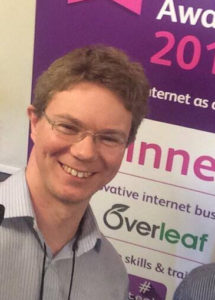
After a PhD in theoretical physics (specifically, holography and the ADS/CFT correspondence), John left academia and later co-founded Overleaf in 2012. He has been developing Overleaf ever since to bring it to more and more users.

What did you train in? What are you doing now?

My background is in mathematics and physics; I completed an MPhys at Warwick in 2004, before heading up to Durham for my PhD, which I completed in 2008. I then moved out of academia into industry, working for Ultra PRT, the company behind the world’s first driverless taxi system. I joined the company as a research scientist, and my role later broadened out to be bid manager for the various projects the company was involved in.

How did Overleaf start?

When joining Ultra PRT, I was lucky enough to be mentored by Prof. Martin Lowson, a former rocket scientist and aeronautical engineer. He founded Ultra PRT out of Bristol University in the mid-nineties, and always maintained a strong link with academia, encouraging us to write up and share our research into large scale driverless taxi systems with the wider community. This involved collaborations both internally and with others at partner universities/organizations, and it was whilst collaborating on these research papers that we discovered Etherpad, a new browser-based collaboration tool. This made it easy for us to share and collaborate on notes, but because we typically use LaTeX for our papers, it wasn’t quite what we needed.

So one weekend, my co-founder Dr John Lees-Miller built the prototype for Overleaf (then called WriteLaTeX), which allowed us all to collaborate in the browser on LaTeX documents, and would generate a PDF output by compiling the LaTeX on a server. We also found that this greatly lowered the barriers to collaborating with others who were new to LaTeX, as there was nothing to install — all that’s needed is a web browser. Usage of the site continued to grow through word-of-mouth and being featured on sites such as HackerNews, and in late 2012 we decided to found our own company and work on Overleaf full time!

Who is using Overleaf today?

Today over four million people worldwide are using Overleaf! These range from students taking their first steps with LaTeX, through to large scale collaborations between hundreds of the world’s leading scientists. I’m always amazed at the wide range of uses people find for LaTeX and Overleaf. For example, one of the first projects on Overleaf that wasn’t one of our research papers was a set of wedding invitations!

We also see Overleaf helping to extend LaTeX out into fields where it’s less common, such as in the humanities and social sciences (for example, see this a short interview with Brian Lucey, Professor of Finance at Trinity College, Dublin, who started using LaTeX through Overleaf and is now part of our Advisor programme).

We’re also collaborating with partners in the publishing industry to try to help streamline the authoring, submission and publication workflows for journals and preprint servers, by providing updated templates and simple submission links. Overleaf is the natural place for authors and editors to be able to check that all the files for a submission are present, and that there are no compilation errors within a manuscript. Because of the built-in error reporting, and friendly interface, it also helps when there are any problems to resolve!

What I personally find most exciting is that Overleaf is helping students create and share their work in ways not easily possibly before. For example, the ‘Nano Ninjas’ — a group of 7th and 8th Graders in the US — used Overleaf to write up the engineering notebook from their school Robotics challenge! They won an award for their notebook, and have shared it in full on Overleaf as a template for future students to see and take inspiration from!

You can read more about the Nano Ninjas here, and some of their members also went on to form ‘The Three Musketeers’. It’s amazing to see, and hopefully provides an inspiration to future researchers and scientists everywhere 🙂

 What are the main challenges when starting a company? Do you have any advice to share?

There’s a lot I could talk about here! Although, I’m a bit reluctant to start by listing out challenges; you have to be somewhat naively optimistic to start a company, and focusing too much on any perceived challenges can be (wrongly) off-putting. So I’ll focus on advice instead.

If four points is too many, just read point four: don’t run out of money!

  1. Take everyone’s advice with a pinch of salt: we all give advice based on our own experiences, and in the early days it’s easy to get side-tracked by advice that’s well-meaning, but not relevant for you.
  2. Talk to people about your idea as early as you can, but don’t be put off if the first people you talk to seem a bit confused as to what you’re proposing. It’s natural, as you’re still developing the idea, and it’ll help highlight where you need to be able to explain your idea more clearly. Early on, you’ll need positive reaction for motivation, early adoption for validation, and any critical feedback for development. But remember to take any advice they give you with a pinch of salt 🙂
  3. Focus on solving the immediate problems that you need to get done to get yourself to the next stage (whether that’s finding a co-founder, building the MVP, or getting feedback from your first users), and don’t worry too much about things beyond that. At the start this is focusing one week or one month at a time, and certainly no more than six months ahead. If you focus too much on the long term, you’ll find it takes you too long to get the important stuff done now, and you’ll run out of time/money.
  4. Finally, and most importantly, it’s the CEO’s main job to make sure you don’t run out of money — whoever the CEO is in your founding team needs know how long you have with initial money you’ve saved/raised to get started, and needs to focus on getting the next funding secured before this runs out. If you run out of money, it doesn’t matter how close you are to solving any of the other problems; that’s usually game over.

I also wrote on a similar topic in a blog for ErrantScience, and in my Reddit AMA from a few years ago. If you’re interested in my longer thoughts on this, those are both good follow-on reads.

If you are starting a company, good luck, and feel free to reach out to me directly if you think I can help! If it’s in the #TechForGood space, I’d also recommend talking to the Bethnal Green Ventures team; they’re very friendly, and have a lot of experience helping start-ups develop in the very early stages. We were part of their summer cohort in 2013, and I still help out as a mentor and alumni!

Do you have a favourite Overleaf tip(s)?

If you’re at a university, check if your institution has a site license for Overleaf! You can see the list of institutions here, and if they do, you’ll be able to get a free upgrade to an Overleaf Professional account through that license!

My other top tip isn’t for Overleaf specifically, but can greatly help if you can’t remember the LaTeX command for a symbol — you can use detexify to find it! Simply draw the symbol, and it’ll give you the corresponding LaTeX command!

Finally, if you’re new to LaTeX itself, we’ve put together this short introduction which can be completed in about 30 minutes, to help you get started. Good luck, and if you do use Overleaf, we’d love to hear from you!