Interactions: Conversation with Anil Ananthaswamy

After writing two successful books on neuroscience (“The man who wasn’t there”) and big instruments (“The edge of physics”), how did you choose quantum mechanics as the topic for your third book?

I’m drawn to such stories, whether there are about cosmology or the nature of the human self and consciousness, or in the case of the new book, the nature of quantum reality. While these topics seem disparate, I think they all address fundamental questions that deep down thrill us all: Who are we? What are we made of? What’s the fundamental stuff of the universe? Where do we come from? Where are we headed?

Given the scope of these questions, I feel lucky to have found ways to tackle them through stories that are grounded in everyday reality: in the telescopes and instruments we build in extreme places, or in the lived experience of people who are coping with their altered selves, or in the deceptively simple double-slit experiment and its many variants.

Why do you think physicists love the double-slit experiment to the extent that they voted it twice as the most beautiful experiment (both in Physics World and in Nature)? Could you try to define the aesthetic of the double-slit experiment?

Richard Feynman, in his paean to the experiment, said it best: he said that it contains the “central mystery” of quantum mechanics. Almost all of the conundrums and peculiarities of the quantum world can be understood using the double-slit experiment. In popular culture, the experiment is often used to highlight wave-particle duality and the apparent centrality of the observer in quantum mechanics: observe a photon going through the double-slit and it acts like a particle and it goes through one slit or the other; look the other way, and it behaves like a wave, seemingly going through both slits at once and interfering with itself. It’s obvious that such an account is enticing to a layperson—it opens a window to the mysterious world of the quantum, seemingly giving humans the power to create reality.

The actual story of the experiment is far more complex. Even hardened physicists are hard-pressed to explain just what is happening with the double-slit experiment. The simplicity of the experiment is obvious, an explanation feels palpable, but nonetheless, when physicists try and make intuitive, physical sense of it, they don’t quite succeed. There are mathematical ways of explaining the experiment, but when you try and interpret the mathematics to say something about physical reality, you stumble. Does a photon go through both slits at once? If yes, how can it do that? If not, does something else do so? If so, what is it? If nothing goes through both slits at once, how can you explain the interference pattern, which is a clear sign that something went through both slits at once? And so it goes, in circles.

And that’s the aesthetic allure of the double-slit experiment. How can something as simple as a photon going through two slits make us confront the very nature of reality? How can one experiment make us debate realism and anti-realism (whether or not reality exists independent of observers), locality and non-locality (whether or not there is instantaneous influence between two regions of space-time, defying special relativity), and determinism and non-determinism? And of course, the experiment raises questions about the role of measurement (observer) in collapsing quantum states to classical ones—and it’s nowhere near as settled an issue as lay accounts of quantum mechanics often suggest.

The experiment can even be used to explain the alternatives to the Copenhagen interpretation, including the Many Worlds interpretation, Bohmian mechanics (where reality is both wave and particle), and spontaneous collapse theories (where quantum systems in a superposition of states stochastically collapse to some classical state). The double-slit can thus be used to probe whether there is a divide between the quantum and classical worlds.

There is no other experiment quite like the double-slit in all of science.
Continue reading

The perfect pitch

Do you have a good idea for a Review article, or perhaps a Comment? Here’s a brief guide on how to pitch ideas to editors.

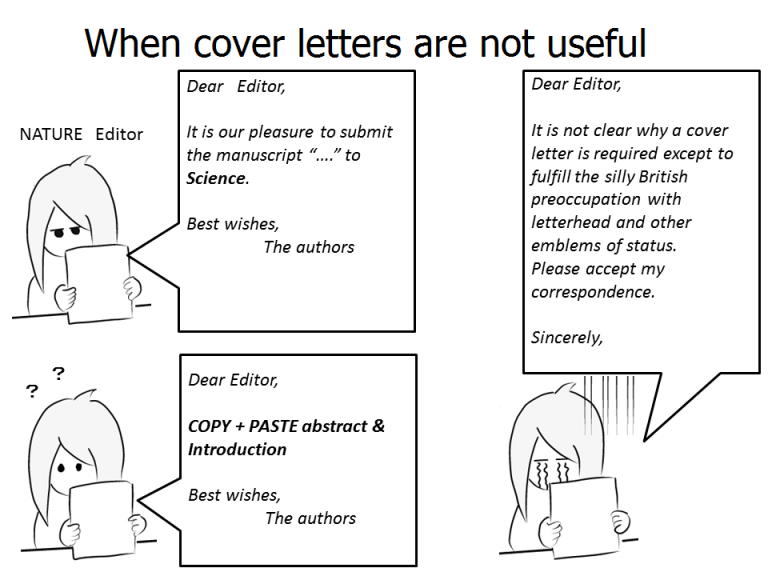
How to write a cover letter? That is a question Nature editors are often asked. When submitting a primary research article, a cover letter is only needed if the authors wish to convey some additional information not included in the manuscript (Some editors still love a good old cover letter. Here are some great tips for writing cover letters for primary research). However, if you want to propose a Review article or a Comment piece, a good cover letter is essential. Here is how to write it:

Dear Editor,

[Spend a few seconds to check the relevant editor’s name on the website, you would not like to receive emails everyday starting with Dear Researcher. It is good practice to get the name of the journal and editor right. Cover letters addressed to another journal suggest that the paper has been rejected by the other journal, which is not necessarily flattering. (Rest assured that this will not lead to the immediate rejection of the proposal, but it does say something about your attention to detail. This is a good moment to double-check the date and the correct spelling of the editor’s name)]

Who are you?

[Introduce yourself very briefly]

Why are you writing to us?

[I would like to propose a Review article, a Comment piece]

Why this topic?

[This is the most important part. Keep it concise, but at the same time convincing. Bring solid arguments but don’t overdo it. Some tips:

  • It has to make us think “what a great idea”!
  • It’s an interesting and relevant topic that has not been covered too recently in the journal. Do check that we have not published this before!
  • Recent findings opening up a new field
  • New insights/new angle into an existing field
  • Bringing together two/more fields
  • Explain the main findings, avoiding peripheral circumstances
  • Be clear, concise, and provide context, but don’t go into a full bibliographic analysis
  • Are there competitor reviews? How are they different from your idea?]

Why now? [This is also very important. Why is the proposed piece timely? Why now and not two years ago or in two years’ time? Highlight recent papers that demonstrate the timeliness of the topic.]

Why you? [Are you are expert in the field, a ‘key opinion leader’ and have an established research background in the field? Will people want to hear what you have to say, are you a good communicator? What new angle are you bringing? If you are a team of authors how do you complement each other?]

Why us? [Why do you want to write in this journal and not in another? Take the time to check the journal website and see what it published in term of article types and content. Is this really the right outlet for your proposed article? Think of your audience: who would you like to read this Review?]

Other information. [When are you available to write, do you have any restrictions, requirements?]

Looking forward to hearing from you.

Yours’


Here are some further tips:

Do:

  • Mention if you had contact with the editors, perhaps we met and chatted at some point.
  • If there are recent meetings on the topic that showcase the interest of the community in this topic.
  • Mention any related developments in the field: projects, facilities, collaborations.

Don’t: [no, no,no]

  • Copy and paste the abstract as the cover letter.
  • Get the journal name wrong.
  • Name-drop “I ran my idea by (famous) Prof so-and-so and he/she think it’s a great idea for a Review”.
  • Include hype, clichés, empty statements.

[All these Donts are worth keeping in mind for primary research cover letters too]

{credit}Iulia Georgescu{/credit}

As editorial lore goes there is a saying: “For a good Review you need the right topic, the right author and the right time”. So the pitch in the cover letter should make it clear why this article, why you, and why now. Good luck!


Many thanks to Linda Koch (Nature Reviews Genetics) and Annette Fenner (Nature Reviews Urology) for sharing their tips.


Heuristics for better figures

Post by Jesse L. Silverberg

Here’s the tldr: (1) Images = Information, (2) Colour communicates meaning, (3) Understand the limits of visual communication, (4) Move through colour space deliberately to reduce complexity, (5) Combine #3 and #4 to pick your colours wisely.

Long before I thought about studying physics, I saw myself on the path to becoming a graphic designer.  I enrolled in a graphic design program at a nearby college, had a well-stocked supply of brushes, pencils, and Bristol board, and even generated a portfolio of nearly 100 compositions before taking my first course.  I ultimately left design school when I recognized the differences between “art for the sake of art” vs “art for the sake of selling a product,” but that’s a story for another day.  In my year studying graphic design, I practiced and learned a set of skills that became extremely useful during my PhD.  What I eventually came to discover was that when I was designing scientific figures, I felt confident that I was making rational design choices, such as visually distinct colours to represent categorical variables and thought-out colour gradients to represent continuous quantities.  This blog post is about those design skills and is intended for my fellow researchers who never had the opportunity to learn the language of design.  My hope is that I can serve as a useful translator to convey some of the practical ideas that designers routinely employ with respect to visual communication, and explain how they can be used in service of articulating a clearer scientific message. Continue reading

Beyond Einstein with neutrinos

Post by Teppei Katori, Janet Conrad and Carlos Argüelles.

The original paper in Nature Physics can be read here.

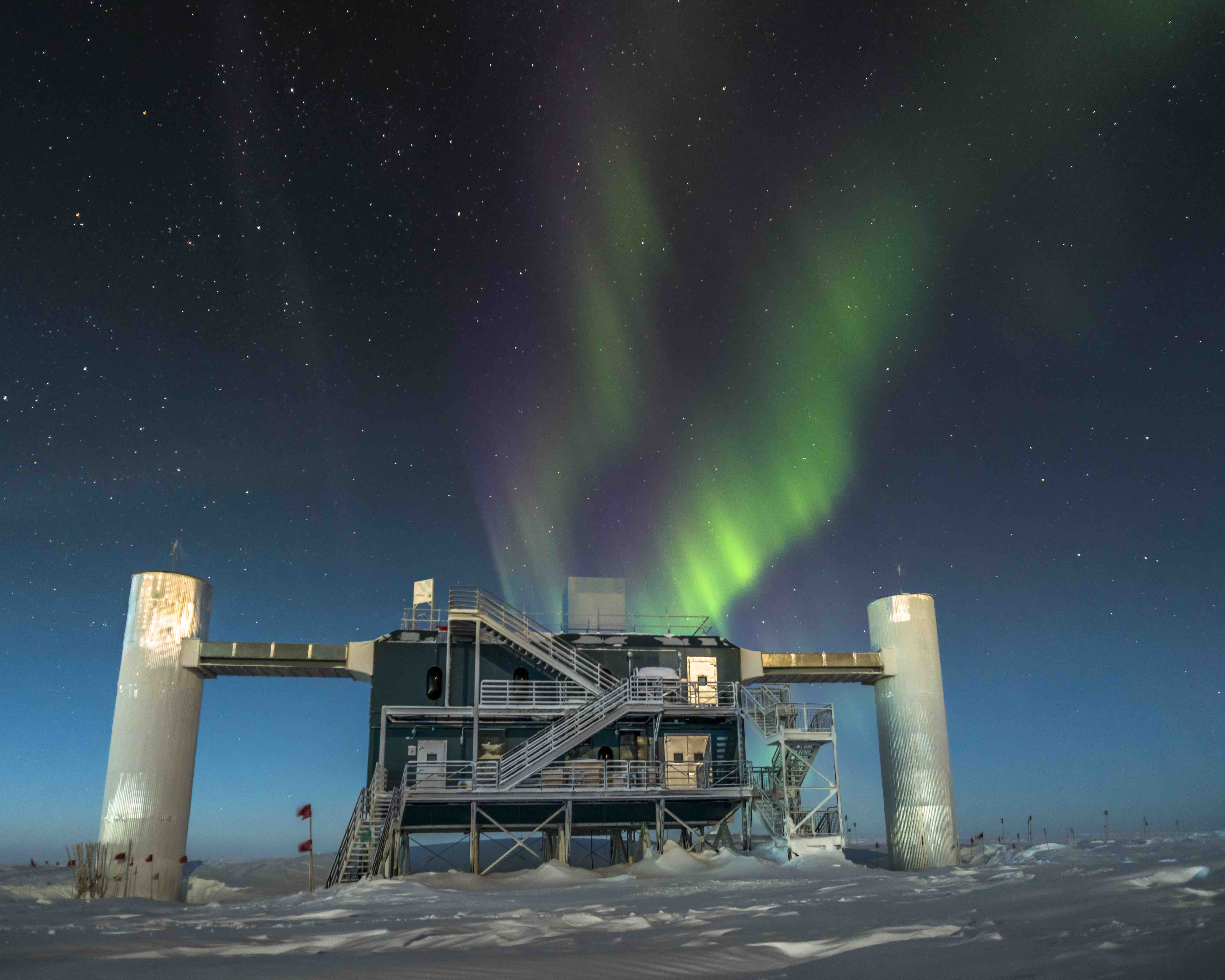
The IceCube Laboratory at the South Pole with the aurora australis. Photo courtesy: Martin Wolf (IceCube, National Science Foundation)

There is a website well-known to physicists that asks, “Are you a Crackpot?”  A leading question in the test is:  “Does your paper start with: Einstein is wrong?”  It’s a good cautionary tale to those of us who search for Lorentz violation.  The ground is littered with false claims that Einstein was wrong.

In fact, by the requirements of science, Einstein was clearly right.  His theory of space-time has withstood many, many tests, to very high precision.  It is a great description of our universe and still accessible today.  At this point, the question is not, “Was Einstein wrong?”  The real question now is, “Is Einstein’s theory sufficient?”

There is a famous example of a beautiful theory that was not wrong, but was not sufficient, and that is Maxwell’s equations.  These equations are a perfect description of how light behaves.  Since the 1800s, they have not been proven wrong.  What was proven wrong, by the influential Michelson and Morley experiment, was the worldview in which these equations were being interpreted:  light does not travel through an ether — its speed is the same from all directions.  Just because Maxwell’s equations are right, it does not mean there is an ether.

We love the Michelson and Morley experiment for many reasons.  First and foremost, of course, is the world-changing view of the meaning of Maxwell’s equations that this experiment demanded.  In fact, that changing worldview led directly to Einstein’s space-time theory.  But also, the interferometry of this experiment is a great analogy to the approach we use in our paper.  In addition, Michelson and Morley demonstrated the power of limits — although it found nothing, this is one of the most consequential experiments ever.  Limits are as important as signals. Continue reading

How advances in active noise cancellation unlocked a new form of waves

Post by Romain Fleury, commissioned by David Abergel.

The original paper in Nature Physics can be read here.

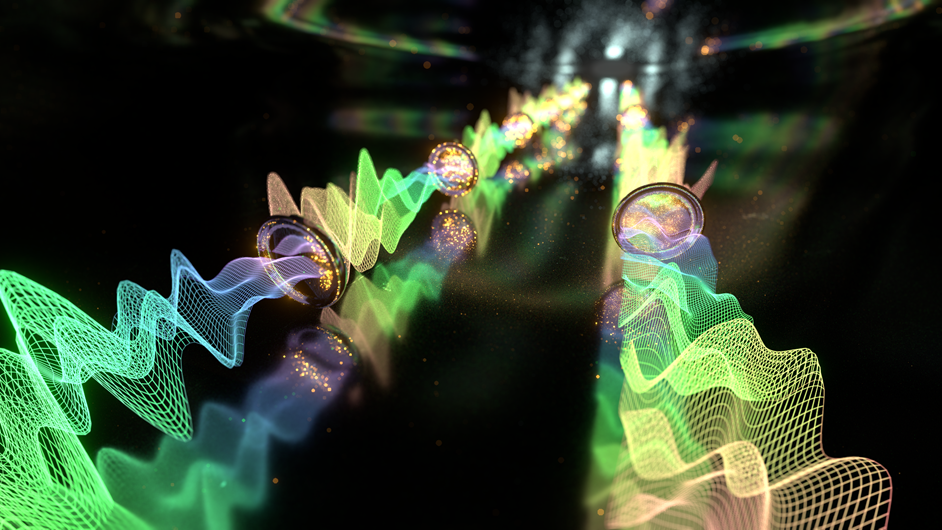
{credit}Credit: Jamani Caillet, EPFL{/credit}

Imagine you are playing the popular Nintendo game Mario Kart, and as you try to win the race one of the other players suddenly drives into the worst possible item box you can imagine: it covers the road in front of you with a very, very large number of banana peels, making it extremely unlikely for you to avoid these obstacles. If waves could have feelings, this is probably what they would think when a scientist tries to transmit them through a strongly localized disordered medium.

Yet, imagine now that you have the possibility to install some sort of magic boosters, or conveyor belts, that auto-pilot your kart seamlessly through these obstacles, while maintaining your precious velocity. This is certainly not possible in the game, but for our team of physicists and engineers, it made perfect sense to try this for waves in disordered media.

In our recent Nature Physics article, we have used acoustic boosters, or relays, to guide sound through a very nasty series of obstacles, and turned an Anderson-localized opaque medium into a perfectly transparent one by doping it with gain and loss. Interestingly, these acoustic boosters were made possible by recent advances in active noise control devices, similar to the ones you may use in your noise cancellation headphones during your next flight. Here is the story of how this idea came to life. Continue reading