Don’t make it so

Christine Horejs reviews the latest series in the Star Trek franchise, the recently broadcasted Star Trek: Picard.

We live in almost surreal times: it feels as if Q was playing another one of his evil games, expecting humanity to fail again it its attempt to prevent a catastrophe (remember the pilot episode of Star Trek: The Next Generation?).  Precisely because of this, the new Star Trek: Picard promises to be the show to watch. Wait, is this the biased view of a Trekkie, who cited Jean-Luc Picard at the beginning of her PhD thesis? Maybe. But Star Trek has always been at the forefront of scientific advance, has solved unsolvable moral and medical problems, has gone where no women or men had gone before. Right now, this is exactly what we would like to see. We need the flagship of the Federation with its wise Captain and crew, who can solve pretty much every problem in the Galaxy using science and diplomacy.

Jean-Luc Picard 2

Sir Patrick Stewart as Jean-Luc Picard. Credit: Patrick Caughey[1]derivative work: Loupeznik / CC BY-SA (https://creativecommons.org/licenses/by-sa/3.0)

Star Trek: Picard is a ten-episodes series, the follow-up of the legendary Star Trek: The Next Generation, centred around captain Jean-Luc Picard – Captain, Sir or Jean-Luc, but certainly not JL.  The story is set at the end of the 24th century, that is, 20 years after we last saw Jean-Luc commanding the USS Enterprise. He has now retired from Starfleet, following his great disappointment with the Federation, who refused to help the Romulans after the destruction of their home planet by a supernova. What follows is a complicated conspiracy theory story, involving the Romulans, Starfleet, the Borg (or rather Ex-Borgs and their cube) and the ‘Synthetics’, who are essentially Data’s children, designed based on his positronic memory.

The plot remains rather unexciting and to prevent any potential spoilers, I will jump right into the scientific vision – if only I could. Thinking of Star Trek: The Next Generation, there are numerous scientific and technological inventions and visions that made every scientist’s heart jump a beat.  Voice activation (long before Siri or Alexa), virtual reality (especially now, I would give everything for a holo deck), replicators (could they make toilet paper?), touch screens (long before iPads), video calls (what would we be without them), diagnostic beds (Beverly Crusher could diagnose everything using those beds and her medical scanning device), to name only a few (see also Boldly going for 50 years). And then there was the really big science: matter-antimatter generators, cloaking devices, the warp drive. In fact, every time a species was close to developing the warp drive, the Enterprise would pay a visit to ensure diplomatic first contact. So, what are the major scientific stories in the new Star Trek: Picard series? Ethical questions related to AI or synthetic life? Well, this has all been discussed at length throughout all The Next Generation episodes with Data, his brother and his father Noonien Soong.  De-assimilation of the Borg? That is indeed interesting; however, the science behind this is not given any room in the series. Making Picard an android? Yes, that is new, albeit without any (valid or not-valid) scientific explanation.  Indeed, the creators managed to take the science out of science fiction.

Then there is the crew. At the heart of every Star Trek series are the smart, adventurous, highly trained crew members, comprising multiple species from all over the Galaxy. Spock, the legendary Vulcan science officer of the original series, Worf, the grumpy Klingon, growing up with humans, always in between two worlds, Geordi, the best engineer in Starfleet, Beverly, the clinician with a passion for fundamental science, Neelix, the Talaxian, who has numerous jobs on board the Voyager, Major Kira, the Bajoran, who certainly is one of the strongest female characters of Star Trek on Deep Space Nine. We meet some of the beloved characters of Next Generation again. Seeing William Riker and Deanna Troi finally happy together is certainly a highlight of the show. And the appearance of Data and Spot 2 are intriguing. However, Seven of Nine as action figure killing Romulans and taking over the place of the Borg queen is rather disturbing. Picard’s new crew members cannot even remotely reach the depth of the old Star Trek characters, and the fact that the majority are human goes against the very principle of Star Trek and the United Federation of Planets.

One of the most hilarious scenes of the new Star Trek: Picard series, in which he calls his dog ‘Number One’, is in the very first episode. And unfortunately, it goes downhill from there. The only thing that will always remain the same is the amazing acting of Sir Patrick Stewart as Captain Jean-Luc Picard, who still spreads the same optimism and belief in the peaceful solution of conflicts as he always has. Make it so!

CERN Science Gateway – for audiences of all ages, and for the scientific community

Ana Godinho, the Head of Education, Communications and Outreach at CERN, talked to us about the CERN Science Gateway, a very exciting outreach project.


On a recent trip to Lisbon, the taxi driver asked me where I had flown in from.

“Geneva,” I replied.

“And what do you do there?” he asked.

“I work at CERN,” I said.

“Ah, CERN. Where they accelerate particles round the huge tunnel,” the taxi driver cheerfully offered.


Was I surprised that someone from outside the scientific world was familiar with CERN? As a matter of fact – no, I wasn’t. Over more than a decade, concerted communications and public engagement programmes have contributed to CERN becoming part of popular culture. The start of the Large Hadron Collider (LHC), in 2008, and the discovery of the Higgs boson, in 2012, captured the imagination of both scientific communities (notice the plural) and the so-called lay public alike.

CERN is one of the world’s leading laboratories for particle physics. Today, it is also recognised as a source of inspiration and engagement for citizens around the world. The taxi driver could well have been one of the over 100 000 visitors that visit CERN each year (he wasn’t), or he could know one of the close to 1000 teachers that take part in CERN’s programmes, or any of the almost 7000 students that each year participate in hands-on physics workshops at CERN.

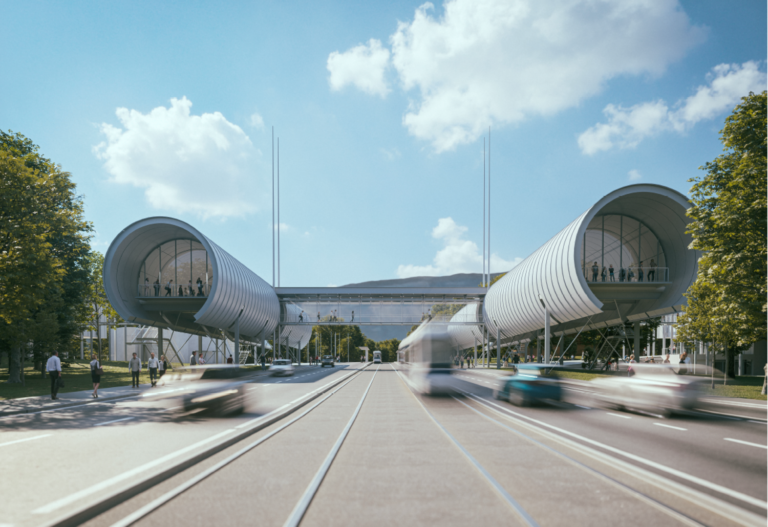
To expand and diversify its education, communication and public engagement portfolio, CERN is preparing to build a new education and outreach centre – CERN Science Gateway. Housed in an iconic building designed by the Italian architect Renzo Piano, CERN Science Gateway will enable a diverse audience across all ages and all sectors of the public to engage with the science, the discoveries, the technologies and the people working at CERN. A series of three pavilions and two tunnels, joined by a bridge floating over the road running in front of CERN, will house exhibitions, laboratories for informal learning and a 900-seater auditorium. An ample and forest-like outdoor area will consolidate the vision of a village, where people will meet to explore CERN Science Gateway, and depart on a discovery of the CERN sites.

CERN Science Gateway Credit: Renzo Piano Building Workshop

CERN Science Gateway’s permanent exhibitions will be housed in the two suspended tubes. In ‘Discover CERN’ children and adults alike will feel they are behind the scenes at CERN, interacting with technologies and discoveries in their actual setting, embedded in stories featuring real scientists and engineers. ‘Our Universe’ will be a journey through space and time back to the origin of everything we see around us today – the Big Bang. It will also be a journey into the future, inviting visitors to discover the big mysteries that govern our universe: dark matter, gravity, extra dimensions and more. Another hands-on exhibition area (located in one of the pavilions) will explore the quantum world – visitor will investigate on a macro scale the weird world in which particles move and interact.

Hands-on and minds-on is the motto for the learning laboratories in CERN Science Gateway. Through enquiry-based learning, children (from age five), students and families will work independently on experiments linked to the research carried out at CERN. Specially trained tutors will guide the visitors on their exploration into the working methods, technologies and research of the world’s largest particle physics laboratory.

CERN Science Gateway Credit: Renzo Piano Building Workshop

The modular auditorium will provide a unique space (in fact, several spaces) for both the scientific community and for public events. It will be a privileged venue for the meetings of the collaborations of the experiments at CERN and indeed for the wider particle physics community. For the public of all ages, science shows, film festivals, theatre, performances, debates will be part of a wide-reaching and diverse programme, making CERN a hub for multidisciplinary debate, learning and participation.

This ambitious project (as all projects at CERN) costs at CHF 79 million, and is fully covered by external funds, raised through a dedicated fundraising strategy. Several important donations have been secured since the work started on the project, in 2017, setting us confidently on the path to start building work in 2020 and opening CERN Science Gateway in the third quarter of 2022.


Make a note in your diaries for a visit to Geneva in 2022, to explore Science Gateway and CERN!

Interactions: Ankita Anirban

Ankita joins Nature Reviews Physics after a brief period as locum associate editor at Nature Reviews Materials. After a BSc degree from King’s College London, Ankita went on to pursue an MPhil at the University of Cambridge, on low-temperature transport of one-dimensional electron systems. She then continued with PhD studies on the theme of electron transport of topological insulator heterostructures at the Cavendish Laboratory in Cambridge.

What made you want to be a physicist?

As a child, I loved fantasy novels and used to wish that I lived in a world with magic, elves and dragons. Physics classes at school seemed dull in comparison, until I discovered quantum mechanics through popular science books as a teenager. Suddenly it seemed that our world could be as crazy as Alice in Wonderland with strange phenomena like entanglement and superposition of particles. This seemed cooler than dragons as we could actually “see” these things happen in a lab – and so I became a physicist!

If you weren’t a physicist, what would you like to be (and why)?

A travel writer/journalist. I’d love to explore lots of interesting and remote places around the world and write about the stories and people I met.

Which is the development that you would really like to see in the next 10 years?

I want science to become more accessible. So many non-scientists are intimidated by the idea of science and maths. I would love for science to become “dinner table conversation” in the way politics or books or films are for the general public.

What would be your (physics) superpower?

To have magic eyes – that can work as a microscope (maybe even an electron microscope!) and zoom into all the details of things around me, and also as a telescope to see distant galaxies.

What’s your favourite (quasi-)particle?

Probably the humble electron. It’s not a glamorous particle, but I’ve spent years making electronic devices which I think of as “electron playgrounds” so I have grown attached to them.

What Sci-Fi gadget / technology would you most like to have / see come true (and why)?

Definitely a time-machine. Ignoring all the related paradoxes I’d have to deal with, I want to be able to transport myself to the past and actually find out what history was like.

Neutrino physics: past, present and future

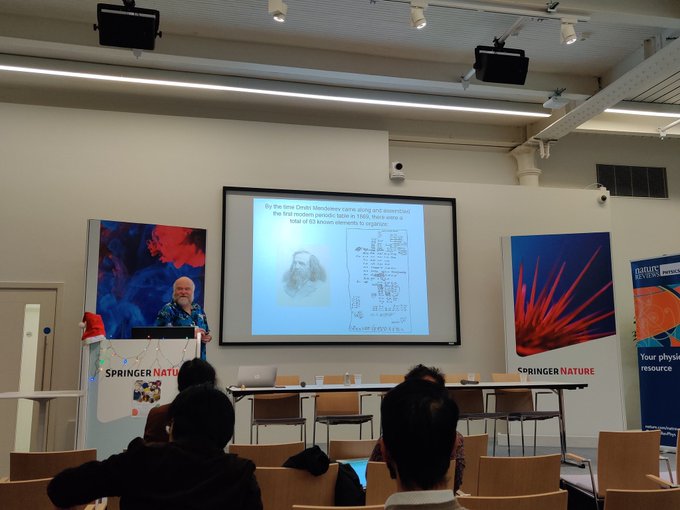
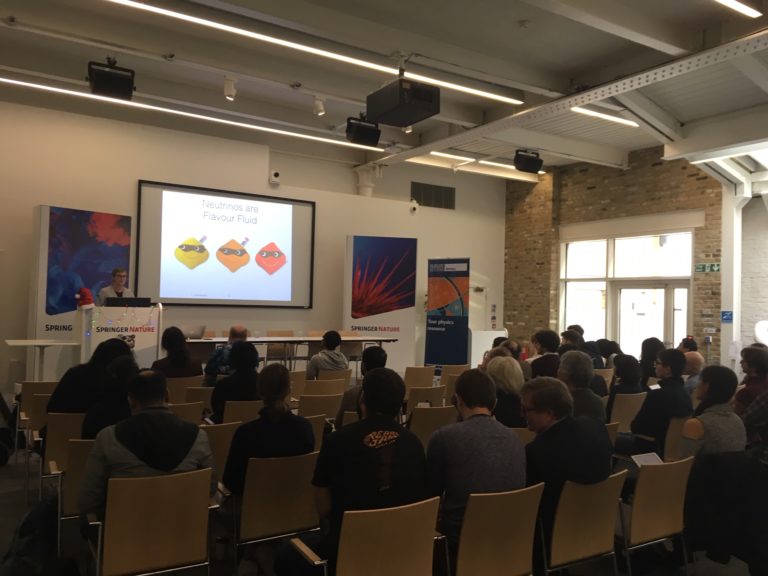
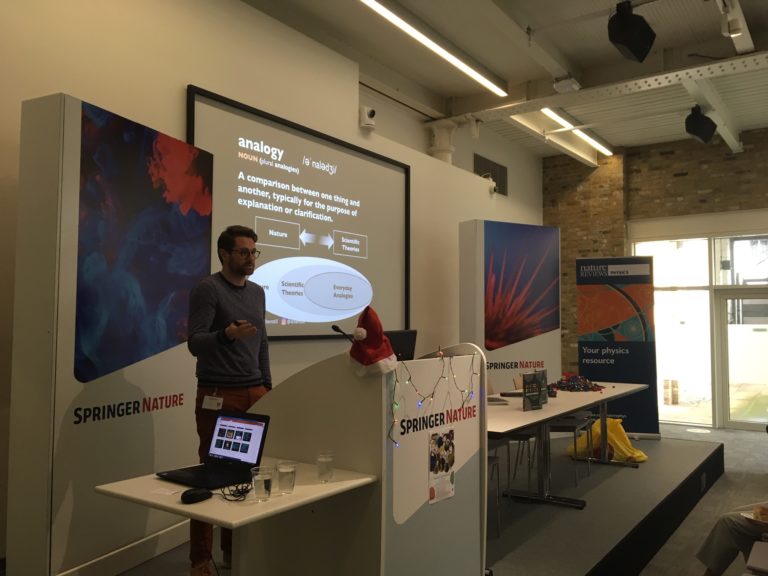
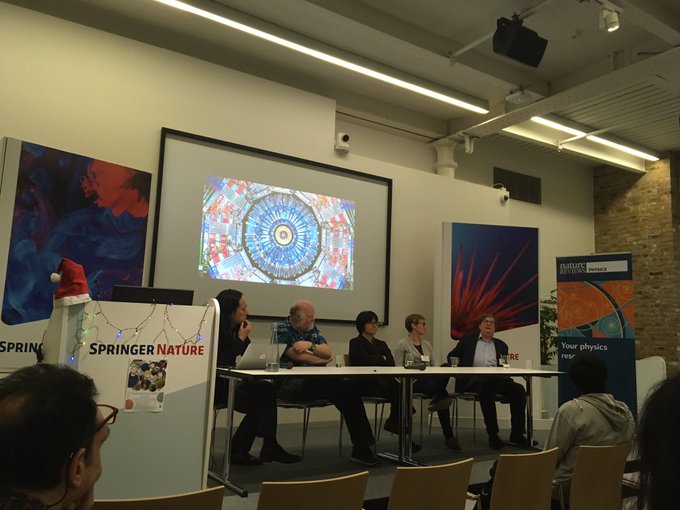
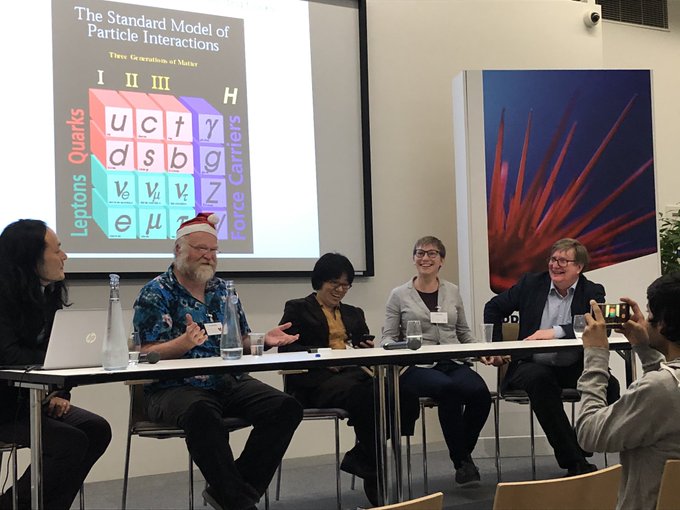
On 19th December we hosted a neutrino symposium in our Springer Nature campus in London. We invited four scientists to share their views and excitement about the past, present and future of neutrino physics. The meeting was organised together with King’s College London and with the support of JSPS.

Mark Vagins, professor at UC Irvine and the first full-time foreign professor at Kavli Institute for the Physics and Mathematics of the Universe in Japan told the history of supernova neutrinos and explained the gadolinium detection he invented, claiming he owns more gadolinium than any other human.

Atsuko Ichikawa, associate professor at Kyoto University and the spokesperson of the T2K experiment in Japan started her talk by asking “why am I here?” It turned out that she was referring to the reason why there is more matter than antimatter in the Universe rather than question her presence at the meeting. This became clear as she explained the mechanism of neutrino oscillations and CP violation.

Linda Cremonesi introduced the NoVA, DUNE and ANITA experiments illustrating her slides with the iconic particlezoo neutrinos. She explained how one launches and recovers a balloon-borne experiment such as ANITA in the most remote locations in Antarctica and described the IceCube experiment at the South Pole.

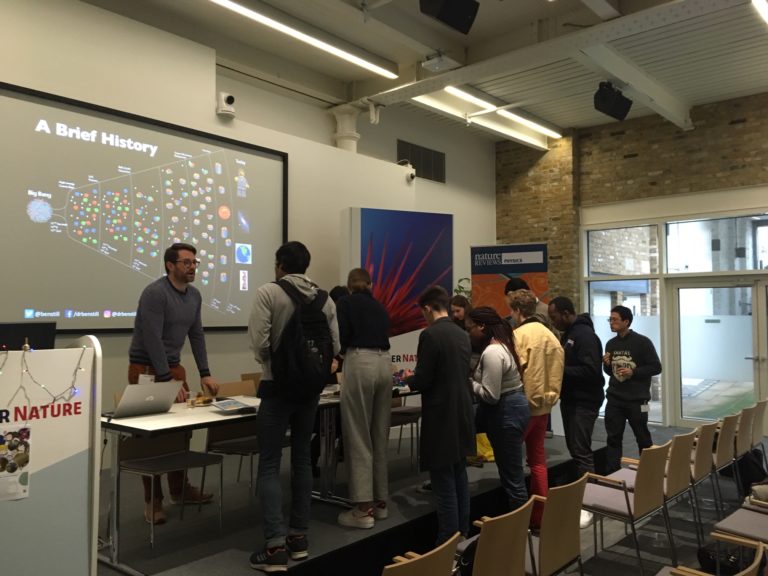
During the lunch break Ben Still, visiting research fellow at Queen Mary University London, particle physicist, author and educator gave a live demonstration of his unique way of explaining particle physics using LEGO bricks. The participants had the opportunity to build their own particles.

David Wark, professor at University of Oxford and former director of the particle physics group at the STFC Rutherford Appleton Laboratory, T2K international spokesperson, UK co-spokesperson of SNO experiment, gave a round-up talk explaining what we knew, and thought we knew back in 1981 compared what we know, we think we know, and we really do not know today. There are many exciting questions about neutrinos.

A keen group of sixth form students attended the symposium. “I’d vaguely heard of neutrinos, but I didn’t know much about what they were” one of them told us. When asked whether they could follow the talks they answered “Yeah, at least most of it. I especially love the LEGO demonstration, it’s so interactive and accessible”. Most of the students are planning to study physics at university – although one student said he was there just for fun!

The event ended with and open discussion moderated by Yoshi Uchida, professor at Imperial College.

The first question was where are we going in the longer term future (>10 years) and what is the public support for the neutrino program? In Japan the funding looks good as Hyper-Kamiokande has just been given green light and the speakers called the neutrino “the national particle of Japan”. The speakers recalled personal experiences with members of the general public being extremely knowledgeable, supportive and sometimes in awe of neutrino physics.  David Wark pointed out that in most areas of science, you wouldn’t dream of having a strategy for 10 years or more.

Asked about the challenges of working in large collaborations the speakers mentioned cultural differences, major travel and communication over different time zones. Astuko Ichikawa compared large collaboration to the teams behind Formula 1 cars, or a rocket going to the Moon. For winning the Grand Prix or reaching the Moon you need large teams of experts and you need them to cooperate. Everyone has their own part to play and each project is a creative one, each person has to do a creative work so it is very rewarding.

Another question was whether we are running out of testable theories? None of the speakers thought that was the case, although they agreed that most theories are unlikely to be correct. Linda Cremonesi pointed out that saying we don’t have any good theories is a very LHC-centric view of things. There are a lot of open questions in neutrino physics and many exciting possibilities.

When asked what do they do outside of work, the speakers came up with unexpected hobbies such as a rock band, standup comedy and impersonating Santa Claus.

When asked whether they would bet on neutrinos being Majorana or Dirac particle, four out of five speakers voted for Majorana and only Mark Vagins proved to be a Dirac supporter.

When asked what is THE thing they want to find out in the next decade most of the speakers agreed on: measuring neutrinos from the Big Bang, confirming the CP violation and understanding how big is it and answering whether neutrinos are Majorana particles or not. David Wark added that he wants to see something genuinely unexpected, because we haven’t had anything completely unpredicted – that turned out to be correct – for a long time.

Interactions: Daniel Hook

Daniel Hook  is CEO at Digital Science and in his free time continues to work in theoretical physics.

What did you train in? What are you doing now?

I spent 11 years studying physics and theoretical physics at Imperial College London.  Originally, I joined the Physics with Theoretical Physics BSc program in 1996, I carried on to do a 1-year MSc in Quantum Fields and Fundamental Forces in 2000.  I then studied part time for a PhD in Quantum Statistical Mechanics with Dorje Brody finishing in July 2007, submitting just before the RAE deadline. I’m now CEO of Digital Science, a technology company that aims to improve the research ecosystem by providing better tools for researchers, administrators, librarians, funders, publishers and corporates.  While the leap from theoretical physics research to trying to improve how research is done is an improbable one, I will attempt to explain (below) how that happened.

How do you introduce yourself (I am a physicist/entrepreneur/…)

I always claim that Theoretical Physics is not a job that you do but rather it is the person that you are.  As such, it’s difficult to answer this question since I’ve always felt I’m both physicist and entrepreneur – I certainly bring a lot of aspects of theoretical-physics thinking to how I approach business.  Introducing myself as CEO, entrepreneur or academic all seem to be disingenuous to one or other of the communities of which I consider myself to be a part, so I usually introduce myself as “someone who helps software start-ups to support researchers”.

How did you your career progress from a PhD in theoretical physics to leading Digital Science?

That’s a long story, but an abbreviated version goes something like this. Carrying on in theoretical physics after a PhD usually means 5-10 years of postdocs in several geographic locations; the often-taken alternative being working for a bank as a quantitative analyst.  Neither alternative seemed to be very attractive to me, or to my office mates at the time, so we founded a software company called Symplectic together. We liked academia, but had noticed that the software that academics had wasn’t too good, so we started working with a variety of parts of Imperial College to develop better software to support academics.  In particular, the Faculty of Medicine was very collaborative and together we developed a piece of software that would later become Symplectic Elements, our research information management platform. By 2009, we had started to sell Elements outside Imperial College and had been noticed by Nature Publishing Group, who were already planning to launch Digital Science at the time.  Symplectic became one of Digital Science’s first investments in 2010.

By 2013, I was spending about equal parts of my time working on Symplectic and helping to establish the Research Metrics group at Digital Science, which wasn’t really fair to either company.  As a result, in the middle of the year, I moved to become Director of Research Metrics at Digital Science and Symplectic promoted Jonathan Breeze to become the new CEO of the company. Two years’ later, Digital Science’s founding Managing Director, Timo Hannay, decided to launch his own start-up SchoolDash and I was asked to lead Digital Science as his successor.

How did you co-found Symplectic? Do you have any advice for young scientists who would follow your career path?

Co-founding Symplectic, as I’ve mentioned, was in part a decision based on the idea that the four of us who co-founded the company didn’t want to leave academia, but also didn’t see a route to do theoretical physics in a way that worked for us. We also wanted to give back to an environment that we loved and where, through our PhD studies, we had seen lots of things that could have been done better with a good software solution.  Luckily, in a lot of theoretical physics research, you usually need to learn some level of coding. In those early years between 2002 and 2008, the four of us wrote about 12 pieces of software from a web content management system to an examination management system. It was a great way to learn the tools of our trade and to learn how to run a company.

I would not recommend following my career path to anyone – it was very much a personal choice and one that, by luck, has turned out to suit me.  That said, undergraduates and PhD students are often taught a definition of success that is very narrowly defined – specifically in the academic context.  What I have learned from my non-standard path is that success can be many things and that ultimately it is about finding a way to make a difference in a way that is personal to you.

Why are you still involved in active research?

As I said earlier, I don’t believe that theoretical physics is just something that you do.  I really love doing research and I’m very lucky in that the type of research problem that interests me is the type of problem for which I only really need a pen, some paper and perhaps a computer.  At the same time, I happen to think that if you’re going to write tools for researchers you can only do that well if you understand what challenges researchers actually face on a day-to-day basis. As such, I think it’s important that I continue to do research to be constantly reminded of what the challenges are and what doesn’t work as well as it could.

I should also say that I’m very fortunate to work with some really great collaborators who put up with my very busy travel schedule and who continue to work with me after all these years.

What is your vision for the future of science communication?

This is a really complicated question.  I’ve spent a lot of time thinking about this problem and I’ve given a few talks on it in the past couple of years. You can find one of them here.  If you can’t sit through the whole 55 minutes of the video, then I can try to summarize my position as follows.  I think that:

  • Communication must become more open and more collaborative – I think that material will be shared earlier in the research process with a greater range of people and that there will be credit and incentives that help this to become a reality;
  • The mechanisms that capture the research outputs of experiments or other data gathering activities will become smarter, more nuanced and more complete in the contextual data that they capture – current equipment and approaches are far too narrow and focused, and don’t capture nearly enough context around the experiment;
  • Communication will become more iterative – we can already see this starting to happen in that researchers now release datasets independently of a publication; there are often versions to the dataset as more data are collected and added to the public release; preprints are also changing our relationship with versions of record and the concept of priority in research.
  • We will move away from the scholarly article.

Ultimately, what makes the scholarly article and the monograph the two preferred forms of communication are three key factors:  Firstly, the fact that they are published on a specific date. This allows them to, secondly, have a physical form, which happens to be fundamentally the same as one that we learn to interact with from a young age. Thirdly, that physical form encapsulates an elegant structure of information that quickly gives us contextual information about what we’re reading.

In short, we are conditioned to hold something in our hands that feels like a book. With research literature that is only possible because a particular version is published on a particular day.  As Geoffrey Builder has observed, by just looking at the front page of a paper, any researcher can identify where the authors, affiliations, title, abstract, main text, journal name, page number, date and DOI are located in the layout without seeing even a single word.  Indeed, in many cases researchers can identify the name of the journal from layout alone.

However, the past few years have seen the nature of research results in many fields change completely.  An increasing number of researchers now have vast amounts of data that they need to share in order for their research to be reproducible; they have developed software; their data needs to be consumed as a video or audio file or using a specific viewer in order to interpret it.  On top of this, many researchers are beginning to see significant value in sharing negative results to increase the efficiency of the research system. None of these aspects can easily be fitted into the standard, flat, paper-based article or monograph.

As a result, I see the principal research outputs becoming the research objects rather than the papers.  I see a deep need to change research evaluation and incentives to take this shift into account. I see research communication becoming more like computer software in the sense that it should be highly versioned, highly collaborative and quite open.  I believe that “co-authorship” of research objects will be fluid and changing in time. I think that research reviews may be created by AIs at our request – relating research objects that interest us and pulling together the thinking of multiple researchers to meet our current need for information.

Even if my predictions are not accurate, it seems clear that there are many opportunities to rethink how publication works and that there are a number of transitions that are likely to take place in the next few years.

The matter that apparently doesn’t matter

Guest post by David Schilter, Senior Editor Nature Reviews Chemistry

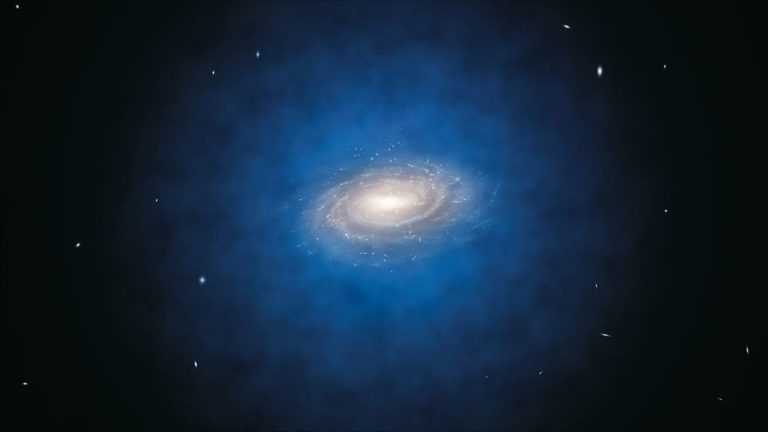
Artist’s impression of the expected dark matter distribution around the Milky Way{credit}ESO/L. Calçada [CC BY 4.0 (https://creativecommons.org/licenses/by/4.0)]{/credit}

We interact with ordinary matter all the time. It is the bed in which you wake up in the morning and the food that you eat for breakfast. It is the people we love and the pets we often love even more. It is us. Being fairly prominent stuff, ordinary matter is often referred to as ‘the matter that matters’ and without doubt deserves our attention. But we should not forget that it only makes up 5% of our Universe, the remainder of which is dark matter. Indeed, dark matter crosses paths with all of us but unless you’re a physicist it is unlikely to have crossed your mind. This prompted The Science Gallery London to present Dark Matter (free admission, June 6 – August 26), an exhibition that finally brings this ubiquitous yet elusive subject to the masses. “95% of the Universe is missing”, the Gallery asserts, so they commissioned collaborative works from teams of artists and scientists to show us what and where this mass–energy really is.

For laypersons, the thought of dark matter is more likely to cue spooky music than to evoke thoughts about baryons (or the lack thereof). Dark Matter depicts the eponymous concept in an approachable way by using everything from music and mirrors to maps and movies. To be sure, the exhibition is not only a feast for the mind but also for the senses, which is ironic because none of our five senses can detect dark matter (perhaps we really do need that sixth sense…). Although we can’t see dark matter, perhaps, like false-colour imaging, we can guess how it would look like if we could see it. Similarly, we can’t hear, touch, taste or smell dark matter, but what if we could?

The mystery associated with dark matter is not limited to laypersons. Among physicists, the subject remains controversial because much of our knowledge comes only from indirect observations that implicate the existence of matter beyond the ordinary. For example, the velocities, X-ray spectra and gravitational lensing from galactic bodies are explicable in terms of an ‘invisible’ mass. Our poor understanding of the spacetime-bending dark matter concept isn’t for lack of trying, and this exhibition highlights the sophisticated experiments carried out by great consortia seeking to fill our knowledge gap. The scale of these mammoth efforts is conveyed to us in HIGGS, In Search of the Anti-Motti, a video in which artist Gianni Motti does his best proton impersonation and circumnavigates the Large Hadron Collider. Walking 27 km in less than 6 hours isn’t bad, although a proton does do it a hundred millions times faster. Efforts to spectroscopically detect dark matter have been likened to tuning a radio in search of a station that might not even exist. In Dark Matter Radio, an installation with a circular array of audio speakers playing sounds at different frequencies, and as we walk around we experience strange interferences and beats that Aura Satz uses to depict this tuning.

Perhaps the simplest way to explain dark matter is in terms of something invisible, this being despite most visitors to Dark Matter knowing full well that there’s plenty of ordinary matter we can’t see either. Nevertheless, artists Carey Young, Nina Canell and Robin Watkins present us apparently empty vessels that, statistically speaking, contain a lot of dark matter (not being under vacuum, they also contain plenty of normal matter, but that’s not the point). Much like our knowledge of Earth’s geography evolved into what it is today (The Maps of Phantom Islands by Agnieszka Kurant is a must-see), our knowledge of dark matter will surely develop commensurate with our technologies. The artist Satz is frank in her admission that these developments are unlikely to come from a fertilization of breakthroughs in these artist–scientist collaborations. But if the only breakthrough these collaborations achieve is to take the most esoteric topic and pique the attention of the general public then that will be breakthrough enough.

There was nothing sane about Chernobyl

Guest post by Christine Horejs, Senior Editor Nature Reviews Materials

The new British-American miniseries ‘Chernobyl’, aired on HBO and Sky in May and June 2019, takes you on a dark ride through the insanity that accompanied the nuclear disaster of Chernobyl. Five haunting episodes depict the night and aftermath of the explosion of reactor 4, using the style of disaster films to vividly show how the combination of bad nuclear reactor design, irresponsible scientists, a totalitarian system and human error led to one of the biggest nuclear disasters, with devastating consequences within and outside the Iron Curtain.  

In Eastern Austria, where I grew up, the weather was rather bad in the last days of April 1986. We children did not know at that time that the rain that fell on our sandbox in the garden carried radioactive waste.

On 26th April 1986, reactor 4 in the Chernobyl nuclear power plant in Soviet Ukraine had exploded. Once the news of the catastrophic nuclear accident spread across the Iron Curtain – on 28th April – we lost our sandbox for good, were fed iodine tablets by our parents and stopped drinking milk and eating berries or mushrooms. Many of the children growing up in Eastern Austria in the 1980s had thyroid problems later in their lives. I had to get my thyroid removed a few years ago – whether this is related to Iodine 131 released in Chernobyl and absorbed by my thyroid remains unclear. Indeed, many facts about Chernobyl have long remained in the dark, as neither the Americans (or Europeans) nor the Russians had an interest in telling the truth about nuclear disasters and the consequences of radiation for human health.

Three important books1,2,3, published over the last year, and a new HBO TV drama, now dissect every minute and (known) consequence of the Chernobyl accident. Being slightly obsessed with this topic, I read them all and I certainly could not wait to watch the HBO series. And, yes, ‘Chernobyl’ drags you right into the agonizing hours after the disaster and creates this feeling of horrifying fascination that often accompanies apocalyptic movies – but this time it is real (most of it)!

Many people are familiar with the ever reoccurring stories about Chernobyl – the spreading wildlife in the exclusion zone, the awkward selfies taken in front of deserted Pripyat or the liquidators as heroes of the Soviet Union. But this series is definitely something else. It not only shows how an RBMK reactor (like the one in Chernobyl) works or does not work and how high doses of radiation literally dissolve the human body, but also how totalitarianism and secrecy provided the basis for what happened at Chernobyl. In particular, the complete refusal of the scientists and politicians in charge to acknowledge the fact that the graphite core of reactor 4 had exploded and that high doses of radiation had been released, despite overwhelming evidence. Highly radioactive graphite pieces from the reactor core lying on the ground outside the reactor and nuclear engineers disbelievingly staring into the remains of the reactor core from the roof while their skins turn red. And yet, Nikolai Fomin, the chief engineer who approved the safety test that ultimately caused the explosion, constantly repeats that the “the core of an RBMK reactor cannot explode,” – like a prayer. Meanwhile, invisible radioactive particles fall on the town and people of Pripyat (the Atomgrad —atomic city – located 2km from the power plant) and accumulate high up in the clouds to make their way across Europe. It is this invisibility that creates the true horror of ‘Chernobyl’. You, the viewer, know, but the children playing in the radioactive dust and their parents gathering on a railway bridge in Pripyat to check out the burning reactor don’t. In the credits at the end of the series, we learn that none of the people on the railway bridge in Pripyat survived.

In ‘Chernobyl’, we experience the actual explosion from the window of the wife of the firefighter Vasily Ignatenko. At 01:23 on 26th April 1986, a bright light appears in the distance, followed by a massive thud leaving behind a bright blue flash in the night sky above the Chernobyl power plant (caused by radiation ionizing air). The few nuclear engineers present in the control room of the power plant anxiously look at each other. “What just happened,” asks Anatoly Dyatlov, deputy chief-engineer of the power plant and supervisor of the fatal safety test. The scene perfectly captures the essence of what went wrong during and after the Chernobyl disaster. The nuclear engineers remain paralysed after the accident, not comprehending its magnitude or cause. Similarly, the director of Chernobyl, Viktor Bryukhanov, who is brought in after the accident, wastes crucial time by convincing local politicians that the accident is under control and that he cannot be held responsible for any damage. Outside, one of the firefighters, who were called to Chernobyl right after the explosion, grabs a piece of the graphite core. What happens to his hand in an instant after he touched the piece of graphite is the stuff of zombie movies.

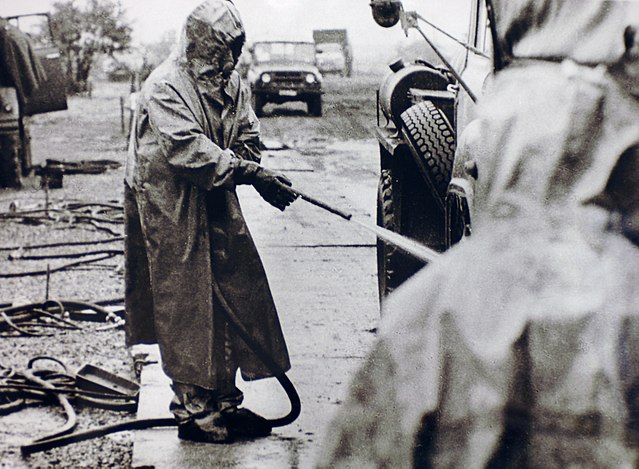
‘Chernobyl’ is mesmerizing owing to the sheer drama of actual facts. For example, biorobots (that is, human beings) have to clean up the roof of reactor 3 to make room for the concrete wall, which will become famous as the sarcophagus shielding the world from reactor 4. Even a rover designed to work on the moon failed in this radioactive environment. Each liquidator has only 90 seconds to shovel graphite pieces back into the open core of reactor 4. The graphite is so radioactive that exposure for longer would be fatal. Ninety seconds never felt so long.

Liquidators (biorobots).{credit}IAEA Imagebank [CC BY-SA 2.0 (https://creativecommons.org/licenses/by-sa/2.0)]{/credit}

The reality of ‘Chernobyl’ could have maybe been even more emphasized by using Russian-speaking actors, as, sometimes, hearing a Russian nuclear engineer speaking English with a British accent seems slightly inappropriate for a historical drama set in Soviet Ukraine in the 1980s.

And then there is the very last episode – the trial. Valery Alekseyevich Legasov, a chemist, who, together with Boris Yevdokimovich Shcherbina, vice-chairman of the Council of Ministers, investigated the Chernobyl disaster, explains what went wrong during the safety test. Legasov theatrically illustrates the combination of errors that caused the explosion of reactor 4 using red and blue panels on a wooden board, to depict the factors that can speed up or slow down the nuclear reaction. He also explains two crucial design flaws of RBMK reactors: the dangerously high ‘positive void coefficient’ and the graphite tips of the control rods, which together make this reactor type inherently difficult to control. Cooling water absorbs neutrons, but once steam is generated, a bubble is created that does not absorb neutrons. This bubble void leads to a reduction in moderation, that is, neutrons are not slowed down, which can cause a runaway condition. RBMK reactors have the highest positive void coefficient of any commercial reactor ever designed. In addition, the ultimate stop button (AZ-5), which should theoretically shut down a reactor as all control rods are inserted at once, can – for a short time – increase the reactor power output, as in RBMK reactors, the rods initially displace coolant with their graphite tips before the neutron-absorbing boron is inserted. Thus, when the nuclear engineers in the control room of reactor 4 pressed the AZ-5 button to shut down a reactor out of control, they ultimately caused the explosion. If only the engineers operating the nuclear power plant would have known about this fatal flaw of the AZ-5 button – but they didn’t as this would have compromised the reputation of Soviet nuclear physics. These construction errors in combination with all the errors previously made during the safety test led to the nightmare that followed.

The episode perfectly rounds up the story, showing what actually happened in the control room before and after the accident (which is well in line with what has been reported in recent books1,2). But in reality, Legasov was not present at the Chernobyl show trial, and even if he had been there, I doubt that he would have openly criticised Soviet science. At an International Atomic Energy Agency meeting in August 1986 Vienna, he had reported that it was only human error that caused the explosion. One wonders why there is the need to introduce fiction in a story that certainly does not lack dramatic historical figures and facts. Especially, because this might open up the room for criticism – as it already happened in the Russian media. Despite these flaws, ‘Chernobyl’ is definitely worth watching and forces you to comprehend the destructive combination of nuclear power going out of control and an authoritarian system – not only for Chernobyl-obsessed people like me, but for all present and future children of the nuclear age.

1 Serhii Plokhy. Chernobyl, the history of a nuclear catastrophe. 2018

2 Adam Higginbotham. Midnight in Chernobyl. 2019

3 Kate Brown. Manual for Survival: A Chernobyl Guide to the Future. 2019

Watch the Chernobyl miniseries here.

Interactions: Luke Fleet

Luke Fleet is a Senior Editor & Team Leader at Nature. He joined Nature Research in 2013 as an editor at Nature Communications, before moving to Nature Physics in 2014, and then to Nature in 2017. He’s responsible for selecting the research papers that are published across a range of fields, including applied physics and electronics, and also assists in devising and delivering the goals for the physics team.

 What made you want to be a physicist?

It was more chance than an active decision, so let’s go with luck and curiosity. Like many people, I didn’t really know what I wanted to do when I was younger and so I decided to carry on in education to basically avoid having to choose. In doing so, I pursued something that I found interesting. Luckily for me, that was physics!

If you weren’t a physicist, what would you like to be (and why)?

If I could choose anything, then I’d want to be a musician or a footballer, as these are my hobbies, but I think people have already said these so I’m going to go with joiner. I actually worked for several years when I was a teenager building things like rabbit hutches and dog kennels, and there are lots of things about working outside crafting something that are satisfying so that’s my back-up if this career goes south.

Which historical figure would you most like to have dinner with — and why?

There are so many to choose from but let’s go with Leonardo Pisano (Fibonacci). He convinced Europeans to switch from Roman numerals to Hindu-Arabic numbers and if you ever have the pleasure of visiting Pisa you’ll see that he also inspired the Church to put a Fibonacci sequence-based artwork above the main entrance to the church of San Nicola. Relatively little is known about Fibonacci so I’d love to know how he managed to convince so many people to embrace arithmetic mathematics during the Middle Ages.

What would be your (physics) superpower?

When I was a researcher I worked with magnets and if they were big enough then then I liked to think that I was like Magneto from the X-men, so that’s the superpower I want: mastery of electromagentism, without trying to instigate a civil war.

What’s your favourite (quasi-)particle?

I’m really a condensed matter physicist at heart, so is has to be a quasiparticle. And whilst there are so many to choose, I’d have to say Weyl fermions. Physicists had been searching for these particles for decades but they were discovered not long after I started working as an editor. It was pretty exciting covering these advances at the time, so I think I’m always going to have a Weyl soft spot.

If you could have an effect or equation named after you, what would it be?

I love playing football and like to think I have some mastery over the Magnussen effect. I know that already exists but I’d like to discover a new effect related to spinning objects so that I can improve my shooting, which is definitely getting worse with age.

Interactions: Elena Belsole

Elena Belsole is the Chief Editor of Communications Physics. An astrophysicist by training, Elena was the executive editor of New Journal of Physics, before joining Nature Research.

What made you want to be a physicist? 

Since the age of 8 I wanted to be a medical doctor. I have always been a very inquisitive person and I would have pursued any direction that was giving me as many answers as possible on what the world is all about. But the truly determining factor was meeting my physics teacher in high school. He was so inspirational and made things look so fascinating; he even introduced the Schrödinger equation to the class. I could not leave it at that. I had to learn more.

If you weren’t a physicist, what would you like to be (and why)?

An herbalist I think. I love how you can forage and use herbs for medicinal use and being able to find a remedy for any minor ailments.  I also considered theatre acting for a short time.

Which historical figure would you most like to have dinner with — and why?

Since I started University I had Richard Feynman lecture notes on my bedside table and always found the simplicity of his explanations fascinating, but I would probably not want to go for dinner with him. If I have to choose one person to take out for dinner I would go for `the queen of carbon’, Millie Dresselhaus. She has guided and inspired so many people and she was a great physicist in an environment that was (and to some extent still is) quite adverse to women, while also having a family. I would like to know how she did it all.

Which is the development that you would really like to see in the next 10 years?

I would like to see physical methods effectively used for controlling and stopping cancer and other diseases in a way that is not intrusive and not damaging for the patient.

What would be your (physics) superpower?

Definitely teleportation. I cannot even imagine how many places on Earth and beyond I could visit if that was true.

What’s your favourite particle?

The neutrino. It is such a versatile particle. Perhaps it is because of my fascination with cosmic rays from astrophysical objects, perhaps because it can be used to probe the Standard Model, or maybe just because thousands of them cross our body every second and are impossible to see and difficult to detect. Regardless, they are fascinating and may be a key to solve the mysteries of the Universe.


Interactions: Athene Donald

Athene Donald is a professor of soft matter and biological physics at the Cavendish Laboratory, University of Cambridge.

What did you train in? What are you working on now?

I was educated in Cambridge in the so-called Natural Sciences Tripos, ultimately specialising in Theoretical Physics. That meant a broad course in the first year – physics, chemistry, materials science and maths – that narrowed down by the third year. I could easily have studied some biology in the first year, but as I had been so put off it at school by the fact it seemed to consist simply of memorising facts, it never crossed my mind to do so. So my formal biology education simply consists of two years at school, not even an O Level.

Although I specialised in Theoretical Physics I soon realised I did not want to spend my life only doing theory and went on to do an experimental PhD (‘Electron Microscopy of Grain Boundary Embrittled Systems’). Although electron microscopy – as well as other microscopies – has formed the core of my research, I have switched the kinds of materials I look at considerably during my career. After a first post-doc continuing on metals I switched to polymers and, over time, moved to biopolymers (first polysaccharides and much later proteins) and ultimately cellular biophysics.

How do you introduce yourself (e.g. I am a physicist/biologist/…) ?

A physicist working at the interface with biology. For my postdoctoral years, however, I was working, not in a physics department but in materials science and, in the USA for four years, that was within the Engineering Faculty.

What motivated you to move away from active research?

It was not a conscious decision! Back in the 1990s I was invited to serve on one of the very first government-organised so-called Foresight panels, looking at the future of the Food and Drink industry (at that time my biopolymer research largely related to food rather than biology per se). The broad range of people on that committee, and how they came together, fascinated me and I realised committee work was actually rather interesting. Over time I served on many different sorts of committees, internally within the university, with research councils and more and I found it taking up increasing amounts of time but also, on the whole, rewarding.

What really pushed my research over the edge was in 2010 when I took on two roles (neither to do with interdisciplinarity!): I became the University’s first Gender Equality Champion, which gave me the opportunity to work with the senior management to try to implement real policy changes and interventions to level the playing field for all across the university; and I became chair of the Royal Society’s Education Committee, dealing with 5-19 education at the time that Michael Gove as Secretary of State was introducing enormous changes to the curriculum. Neither role had any formal associated time commitment, but  they inevitably grew to fill (and more) the time available.  Both rewarding, both taught me a lot about different issues and ways of interacting with people from very different backgrounds. I continued in both those roles until 2014 when I became Master of Churchill College.

What did you find most difficult when you first had contact with other disciplines?

As I indicated, I had essentially no formal biology training and the world of genetics – and the language – had anyhow changed radically since my education. So the initial problem I faced was in understanding the language. When I was first involved in a collaboration with a plant scientist in the area of starch I suspect we both spent about a year just understanding what the other was saying and what our disciplines could and could not offer each other. To my mind, what is absolutely crucial in this formative stage, is finding the other person congenial enough you want to spend the time working together through this potential barrier.

And what did you find most helpful to familiarize yourself with new concepts and jargon?

Time! There is no short cut to getting to grips with a subject unfamiliar to you. I think it is also important to realise that working at the interface with another discipline does not mean you need to know everything about the other discipline. Recognizing what you absolutely do need to know but also there is plenty that, at least at that point, is not necessary so you can home in on the essentials, is crucial. Otherwise it can just seem an insurmountable problem. Of course over time what is vital to know may expand, but by that point it may seem less formidable a challenge. I think having someone you feel comfortable asking naïve questions of is also important; this comes back to having a good relationship with your collaborators. If you don’t feel relaxed about asking something basic the collaboration is probably not going to flourish. Of course sometimes collaborations will be with multiple individuals, possibly multiple disciplines, and then the tactics may need some modification.

Tell us about your experience the first time you went to a conference outside the field you trained in.

A general sense of confusion is what I remember most clearly. The diagrams – of protein structures – seemed mysterious as their presentation was so different from how a physicist would have approached the problem – and that left me with a profound sense of being out of my depth. If the basics seem incomprehensible it is hard to extract much useful information, however willing one may be. Coming into a new field also means that you probably don’t know anyone else in the room and that sense of isolation can be quite intimidating. Once you have some results (even if only a poster) it provides an entrée, so that other people will come up and introduce themselves. But that first step into the unknown can be daunting.

What would be your advice to a PI leading an interdisciplinary group?

Remember everyone comes with different experiences, skills and jargon. Somehow your job is to keep that constantly in mind like an orchestra conductor, to make sure people respect each other’s skills and make the best use of these they can. It is important not to let someone who is an expert in one area make another student whose skills sit elsewhere feel stupid or group dynamics can go sadly awry.

Is there any anecdote you would like to share?

Moving away from the heart of a discipline can make colleagues very uncomfortable. Working with starch, not the typical sort of material a physicist in the 1990s would have thought ‘respectable’, meant I came in for a lot of flak from my seniors. Being told ‘things have come to a sad pass when people at the Cavendish study starch’ by one of these was depressing. Added to this is the fact that, as a woman, people’s biases probably gave them a lower opinion of me anyhow at the time. Hence I was accused at a conference of doing ‘just domestic science’ – and that after I’d given an invited paper. It was sometimes hard to feel positive in an atmosphere like that. Again, having people around you who you trust and can rely on is vital to provide the balance to any such hostile colleagues.

Interactions: Myfanwy Evans

Myfanwy Evans is an Emmy Noether Research Group Leader at the Institute for Mathematics, Technische Universität Berlin. Her research is in the field of geometry and topology in soft matter physics.

What did you train in? What are you working on now?

My undergraduate degree was in science, majoring in mathematics. My PhD was already in an interdisciplinary setting, officially part of “Physical Sciences”. It involved mathematics, physics, with some chemistry and biology on the side. Ever since my research has been swinging between mathematics and physics, depending on my collaborators and students at the time. My current research is focused on a theoretical framework to understand tangling in soft matter systems. It uses geometry and topology to investigate how filaments can tangle in a variety of settings, in the view of making a connection with protein and polymer physics.

Do you think of yourself as a mathematician or physicist?

Both and neither! Much of the content of my research is geometry, but the style in which I do it is more physics. However, I like to define my research via the problem that I am trying to solve rather than a specific discipline and I don’t like to be restricted by the methodology or traditions of a specific discipline.

What motivated you to move to this field of research?

I had already started in this general area as a PhD student, and it really grabbed me as an interesting topic. I finished my PhD with far more questions than answers, and this has snowballed into an array of research topics that I am still working on today. My motivation to continue in this direction is driven by my own curiosity, and a kind of religious belief that the results I am getting are so beautiful that they must be important.

What are the main challenges and the main advantages of working in an interdisciplinary team?

The main advantages are that everyone can bring something unique to the table, and the breadth of expertise opens really interesting research directions. I find that the students feel less constrained by their prior knowledge and disciplinary expertise, and are able to work on broad problems from many perspectives, learning a huge amount along the way. The main challenge is keeping the research also relevant to specific fields, in particular for PhD students who wish to stick to a more traditional discipline. Finding the right place to publish, that means reaching the right readership, is always a key problem too.

Do you find it particularly difficult to obtain funding? Or to get your research published?

I think that interdisciplinary research has become a big focus of many funding agencies, and in general I don’t find any major obstacles in obtaining funding from the standard sources. I find the same with scientific publications, where new interdisciplinary findings are often published. Of course, there are exceptions and I have a handful of examples of journals claiming that the research is “not physics” or “not mathematics”, without refereeing the scientific content. But these are few and far between.


Behind the paper: A bridge between theory and experiment

On behalf of Marcus Huber

{credit}Christian Murzek 2018 murzek.com{/credit}

Supposedly, there are two very different species of physicists: theorists and experimentalists. This alleged division is the subject of numerous nerdy jokes, but is more seriously reflected in university curricula, academic positions, grants, papers and non-surprisingly, reviews. Our review is an attempt to bridge the apparent gap that often complicates communication, focussing on a specific area of quantum physics that has seen a close connection between theory and experiment.

The story behind this review starts well before it was conceived. After finishing my PhD in theoretical physics, I remember being approached by experimentalist colleagues, asking seemingly simple questions about quantifying high-dimensional entanglement. At first, I couldn’t comprehend their dissatisfaction with my writing down a self-adjoint operator—after all, this is what constitutes a ‘measurement’ according to the postulates of quantum mechanics. After being presented with a bunch of tangible tools that were screwed to an optical table and asked to explain how to realise that specific measurement, I realised how little I actually understood quantum experiments and how pointless all of my theorems seemed for answering the simplest of questions.

This initially painstaking interaction with the mysterious species of experimentalists eventually bore fruit and led to a series of collaborations with experimental groups. There was a recurrent theme in our interactions experienced also by many theorist colleagues—we were presented with final experimental data and asked to tell if it is possible to certify or even quantify entanglement. The answers would have always been easy had they done the experiment in a slightly different manner, but alas, what was done, was done. I then spent sleepless nights trying to understand what each particular setup meant and how one could construct theoretical tests of entanglement for each specific situation—a process that could have been much simpler had there been a comprehensive review bridging this divide.

At some point, one of my frequent experimental collaborators approached me with an interesting proposition: we could run experiments together. And indeed a short time later, Mehul Malik joined my group as a senior postdoc and we started exploring the intricacies of multipartite and high-dimensional entanglement of ‘twisted’ photons. The first ‘experimental’ papers with a majority of theory authors were born and slowly the entire group developed a common language. Two more senior postdocs of the group had reported very similar experiences in different experimental collaborations, with Giuseppe Vitagliano working on spin squeezing in cold atoms and Nicolai Friis analysing ion traps with 20 qubits. We had often talked and decided the field really needs a review that covers all aspects in a unifying language, but never found the time to actually materialise it.

When I was invited to write a review for Nature Reviews Physics, we knew this was the chance to finally realise that dictionary that should become a handbook for both theorists and experimentalists to talk to each other, while comprehensively showcasing the state-of-the-art of quantum technologies. Of course, our initial dream was a bit too ambitious, given that there are dozens of experimental platforms, each with their own techniques and whole books could be written just about the theory of entanglement. So while trying to remain as objective and comprehensive as possible, we naturally decided to focus on aspects that we found most exciting at the moment.

The time we were planning to write the review also coincided with the move of Mehul Malik to his new professorship in Edinburgh and overlapped with the parental leaves of both Nicolai Friis and Giuseppe Vitagliano. While all joyous occasions, it was hard to gather the crowd even in the same Skype conversation. Collectively editing, planning and writing a comprehensive review with strict length constraints seemed an insurmountable task under these circumstances. So we turned to collaborative online LaTeX editors and at different hours of day and night wrote and commented the present review. When Nature Reviews Physics approached us about whether we would be willing to try Overleaf for collaborating with the editorial team, we were already well acquainted with the workflow, and went through several rounds of excellent editorial feedback, without ever having to worry about version control or sending a single document via email.

Interactions: Anastasiia Novikova

Anastasiia Novikova will join Nature Reviews Physics in January after a PhD at Synchrotron SOLEIL and a postdoc at CEA Saclay in France.

What made you want to be a physicist? 

I was always curious to understand natural phenomena, and physics seemed to explain how almost everything worked in the Universe. Besides, I enjoyed the scientific approach used in physics: experiment and demonstration.

If you weren’t a physicist, what would you like to be (and why)?

If not a physicist, I would definitely be an artist. As a child, I was passionate about drawing and painting (and I still am). Shapes and colours of nature were always hypnotizing me.

Which historical figure would you most like to have dinner with — and why?

I have a whole list of historical figures but the one I would really like to meet is Richard Feynman. To me, he is a person remarkable for his manner of popularizing physics and capturing the audience. The first thing I would ask him: “What is your secret? “

Which is the development that you would really like to see in the next 10 years?

I would like to see the development of Artificial Intelligence in the domain of Genetics to help us understand such issues as genetic disorders.

What’s your favourite particle?

While studying the Physical Chemistry module at Pierre and Marie Curie University, I was fascinated with how the electronic structure of a compound could influence its colour. In this regard, my favourite particle is, definitely, the electron.

What would your dream conference be like?

The conference I dream of would be dedicated to the greatest discoveries of all time. And being imaginary, it would be organized by the pioneers, with, for example, Isaac Newton giving a Welcome speech.

Interactions: Zoe Budrikis

Zoe Budrikis joined Nature Reviews Physics after postdoctoral research at the ISI Foundation in Turin and at the Center for Complexity and Biosystems at the University of Milan and a PhD from the University of Western Australia.

What made you want to be a physicist?
In high school, I didn’t plan to study physics. I wanted to take Ancient History instead. But the timetable didn’t work out so I took physics classes and enjoyed them, and then I took some physics courses at university and enjoyed them so much I changed my degree. The rest, as they say, is history.

If you weren’t a physicist, what would you like to be (and why)?
It’s a cliché, but my backup plan/daydream is to open a bakery. I love seeing people enjoy food I’ve made, which is easy to do with cake! Plus, thinking about how to put unusual flavours and ingredients together is the kind of problem-solving I find relaxing. Of course, there’s a lot of physics involved in understanding how food works.

Which is the development that you would really like to see in the next 10 years?
Interdisciplinary science has really come to the fore in recent years, and I’m excited to see where that will take us. Especially because so many of the big problems in science and society – climate change springs to mind – require people with different backgrounds to work together to find a solution.

Which historical figure would you most like to have dinner with — and why?
I’d love to meet some of the everyday people of the past. Any era, really. Most of what I know about history is about big political figures, or famous authors/artists/inventors, and I think it would be fun to sit down with someone not at all famous and find out what their life was actually like.

What Sci-Fi technology would you most like to have (and why)?
I’d like everyone to have the Babel Fish from Hitchhiker’s Guide to the Galaxy.

What is your non-scientifically accurate guilty pleasure (could be film/series/book)?
I watched a lot of classic Dr Who as a teenager, and I retain a soft spot for alien planets that look remarkably like quarries.

Interactions: Giulia Pacchioni

Giulia Pacchioni played a big part in the launch of Nature Reviews Physics, but will return to Nature Reviews Materials next month. Still, she will always be part of the team.

What made you want to be a physicist? 
Feynman’s autobiography, Surely You’re Joking, Mr. Feynman! I read it as a teenager and it kicked off a long-lasting fascination for physics. For a while I also thought about becoming a mathematician, but then I was drawn by the richness of physics, a subject that stretches from the understanding of the origin of the universe to the conception of next-generation electronic devices. As many others I entered university thinking I wanted to be an astrophysicist, but after finding out more about the marvels of solid-state systems I ended up being a condensed matter physicist instead.

If you weren’t a physicist, what would you like to be (and why)?

I considered studying classics — I was particularly fascinated by the evolution of the Greek ancient language, as it gives insight on how languages developed. However, my secret plan has always been to open my own factory of soft toys. I would make fluffy versions of all the cutest animals, from the domestic to the rare. But I haven’t totally discarded the idea of owning a chocolate factory either.

Which historical figure would you most like to have dinner with — and why?

Dinner with Aristotle would be cool. He was such a great thinker I suspect there would be no shortage of topics to discuss, starting from his deep questions about the physical world. Maybe he could bring along his pupil Alexander the Great. He must have had a magnetic personality.

What would be your (physics) superpower?

Teleportation! I could pop in for lunch with friends in Paris, and chill on a beach in Sardinia in the afternoon. Coffee and cake on the Amalfi coast.

What’s your favourite (quasi-)particle?

Definitely skyrmions. They look so awesome with their arrangement of colourful spins. There is a lot of fascinating materials research going on to obtain smaller and more controllable skyrmions, and they have cool potential applications. Lately I’m getting into Majorana quasiparticles as well, as their observation requires top-notch condensed matter physics experiments and they might enable error-protected quantum computers. In preparation for when I will have my toy shop, I made a soft Majorana fermion that keeps me company in the office.

What Sci-Fi gadget / technology would you most like to have / see come true (and why)?

In Italy there is a comic-book character,  Eta Beta, who wears a little black skirt in which he can stock anything, a bit like in Mary Poppins’ bag, as objects become incredibly small (and hopefully light!) as they are stored in the pockets. I find such a garment would be practical, provided the storage is organized enough to find stuff speedily.

Interactions: Andrea Taroni

Andrea Taroni is the Chief Editor of Nature Physics.

What made you want to be a physicist? 

Being the enlightened souls that they were, my parents told me I could study anything I wanted, provided it was a science. So I chose chemistry, because it was somehow in the middle between biology (which I tended to like) and physics (which I tended to find quite boring, at least at school) – but long term I had no intention of staying in science. Anyway, as things went on I realised that I hadn’t quite appreciated that a) chemistry is only in the middle if you imagine the spectrum between the sciences to be on a logarithmic scale (that is, physics explains A LOT more than I had initially thought); b) physics research is a lot more interesting than physics lessons; and c) I wasn’t very good at chemistry to begin with. I was lucky to work with a chap called Steve Bramwell in my last year of university: thanks to the project I worked on with him, I realised I liked magnetism. And in order to study that, I had to get a better grasp of fundamental ideas rooted in statistical physics and, ultimately, symmetry. This struck is very deep and very beautiful and it had the effect of helping me to start thinking like a physicist.

If you weren’t a physicist, what would you like to be (and why)?

I’m now beyond the age where it is even possible for me to cling on to my dream of being a footballer, but that was, alas, my burning ambition when I was growing up. I enjoy what I am doing right now a lot, but compared to football it is a very distant plan B. Had a pro football career come off, I would be now be looking at investing my money in property on the Mediterranean coast…and I can’t say I would be too disappointed with that. But you ask what I would like to be, and “property developer” is not something I ever aspired to be. The people I admire the most these days are, for want of a better description, practitioners: people that have dedicated themselves with passion and discipline to a particular art or craft. You can just tell when you meet such people – they might be famous artists or simply very good teachers that don’t get as much recognition as they deserve – but measured over time their influence over the people around them is huge.

Which historical figure would you most like to have dinner with — and why?

I answered this question the last time I did this kind of Q&A, and I said Julius Cesar and Cleopatra. I’m going to stick with that.

What would be your (physics) superpower?

Without doubt it would be the power of flight. Am I aiming to low? Because that still strikes me as a cool thing to be able to do.

What’s your favourite (quasi-)particle?

Probably the magnon, as I worked with it while I was doing research. It’s a nice, simple quasi-particle with a distinguished history in the physics literature. And once you understand how they work, you understand how a lot of other quasiparticles work too.

Which physicist would you like to see interviewed on Interactions — and why?

If you could go back in time, I would suggest Ludwig Boltzmann. As you can’t, I’m going to say Philip Anderson.

Interactions: Beatriz Roldán Cuenya

Beatriz Roldán Cuenya is the Director of the Interface Science Department at the Fritz Haber Institute of the Max Planck Society, Berlin, Germany.

What did you train in? What are you working on now?

My undergraduate training was in Physics with a minor in Materials Science in Spain. Subsequently I did my PhD in Solid State Physics in Germany and from there I transitioned to a postdoctoral position at a Chemical Engineering Department in the United States. Currently, I am working at the interface between physics and chemistry investigating thermal and electro-catalytic processes taking place over nanostructured materials. My group’s research program takes advantage of in situ and operando microscopy and spectroscopic characterization methods (including synchrotron-based techniques) for the understanding of correlations between material properties such as chemical reactivity and specific structural, electronic and chemical characteristics of the system.

What did you find most difficult when you started working in an area out of your comfort zone?

Missing basic chemical concepts and nomenclature that a physicist does not acquire during his/her undergraduate training, but are essential for the understanding of chemical processes taking place at gas/liquid/solid interfaces. This motivated a slow literature review since I had to stop often to go back to basic undergraduate books before being able to dig deeper into the current literature. However, the strong mathematics background that is inherent part of a physicist’s training was very helpful when dealing with some of the topics in the department of Chemical Engineering I transferred to.

And what did you find most helpful to familiarize yourself with new concepts and jargon?

Reading the related literature, specifically review articles, while having side by side undergraduate chemistry books.

Tell us about your experience the first time you went to a conference outside the field you trained in.

It was exciting because there were a lot of new things to learn, but also somewhat frustrating since there were at times gaps of knowledge that prevented me from understanding a significant fraction of the content presented.

What are the main challenges and the main advantages of working in an interdisciplinary team?

The main challenge I found was to convince the scientific communities you are interacting with, in my case, physicists, chemists and chemical engineers, that you can contribute meaningful new research ideas and findings to their respective fields even without a formal undergraduate training in such field. It was also difficult to recruit students from the different disciplines, the physicists in my department were scared to join the group because I did “too much chemistry” and the chemists were concerned that they could not follow the math or that they did not have sufficient background in specific topics such as quantum mechanics or electrodynamics.

The advantage was that once you managed to build an interdisciplinary team, the boundaries soften and the student and postdocs end up working in a much richer environment where accelerated knowledge transfer is favoured. We managed to become a self-sufficient group by teaming up chemists that were in charge of sample synthesis and for example electrochemical characterization, chemical engineers contributing to our reactor design and thermal catalysis work, and physicists providing microscopy and spectroscopic tools for the characterization of our catalytic materials.

What would be your advice to a PI leading an interdisciplinary group?

To try to get joint appointments in the different departments of interest to foster student recruitment and the exchange of ideas with other faculty colleagues. If possible, this should include teaching some advanced courses or given some introductory presentation as guest lecturer in the partner department.

Do you find it particularly difficult to obtain funding? Or to get your research published?

Actually yes, this was the case at first. When I was an assistant professor in Physics in the United States it was difficult to convince the external reviewers in Chemistry or Chemical Engineering departments that even though my background was different, I still had the required expertise to bring to success a given interdisciplinary project. I found that chemists are more comfortable reviewing/funding chemists and same for physicists, especially when you attend mixed review panels at science foundations. However, as an assistant professor in Physics my first grant came from the American Chemical Society (Petroleum Research Fund) and the second, a CAREER award from the National Science Foundation, was granted by the Materials Research Division in the sub-area of Solid State Chemistry.

I faced the same difficulties when trying to publish in chemistry-oriented journals while submitting papers with a Physics Department affiliation. Nevertheless, with time and as visibility improved I managed to establish good connections in both communities and get invitations to present my work in both communities, which will in return facilitated publication in the top journals of both fields.

Is there any anecdote you would like to share?

I recall the frustration of being a female assistant professor in physics struggling to convince editors in chemistry-related fields to send out your work for external peer-review. I learned the hard way that when a more senior collaborator in the “correct” scientific disciple was added to the co-author list the paper would be easily sent out for review and subsequently published, while when similar quality work was submitted directly by myself it was almost never considered by the top journals. That is a serious issue since it might end up encouraging junior people with innovative ideas not to stand up on their own but seek for “strong senior supporters” to champion a given paper to get into the system (a given journal database) with the end result being that the real contribution of the junior person might be questioned.

Interactions: Cosima Schuster

Cosima Schuster is program director in the German Research Foundation (DFG) for the fields of statistical physics, soft matter, biological physics and nonlinear dynamics.

What did you train in? What are you working on now?

I trained in solid state physics as a theorist. Now I work in research administration as a program director in the field of condensed matter physics as well as  statistical and biological physics.

Do you think of yourself as a physicist or a funder?

I work for a self-governing organisation for science and research which funds excellent science without regard to extra-scientific factors, in a strict bottom-up competitive approach to ensure science-driven decisions. Hence, I consider myself not a funder, but an administrator who needs a good knowledge of physics.

What motivated you to move away from active research?

I feel more comfortable working on several topics with a broad range of interests than to work hard on specific questions.

What did you find most difficult when you first had contact with other disciplines?

You have to learn a new language with a lot of new definitions.

And what did you find most helpful to familiarize yourself with new concepts and jargon?

First, you need to be aware that there are different definitions and concepts. Second, you have to listen to the experts.

Tell us about your experience the first time you went to a conference outside the field you trained in.

I recall a conference in pure mathematics, where I understood nothing.

Interactions: Magdalena Skipper

Magdalena Skipper is the Editor in Chief of Nature. She has spent over 15 years working for Nature Research in various roles at Nature Reviews Genetics, Nature, the Nature Partner Journals and Nature Communications.

What did you train in? What areas have you handled for the Nature Research journals over the years?

My background is in genetics. Life sciences fascinated me from an early age, but once I discovered genetics at school I knew this specific discipline was something I wanted to delve into deeper. I studied genetics for my first degree (at the University of Nottingham, in the UK) and then went to do a PhD researching sex determination in a classic genetic model organism – a small round worm Caenorhabditis elegans. Throughout my PhD and postdoc years, I always found using genetics to help answer research questions to be the most elegant and satisfying approach. And it was genetics and genomics that were my core areas as an editor, but since genes and genomes are involved in all aspects of life sciences my focus broadened and I developed an understanding of most, if not all, life science disciplines. More recently, as I took on more senior editorial roles I also began to delve into the physical sciences.

You are the first editor of Nature not coming from a physical sciences background. Do you find this a challenge in championing physical sciences in the pages of Nature?

It is true that to date Nature has had at its helm editors trained mainly in the physical sciences. In my opinion, the most influential paper published by Nature during my predecessor’s tenure was the sequencing of the human genome. I hope that during my time we can publish the greatest and most important advances in any field. Learning is a life-long passion for me and so as I grow my knowledge and appreciation for the physical sciences I also develop a growing enthusiasm for this branch of science.

You led Nature Communications and now Nature. What has that taught you about multidisciplinary journals?

My time as Editor in Chief of Nature Communications has reaffirmed my conviction about the importance of multidisciplinary journals in modern research. It has also taught me to appreciate the challenges and needs of different scientific communities which are often shaped by their very discipline; these discipline-specific needs must be respected, but multidisciplinary journals find themselves in a unique and privileged position to share solutions developed within one field so that they may be adopted (and/or modified) by other fields.

How can we move from multidisciplinary to interdisciplinary?

This is a fascinating challenge and an important opportunity. While this transition need not be complete – in so far that some questions may always be answerable without reaching beyond one specific discipline – true interdisciplinary approaches open entirely new avenues of investigation. As so often is the case the transition needs to start with researcher training, and we have seen increasing trend in this direction in a number of academic establishments. We as editors have an important role to play too, by recognising potential in interdisciplinary submissions. Multidisciplinary journals can be perfect incubators, if you like, in which interdisciplinary papers can flourish.

What is your vision on interdisciplinary research in the pages of the Nature Research journals?

Our Nature Research portfolio of journals offers a fantastic environment for championing and disseminating interdisciplinary research. Our classic, discipline-specific journals are complemented by so-called thematic journals; for these multidisciplinarity and interdisciplinarity lies at the very heart of their editorial scope. And then of course there are the broad scope, multidisciplinary journals like Nature and Nature Communications. What excites me the most is that the breadth of our portfolio allows us to really delve into all aspects of contemporary research questions. Take climate change for example: one can think of research questions the answers to which require approaches from physics, material science, ecology, economics and social sciences, all at the same time. We can and should be increasingly considering more and more work along these lines.

Interactions: Conversation with Anil Ananthaswamy

After writing two successful books on neuroscience (“The man who wasn’t there”) and big instruments (“The edge of physics”), how did you choose quantum mechanics as the topic for your third book?

I’m drawn to such stories, whether there are about cosmology or the nature of the human self and consciousness, or in the case of the new book, the nature of quantum reality. While these topics seem disparate, I think they all address fundamental questions that deep down thrill us all: Who are we? What are we made of? What’s the fundamental stuff of the universe? Where do we come from? Where are we headed?

Given the scope of these questions, I feel lucky to have found ways to tackle them through stories that are grounded in everyday reality: in the telescopes and instruments we build in extreme places, or in the lived experience of people who are coping with their altered selves, or in the deceptively simple double-slit experiment and its many variants.

Why do you think physicists love the double-slit experiment to the extent that they voted it twice as the most beautiful experiment (both in Physics World and in Nature)? Could you try to define the aesthetic of the double-slit experiment?

Richard Feynman, in his paean to the experiment, said it best: he said that it contains the “central mystery” of quantum mechanics. Almost all of the conundrums and peculiarities of the quantum world can be understood using the double-slit experiment. In popular culture, the experiment is often used to highlight wave-particle duality and the apparent centrality of the observer in quantum mechanics: observe a photon going through the double-slit and it acts like a particle and it goes through one slit or the other; look the other way, and it behaves like a wave, seemingly going through both slits at once and interfering with itself. It’s obvious that such an account is enticing to a layperson—it opens a window to the mysterious world of the quantum, seemingly giving humans the power to create reality.

The actual story of the experiment is far more complex. Even hardened physicists are hard-pressed to explain just what is happening with the double-slit experiment. The simplicity of the experiment is obvious, an explanation feels palpable, but nonetheless, when physicists try and make intuitive, physical sense of it, they don’t quite succeed. There are mathematical ways of explaining the experiment, but when you try and interpret the mathematics to say something about physical reality, you stumble. Does a photon go through both slits at once? If yes, how can it do that? If not, does something else do so? If so, what is it? If nothing goes through both slits at once, how can you explain the interference pattern, which is a clear sign that something went through both slits at once? And so it goes, in circles.

And that’s the aesthetic allure of the double-slit experiment. How can something as simple as a photon going through two slits make us confront the very nature of reality? How can one experiment make us debate realism and anti-realism (whether or not reality exists independent of observers), locality and non-locality (whether or not there is instantaneous influence between two regions of space-time, defying special relativity), and determinism and non-determinism? And of course, the experiment raises questions about the role of measurement (observer) in collapsing quantum states to classical ones—and it’s nowhere near as settled an issue as lay accounts of quantum mechanics often suggest.

The experiment can even be used to explain the alternatives to the Copenhagen interpretation, including the Many Worlds interpretation, Bohmian mechanics (where reality is both wave and particle), and spontaneous collapse theories (where quantum systems in a superposition of states stochastically collapse to some classical state). The double-slit can thus be used to probe whether there is a divide between the quantum and classical worlds.

There is no other experiment quite like the double-slit in all of science.

Continue reading