Interactions: Ghina M. Halabi

Ghina Halabi

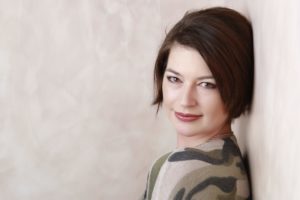
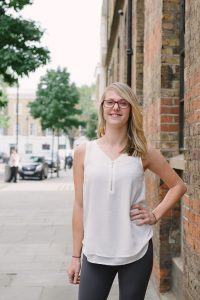
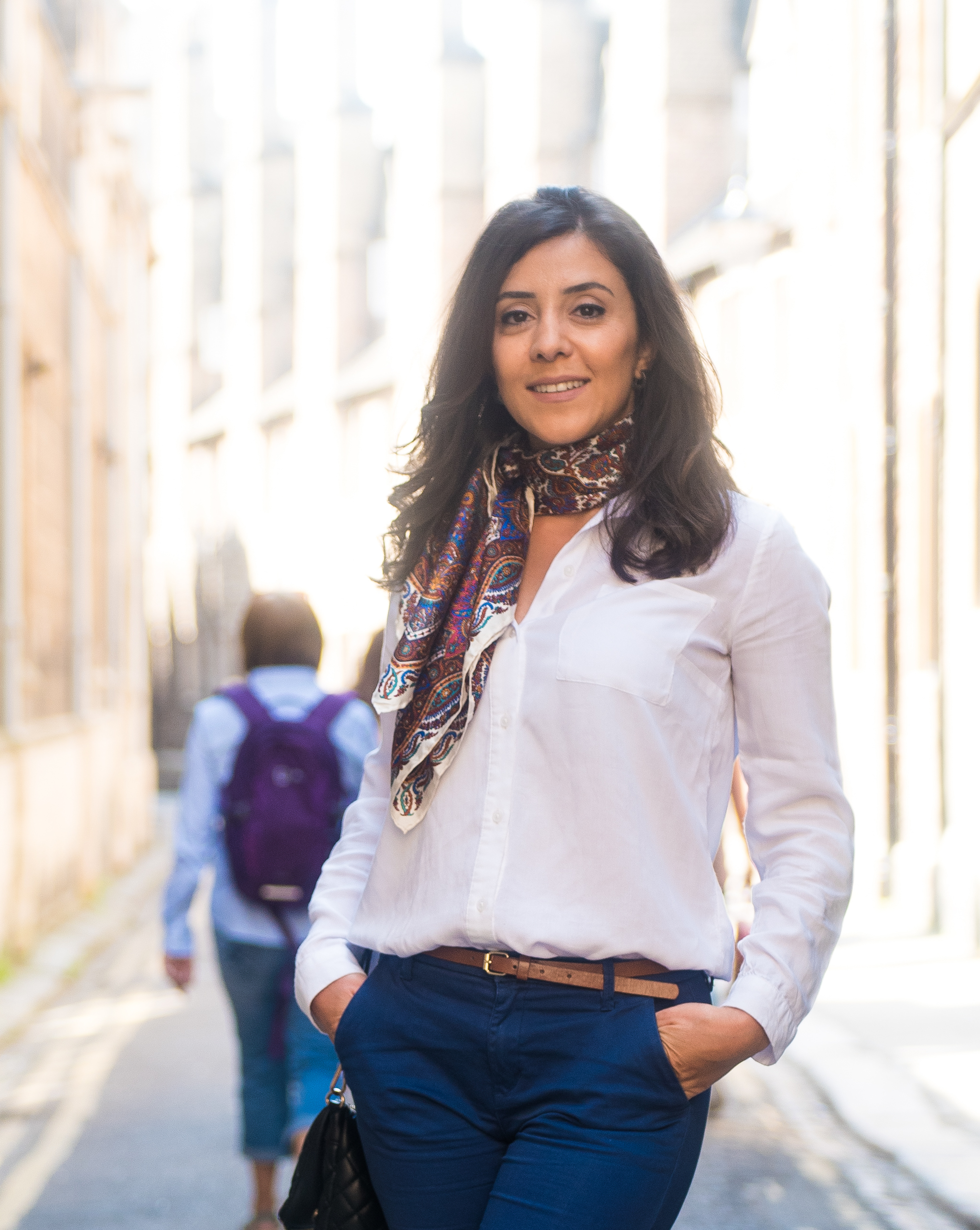
Ghina M. Halabi is an astrophysicist and social entrepreneur, whose work lies at the intersection of science, entrepreneurship and education. During her PhD and postdoctoral work, her research was on internal structure and evolution of stars. Now, working at Cambridge Judge Business School Entrepreneurship Centre, ​she creates and leads​ impactful opportunities for scientists and academics to thrive beyond the lab. The first person to gain a PhD in astrophysics from a Lebanese university, she is a strong advocate for public engagement, particularly through storytelling. In 2018, Ghina founded She Speaks Science, a multilingual social enterprise for public engagement. Since 2020, she has been a mentor on the United Nations Space for Women Network.

Could you tell us a bit about your research?

There is hardly any region in the Universe less accessible to human investigation than stellar interiors. For more than a decade, my work probed exactly that: the interiors of stars, vital regions of our Universe and the seed to human life. My research looked at the evolution of these enigmatic objects, their interactions with their nearby companions, and the nucleosynthesis processes taking place through their lifetimes. I developed computational codes to model stellar evolution, by tracing the progression of a star’s properties throughout its life cycle and model its structure and element formation. This allowed me to predict the abundances of chemical elements on a star’s surface.

What inspired you to become an astrophysicist?

Unlike many astrophysicists who start marvelling at the mysteries of the cosmos from a very young age, I never thought I’d become one. In the small mountainous Lebanese village where I grew up, an urban legend has it that counting stars causes warts on your fingers. As any child would, I counted stars all the same but not without a creeping sense of thrill and apprehension of the curse that might befall me. The only affliction I ended up with instead is an unshakable spell of always seeking a good challenge.

Born in the 1980s in a country riddled with a raging civil war, the sounds of artillery, missiles and sonic booms were almost a daily reality. I was intrigued about flying, and as a teenager, I wanted to become a fighter pilot. However, to a 15-year-old with no role models breaking clouds, this path seemed cordoned off and even trying seemed like trespassing.

Perhaps when reality disappoints and limitations shackle one’s dreams, defiance becomes a life-affirming act. So I dismissed the thought of becoming a fighter pilot, but not the skyward dreams. I took to studying physics which seemed like a hearty challenge, then worked hard for a PhD in astrophysics. One would think it can only get easier from there. However, no one had attempted that degree in Lebanon before so there was no clear path to tread or role model to aspire to. I had to blaze that trail myself, yet another challenge I daringly accepted.

What was the motivation behind She Speaks Science?

My own experience and the barriers I faced fuel my work on broadening access so that young people don’t miss out on becoming engineers or pilots or astronauts because of lack of mentorship or role models. So I founded She Speaks Science in 2018. Our work aims to promote women and minority scientists in STEM, and create a positive STEM identity among young people.

Why is the idea of storytelling important to you?

My consultancy work in science communication made me realise that not every role model inspires, and not every outreach approach works to promote STEM. On She Speaks Science, we take a storytelling approach for three reasons:

  1. Stories featuring characters, change, struggle and adventure spark imagination and motivate girls and young women to explore science. Girlhood is changing, being an 11 year old these days is different from what it used to be. Girls today are individualistic and socially conscious. They have a message and want to make impact, they want to change the world. Our stories show them how through science they can do that.
  2. Stories help normalise failure. One factor that deters young people from pursuing a scientific career is the notion that to be a scientist, one has to be a “genius”. Our stereotypical role models seem to have enforced a normative idea of who does STEM, overlooking struggle and resilience as essential aspects of being a scientist. A study published in 2016 in the Journal of Educational Psychology finds that students who are exposed to scientists “struggle stories” recorded higher science grades and levels of motivation than those who weren’t. Thus narrating the struggle of a scientist, as a protagonist searching for the truth, is effective in normalising failure and building resilience among young explorers.
  3. Stories help bring about a culture change. They normalise the idea of a woman scientist to boys and young men so they come to view it as commonplace rather than exceptional.

She Speaks Science features writing in many languages, why is that important?

She Speaks Science’s readership now spans more than 180 countries across the globe. Offering our stories in five languages (English, Arabic, Spanish, German and Italian) is crucial to ensure wider accessibility and to cater for a global audience. Although the English language dominates global scientific activities and using a single international language facilitates the dissemination of scientific knowledge across national and cultural borders, the English language shouldn’t be a gatekeeper to scientific discourse. More critically, to face the threats of the coming decades humanity requires the understanding and support of science at a global scale. This makes science communication in multiple languages crucial to ensure a larger reach and effectiveness. That’s what we’re trying to do through our team of dedicated translators.

We will also soon be offering our stories in audio format, as a podcast initially, for an even wider accessibility and inclusivity.
Continue reading

Hawking Hawking: author Charles Seife on how he cracked the cosmologist’s myth

The British cosmologist Stephen Hawking (1942–2018) was probably the most recognizable scientist of the last 50 years. Many of his greatest contributions were in the study of black holes. In particular, he discovered in 1974 that black holes emit what came to be known as Hawking radiation — which shows that black holes are not truly black and appears to contradict quantum mechanics.
His public persona was forged by his popularization work, beginning with the wildly successful 1988 book A Brief History of Time and his appearances on television shows such as Star Trek: The Next Generation and The Big Bang Theory. Later, he was the subject of the 2014 biographical film A Theory of Everything.

Part of the public’s fascination with Hawking lay in his stoicism in the face of adversity. When he was 21, he was diagnosed with amyotrophic lateral sclerosis, and his doctors gave him two years to live. In the later decades of his life, he was almost completely paralyzed and spoke through a voice synthesizer, which became part of his mystique.

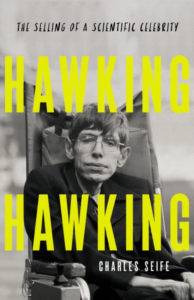
In the media, Hawking was often portrayed as a genius on a par with Albert Einstein or Isaac Newton, but it was an exaggeration that Hawking himself often resisted to. With his new biography, Hawking Hawking: The selling of a scientific celebrity (Basic Book, New York, US$30.00), Charles Seife wants to set the record straight.

Seife is a professor of Journalism at New York University and the author of six previous books. He has covered Hawking the researcher during his year as a reporter for Science.

Davide Castelvecchi, reporter from Nature, interviewed Seife to go behind the scenes. The following was edited for length and clarity.

Charles Seife {credit}Sigrid Estrada{/credit}

What motivated you to write this book? 

I never thought of myself as a biographer, even though my first book [Zero: Biography of a dangerous idea] was nominally a biography of a number. But when Hawking died and I saw the outpouring of grief, I was surprised by how little of it was about his science. There was more to the human than the simple picture people had. I had encountered him a few times, and I was tapped into the social circle of cosmology, so I knew how he was assessed. I decided it was worth doing a real, probing biography that got to Hawking as a human, as opposed to Hawking as a symbol.

What did you know before you started researching the book?

It was a complex picture. Perhaps the clearest event where I was watching from the inside was his 2004 announcement in Dublin that he had solved the black hole information paradox [which suggests that Hawking radiation violates quantum mechanics because it erases information from the Universe]. In speaking to people who were there, almost no one was convinced. There was this poignancy I was picking up, that you had this man who was beloved — his students really loved him, and he’d made some major contributions — but then he got up in front of people and no one bought it. People were wondering why he did it.

But for the public at large, he had this status as an oracle, and it really didn’t matter what he was talking about.  Continue reading

Interactions: Conversation with Katie Mack

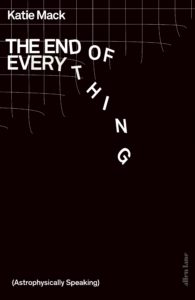
In her new book, “The End of Everything (Astrophysically Speaking)”, Katie Mack takes us on a journey through cosmology to find out how it will all end. Will the Universe collapse into itself in a Big Crunch? Or will a vacuum bubble slowly swallow up everything?

Mack shares with us an accessible and intuitive picture of what we know about universe so far, while providing a sharp analysis of each theory. Her writing is engaging and witty and feels like a cosy fireside chat, with enthusiasm seeming to bubble out of every page.

We asked Katie some questions about her book.

{credit}Penguin Random House, UK{/credit}

This is your first book, but you are well-known for your outreach in the form of talks, articles, interviews and twitter. What is your favourite way of doing outreach? And what do you find rewarding about it?

Writing is always fun, as is social media. It’s fun to be creative in that way. But I also really like giving talks, and doing Q&As. Public speaking doesn’t scare me, and having an audience out there and being able to blow their minds with cosmology ideas is a lot of fun. Q&As are always great because people have wonderful questions, and I love the challenge of having to come up with an answer on the spot if it’s something I haven’t really thought about before. I think the thing I find rewarding about all of it is just that thing where I get to share my enthusiasm and let other people feel it too. And when I can help someone have an epiphany, a eureka moment — that’s really the absolute best.

What advice would you give to someone wanting to write their first book?

I think it’s important to have a through-line — some kind of narrative or story you want to tell that’s not just a collection of facts. It also helps to be really excited about the topic! I had a great time writing the book, because it was something I just really loved talking about. Also, when it comes to the actual writing part, that thing that all the writing advice articles tell you, that you should write every day, preferably first thing in the morning: that is totally true. I’m not a morning person AT ALL but starting my day with some tea and oatmeal and my laptop at the local cafe made a huge difference for getting my book written.

In the book you write “Would I want to uncover the secrets of the universe, even if I didn’t get to share that knowledge, or keep it? I would.” Yet you have shared your knowledge with us – thank you! What inspired you to write an accessible book about the end of the universe?

I’ve done a lot of writing about astronomy and physics over the years, and my motivation is always that I find the universe absolutely fascinating and I am just totally incapable of keeping that enthusiasm to myself. As for tackling the end of the universe specifically — that was motivated by a few things. One was the fact that there are just not very many books on the topic. Lots of books discuss the beginning of the universe, but not so many really dig into the possibilities for the end. So there was definitely room for that discussion. But also, it’s something that I think people are generally really curious about — our ultimate fate, the end of the story — and it seemed like it would be a really great hook for also talking about all my favourite cosmology topics. You have to get into a lot of weird physics and astronomy stuff in order to describe the kinds of things that might happen at the end of the universe.

{credit}Nerissa-Escanlar{/credit}

I think my favourite fact from the book is learning that galaxies that are further away look bigger. What’s your favourite astrophysics fact/story to share at a cocktail party?

I think my very favourite thing to tell people about is the fact that we can SEE the Big Bang. The cosmic microwave background is often described as the “afterglow” of the Big Bang, which is correct, but it’s also a *direct view* of parts of the universe that are so distant from us that from our perspective, they are STILL ON FIRE — still experiencing the final stages of the cosmic fireball stage that was the early universe during the Hot Big Bang. I love that so much.

 Most readers of the book will have their minds absolutely boggled by the ideas you talk about. Thinking about the universe is mindblowing. In the course of your daily research, do you find yourself reflecting on this vastness regularly, or do you prefer to focus on the maths?

Most of my research focuses on smaller parts of big questions (like how dark matter might have affected the first stars and galaxies) and so it’s easy to get caught up in those details, calculations, and code, and not to think much about the bigger picture. But every once in a while, especially if I’m discussing the work with someone outside the field, I do have moments of what people sometimes call “cosmic vertigo” where I’m overwhelmed by the scale of the cosmos or the realization that these bizarre distant things I’m studying are real and incredibly powerful.

Reading this book during a pandemic and at a time of global social and political unrest, I found the book weirdly calming. How do you find working with such grand ideas affects your outlook on life?

It’s been a very interesting thing, to spend a couple years so engrossed in the idea of ultimate cosmic destruction. It does weird things to your outlook sometimes. But I’ve had the same experience; lately, I have found it calming to think about something so much bigger than us, and in some sense very abstracted. It can be a really useful change in perspective, to think about how we fit into this much larger cosmic story, and how insignificant we are. That insignificance is actually important to me, because it makes it much more impressive how much we are able to know. I think it’s astonishing that we can see the Big Bang, watch the expansion of the universe, contemplate our cosmic future. And thinking about how even the universe will someday end is a way of reminding us to appreciate what we have now. For me, it makes it more important to find meaning in the moment, rather than waiting for it all to be somehow justified after the fact.

Interactions: Nell Freudenberger

Ankita Anirban interviews Nell Freudenberger about her book `Lost and Wanted’ whose protagonist is a theoretical physicist.

`Lost and Wanted’ is a novel about friendship, grief and parenthood. Helen, the protagonist, is coming to terms with the death of her best friend, Charlie, when she begins to receive mysterious texts from her friend’s phone. Her son later claims to have seen Charlie in their house. The story unfolds as Helen tries to explain these seemingly `supernatural’ phenomena, while reflecting on her friendship with Charlie and continuing her academic work.

What is perhaps unusual about this plot is that Helen is a theoretical physicist. Explanations of physics concepts are threaded throughout the narrative, but the execution is not heavy-handed. Rather, physics is a focus of the book only as it is central to Helen’s life and worldview. I found Helen compelling and convincing and it was refreshing to be able to relate to a character, not necessarily in terms of feelings, but simply in her daily routines and concerns as a researcher.

When I finished the book, I wanted to learn about the author and was surprised to find that she did not have a physics background and her previous work was not about science at all. Curious to find out more about her motivation to write this novel and how she found the process, I reached out to her.

What inspired you to write a novel about a physicist?

I wanted to write a book about women and work; about the commitment of a woman to a career that demanded sacrifices of her.  In my first draft (which I threw away completely) the narrator was a writer.  The problem was that I got bored thinking about something I knew so well, and the writing reflected that.  I have a friend from college who is an astrophysicist, and I wrote to him to ask whether he could recommend an introductory undergraduate cosmology textbook.  He did, and reading it made me wonder if my female narrator could be a physicist.  That idea was terrifying at first because I don’t have a background in science.  Usually though, the idea that scares you is the one that’s worth pursuing.  I wonder if that’s true in science as well.

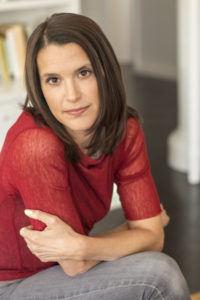
Image of author

Credit: Elena Seibert

The physics metaphors are `entangled’ with the plot and structure of the book. Which came to you first, the metaphors or the plot?

Characters always come first, followed by plot.  I resisted using the science in the book metaphorically at all, at least at first.  I really wanted readers to see Helen doing science `onstage’ in the novel, rather than simply throwing in technical jargon to make the reader believe she was a scientist.  I thought Helen would be very impatient with scientific metaphors like gravity used to describe romantic attraction, or entanglement for friendship.  In talking to physicists though, I started to change my mind.  One LIGO experimental physicist told me that our 3D brains have a lot of trouble understanding certain phenomena without leaning on analogies (he was talking about describing black holes quantum mechanically as opposed to classically at the time) and that he wasn’t opposed to them.  He said that the trick was to make those metaphors as accurate as possible.  I thought that by really trying to understand the work that Helen was doing myself, I might be able to make the scientific concepts in the book more complex and evocative than they normally are in casual conversation.

How did you go about doing your research – both on the technical aspects of the science and also about the daily rhythms of life as a physicist?

To begin with, I read a lot.  I’m lucky that many physicists consider it worth their time to write for a general audience.  Books by David Kaiser, Lisa Randall, Kip Thorne, Janna Levin, Steven Weinberg, and Louisa Gilder, as well as a sociology of LIGO by Harry Collins and Walter Isaacson’s biography of Einstein, were especially helpful.  My reading gave me the confidence to approach some physicists myself and I was fortunate that they were all so generous with their time.  I was struck by how passionate these physicists were about their work, and how willing they were to put it in simple terms for a novice.  I once had an amusing conference call with two LIGO physicists from the interferometer at Livingston, where they helped me brainstorm violent disasters that might occur in a LIGO lab.  (For the record, their ideas were bloodier than mine.)  I also visited labs at Columbia and MIT to see some of the equipment that appears in the novel, as well as small details like the objects that might sit on a physicist’s desk, for example, a cosmic microwave background stuffed toy.  You can’t make this stuff up …

Did you have any preconceived notions about the life of a physicist which you reconsidered after your research?

I kept trying to find some dramatic way in which physicists saw the world differently.  I was thinking about that especially in terms of grief because Charlie’s death is the center of the book.  I asked every scientist I spoke to, “Is there something that makes you different from other people because you’re a physicist?”  Their answers were very boring; one physicist told me that he’s not afraid of flying, because he understands the way the plane operates.  I came to the conclusion that physicists are more like the rest of us than we think, and that Helen should react to loss the same way anyone else would, with some magical thinking—what the literary critic Stephen Greenblatt calls “irrational expectations of recovery.”

As far as preconceived notions go, I’m embarrassed to admit that I didn’t know sexual harassment was as prevalent in the science departments of universities as it is in the humanities.  I think I got that wrong because most of my friends in college were liberal arts majors, and because female students in STEM are so underrepresented in popular culture.

How much do you relate to the way Helen sees the world? Does she have a life you think you would enjoy?

I loved learning about Helen’s work.  I don’t like the idea that science and the humanities require different types of brains, and the wonderful physicist-writers I read while researching the novel disprove that theory anyway.  That said, it seems unlikely that I would’ve made it as a physicist.  But if you could build me a theoretical model in which I could have done physics at Helen’s level (or even a less elevated one) I think I would have loved her life.  Some readers have said that Helen is cold, or that she sees the world in a strange way; if that’s true, those are qualities I share.  I do often feel sort of removed from other people, more of an observer than a participant.  I won’t speak for scientists, but I think this is probably true of most writers.

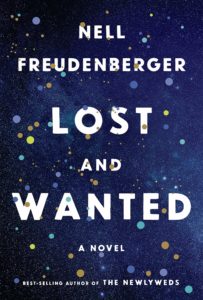
Book cover of Lost and Wanter

Courtesy of Knopf

Interactions: Ankita Anirban

Ankita joins Nature Reviews Physics after a brief period as locum associate editor at Nature Reviews Materials. After a BSc degree from King’s College London, Ankita went on to pursue an MPhil at the University of Cambridge, on low-temperature transport of one-dimensional electron systems. She then continued with PhD studies on the theme of electron transport of topological insulator heterostructures at the Cavendish Laboratory in Cambridge.

What made you want to be a physicist?

As a child, I loved fantasy novels and used to wish that I lived in a world with magic, elves and dragons. Physics classes at school seemed dull in comparison, until I discovered quantum mechanics through popular science books as a teenager. Suddenly it seemed that our world could be as crazy as Alice in Wonderland with strange phenomena like entanglement and superposition of particles. This seemed cooler than dragons as we could actually “see” these things happen in a lab – and so I became a physicist!

If you weren’t a physicist, what would you like to be (and why)?

A travel writer/journalist. I’d love to explore lots of interesting and remote places around the world and write about the stories and people I met.

Which is the development that you would really like to see in the next 10 years?

I want science to become more accessible. So many non-scientists are intimidated by the idea of science and maths. I would love for science to become “dinner table conversation” in the way politics or books or films are for the general public.

What would be your (physics) superpower?

To have magic eyes – that can work as a microscope (maybe even an electron microscope!) and zoom into all the details of things around me, and also as a telescope to see distant galaxies.

What’s your favourite (quasi-)particle?

Probably the humble electron. It’s not a glamorous particle, but I’ve spent years making electronic devices which I think of as “electron playgrounds” so I have grown attached to them.

What Sci-Fi gadget / technology would you most like to have / see come true (and why)?

Definitely a time-machine. Ignoring all the related paradoxes I’d have to deal with, I want to be able to transport myself to the past and actually find out what history was like.

Interactions: Ed Simpson and the 3d nuclide chart

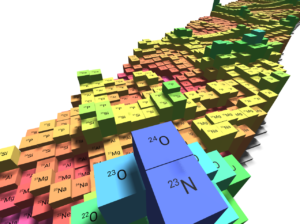
An example visualization from the 3D Nuclide Chart

The nuclide chart is a staple of nuclear physics, visualizing the properties of nuclides arranged by their number of protons and neutrons. The chart appears in text books, talk slides and Lego form (in the Binding Blocks science outreach programme). The 3D Nuclide Chart is a web app put together by Ed Simpson (@SuperSubatomic on Twitter) of the Australian National University. The app lets users plot the nuclear data of their choosing (taken from published data tables), play around with the 3D viewpoint (or work in 2D), set colour schemes and fonts, and then export the visualization as a png file or export the relevant data. The results are rather pretty, and the app is easy to use.

We asked Ed a few questions about the chart.

For our non-nuclear-physicist readers, what does the nuclide chart show?

The nuclide chart is like a nuclear physicists’ periodic table, and is a basic tool of the nuclear science community. Instead of visualising the elements, it plots the properties of nuclides. A nuclide is a specific type of nucleus, defined by its number of protons (Z) and neutrons (N). Plotting nuclides as a function of Z and N gives insights into basic nuclear properties such as radioactive decay and half-lives. It also allows us to spot patterns in nuclear structure, such as the “magic numbers” of protons and neutrons, which greatly add to the stability of nuclides.

Can you let us know a little about the history of nuclide charts?

The earliest nuclide charts date back to the mid 1930s. The evolution of the chart after that is somewhat hidden in the secrecy of the Manhattan Project, where much of the development took place. Declassified Los Alamos reports do tell us, however, that it had reached a recognisably modern form by 1945. The 2D visualisations of the nuclide chart have changed very little since then, though we’ve discovered many more nuclides: from 540 in 1946, to more than 3200 today!

What made you decide to make a new visualization tool for the nuclide chart?

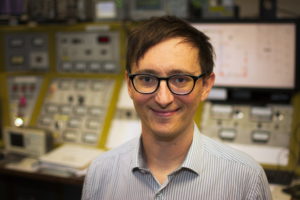
Ed Simpson in an accelerator control room

Nuclear physicists often use nuclide charts in publications, talks and outreach materials. The existing online tools were more focused on data than visualisation, and I developed the 3D Nuclide Chart with the primary aim of producing high quality images for reuse elsewhere. The chart has fine-grained control over the appearance – everything from the colour palette to fonts can be changed. Being 3D, it’s perfect for use in outreach and teaching, and being online, all that’s required is a recent web browser.

What are your plans for future developments of the visualization?

The main thing I’d like to add is loading of data from users (e.g., a set of calculations of nuclear masses). Plotting data as a function of time would also be really cool for visualising the abundances of nuclides during astrophysical events like the r-process, which is responsible for creating half the heavy elements we see around us today. I’m always open to suggestions, and many of the developments have come following feedback from users.


What it’s like to be a Reviews editor

Have you ever wondered what reviews editors do? Chasing authors to submit and making edits to the text of the reviews? That is just a small part of it.

In this editorial we outlined the story of a Review from commissioning to publication. As editors, we spend a lot of time searching for ideas for potential reviews. We travel to conferences and visit labs to find out what the community is interested in and whet types of reviews are missing. Then we work closely with authors to develop the idea of the review, and then polish the text before publication to make it accessible and self-contained so that physicists from other fields can follow, make use of — and enjoy — the article.

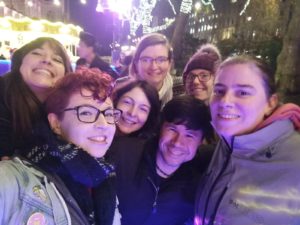
Some of the crew on an ice skating trip last winter

Being an editor is a busy and stimulating job. Producing monthly issues means regular deadlines and a lot of planning ahead. We coordinate and liaise with authors, referees, art and production editors to make sure that the content is published regularly as the readers expect. The job is also very sociable. We are part of the journal teams and the wider physical sciences reviews journal teams and even wider reviews team. We also interact a lot with our colleagues at Nature, Nature Communications and the Nature research journals. All editors have academic backgrounds and we all share the love of science and common experiences from our PhD and postdoc years.

Here are some comments from editors of Nature Reviews journals in the physical sciences:

Iulia Georgescu, Chief Editor of Nature Reviews Physics: I think the role of reviews editors is not well understood. We are not gate-keepers, but guides walking together with the authors all the way from idea to publication. We often think of manuscripts as ‘our babies’ because we are as invested as the authors who wrote them. It is a wonderful thing to see a Review evolve from a vague idea, to a well-structured outline and then a full manuscript. We feel great satisfaction when we see the reviews we worked on published and take pride when they are well-received by the community. I often think: look at my baby and how well it’s doing.

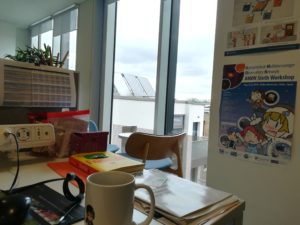
The editor’s natural habitat

Giulia Pacchioni, Senior Editor at Nature Reviews Materials: Being a Reviews editor is a lot of fun — I like keeping an eye on how ideas evolve from initial results presented at a conference to a flurry of publications as the topic becomes more established, and deciding when is the perfect moment to commission a Review. I am lucky to have the opportunity to travel to plenty of conferences and lab visits to keep in touch with the community, and to spend a lot of time reading and thinking about science.

Claire Ashworth, who works for our inter-journal team providing support to Nature Reviews Physics, Nature Reviews Materials and Nature Reviews Chemistry: I enjoy seeing an idea develop into a published Review and working with authors at each stage of the publication process to achieve this. I think that Reviews editors are quite unique in terms of the amount of time that we invest into each article and the extent to which we use both our scientific knowledge and editorial experience to help to ‘shape’ an article.

Stephen Davey, Chief Editor of Nature Reviews Chemistry: The Reviews editor role is rather different to that of a primary research journal editor – and not just because I spend my time chasing authors rather than being chased by them. I get to put a lot into every manuscript that I handle. And I do it all while travelling the world, meeting interesting people and slaking my thirst for knowledge.

Zoe Budrikis, Associate Editor at Nature Reviews Physics: Every day — every hour, sometimes! — in this job is different. I can go from looking for commissioning ideas in soft matter physics, to line-editing a review on the physics of climate modelling, to discussing with editors in other journals about what the latest trends in complexity research are.

Interactions: Daniel Hook

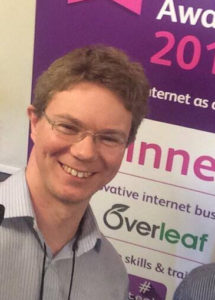
Daniel Hook  is CEO at Digital Science and in his free time continues to work in theoretical physics.

What did you train in? What are you doing now?

I spent 11 years studying physics and theoretical physics at Imperial College London.  Originally, I joined the Physics with Theoretical Physics BSc program in 1996, I carried on to do a 1-year MSc in Quantum Fields and Fundamental Forces in 2000.  I then studied part time for a PhD in Quantum Statistical Mechanics with Dorje Brody finishing in July 2007, submitting just before the RAE deadline. I’m now CEO of Digital Science, a technology company that aims to improve the research ecosystem by providing better tools for researchers, administrators, librarians, funders, publishers and corporates.  While the leap from theoretical physics research to trying to improve how research is done is an improbable one, I will attempt to explain (below) how that happened.

How do you introduce yourself (I am a physicist/entrepreneur/…)

I always claim that Theoretical Physics is not a job that you do but rather it is the person that you are.  As such, it’s difficult to answer this question since I’ve always felt I’m both physicist and entrepreneur – I certainly bring a lot of aspects of theoretical-physics thinking to how I approach business.  Introducing myself as CEO, entrepreneur or academic all seem to be disingenuous to one or other of the communities of which I consider myself to be a part, so I usually introduce myself as “someone who helps software start-ups to support researchers”.

How did you your career progress from a PhD in theoretical physics to leading Digital Science?

That’s a long story, but an abbreviated version goes something like this. Carrying on in theoretical physics after a PhD usually means 5-10 years of postdocs in several geographic locations; the often-taken alternative being working for a bank as a quantitative analyst.  Neither alternative seemed to be very attractive to me, or to my office mates at the time, so we founded a software company called Symplectic together. We liked academia, but had noticed that the software that academics had wasn’t too good, so we started working with a variety of parts of Imperial College to develop better software to support academics.  In particular, the Faculty of Medicine was very collaborative and together we developed a piece of software that would later become Symplectic Elements, our research information management platform. By 2009, we had started to sell Elements outside Imperial College and had been noticed by Nature Publishing Group, who were already planning to launch Digital Science at the time.  Symplectic became one of Digital Science’s first investments in 2010.

By 2013, I was spending about equal parts of my time working on Symplectic and helping to establish the Research Metrics group at Digital Science, which wasn’t really fair to either company.  As a result, in the middle of the year, I moved to become Director of Research Metrics at Digital Science and Symplectic promoted Jonathan Breeze to become the new CEO of the company. Two years’ later, Digital Science’s founding Managing Director, Timo Hannay, decided to launch his own start-up SchoolDash and I was asked to lead Digital Science as his successor.

How did you co-found Symplectic? Do you have any advice for young scientists who would follow your career path?

Co-founding Symplectic, as I’ve mentioned, was in part a decision based on the idea that the four of us who co-founded the company didn’t want to leave academia, but also didn’t see a route to do theoretical physics in a way that worked for us. We also wanted to give back to an environment that we loved and where, through our PhD studies, we had seen lots of things that could have been done better with a good software solution.  Luckily, in a lot of theoretical physics research, you usually need to learn some level of coding. In those early years between 2002 and 2008, the four of us wrote about 12 pieces of software from a web content management system to an examination management system. It was a great way to learn the tools of our trade and to learn how to run a company.

I would not recommend following my career path to anyone – it was very much a personal choice and one that, by luck, has turned out to suit me.  That said, undergraduates and PhD students are often taught a definition of success that is very narrowly defined – specifically in the academic context.  What I have learned from my non-standard path is that success can be many things and that ultimately it is about finding a way to make a difference in a way that is personal to you.

Why are you still involved in active research?

As I said earlier, I don’t believe that theoretical physics is just something that you do.  I really love doing research and I’m very lucky in that the type of research problem that interests me is the type of problem for which I only really need a pen, some paper and perhaps a computer.  At the same time, I happen to think that if you’re going to write tools for researchers you can only do that well if you understand what challenges researchers actually face on a day-to-day basis. As such, I think it’s important that I continue to do research to be constantly reminded of what the challenges are and what doesn’t work as well as it could.

I should also say that I’m very fortunate to work with some really great collaborators who put up with my very busy travel schedule and who continue to work with me after all these years.

What is your vision for the future of science communication?

This is a really complicated question.  I’ve spent a lot of time thinking about this problem and I’ve given a few talks on it in the past couple of years. You can find one of them here.  If you can’t sit through the whole 55 minutes of the video, then I can try to summarize my position as follows.  I think that:

  • Communication must become more open and more collaborative – I think that material will be shared earlier in the research process with a greater range of people and that there will be credit and incentives that help this to become a reality;
  • The mechanisms that capture the research outputs of experiments or other data gathering activities will become smarter, more nuanced and more complete in the contextual data that they capture – current equipment and approaches are far too narrow and focused, and don’t capture nearly enough context around the experiment;
  • Communication will become more iterative – we can already see this starting to happen in that researchers now release datasets independently of a publication; there are often versions to the dataset as more data are collected and added to the public release; preprints are also changing our relationship with versions of record and the concept of priority in research.
  • We will move away from the scholarly article.

Ultimately, what makes the scholarly article and the monograph the two preferred forms of communication are three key factors:  Firstly, the fact that they are published on a specific date. This allows them to, secondly, have a physical form, which happens to be fundamentally the same as one that we learn to interact with from a young age. Thirdly, that physical form encapsulates an elegant structure of information that quickly gives us contextual information about what we’re reading.

In short, we are conditioned to hold something in our hands that feels like a book. With research literature that is only possible because a particular version is published on a particular day.  As Geoffrey Builder has observed, by just looking at the front page of a paper, any researcher can identify where the authors, affiliations, title, abstract, main text, journal name, page number, date and DOI are located in the layout without seeing even a single word.  Indeed, in many cases researchers can identify the name of the journal from layout alone.

However, the past few years have seen the nature of research results in many fields change completely.  An increasing number of researchers now have vast amounts of data that they need to share in order for their research to be reproducible; they have developed software; their data needs to be consumed as a video or audio file or using a specific viewer in order to interpret it.  On top of this, many researchers are beginning to see significant value in sharing negative results to increase the efficiency of the research system. None of these aspects can easily be fitted into the standard, flat, paper-based article or monograph.

As a result, I see the principal research outputs becoming the research objects rather than the papers.  I see a deep need to change research evaluation and incentives to take this shift into account. I see research communication becoming more like computer software in the sense that it should be highly versioned, highly collaborative and quite open.  I believe that “co-authorship” of research objects will be fluid and changing in time. I think that research reviews may be created by AIs at our request – relating research objects that interest us and pulling together the thinking of multiple researchers to meet our current need for information.

Even if my predictions are not accurate, it seems clear that there are many opportunities to rethink how publication works and that there are a number of transitions that are likely to take place in the next few years.

Interactions: John Hammersley

After a PhD in theoretical physics (specifically, holography and the ADS/CFT correspondence), John left academia and later co-founded Overleaf in 2012. He has been developing Overleaf ever since to bring it to more and more users.

What did you train in? What are you doing now?

My background is in mathematics and physics; I completed an MPhys at Warwick in 2004, before heading up to Durham for my PhD, which I completed in 2008. I then moved out of academia into industry, working for Ultra PRT, the company behind the world’s first driverless taxi system. I joined the company as a research scientist, and my role later broadened out to be bid manager for the various projects the company was involved in.

How did Overleaf start?

When joining Ultra PRT, I was lucky enough to be mentored by Prof. Martin Lowson, a former rocket scientist and aeronautical engineer. He founded Ultra PRT out of Bristol University in the mid-nineties, and always maintained a strong link with academia, encouraging us to write up and share our research into large scale driverless taxi systems with the wider community. This involved collaborations both internally and with others at partner universities/organizations, and it was whilst collaborating on these research papers that we discovered Etherpad, a new browser-based collaboration tool. This made it easy for us to share and collaborate on notes, but because we typically use LaTeX for our papers, it wasn’t quite what we needed.

So one weekend, my co-founder Dr John Lees-Miller built the prototype for Overleaf (then called WriteLaTeX), which allowed us all to collaborate in the browser on LaTeX documents, and would generate a PDF output by compiling the LaTeX on a server. We also found that this greatly lowered the barriers to collaborating with others who were new to LaTeX, as there was nothing to install — all that’s needed is a web browser. Usage of the site continued to grow through word-of-mouth and being featured on sites such as HackerNews, and in late 2012 we decided to found our own company and work on Overleaf full time!

Who is using Overleaf today?

Today over four million people worldwide are using Overleaf! These range from students taking their first steps with LaTeX, through to large scale collaborations between hundreds of the world’s leading scientists. I’m always amazed at the wide range of uses people find for LaTeX and Overleaf. For example, one of the first projects on Overleaf that wasn’t one of our research papers was a set of wedding invitations!

We also see Overleaf helping to extend LaTeX out into fields where it’s less common, such as in the humanities and social sciences (for example, see this a short interview with Brian Lucey, Professor of Finance at Trinity College, Dublin, who started using LaTeX through Overleaf and is now part of our Advisor programme).

We’re also collaborating with partners in the publishing industry to try to help streamline the authoring, submission and publication workflows for journals and preprint servers, by providing updated templates and simple submission links. Overleaf is the natural place for authors and editors to be able to check that all the files for a submission are present, and that there are no compilation errors within a manuscript. Because of the built-in error reporting, and friendly interface, it also helps when there are any problems to resolve!

What I personally find most exciting is that Overleaf is helping students create and share their work in ways not easily possibly before. For example, the ‘Nano Ninjas’ — a group of 7th and 8th Graders in the US — used Overleaf to write up the engineering notebook from their school Robotics challenge! They won an award for their notebook, and have shared it in full on Overleaf as a template for future students to see and take inspiration from!

You can read more about the Nano Ninjas here, and some of their members also went on to form ‘The Three Musketeers’. It’s amazing to see, and hopefully provides an inspiration to future researchers and scientists everywhere 🙂

 What are the main challenges when starting a company? Do you have any advice to share?

There’s a lot I could talk about here! Although, I’m a bit reluctant to start by listing out challenges; you have to be somewhat naively optimistic to start a company, and focusing too much on any perceived challenges can be (wrongly) off-putting. So I’ll focus on advice instead.

If four points is too many, just read point four: don’t run out of money!

  1. Take everyone’s advice with a pinch of salt: we all give advice based on our own experiences, and in the early days it’s easy to get side-tracked by advice that’s well-meaning, but not relevant for you.
  2. Talk to people about your idea as early as you can, but don’t be put off if the first people you talk to seem a bit confused as to what you’re proposing. It’s natural, as you’re still developing the idea, and it’ll help highlight where you need to be able to explain your idea more clearly. Early on, you’ll need positive reaction for motivation, early adoption for validation, and any critical feedback for development. But remember to take any advice they give you with a pinch of salt 🙂
  3. Focus on solving the immediate problems that you need to get done to get yourself to the next stage (whether that’s finding a co-founder, building the MVP, or getting feedback from your first users), and don’t worry too much about things beyond that. At the start this is focusing one week or one month at a time, and certainly no more than six months ahead. If you focus too much on the long term, you’ll find it takes you too long to get the important stuff done now, and you’ll run out of time/money.
  4. Finally, and most importantly, it’s the CEO’s main job to make sure you don’t run out of money — whoever the CEO is in your founding team needs know how long you have with initial money you’ve saved/raised to get started, and needs to focus on getting the next funding secured before this runs out. If you run out of money, it doesn’t matter how close you are to solving any of the other problems; that’s usually game over.

I also wrote on a similar topic in a blog for ErrantScience, and in my Reddit AMA from a few years ago. If you’re interested in my longer thoughts on this, those are both good follow-on reads.

If you are starting a company, good luck, and feel free to reach out to me directly if you think I can help! If it’s in the #TechForGood space, I’d also recommend talking to the Bethnal Green Ventures team; they’re very friendly, and have a lot of experience helping start-ups develop in the very early stages. We were part of their summer cohort in 2013, and I still help out as a mentor and alumni!

Do you have a favourite Overleaf tip(s)?

If you’re at a university, check if your institution has a site license for Overleaf! You can see the list of institutions here, and if they do, you’ll be able to get a free upgrade to an Overleaf Professional account through that license!

My other top tip isn’t for Overleaf specifically, but can greatly help if you can’t remember the LaTeX command for a symbol — you can use detexify to find it! Simply draw the symbol, and it’ll give you the corresponding LaTeX command!

Finally, if you’re new to LaTeX itself, we’ve put together this short introduction which can be completed in about 30 minutes, to help you get started. Good luck, and if you do use Overleaf, we’d love to hear from you!


Interactions: Chen Fang and the Materiae database

Post by Anastasiia Novikova.

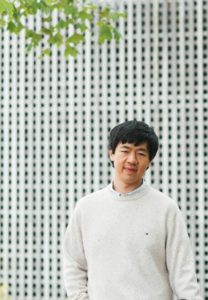
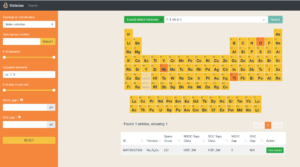
In theory, many ordinary materials can have exotic topological phases. But how can we find them? In 2018 a research group from the National Laboratory for Condensed Matter Physics in Beijing scanned 39519 materials to predict which phases of the already-known compounds might exhibit topological properties. These materials were summarised into an interactive database Materiae, where you can browse compounds containing particular elements, check if they have any topological phases and visualise their band structure.

We asked Prof. Chen Fang — one of the team members who worked on Materiae along with Prof. Hongming Weng —  to give us more details of the project, which has now been published in Nature.

When did the database start? What were the main challenges of this project? What goals do you have for the future?

The database has been online since 23 July 2018; it appeared simultaneously with the posting of the corresponding paper on arXiv. By now there have been over 10000 unique visitors (1=ip*day). The most difficult part is, naturally, the calculation that was done to obtain the topological properties of about 30000 materials. The theory, the underlying work was accomplished back in late 2017 (arXiv:1711.11049 and 1711.11050), but even so, it was an effort to implement the fully automated algorithm shown in the flowchart. Currently we have the band structures plotted for topological materials only, and in the future we will add the band structure plots for all materials, topological and non-topological.

Using your algorithm, you scanned 39519 materials. How much time did the whole calculation process take?

We didn’t track the CPU hours used on this, but if we count the time spent on debugging small bugs now and then, it took us about three to four months in total for the bulk results to come out.

You mention that 8056 materials from your database are actually topological. How many of these materials were experimentally studied?

All materials have been reportedly synthesized in literature, but most of them were not studied from a “topological perspective”, but were studied for superconductivity or ferroelectricity, for example. I think at most few hundreds of these materials have been studied for potential topological properties.

What is the most “underestimated” material?
One example is Tl2Nb2O7. Oxides are seldom considered as topological materials in literature, yet our database registers it as a topological semi-metal. Surprised by this result, we further looked into this material, and realized that the mixed-valence nature of Tl ion is the origin of the nontrivial topology.

Another is Ba3Cd2As4. The layered structure made us expect it to be a weak topological insulator, but our database shows it to be a new type of topological crystalline insulator (having so-called C2-anomalous surface states). Shortly after the prediction, experimental groups have started synthesizing this material.

We expect the study of certain materials, like the ones above, may be “revived” by what we show in the database.

The database contains only non-magnetic materials. Is it possible to envision a similar type of database for magnetic materials?

The entire prediction is based on first-principle calculation, but magnetism is notoriously difficult to predict/include in any first-principle calculations. Therefore, while some theoretical work on the mapping between symmetry data and topological data has been out there for a while (arXiv:1707.01903), I do not think a similar material database can be obtained in near future because of the inherent difficulty of DFT mentioned above.

Interactions: Luke Fleet

Luke Fleet is a Senior Editor & Team Leader at Nature. He joined Nature Research in 2013 as an editor at Nature Communications, before moving to Nature Physics in 2014, and then to Nature in 2017. He’s responsible for selecting the research papers that are published across a range of fields, including applied physics and electronics, and also assists in devising and delivering the goals for the physics team.

 What made you want to be a physicist?

It was more chance than an active decision, so let’s go with luck and curiosity. Like many people, I didn’t really know what I wanted to do when I was younger and so I decided to carry on in education to basically avoid having to choose. In doing so, I pursued something that I found interesting. Luckily for me, that was physics!

If you weren’t a physicist, what would you like to be (and why)?

If I could choose anything, then I’d want to be a musician or a footballer, as these are my hobbies, but I think people have already said these so I’m going to go with joiner. I actually worked for several years when I was a teenager building things like rabbit hutches and dog kennels, and there are lots of things about working outside crafting something that are satisfying so that’s my back-up if this career goes south.

Which historical figure would you most like to have dinner with — and why?

There are so many to choose from but let’s go with Leonardo Pisano (Fibonacci). He convinced Europeans to switch from Roman numerals to Hindu-Arabic numbers and if you ever have the pleasure of visiting Pisa you’ll see that he also inspired the Church to put a Fibonacci sequence-based artwork above the main entrance to the church of San Nicola. Relatively little is known about Fibonacci so I’d love to know how he managed to convince so many people to embrace arithmetic mathematics during the Middle Ages.

What would be your (physics) superpower?

When I was a researcher I worked with magnets and if they were big enough then then I liked to think that I was like Magneto from the X-men, so that’s the superpower I want: mastery of electromagentism, without trying to instigate a civil war.

What’s your favourite (quasi-)particle?

I’m really a condensed matter physicist at heart, so is has to be a quasiparticle. And whilst there are so many to choose, I’d have to say Weyl fermions. Physicists had been searching for these particles for decades but they were discovered not long after I started working as an editor. It was pretty exciting covering these advances at the time, so I think I’m always going to have a Weyl soft spot.

If you could have an effect or equation named after you, what would it be?

I love playing football and like to think I have some mastery over the Magnussen effect. I know that already exists but I’d like to discover a new effect related to spinning objects so that I can improve my shooting, which is definitely getting worse with age.

Interactions: Federico Levi

Federico Levi is a Senior Editor at Nature Physics.

What made you want to be a physicist? 

I was a rather curious kid — the annoying kind that asks a lot of ‘why’ questions. But I never found my interests to be limited to the natural world. The adolescent me somehow decided that good learning opportunities would come from a degree in physics or history or English literature. While I like to think that some natural inclination towards analytical thinking nudged me in the direction of physics, the reality is that my parents were pretty persuasive in their case against a career in the humanities. But once I started learning physics for real, I was hooked. When I got to quantum mechanics, I was totally sold.

If you weren’t a physicist, what would you like to be (and why)?

I would like to write novels, I think. Too bad I’m not very good at it.

Which historical figure would you most like to have dinner with — and why?

Thomas Kuhn, to thank him for having written a great book.

What is the development that you would really like to see in the next 10 years?

Understanding so much better the foundations of quantum mechanics, cosmology or the interplay between quantum physics and general relativity to realize that what we all assumed was clearly right is actually rather wrong.

What would be your (physics) superpower?

Skipping stones for hundreds of meters.

What Sci-Fi gadget / technology would you most like to have / see come true (and why)?

A time machine to undo stupid mistakes. Could probably have other uses too.

Interactions: David Abergel

David Abergel is an Associate Editor at Nature PhysicsBefore joining Nature Physics in 2017, David carried out theoretical research on graphene and other two-dimensional crystals, and quantum topological materials. 

What made you want to be a physicist? 

When I was a kid, I was really into astronomy, so I guess I’ve always had an inclination towards science. Then, as a teenager, I read John Gribbin’s In Search of Schödinger’s Cat. I loved it. The vivid picture he painted of how quantum mechanics works, how it’s so different from the classical world that we experience, and most importantly how we can use maths to understand it had me hooked. From that point on I never wanted to be anything else.

If you weren’t a physicist, what would you like to be (and why)?

I would probably have ended up as a forensic scientist working for the police. I’m sure it’s nowhere near as cool as it looks on TV, but the idea of trying to piece together a lot of small clues to provide evidence for case seems like a really interesting type of problem solving.

What would be your (physics) superpower?

Getting code to compile first time!

What’s your favourite (quasi-)particle?

Undoubtedly the Cooper pair. I find it counterintuitive that the jiggling of an atomic lattice can make two negatively-charged electrons ‘stick’ together. And the fact that there is most likely a completely different mechanism that we don’t understand going on in high-Tc superconductors is a fascinating mystery.

What Sci-Fi gadget / technology would you most like to have / see come true (and why)?

Apart from the obvious ones like time travel and teleportation, I want someone to come up with a material that is soundproof, but allows cool air through. It would be the perfect window covering for warm summer nights.

Which physicist would you like to see interviewed on Interactions — and why?

Is this like one of those facebook things where you have to nominate five of your friends to keep the game going??!! But more seriously, seeing as he kind-of came up with the idea, I want to hear what Lev Landau’s favourite quasiparticle is.

Interactions: Elena Belsole

Elena Belsole is the Chief Editor of Communications Physics. An astrophysicist by training, Elena was the executive editor of New Journal of Physics, before joining Nature Research.

What made you want to be a physicist? 

Since the age of 8 I wanted to be a medical doctor. I have always been a very inquisitive person and I would have pursued any direction that was giving me as many answers as possible on what the world is all about. But the truly determining factor was meeting my physics teacher in high school. He was so inspirational and made things look so fascinating; he even introduced the Schrödinger equation to the class. I could not leave it at that. I had to learn more.

If you weren’t a physicist, what would you like to be (and why)?

An herbalist I think. I love how you can forage and use herbs for medicinal use and being able to find a remedy for any minor ailments.  I also considered theatre acting for a short time.

Which historical figure would you most like to have dinner with — and why?

Since I started University I had Richard Feynman lecture notes on my bedside table and always found the simplicity of his explanations fascinating, but I would probably not want to go for dinner with him. If I have to choose one person to take out for dinner I would go for `the queen of carbon’, Millie Dresselhaus. She has guided and inspired so many people and she was a great physicist in an environment that was (and to some extent still is) quite adverse to women, while also having a family. I would like to know how she did it all.

Which is the development that you would really like to see in the next 10 years?

I would like to see physical methods effectively used for controlling and stopping cancer and other diseases in a way that is not intrusive and not damaging for the patient.

What would be your (physics) superpower?

Definitely teleportation. I cannot even imagine how many places on Earth and beyond I could visit if that was true.

What’s your favourite particle?

The neutrino. It is such a versatile particle. Perhaps it is because of my fascination with cosmic rays from astrophysical objects, perhaps because it can be used to probe the Standard Model, or maybe just because thousands of them cross our body every second and are impossible to see and difficult to detect. Regardless, they are fascinating and may be a key to solve the mysteries of the Universe.


Interactions: Vittoria Colizza

Vittoria Colizza is Research Director of the EPIcx lab at INSERM and Sorbonne Université.

What did you train in? What are you working on now?

My formal training is in theoretical physics, but already during my PhD my work was at the interface with biology. Since then, I’ve been working on the characterization, modelling and surveillance of infectious disease epidemics, moving progressively from theoretical approaches to increasingly applied research informing public health. If I have to use a single tag to describe my research it would be ‘Computational and digital epidemiology’, integrating statistical physics, mathematical epidemiology, computer science, statistics, medicine, public health, complex systems approaches, network science, data science, surveillance, numerical thinking and geographic information systems.

My research focuses on real epidemic outbreaks to gather context epidemic awareness and provide risk assessment analyses for preparedness, mitigation, and control. Applications range from human epidemics (e.g. 2009 H1N1 pandemic influenza, MERS-CoV epidemic, Ebola virus disease epidemic, childhood infections, antimicrobial resistance spread in hospital settings) to animal epidemics (e.g. bovine brucellosis, bovine tuberculosis, foot-and-mouth disease, rabies).

In 2011 I joined the French National Institute of Health and Medical Research (INSERM), after several years spent in interdisciplinary departments/institutions (my only affiliation to a Physics Dept. was during my education at Sapienza University in Rome).

How do you introduce yourself (e.g. I am a physicist/biologist/…) ?

It depends on the audience.

In front of an epidemic/medicine/public health community I’d just state that I’m a modeler, as this is the key information they would need about my profile, e.g. to distinguish my expertise from the one of field epidemiologists, biostatisticians, public health professionals, MDs, and others. But a few exchanges about my approaches would often identify me as a ‘stranger’ and force me to reveal I’m a physicist by training. I tend not to state that upfront as it may induce an unneeded distance that is not beneficial for the interaction.

Talking to physicists, I would introduce myself as ‘originally a physicist’ to establish a common ground facilitating the communication, but I would specify that my work is fully framed in the context of infectious disease epidemics (and therefore, it’s not physics anymore – at least most of the times).

In all circumstances, I try to introduce myself in a way that could avoid misunderstandings, assumptions, cross-disciplinary suspicion, and would allow putting my audience more at ease to have a comfortable and fruitful dialogue.

What did you find most difficult when you first had contact with other disciplines?

Definitely a long list of painful aspects that all interdisciplinary scientists experience – lack of shared language/notation/methods/practices, huge investment of time, confusion, need for uninterrupted nurturing of the interdisciplinary dialogue, mutual suspicion. These aspects are more or less foreseeable before embarking in an interdisciplinary endeavor (though experiencing them directly is unforeseeably painful).

What caught me completely by surprise was realizing that the very same reason behind interdisciplinary research – mindset diversity bringing additional richness – was also its biggest obstacle. Mindsets are mainly rooted in the disciplines of training of each scientist, thus shaping their ability to frame and interpret concepts. While each offers a different perspective to a given problem, they all need to be reconciled and synthesized in something new to achieve the knowledge advancement that interdisciplinary research aims to produce. And reconciling different mindsets, under varying conditions of rigidity, may be extremely challenging.

And what did you find most helpful to familiarize yourself with new concepts and jargon?

For me there was no other shortcut than reading reading reading out-of-my-field papers and books, attending Schools to complete my training, and discussing infinite times and for infinite hours with experts from other fields. And clearly I learnt a lot through the collaborations, as I still do.

Tell us about your experience the first time you went to a conference outside the field you trained in.

It was a rollercoaster of highs and lows. On the low points there was definitely the intimidating feeling of being an outsider along with the depressing realization that the community didn’t feel any need for outsiders… Up to the moment I realized that my just-developed model was able to answer the questions left open by the keynote speaker – so after all, the community didn’t have all the solutions within the boundaries of its discipline. This was a very powerful impulse for a young post-doc starting interdisciplinary science.

What would be your advice to a PI leading an interdisciplinary group?

I don’t think there is a single recipe for success. But I learnt that there are many important skills –beyond scientific expertise –  that are crucial to a successful and effective interdisciplinary dialogue. Among them, respect for other disciplines, for other points of view, as well as tolerance for ambiguity. These are not taught in courses and should be fostered and practiced in the everyday lab life. The aim is for young researchers to learn how to establish comfortable, engaging and unassuming scientific interactions, lowering cross-disciplinary barriers and removing perceived hierarchies of discipline importance.

Is there any anecdote you would like to share?

Oh yes, I have so many! Are you coming to the Nature Reviews Physics event in London on Feb 26? 😉

Interactions: Athene Donald

Athene Donald is a professor of soft matter and biological physics at the Cavendish Laboratory, University of Cambridge.

What did you train in? What are you working on now?

I was educated in Cambridge in the so-called Natural Sciences Tripos, ultimately specialising in Theoretical Physics. That meant a broad course in the first year – physics, chemistry, materials science and maths – that narrowed down by the third year. I could easily have studied some biology in the first year, but as I had been so put off it at school by the fact it seemed to consist simply of memorising facts, it never crossed my mind to do so. So my formal biology education simply consists of two years at school, not even an O Level.

Although I specialised in Theoretical Physics I soon realised I did not want to spend my life only doing theory and went on to do an experimental PhD (‘Electron Microscopy of Grain Boundary Embrittled Systems’). Although electron microscopy – as well as other microscopies – has formed the core of my research, I have switched the kinds of materials I look at considerably during my career. After a first post-doc continuing on metals I switched to polymers and, over time, moved to biopolymers (first polysaccharides and much later proteins) and ultimately cellular biophysics.

How do you introduce yourself (e.g. I am a physicist/biologist/…) ?

A physicist working at the interface with biology. For my postdoctoral years, however, I was working, not in a physics department but in materials science and, in the USA for four years, that was within the Engineering Faculty.

What motivated you to move away from active research?

It was not a conscious decision! Back in the 1990s I was invited to serve on one of the very first government-organised so-called Foresight panels, looking at the future of the Food and Drink industry (at that time my biopolymer research largely related to food rather than biology per se). The broad range of people on that committee, and how they came together, fascinated me and I realised committee work was actually rather interesting. Over time I served on many different sorts of committees, internally within the university, with research councils and more and I found it taking up increasing amounts of time but also, on the whole, rewarding.

What really pushed my research over the edge was in 2010 when I took on two roles (neither to do with interdisciplinarity!): I became the University’s first Gender Equality Champion, which gave me the opportunity to work with the senior management to try to implement real policy changes and interventions to level the playing field for all across the university; and I became chair of the Royal Society’s Education Committee, dealing with 5-19 education at the time that Michael Gove as Secretary of State was introducing enormous changes to the curriculum. Neither role had any formal associated time commitment, but  they inevitably grew to fill (and more) the time available.  Both rewarding, both taught me a lot about different issues and ways of interacting with people from very different backgrounds. I continued in both those roles until 2014 when I became Master of Churchill College.

What did you find most difficult when you first had contact with other disciplines?

As I indicated, I had essentially no formal biology training and the world of genetics – and the language – had anyhow changed radically since my education. So the initial problem I faced was in understanding the language. When I was first involved in a collaboration with a plant scientist in the area of starch I suspect we both spent about a year just understanding what the other was saying and what our disciplines could and could not offer each other. To my mind, what is absolutely crucial in this formative stage, is finding the other person congenial enough you want to spend the time working together through this potential barrier.

And what did you find most helpful to familiarize yourself with new concepts and jargon?

Time! There is no short cut to getting to grips with a subject unfamiliar to you. I think it is also important to realise that working at the interface with another discipline does not mean you need to know everything about the other discipline. Recognizing what you absolutely do need to know but also there is plenty that, at least at that point, is not necessary so you can home in on the essentials, is crucial. Otherwise it can just seem an insurmountable problem. Of course over time what is vital to know may expand, but by that point it may seem less formidable a challenge. I think having someone you feel comfortable asking naïve questions of is also important; this comes back to having a good relationship with your collaborators. If you don’t feel relaxed about asking something basic the collaboration is probably not going to flourish. Of course sometimes collaborations will be with multiple individuals, possibly multiple disciplines, and then the tactics may need some modification.

Tell us about your experience the first time you went to a conference outside the field you trained in.

A general sense of confusion is what I remember most clearly. The diagrams – of protein structures – seemed mysterious as their presentation was so different from how a physicist would have approached the problem – and that left me with a profound sense of being out of my depth. If the basics seem incomprehensible it is hard to extract much useful information, however willing one may be. Coming into a new field also means that you probably don’t know anyone else in the room and that sense of isolation can be quite intimidating. Once you have some results (even if only a poster) it provides an entrée, so that other people will come up and introduce themselves. But that first step into the unknown can be daunting.

What would be your advice to a PI leading an interdisciplinary group?

Remember everyone comes with different experiences, skills and jargon. Somehow your job is to keep that constantly in mind like an orchestra conductor, to make sure people respect each other’s skills and make the best use of these they can. It is important not to let someone who is an expert in one area make another student whose skills sit elsewhere feel stupid or group dynamics can go sadly awry.

Is there any anecdote you would like to share?

Moving away from the heart of a discipline can make colleagues very uncomfortable. Working with starch, not the typical sort of material a physicist in the 1990s would have thought ‘respectable’, meant I came in for a lot of flak from my seniors. Being told ‘things have come to a sad pass when people at the Cavendish study starch’ by one of these was depressing. Added to this is the fact that, as a woman, people’s biases probably gave them a lower opinion of me anyhow at the time. Hence I was accused at a conference of doing ‘just domestic science’ – and that after I’d given an invited paper. It was sometimes hard to feel positive in an atmosphere like that. Again, having people around you who you trust and can rely on is vital to provide the balance to any such hostile colleagues.

Interactions: Bart Hoogenboom

Bart Hoogenboom is a professor of biophysics at University College London.

What did you train in? What are you working on now?

My undergraduate degree was in physics, I did a final-year research project on the electronic properties of buckyballs (C60), and a PhD project on high-Tc superconductors, that is, all solid-state physics. During my PhD, I learnt how to build and use scanning tunnelling microscopes, which came handy when as a postdoc, I developed atomic force microscopy methods to image solid–liquid interfaces at atomic/molecular resolution. At present, my lab still makes extensive use of atomic force microscopy, complemented by other methods, largely to study — often by real-time, nanoscale visualisation — how biological molecules interact with each other and self-organize to collectively carry out tasks that are important for health and disease. Examples of such tasks are the repair of DNA damage (important in various cancer therapies, for instance), the perforation of cellular membranes (such as in bacterial attack and immune defence) and the regulation of transport into and out of the cell nucleus (exploited by viruses and in gene therapies, for example).

How do you introduce yourself (e.g. I am a physicist/biologist/…) ? 

By my training and way of thinking, I am very much a physicist. That said, I try to do interesting science, and in doing so am not too concerned about the question whether that science happens to be more physical or biological.

What motivated you to change your field of research?

For my PhD, I was working on intellectually challenging questions regarding local electronic excitations in superconductors, which was great fun. However, to keep me motivated and interested on the longer term, I felt that I would benefit from broadening my research horizons and learning about other fields of science. Biology has the advantage of such broadness, with a nigh-infinite collection of questions and problems and ample scope for physicists to make meaningful contributions.

What did you find most difficult when you first had contact with other disciplines? 

I find biologists on average more conservative than physicists. In my experience, physicists tend to be more open to new concepts and methods, even if their immediate use or validity in a practical context is unclear. By contrast, most biologists know that many concepts may apply in nature and many methods may a priori be helpful; however, the hard work is often not in defining a new concept or new method, but in determining which ones (out of many) are useful for the particular biological problem that they are working on.

And what did you find most helpful to familiarize yourself with new concepts and jargon?

To start with, I worked my way through a cell biology textbook. That took quite some patience, but in the end I could read relevant scientific literature and talk to biologists without feeling excessively ignorant. Next, in such discussions across disciplinary boundaries, it helps to be honest about gaps in one’s knowledge. I must have asked many, many naïve questions (and still do), and I count myself fortunate with many fantastic collaborators willing to answer such questions and even do research projects with me.

Tell us about your experience the first time you went to a conference outside the field you trained in.

I felt rather lost and was wondering what on earth I was doing there.

What would be your advice to a PI leading an interdisciplinary group?

A good interdisciplinary research team is a treasure chest that contains much more knowledge and skills than a PI can have on his/her own, and this can be further enhanced by collaborations with labs that have complementary expertise. For a PI leading such a group, my main advice is to appreciate and make best use of such knowledge and skills, encouraging the team to help each other and show a similar open, communicative and collaborative approach when interacting with other labs.

Is there any anecdote you would like to share?

Interdisciplinary communication can sometimes get a bit lost by lack of proper translation. Some years ago, I had done preliminary experiments to visualise the assembly of immune proteins that punch holes in target cell membranes. My postdoc at that time struggled to replicate my results in a room where the heating – not for the first time on our building – was failing. When he next reported to our biological collaborators how he had solved the problem, ‘I put the sample on a hot-plate’, our collaborators went through the roof. To alleviate their major concerns over what we had done to the delicate proteins, it sufficed to give them the appropriate biological translation of my postdoc’s remark, ‘He incubated the sample at 37oC.’

Interactions: Georgia Francis

Georgia Francis is a Senior Editorial Assistant for the Nature Reviews journals, who works hard to keep Nature Reviews Physics running smoothly.

What is your role? What do you do?

I’m a Senior Editorial Assistant — I act as a first port of call for authors and editors for the online submission system we use to handle all drafts of manuscripts. I am responsible for ad hoc duties, questions and queries, as well as managing  and tracking author and referees via the online database system. I am also responsible for checking and obtaining legal documentation, and ensuring that the flow of manuscripts is timely in relation to peer-review through to acceptance.

What do you enjoy about working on Nature Reviews Physics?

I thoroughly enjoy working with the authors and the editors of Nature Reviews Physics;  they make my job rewarding and fun!

What do you find challenging in interacting with physicists (authors, reviewers, editors)?

Part of my role is to ensure that manuscripts are on track for peer-review. Quite often the reviewers require extra time to complete their duties because they’re exceptionally busy! They’re always very polite in response to my emails however which makes the job a little easier.

Which historical figure would you most like to have dinner with — and why?

The historical figure I would most like to have dinner with is definitely Charles Darwin – I’d just be eager to see what he was like in person and express amazement at his influential work on evolution and humanity in general!


Interactions: Myfanwy Evans

Myfanwy Evans is an Emmy Noether Research Group Leader at the Institute for Mathematics, Technische Universität Berlin. Her research is in the field of geometry and topology in soft matter physics.

What did you train in? What are you working on now?

My undergraduate degree was in science, majoring in mathematics. My PhD was already in an interdisciplinary setting, officially part of “Physical Sciences”. It involved mathematics, physics, with some chemistry and biology on the side. Ever since my research has been swinging between mathematics and physics, depending on my collaborators and students at the time. My current research is focused on a theoretical framework to understand tangling in soft matter systems. It uses geometry and topology to investigate how filaments can tangle in a variety of settings, in the view of making a connection with protein and polymer physics.

Do you think of yourself as a mathematician or physicist?

Both and neither! Much of the content of my research is geometry, but the style in which I do it is more physics. However, I like to define my research via the problem that I am trying to solve rather than a specific discipline and I don’t like to be restricted by the methodology or traditions of a specific discipline.

What motivated you to move to this field of research?

I had already started in this general area as a PhD student, and it really grabbed me as an interesting topic. I finished my PhD with far more questions than answers, and this has snowballed into an array of research topics that I am still working on today. My motivation to continue in this direction is driven by my own curiosity, and a kind of religious belief that the results I am getting are so beautiful that they must be important.

What are the main challenges and the main advantages of working in an interdisciplinary team?

The main advantages are that everyone can bring something unique to the table, and the breadth of expertise opens really interesting research directions. I find that the students feel less constrained by their prior knowledge and disciplinary expertise, and are able to work on broad problems from many perspectives, learning a huge amount along the way. The main challenge is keeping the research also relevant to specific fields, in particular for PhD students who wish to stick to a more traditional discipline. Finding the right place to publish, that means reaching the right readership, is always a key problem too.

Do you find it particularly difficult to obtain funding? Or to get your research published?

I think that interdisciplinary research has become a big focus of many funding agencies, and in general I don’t find any major obstacles in obtaining funding from the standard sources. I find the same with scientific publications, where new interdisciplinary findings are often published. Of course, there are exceptions and I have a handful of examples of journals claiming that the research is “not physics” or “not mathematics”, without refereeing the scientific content. But these are few and far between.