Interactions: Luke Fleet

Luke Fleet is a Senior Editor & Team Leader at Nature. He joined Nature Research in 2013 as an editor at Nature Communications, before moving to Nature Physics in 2014, and then to Nature in 2017. He’s responsible for selecting the research papers that are published across a range of fields, including applied physics and electronics, and also assists in devising and delivering the goals for the physics team.
 What made you want to be a physicist?

It was more chance than an active decision, so let’s go with luck and curiosity. Like many people, I didn’t really know what I wanted to do when I was younger and so I decided to carry on in education to basically avoid having to choose. In doing so, I pursued something that I found interesting. Luckily for me, that was physics!

If you weren’t a physicist, what would you like to be (and why)?

If I could choose anything, then I’d want to be a musician or a footballer, as these are my hobbies, but I think people have already said these so I’m going to go with joiner. I actually worked for several years when I was a teenager building things like rabbit hutches and dog kennels, and there are lots of things about working outside crafting something that are satisfying so that’s my back-up if this career goes south.

Which historical figure would you most like to have dinner with — and why?

There are so many to choose from but let’s go with Leonardo Pisano (Fibonacci). He convinced Europeans to switch from Roman numerals to Hindu-Arabic numbers and if you ever have the pleasure of visiting Pisa you’ll see that he also inspired the Church to put a Fibonacci sequence-based artwork above the main entrance to the church of San Nicola. Relatively little is known about Fibonacci so I’d love to know how he managed to convince so many people to embrace arithmetic mathematics during the Middle Ages.

What would be your (physics) superpower?

When I was a researcher I worked with magnets and if they were big enough then then I liked to think that I was like Magneto from the X-men, so that’s the superpower I want: mastery of electromagentism, without trying to instigate a civil war.

What’s your favourite (quasi-)particle?

I’m really a condensed matter physicist at heart, so is has to be a quasiparticle. And whilst there are so many to choose, I’d have to say Weyl fermions. Physicists had been searching for these particles for decades but they were discovered not long after I started working as an editor. It was pretty exciting covering these advances at the time, so I think I’m always going to have a Weyl soft spot.

If you could have an effect or equation named after you, what would it be?

I love playing football and like to think I have some mastery over the Magnussen effect. I know that already exists but I’d like to discover a new effect related to spinning objects so that I can improve my shooting, which is definitely getting worse with age.
Interactions: Federico Levi

Federico Levi is a Senior Editor at Nature Physics.

What made you want to be a physicist? 

I was a rather curious kid — the annoying kind that asks a lot of ‘why’ questions. But I never found my interests to be limited to the natural world. The adolescent me somehow decided that good learning opportunities would come from a degree in physics or history or English literature. While I like to think that some natural inclination towards analytical thinking nudged me in the direction of physics, the reality is that my parents were pretty persuasive in their case against a career in the humanities. But once I started learning physics for real, I was hooked. When I got to quantum mechanics, I was totally sold.

If you weren’t a physicist, what would you like to be (and why)?

I would like to write novels, I think. Too bad I’m not very good at it.

Which historical figure would you most like to have dinner with — and why?

Thomas Kuhn, to thank him for having written a great book.

What is the development that you would really like to see in the next 10 years?

Understanding so much better the foundations of quantum mechanics, cosmology or the interplay between quantum physics and general relativity to realize that what we all assumed was clearly right is actually rather wrong.

What would be your (physics) superpower?

Skipping stones for hundreds of meters.

What Sci-Fi gadget / technology would you most like to have / see come true (and why)?

A time machine to undo stupid mistakes. Could probably have other uses too.

Interactions: David Abergel

David Abergel is an Associate Editor at Nature PhysicsBefore joining Nature Physics in 2017, David carried out theoretical research on graphene and other two-dimensional crystals, and quantum topological materials. 

What made you want to be a physicist? 

When I was a kid, I was really into astronomy, so I guess I’ve always had an inclination towards science. Then, as a teenager, I read John Gribbin’s In Search of Schödinger’s Cat. I loved it. The vivid picture he painted of how quantum mechanics works, how it’s so different from the classical world that we experience, and most importantly how we can use maths to understand it had me hooked. From that point on I never wanted to be anything else.

If you weren’t a physicist, what would you like to be (and why)?

I would probably have ended up as a forensic scientist working for the police. I’m sure it’s nowhere near as cool as it looks on TV, but the idea of trying to piece together a lot of small clues to provide evidence for case seems like a really interesting type of problem solving.

What would be your (physics) superpower?

Getting code to compile first time!

What’s your favourite (quasi-)particle?

Undoubtedly the Cooper pair. I find it counterintuitive that the jiggling of an atomic lattice can make two negatively-charged electrons ‘stick’ together. And the fact that there is most likely a completely different mechanism that we don’t understand going on in high-Tc superconductors is a fascinating mystery.

What Sci-Fi gadget / technology would you most like to have / see come true (and why)?

Apart from the obvious ones like time travel and teleportation, I want someone to come up with a material that is soundproof, but allows cool air through. It would be the perfect window covering for warm summer nights.

Which physicist would you like to see interviewed on Interactions — and why?

Is this like one of those facebook things where you have to nominate five of your friends to keep the game going??!! But more seriously, seeing as he kind-of came up with the idea, I want to hear what Lev Landau’s favourite quasiparticle is.

Interactions: Elena Belsole

Elena Belsole is the Chief Editor of Communications Physics. An astrophysicist by training, Elena was the executive editor of New Journal of Physics, before joining Nature Research.

What made you want to be a physicist? 

Since the age of 8 I wanted to be a medical doctor. I have always been a very inquisitive person and I would have pursued any direction that was giving me as many answers as possible on what the world is all about. But the truly determining factor was meeting my physics teacher in high school. He was so inspirational and made things look so fascinating; he even introduced the Schrödinger equation to the class. I could not leave it at that. I had to learn more.

If you weren’t a physicist, what would you like to be (and why)?

An herbalist I think. I love how you can forage and use herbs for medicinal use and being able to find a remedy for any minor ailments.  I also considered theatre acting for a short time.

Which historical figure would you most like to have dinner with — and why?

Since I started University I had Richard Feynman lecture notes on my bedside table and always found the simplicity of his explanations fascinating, but I would probably not want to go for dinner with him. If I have to choose one person to take out for dinner I would go for `the queen of carbon’, Millie Dresselhaus. She has guided and inspired so many people and she was a great physicist in an environment that was (and to some extent still is) quite adverse to women, while also having a family. I would like to know how she did it all.

Which is the development that you would really like to see in the next 10 years?

I would like to see physical methods effectively used for controlling and stopping cancer and other diseases in a way that is not intrusive and not damaging for the patient.

What would be your (physics) superpower?

Definitely teleportation. I cannot even imagine how many places on Earth and beyond I could visit if that was true.

What’s your favourite particle?

The neutrino. It is such a versatile particle. Perhaps it is because of my fascination with cosmic rays from astrophysical objects, perhaps because it can be used to probe the Standard Model, or maybe just because thousands of them cross our body every second and are impossible to see and difficult to detect. Regardless, they are fascinating and may be a key to solve the mysteries of the Universe.


Interactions: Vittoria Colizza

Vittoria Colizza is Research Director of the EPIcx lab at INSERM and Sorbonne Université.

What did you train in? What are you working on now?

My formal training is in theoretical physics, but already during my PhD my work was at the interface with biology. Since then, I’ve been working on the characterization, modelling and surveillance of infectious disease epidemics, moving progressively from theoretical approaches to increasingly applied research informing public health. If I have to use a single tag to describe my research it would be ‘Computational and digital epidemiology’, integrating statistical physics, mathematical epidemiology, computer science, statistics, medicine, public health, complex systems approaches, network science, data science, surveillance, numerical thinking and geographic information systems.

My research focuses on real epidemic outbreaks to gather context epidemic awareness and provide risk assessment analyses for preparedness, mitigation, and control. Applications range from human epidemics (e.g. 2009 H1N1 pandemic influenza, MERS-CoV epidemic, Ebola virus disease epidemic, childhood infections, antimicrobial resistance spread in hospital settings) to animal epidemics (e.g. bovine brucellosis, bovine tuberculosis, foot-and-mouth disease, rabies).

In 2011 I joined the French National Institute of Health and Medical Research (INSERM), after several years spent in interdisciplinary departments/institutions (my only affiliation to a Physics Dept. was during my education at Sapienza University in Rome).

How do you introduce yourself (e.g. I am a physicist/biologist/…) ?

It depends on the audience.

In front of an epidemic/medicine/public health community I’d just state that I’m a modeler, as this is the key information they would need about my profile, e.g. to distinguish my expertise from the one of field epidemiologists, biostatisticians, public health professionals, MDs, and others. But a few exchanges about my approaches would often identify me as a ‘stranger’ and force me to reveal I’m a physicist by training. I tend not to state that upfront as it may induce an unneeded distance that is not beneficial for the interaction.

Talking to physicists, I would introduce myself as ‘originally a physicist’ to establish a common ground facilitating the communication, but I would specify that my work is fully framed in the context of infectious disease epidemics (and therefore, it’s not physics anymore – at least most of the times).

In all circumstances, I try to introduce myself in a way that could avoid misunderstandings, assumptions, cross-disciplinary suspicion, and would allow putting my audience more at ease to have a comfortable and fruitful dialogue.

What did you find most difficult when you first had contact with other disciplines?

Definitely a long list of painful aspects that all interdisciplinary scientists experience – lack of shared language/notation/methods/practices, huge investment of time, confusion, need for uninterrupted nurturing of the interdisciplinary dialogue, mutual suspicion. These aspects are more or less foreseeable before embarking in an interdisciplinary endeavor (though experiencing them directly is unforeseeably painful).

What caught me completely by surprise was realizing that the very same reason behind interdisciplinary research – mindset diversity bringing additional richness – was also its biggest obstacle. Mindsets are mainly rooted in the disciplines of training of each scientist, thus shaping their ability to frame and interpret concepts. While each offers a different perspective to a given problem, they all need to be reconciled and synthesized in something new to achieve the knowledge advancement that interdisciplinary research aims to produce. And reconciling different mindsets, under varying conditions of rigidity, may be extremely challenging.

And what did you find most helpful to familiarize yourself with new concepts and jargon?

For me there was no other shortcut than reading reading reading out-of-my-field papers and books, attending Schools to complete my training, and discussing infinite times and for infinite hours with experts from other fields. And clearly I learnt a lot through the collaborations, as I still do.

Tell us about your experience the first time you went to a conference outside the field you trained in.

It was a rollercoaster of highs and lows. On the low points there was definitely the intimidating feeling of being an outsider along with the depressing realization that the community didn’t feel any need for outsiders… Up to the moment I realized that my just-developed model was able to answer the questions left open by the keynote speaker – so after all, the community didn’t have all the solutions within the boundaries of its discipline. This was a very powerful impulse for a young post-doc starting interdisciplinary science.

What would be your advice to a PI leading an interdisciplinary group?

I don’t think there is a single recipe for success. But I learnt that there are many important skills –beyond scientific expertise –  that are crucial to a successful and effective interdisciplinary dialogue. Among them, respect for other disciplines, for other points of view, as well as tolerance for ambiguity. These are not taught in courses and should be fostered and practiced in the everyday lab life. The aim is for young researchers to learn how to establish comfortable, engaging and unassuming scientific interactions, lowering cross-disciplinary barriers and removing perceived hierarchies of discipline importance.

Is there any anecdote you would like to share?

Oh yes, I have so many! Are you coming to the Nature Reviews Physics event in London on Feb 26? 😉

Interactions: Athene Donald

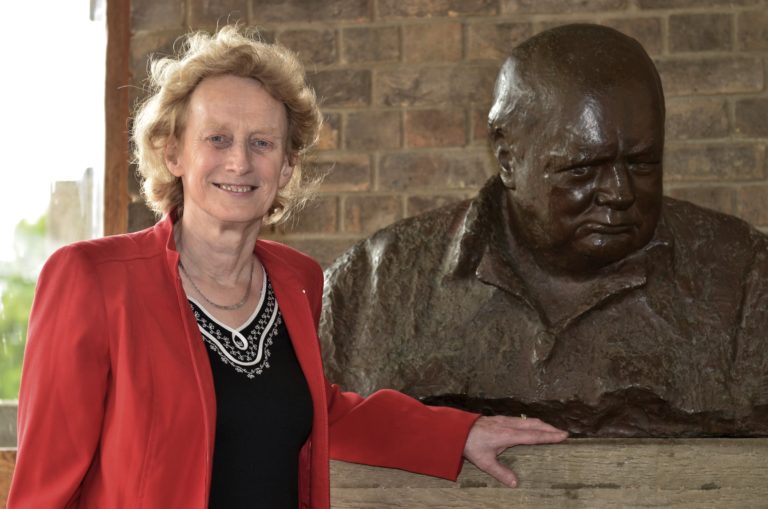
Athene Donald is a professor of soft matter and biological physics at the Cavendish Laboratory, University of Cambridge.

What did you train in? What are you working on now?

I was educated in Cambridge in the so-called Natural Sciences Tripos, ultimately specialising in Theoretical Physics. That meant a broad course in the first year – physics, chemistry, materials science and maths – that narrowed down by the third year. I could easily have studied some biology in the first year, but as I had been so put off it at school by the fact it seemed to consist simply of memorising facts, it never crossed my mind to do so. So my formal biology education simply consists of two years at school, not even an O Level.

Although I specialised in Theoretical Physics I soon realised I did not want to spend my life only doing theory and went on to do an experimental PhD (‘Electron Microscopy of Grain Boundary Embrittled Systems’). Although electron microscopy – as well as other microscopies – has formed the core of my research, I have switched the kinds of materials I look at considerably during my career. After a first post-doc continuing on metals I switched to polymers and, over time, moved to biopolymers (first polysaccharides and much later proteins) and ultimately cellular biophysics.

How do you introduce yourself (e.g. I am a physicist/biologist/…) ?

A physicist working at the interface with biology. For my postdoctoral years, however, I was working, not in a physics department but in materials science and, in the USA for four years, that was within the Engineering Faculty.

What motivated you to move away from active research?

It was not a conscious decision! Back in the 1990s I was invited to serve on one of the very first government-organised so-called Foresight panels, looking at the future of the Food and Drink industry (at that time my biopolymer research largely related to food rather than biology per se). The broad range of people on that committee, and how they came together, fascinated me and I realised committee work was actually rather interesting. Over time I served on many different sorts of committees, internally within the university, with research councils and more and I found it taking up increasing amounts of time but also, on the whole, rewarding.

What really pushed my research over the edge was in 2010 when I took on two roles (neither to do with interdisciplinarity!): I became the University’s first Gender Equality Champion, which gave me the opportunity to work with the senior management to try to implement real policy changes and interventions to level the playing field for all across the university; and I became chair of the Royal Society’s Education Committee, dealing with 5-19 education at the time that Michael Gove as Secretary of State was introducing enormous changes to the curriculum. Neither role had any formal associated time commitment, but  they inevitably grew to fill (and more) the time available.  Both rewarding, both taught me a lot about different issues and ways of interacting with people from very different backgrounds. I continued in both those roles until 2014 when I became Master of Churchill College.

What did you find most difficult when you first had contact with other disciplines?

As I indicated, I had essentially no formal biology training and the world of genetics – and the language – had anyhow changed radically since my education. So the initial problem I faced was in understanding the language. When I was first involved in a collaboration with a plant scientist in the area of starch I suspect we both spent about a year just understanding what the other was saying and what our disciplines could and could not offer each other. To my mind, what is absolutely crucial in this formative stage, is finding the other person congenial enough you want to spend the time working together through this potential barrier.

And what did you find most helpful to familiarize yourself with new concepts and jargon?

Time! There is no short cut to getting to grips with a subject unfamiliar to you. I think it is also important to realise that working at the interface with another discipline does not mean you need to know everything about the other discipline. Recognizing what you absolutely do need to know but also there is plenty that, at least at that point, is not necessary so you can home in on the essentials, is crucial. Otherwise it can just seem an insurmountable problem. Of course over time what is vital to know may expand, but by that point it may seem less formidable a challenge. I think having someone you feel comfortable asking naïve questions of is also important; this comes back to having a good relationship with your collaborators. If you don’t feel relaxed about asking something basic the collaboration is probably not going to flourish. Of course sometimes collaborations will be with multiple individuals, possibly multiple disciplines, and then the tactics may need some modification.

Tell us about your experience the first time you went to a conference outside the field you trained in.

A general sense of confusion is what I remember most clearly. The diagrams – of protein structures – seemed mysterious as their presentation was so different from how a physicist would have approached the problem – and that left me with a profound sense of being out of my depth. If the basics seem incomprehensible it is hard to extract much useful information, however willing one may be. Coming into a new field also means that you probably don’t know anyone else in the room and that sense of isolation can be quite intimidating. Once you have some results (even if only a poster) it provides an entrée, so that other people will come up and introduce themselves. But that first step into the unknown can be daunting.

What would be your advice to a PI leading an interdisciplinary group?

Remember everyone comes with different experiences, skills and jargon. Somehow your job is to keep that constantly in mind like an orchestra conductor, to make sure people respect each other’s skills and make the best use of these they can. It is important not to let someone who is an expert in one area make another student whose skills sit elsewhere feel stupid or group dynamics can go sadly awry.

Is there any anecdote you would like to share?

Moving away from the heart of a discipline can make colleagues very uncomfortable. Working with starch, not the typical sort of material a physicist in the 1990s would have thought ‘respectable’, meant I came in for a lot of flak from my seniors. Being told ‘things have come to a sad pass when people at the Cavendish study starch’ by one of these was depressing. Added to this is the fact that, as a woman, people’s biases probably gave them a lower opinion of me anyhow at the time. Hence I was accused at a conference of doing ‘just domestic science’ – and that after I’d given an invited paper. It was sometimes hard to feel positive in an atmosphere like that. Again, having people around you who you trust and can rely on is vital to provide the balance to any such hostile colleagues.

Interactions: Bart Hoogenboom

Bart Hoogenboom is a professor of biophysics at University College London.

What did you train in? What are you working on now?

My undergraduate degree was in physics, I did a final-year research project on the electronic properties of buckyballs (C60), and a PhD project on high-Tc superconductors, that is, all solid-state physics. During my PhD, I learnt how to build and use scanning tunnelling microscopes, which came handy when as a postdoc, I developed atomic force microscopy methods to image solid–liquid interfaces at atomic/molecular resolution. At present, my lab still makes extensive use of atomic force microscopy, complemented by other methods, largely to study — often by real-time, nanoscale visualisation — how biological molecules interact with each other and self-organize to collectively carry out tasks that are important for health and disease. Examples of such tasks are the repair of DNA damage (important in various cancer therapies, for instance), the perforation of cellular membranes (such as in bacterial attack and immune defence) and the regulation of transport into and out of the cell nucleus (exploited by viruses and in gene therapies, for example).

How do you introduce yourself (e.g. I am a physicist/biologist/…) ? 

By my training and way of thinking, I am very much a physicist. That said, I try to do interesting science, and in doing so am not too concerned about the question whether that science happens to be more physical or biological.

What motivated you to change your field of research?

For my PhD, I was working on intellectually challenging questions regarding local electronic excitations in superconductors, which was great fun. However, to keep me motivated and interested on the longer term, I felt that I would benefit from broadening my research horizons and learning about other fields of science. Biology has the advantage of such broadness, with a nigh-infinite collection of questions and problems and ample scope for physicists to make meaningful contributions.

What did you find most difficult when you first had contact with other disciplines? 

I find biologists on average more conservative than physicists. In my experience, physicists tend to be more open to new concepts and methods, even if their immediate use or validity in a practical context is unclear. By contrast, most biologists know that many concepts may apply in nature and many methods may a priori be helpful; however, the hard work is often not in defining a new concept or new method, but in determining which ones (out of many) are useful for the particular biological problem that they are working on.

And what did you find most helpful to familiarize yourself with new concepts and jargon?

To start with, I worked my way through a cell biology textbook. That took quite some patience, but in the end I could read relevant scientific literature and talk to biologists without feeling excessively ignorant. Next, in such discussions across disciplinary boundaries, it helps to be honest about gaps in one’s knowledge. I must have asked many, many naïve questions (and still do), and I count myself fortunate with many fantastic collaborators willing to answer such questions and even do research projects with me.

Tell us about your experience the first time you went to a conference outside the field you trained in.

I felt rather lost and was wondering what on earth I was doing there.

What would be your advice to a PI leading an interdisciplinary group?

A good interdisciplinary research team is a treasure chest that contains much more knowledge and skills than a PI can have on his/her own, and this can be further enhanced by collaborations with labs that have complementary expertise. For a PI leading such a group, my main advice is to appreciate and make best use of such knowledge and skills, encouraging the team to help each other and show a similar open, communicative and collaborative approach when interacting with other labs.

Is there any anecdote you would like to share?

Interdisciplinary communication can sometimes get a bit lost by lack of proper translation. Some years ago, I had done preliminary experiments to visualise the assembly of immune proteins that punch holes in target cell membranes. My postdoc at that time struggled to replicate my results in a room where the heating – not for the first time on our building – was failing. When he next reported to our biological collaborators how he had solved the problem, ‘I put the sample on a hot-plate’, our collaborators went through the roof. To alleviate their major concerns over what we had done to the delicate proteins, it sufficed to give them the appropriate biological translation of my postdoc’s remark, ‘He incubated the sample at 37oC.’

Interactions: Georgia Francis

Georgia Francis is a Senior Editorial Assistant for the Nature Reviews journals, who works hard to keep Nature Reviews Physics running smoothly.

What is your role? What do you do?

I’m a Senior Editorial Assistant — I act as a first port of call for authors and editors for the online submission system we use to handle all drafts of manuscripts. I am responsible for ad hoc duties, questions and queries, as well as managing  and tracking author and referees via the online database system. I am also responsible for checking and obtaining legal documentation, and ensuring that the flow of manuscripts is timely in relation to peer-review through to acceptance.

What do you enjoy about working on Nature Reviews Physics?

I thoroughly enjoy working with the authors and the editors of Nature Reviews Physics;  they make my job rewarding and fun!

What do you find challenging in interacting with physicists (authors, reviewers, editors)?

Part of my role is to ensure that manuscripts are on track for peer-review. Quite often the reviewers require extra time to complete their duties because they’re exceptionally busy! They’re always very polite in response to my emails however which makes the job a little easier.

Which historical figure would you most like to have dinner with — and why?

The historical figure I would most like to have dinner with is definitely Charles Darwin – I’d just be eager to see what he was like in person and express amazement at his influential work on evolution and humanity in general!