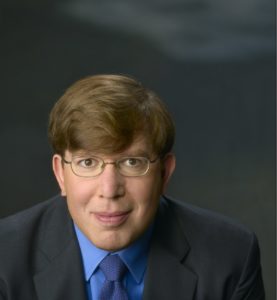
Guest post by Andrea Richaud, recipient of the Communications Physics 2020 Early Career Researcher grant which enabled him to attend a conference or scientific school of his choice.
In December 2020, I had the pleasure to receive the 2020 Training Grant for Early Career Researchers from the journal Communications Physics. After defending my doctoral thesis in February 2020, I joined SISSA (International School for Advanced Studies, Trieste, Italy), where I am now post-doctoral researcher in the Condensed Matter section. The focus of my research is on SU(N) fermionic systems, their possible topological phases, and their possible use as quantum simulators of multiband solid-state models. This is an active research field, as ultracold-atom-based platforms illuminate the intimate physics of strongly-correlated systems, by getting rid of a number of spurious effects (like crystal defects) which are inevitably present in standard solid-state systems.
As an awardee of the ECR training grant, I decided to attend the APS March Meeting 2021, a very important conference which involved more than 11,000 different researchers from all over the world. Despite its virtual form (due to the persistent pandemic situation), attending this conference was a very positive and stimulating experience, as I had the possibility to watch tens of very interesting seminars encompassing several aspects of my current research activity. In particular, I found it useful to attend seminars focusing on experimental aspects of the topics which I investigate at the theoretical level. Even as a theoretician, I think that being up to date with experimental advances is really crucial, as one can get valuable ideas and correctly interpret the open problems.
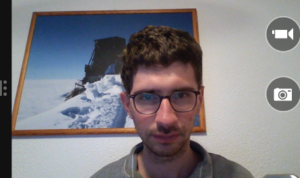
{credit}Andrea attending the conference{/credit}
In spite of the virtual form of the conference, I managed to have a good interaction with many speakers, asking them questions and sharing ideas about common research topics. This was possible thanks to the presence of “Zoom networking rooms”, which were made available at the end of each session. Of course, they could not fully replace a good traditional coffee break, but l think that they worked well enough for this pandemic situation. Among the advantages of attending such a large meeting virtually, the online platform made switching between rooms pretty easy (compared to running down corridors in a conference centre) and every seminar was recorded and made available to the attendees to re-watch. I am very grateful to the journal Nature Communications Physics for awarding me the prize which allowed me to take part to the APS March Meeting 2021. I definitely think that this experience has been very beneficial for my career as a young researcher.
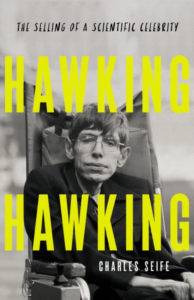 The British cosmologist Stephen Hawking (1942–2018) was probably the most recognizable scientist of the last 50 years. Many of his greatest contributions were in the study of black holes. In particular, he discovered in 1974 that black holes emit what came to be known as Hawking radiation — which shows that black holes are not truly black and appears to contradict quantum mechanics.