Diversity leads to impact: what we learned from running an inclusive and accessible physics webinar series

Contributed by the following authors (in alphabetical order): Dr Claudia Antolini, Dr Clara Barker, Dr Kathryn Boast, Dr Izzy Jayasinghe, Dr Caroline Müllenbroich, Dr Clara Nellist

Why we launched a webinar series

2020 has seen an explosion of physics webinars. Many of these came about out of necessity to adapt established seminar series and conferences to suit the restrictions around the COVID-19 pandemic. Others were the realisation of an opportunity to bring together researchers and audiences that would typically be restricted by geographic separation or time commitments.

In this time, it soon became apparent to a number of us in the advocacy group TIGER in STEMM that women, people of colour, people who are LGBTQ+ and people who have disabilities were under-represented in online physics panels and webinars, and that speakers from marginalized demographics and identities were not always afforded the visibility and courtesy that is usually expected in the field. Moreover, considerations for adequate accessibility to the broadcast were often overlooked.
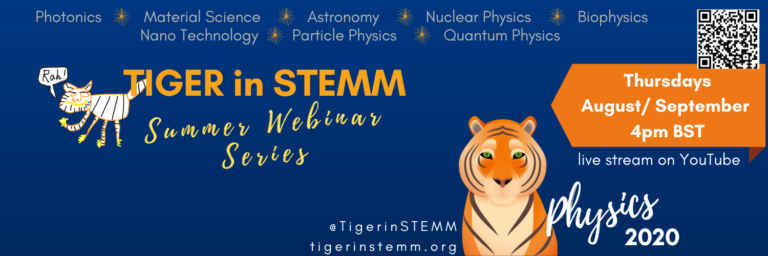
Banner for the TIGER in STEMM 2020 summer webinar series

Banner for the TIGER in STEMM 2020 summer webinar series

The six of us, women with a connection to the UK physics landscape from different areas of physics, diverse backgrounds, and identities, were determined to successfully demonstrate a different approach to online physics webinars. Recognising the need to place the same importance on diversity, inclusion and accessibility as on the physics that would be showcased, we set out to create a series of talks that break the mould and establish a precedent of providing an equitable platform for communicating science to academic peers and the general public alike. Within four weeks of initially coming together, we launched the inaugural TIGER in STEMM summer webinar series in physics on the 6th of August 2020. We wanted to celebrate intersectional and marginalised physicists (see Figure 1) and offer them centre stage to talk about their research. Our vision was to demonstrate that incorporating diversity, inclusion and accessibility compromised neither the impact nor the quality of the scientific discussion. More than that, we strived to prove that by placing these values and principles at the core of our enterprise, scientific discussion and dissemination would be enhanced and the impact of this style of communicating science would be amplified.

What we (and you) can learn

Diversity leads to impact. From an event which ran as a brief and self-contained series of webinars, the learnings were rich. With a total audience nearing 1000 people over the duration of the 5 event series, it was clear that prioritising diversity on an equal footing as achievements of the speakers enhanced the engagement with the event. There were no compromises made on the depth of the science presented on this platform, which is evidenced by the recordings of the lectures which are still publicly available for viewing.

A support network is key. A series such as this was only possible with the unwavering support of TIGER in STEMM, particularly through endorsement of the conviction that diversity can only enrich science, technology, engineering, mathematics, and medicine (STEMM) fields. At a time when online physics conferences and workshops heavily feature speaker line-ups and panels dominated by white men, stepping up to demonstrate impact through a contrasting set of objectives required strength and every bit of support that the six of us could get. Also, the practical support of the group, for example taking advantage of the substantial follower count of the TIGER’s Twitter account and amplification of that advertisement by group members, was fundamental to the success of the physics webinar series.

Accessibility is more difficult but not impossible without a budget.The plan to organise a webinar series came together over a noticeably short period of time and we had no budget. This came with its own set of limitations. TIGER in STEMM do not hold funds so we had to rely on freely available resources. Firstly, we struggled to find free software support for captioning the presentations and Q&A sessions during the webinars. We found that the live subtitles of Microsoft PowerPoint worked best during the live broadcast, however this was subject to the version of software each presenter was using. Irregular captioning was in fact the single most frequent criticism that we received on our approach. Incorporating either live captioning via a scientific captioning service or sign language interpretation would have added a considerable amount of value and accessibility.

Timing and frequency require careful consideration. The decision to schedule the series for consecutive weeks in August and early September when most university academics, school teachers and students are on vacation may have amplified the webinar fatigue among our audience. While it could be due to the unique amount of stress that 2020 has generated, we acknowledge that this was particularly evident from the limited survey feedback that we received after the conclusion of the series. So, timing should be considered as a factor for accessibility and engagement.

Diversity attracts diversity. Webinars and platforms that promote and safeguard diversity and equity are a powerful medium to attract a diverse audience. As clearly shown from our feedback survey, this positive feedback effect yielded an even greater representation of minoritised people in our audience than is seen in the general UK population.
Continue reading

Strike4BlackLives

Post compiled by Ankita Anirban.

10 June 2020 is #Strike4BlackLives and we urge you to participate in this strike. Organised by a group of physicists, led by Brian Nord and Chanda Prescod-Weinstein, this is a day to #ShutDownAcademia and #ShutDownSTEM in solidarity with Black colleagues, Black students and Black people who are excluded from academia. Learn more about the strike here.

“As researchers, teachers, students, and staff we devote an immense amount of our time and mental energy to learning more about the world and ourselves within the framework of our own discipline. The strike day gives us the space and time to center Black lives, show solidarity with academics with marginalized ascribed identities, to educate ourselves about the ways in which we and our institutions are complicit in anti-Black racism, and to take concrete action for change.” –  Particles for Justice call to action.

Thousands have pledged to join the strike, including the arXiv and the American Physical Society. Today, take time to pause your academic work and reflect on your role within the academic institution. Talk to your colleagues, organise within your department and work to become anti-racist.

In the UK, just 1.7% of first year physics undergraduates in 2016 were Black and an IOP report from 2012 shows that for PhD- holding researchers, the number is even lower at 0.1%. If you are not Black, take a moment to count how many Black physicists you have come across in your academic career.

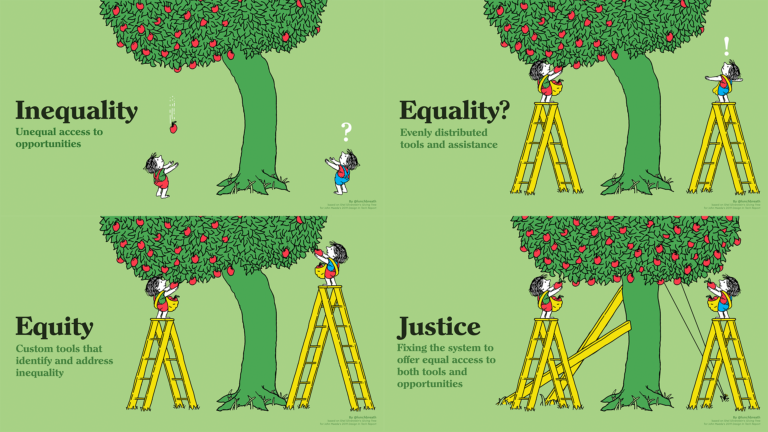
Source: https://cx.report/2020/06/02/equity/

It is clear that academic institutions are in need of radical structural change. Yet with so few Black voices within the system, there is an urgent need for non-Black allies to take an active role in campaigning for change.

Here we provide some starting points we have found useful for learning more about racism in academia, how racism and science are inextricably linked and the case for a more inclusive and pluralist science.

Being Black in physics

For non-Black academics, the first step to understanding the extent to which racism pervades academic life is to hear the stories of Black academics. One place to start is the  #BlackintheIvory hashtag on Twitter which has been used to share experiences of Black academics.

Op-ed: The ‘Benefits’ of Black physics students by Jedidah Isler, New York Times, 2015

News: Why are there so few Black physicists? by Ryan Mandelbaum, Gizmodo, 2020 

Perspective: Curiosity and the end of discimination by Chanda Prescod-Weinstein, Nature Astronomy, 2017

Blog: Ain’t I a woman? At the intersection of gender, race and sexuality by Chanda Prescod-Weinstein, Women in Astronomy blog, 2014

Addressing the inequalities and discrimination within academia requires structural change. As an individual, you can campaign within your department to recognise the need for this change and enact it in policies regarding hiring, mentoring and support for Black students. When organising a conference or a new collaboration, reflect on your choice of participants and strive to include more Black voices in the conversation.

500 Women Scientists – Black History Month

Fellows of the National Society of Black Physicists

Who are the Black Physicists? A historical list

Science and colonialism

Modern science as we practise it today has inextricable links to empire, colonialism and the slave trade. Here are some accessible resources which introduce how colonialism has shaped science:

Podcast: BBC Radio 4 In Our Time – on astronomy and the British empire

Blog: Black Women Physicists In the Wake by Chanda Prescod-Weinstein, 2017

Reading list: Decolonising science reading list compiled by Chanda Prescod-Weinstein

Building a more inclusive science

In addition to recognising the historical impact of colonialism on science, it is also important to acknowledge the influence it continues to wield within scientific practice today.  Here are some resources that re-centre Indigenous science:

Australian Indigenous Astronomy 

Blog: The fight for Mauna Kea and the future of science by Sara Segura Kahanamoku, Massive Science, 2019

Comment: Towards inclusive practices with indigenous knowledge by Aparna Venkatesan et al., Nature Astronomy, 2019

Article: Challenging epistemologies: Exploring knowledge practices in Palikur astronomy by Lesley Green, Futures, 2009

Article: ‘Indigenous Knowledge’ and ‘Science’: Reframing the Debate on Knowledge Diversity by Lesley Green, Archaeologies, 2008

Long Reads:

Superior by Angela Saini.

Reaching for the Moon: The Autobiography of NASA Mathematician by Katherine Johnson

Hidden Figures by Margot Lee Shetterly

Beyond Banneker: Black Mathematicians and the Paths to Excellence by Erica N. Walker 

A different kind of dark energy: placing race and gender in physics, BSc thesis by Lauren Chambers, Department of African American Studies, Yale University

Behind the paper: CP violation in neutrino oscillations

In 1967, Andrei Sakharov proposed conditions required in the early universe for generating
matter and anti-matter at different rates, to explain the abundance of matter in our universe
today. Charge-Parity (CP) violating processes are essential under these conditions.
Measurements of the CP violation in quarks, first performed in 1964, are too small to explain
the difference, and finding other sources of CP violation is an ongoing quest in the physics
community. In April 2020, the T2K collaboration published a paper in Nature suggesting
large CP violation in the leptonic sector, namely in neutrino oscillations. Some of the
researchers involved in the project tell us their story.

A guest post by Ciro Riccio (Scientist, Stony Brook University), Patrick Dunne (Scientist,
Imperial College London), Pruthvi Mehta (Ph.D. student, University of Liverpool), Sam
Jenkins (Ph.D. student, University of Sheffield), Tomoyo Yoshida (Graduated Ph.D. student,
Tokyo Institute of Technology), Clarence Wret (Scientist, University of Rochester)

The oscillation analysis, whose results were recently published in Nature, is the last link in a
long chain of work. It amalgamates the effort of the entire collaboration, from those designing
and constructing the experiment 20 years ago, to the countless hours of detector operations
taken by people all over the world, to the development of the analyses.

The project
There are over 400 people working on T2K, in 12 countries, at 69 institutes. Many of us have
spent years building our bit of the experiment, from physical objects like detector or beamline
instrumentation, to abstract items like data analysis frameworks. Looking at the author list,
you’ll see that T2K consists of collaborators from all over the world. Our daily
communications happen online; in video meetings, emails, and chats. It’s sometimes a
challenge to find good time-slots for connecting people over 16 time zones, and it’s not
uncommon to sign-off from a meeting with a good-night, only to be met with a good-morning,
and vice versa.

Our international collaborators frequently fly to Japan to spend a week or two monitoring the
experiment in Tokai—on the east coast—where the neutrino beamline and Near Detectors
are, or Kamioka—just west of the Japanese alps—where the Far Detector is. In addition to
the flashing computer screens and sounding alarms, we get to witness a very different side
of Japan from the bright lights of Tokyo, from the beautiful mountains and rivers of rural
Japan, to the delicious local specialities. Avoiding the risk of data loss often occurs at the
cost of sleep for the operations experts (as the contributors to this blog post can attest)—but
all is forgotten after a morning visit to the local onsen (hot-spring).

It’s impossible to overemphasise the fantastic experience of Japanese culture as an added
bonus of partaking in T2K. Many of the restaurants in the Tokai and Kamioka areas are
familiar with members of the collaboration, and are very accommodating to international
collaborators. The owner of one particular restaurant in Tokai often recognises Sam and
remembers that he can speak a small amount of the language (chotto), and indulges him to
order in broken Japanese (we like to think it’s good for practice, and not solely their
entertainment). A favourite annual event is the sweet potato festival (imo matsuri), a
community event in Tokai held in November to celebrate the root vegetable that the Ibaraki
prefecture is renowned for.

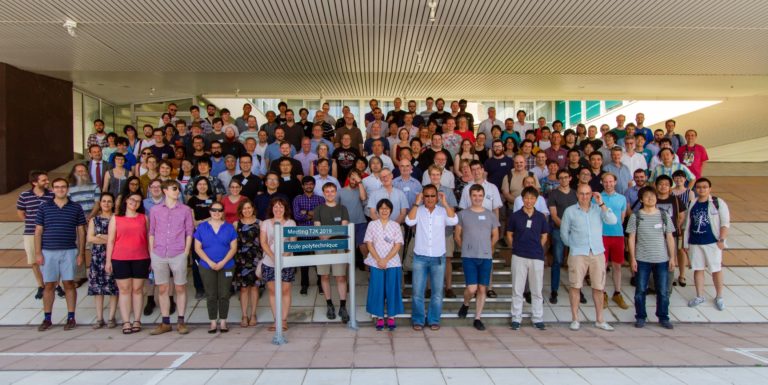
T2K collaboration meeting, Paris 2019, Credit: Pieyre Sylvaineat

The measurement
The Super-Kamiokande Far Detector started construction in 1991 in Kamioka, and operates
24 hours a day, 365 days a year, so as not to miss rare astrophysical events, such as
supernova bursts. The neutrino beam and the Near Detectors started construction 2001
(beam) and 2007 (Near Detectors) in Tokai, and are continuously operating when we have
pre-allocated beam time, sometimes up to seven months per year.
To make our measurement we not only need the neutrino beam and the detectors, but also a
computer-simulated model of the entire experiment, painstakingly quantifying how we think
each component behaves and how certain we are of that description. This includes
everything from the neutrino beam (and the proton beam collisions that creates it), to the
neutrino interactions in our detectors, to the density of the Earth between Tokai and
Kamioka, to how good our detectors are at measuring the neutrinos.

To characterise the neutrino beam, we have two detectors (“ND280” and “INGRID”) 280m
from the neutrino source, which have a staggering amount of neutrinos passing through
them. Occasionally these neutrinos interact at the Near Detectors, occasionally they interact
300km later in Super-Kamiokande, but most of the time they continue out through Earth’s
atmosphere, propagating deep into space. To put things into perspective, this analysis used
about 3×10²¹ (3,000,000,000,000,000,000,000) proton interactions to create the neutrino
beam. Roughly one neutrino is created per proton interaction, but due to their rare interaction rate with matter, we observe a mere 120,000 neutrino events at ND280 (60,000
of which were used in our analysis) and about 500 at Super-Kamiokande over the course of
nine years. In the early neutrino beam experiments of the 1970s, the data are often on less
than 500 neutrino events, with the experiments sitting right next to the neutrino source for
tens of years. Today we have about the same number of neutrino events in a similar amount
of time, but sitting 300km away from the source at Super-Kamiokande. It’s only recently that
we have the technology, international funding support from governments, and scientific
community in place to produce such powerful neutrino beams, which are the backbone of
these precise measurements.

Presentation of final results of the oscillation analysis. Credit: Pieyre Sylvaineat

Once the neutrinos are characterised at the Near Detector, the oscillation analysis takes all
the models of the neutrino beam, the detectors, the neutrino interaction, and neutrino
oscillations, combines them with their constraints, and blends them together to describe our
observations. The analysis and all of its inputs turns PhD students’, scientists’ and
professors’ daily work into many cycles of communication-implementation-validation, over
the course of more than a year. When validations and tests are satisfied, we finally get to
look at the data and make our measurement of the neutrinos’ oscillations. That last link in
the long chain has the privilege to see the final result first in the collaboration. The moment
when the plot pops onto your screen and you’re the only person who knows what it shows is
pretty special. For this result, published in April 2020, we first saw the results internally in
Autumn 2018, and spent the time between then and now extensively validating and testing
alternate explanations.

Looking ahead
T2K is currently in the process of updating the analysis using more data taken during
2019/2020, and using better models of the experiment, all thanks to the continuing dedicated
work of all our collaborators. Many of us are also working on upgrades of the neutrino
beamline, the Near Detectors and the Far Detector, to squeeze out more science from the
neutrino beam. Our results published in Nature are the strongest constraint on the CP
violating phase in neutrinos to date, but we have only taken about half of our allocated data.
There is much more to come and the prospects are truly exciting for all of us. As we
continue, we’re including the work of even more people than the analyses that came before;
new students, scientists and professors. We hope they, like us, get their share of the
pleasant, stressful, lovely, frustrating, and ultimately rewarding experience of being on an
international science collaboration such as ours.

Party at Abbaye des Vaux de Cernay. Credit: Pieyre Sylvaineat

What’s the difference between a supernova and a fork?

Francesca Chadha-Day is a Junior Research Fellow at the University of Cambridge, studying particle astrophysics and axion phenomenology. She is also a comedian. Here, Fran writes for us about her experience of stand-up comedy. 

My first stand-up comedy performance was an unfortunate side effect of a promise I made to myself. I used to be an atrocious public speaker and, at the start of my PhD, vowed to do something about it. I promised myself I would say yes to every public speaking opportunity that came my way for the next few months. I deeply regretted this promise when I opened an e-mail from Bright Club – a comedy night where academics do stand-up about their research. According to my self-imposed rules, I had to do it.

{credit}Steve Cross{/credit}

For the next month, most of my free time was devoted to writing and meticulously memorising my set. I was terrified. When my time on stage finally arrived, it was 20 seconds of blinding fear, followed by eight minutes of pure joy (and relief). Making a room full of people laugh is absolutely brilliant.

My first set asked and answered the question “what do theoretical particle physicists do all day?” My answer is that we spend our time figuring out what the universe would look like if the laws of physics were just a little bit different than what we currently think. For example, what if there were new particles, new interactions between particles, or even new dimensions? Comparing these calculations to data helps us discover what the laws of physics really are. In other words, we write fan fiction for the universe. This first short set formed the basis of my first solo show, Physics Fan Fiction, which I took to the Edinburgh Fringe in 2016.

I believe that science comedy is a great addition to the landscape of public engagement with science. It appeals to people who might not want to come to a more traditional science talk, and it’s a perfect medium for communicating how science works. Rather than focusing only on the facts and figures of physics, my comedy explores the scientific method, the challenges of making progress in particle physics, and day to day life as a theoretical physicist. I even have a set on quantum field theory.

This kind of science communication really appeals to me because I have never been that excited by how large space is, or how fast the protons can go at the Large Hadron Collider. I am excited by the fact that the laws of physics which make a star explode into a supernova are the same laws of physics that make celery. The immense variety of phenomena that arise from the interactions of 18 or so fundamental particles is what physics is all about. This is the subject of my recent show “10 key differences between a supernova explosion and a fork”.

Writing a stand-up comedy show is a highly creative endeavour – and theoretical physics is just as creative. My creative process is more or less the same, whether I am writing a set, thinking up a new method to discover dark matter, or even debugging some code. For me, it’s all about asking stupid questions, and then doing my best to answer them. “What are the main differences between a supernova and a fork?” is a pretty stupid question. Einstein’s question, “how come the speed of light is a constant in Maxwell’s equations” might well have seemed stupid initially, but it led to one of the most beautiful and revolutionary theories in physics.

So, what are the key differences between a supernova and a fork? The first difference is that a supernova lasts for a few weeks, whereas forks are stable more or less indefinitely. The last is that no-one knows what happens if you put a supernova in a microwave.


Interactions: Nell Freudenberger

Ankita Anirban interviews Nell Freudenberger about her book `Lost and Wanted’ whose protagonist is a theoretical physicist.

`Lost and Wanted’ is a novel about friendship, grief and parenthood. Helen, the protagonist, is coming to terms with the death of her best friend, Charlie, when she begins to receive mysterious texts from her friend’s phone. Her son later claims to have seen Charlie in their house. The story unfolds as Helen tries to explain these seemingly `supernatural’ phenomena, while reflecting on her friendship with Charlie and continuing her academic work.

What is perhaps unusual about this plot is that Helen is a theoretical physicist. Explanations of physics concepts are threaded throughout the narrative, but the execution is not heavy-handed. Rather, physics is a focus of the book only as it is central to Helen’s life and worldview. I found Helen compelling and convincing and it was refreshing to be able to relate to a character, not necessarily in terms of feelings, but simply in her daily routines and concerns as a researcher.

When I finished the book, I wanted to learn about the author and was surprised to find that she did not have a physics background and her previous work was not about science at all. Curious to find out more about her motivation to write this novel and how she found the process, I reached out to her.

What inspired you to write a novel about a physicist?

I wanted to write a book about women and work; about the commitment of a woman to a career that demanded sacrifices of her.  In my first draft (which I threw away completely) the narrator was a writer.  The problem was that I got bored thinking about something I knew so well, and the writing reflected that.  I have a friend from college who is an astrophysicist, and I wrote to him to ask whether he could recommend an introductory undergraduate cosmology textbook.  He did, and reading it made me wonder if my female narrator could be a physicist.  That idea was terrifying at first because I don’t have a background in science.  Usually though, the idea that scares you is the one that’s worth pursuing.  I wonder if that’s true in science as well.

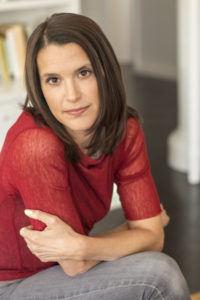
Image of author

Credit: Elena Seibert

The physics metaphors are `entangled’ with the plot and structure of the book. Which came to you first, the metaphors or the plot?

Characters always come first, followed by plot.  I resisted using the science in the book metaphorically at all, at least at first.  I really wanted readers to see Helen doing science `onstage’ in the novel, rather than simply throwing in technical jargon to make the reader believe she was a scientist.  I thought Helen would be very impatient with scientific metaphors like gravity used to describe romantic attraction, or entanglement for friendship.  In talking to physicists though, I started to change my mind.  One LIGO experimental physicist told me that our 3D brains have a lot of trouble understanding certain phenomena without leaning on analogies (he was talking about describing black holes quantum mechanically as opposed to classically at the time) and that he wasn’t opposed to them.  He said that the trick was to make those metaphors as accurate as possible.  I thought that by really trying to understand the work that Helen was doing myself, I might be able to make the scientific concepts in the book more complex and evocative than they normally are in casual conversation.

How did you go about doing your research – both on the technical aspects of the science and also about the daily rhythms of life as a physicist?

To begin with, I read a lot.  I’m lucky that many physicists consider it worth their time to write for a general audience.  Books by David Kaiser, Lisa Randall, Kip Thorne, Janna Levin, Steven Weinberg, and Louisa Gilder, as well as a sociology of LIGO by Harry Collins and Walter Isaacson’s biography of Einstein, were especially helpful.  My reading gave me the confidence to approach some physicists myself and I was fortunate that they were all so generous with their time.  I was struck by how passionate these physicists were about their work, and how willing they were to put it in simple terms for a novice.  I once had an amusing conference call with two LIGO physicists from the interferometer at Livingston, where they helped me brainstorm violent disasters that might occur in a LIGO lab.  (For the record, their ideas were bloodier than mine.)  I also visited labs at Columbia and MIT to see some of the equipment that appears in the novel, as well as small details like the objects that might sit on a physicist’s desk, for example, a cosmic microwave background stuffed toy.  You can’t make this stuff up …

Did you have any preconceived notions about the life of a physicist which you reconsidered after your research?

I kept trying to find some dramatic way in which physicists saw the world differently.  I was thinking about that especially in terms of grief because Charlie’s death is the center of the book.  I asked every scientist I spoke to, “Is there something that makes you different from other people because you’re a physicist?”  Their answers were very boring; one physicist told me that he’s not afraid of flying, because he understands the way the plane operates.  I came to the conclusion that physicists are more like the rest of us than we think, and that Helen should react to loss the same way anyone else would, with some magical thinking—what the literary critic Stephen Greenblatt calls “irrational expectations of recovery.”

As far as preconceived notions go, I’m embarrassed to admit that I didn’t know sexual harassment was as prevalent in the science departments of universities as it is in the humanities.  I think I got that wrong because most of my friends in college were liberal arts majors, and because female students in STEM are so underrepresented in popular culture.

How much do you relate to the way Helen sees the world? Does she have a life you think you would enjoy?

I loved learning about Helen’s work.  I don’t like the idea that science and the humanities require different types of brains, and the wonderful physicist-writers I read while researching the novel disprove that theory anyway.  That said, it seems unlikely that I would’ve made it as a physicist.  But if you could build me a theoretical model in which I could have done physics at Helen’s level (or even a less elevated one) I think I would have loved her life.  Some readers have said that Helen is cold, or that she sees the world in a strange way; if that’s true, those are qualities I share.  I do often feel sort of removed from other people, more of an observer than a participant.  I won’t speak for scientists, but I think this is probably true of most writers.

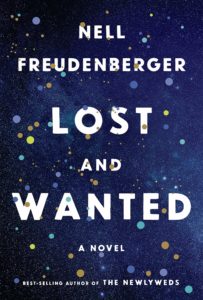
Book cover of Lost and Wanter

Courtesy of Knopf

What’s in our browser tabs? October 2019

As editors of physics journals, we love reading the latest research papers, but we also love a bit of lunch-break science-related browsing. Here are some pieces that caught our eyes in October:

Nature and physics. In Physics Today, Melinda Baldwin recounts the highs and lows of physics research published in Nature over the past 150 years.


At APS News, Preprints make inroads outside of physics. “Recently, however, the tide has begun to shift. Since 2013, dozens of preprint servers in fields such as biology, chemistry, and sociology have popped up and garnered tens of thousands of submissions.”


Football’s concussion crisis is awash with pseduoscience, reports Christie Aschwanden in Wired. “Products that offer a “seatbelt” or “bubble wrap” for the brain claim to reduce head trauma. If only the laws of physics worked that way.”


Check out the APS Division of Fluid Dynamics 36th annual Gallery of Fluid Motion and an accompanying editorial explaining how winners were picked and giving some stats on which fluid dynamics phenomena get awarded the most.


Review with care. Writing in Science, Adriana L. Romero-Olivares gives good advice for when, and how, to comment as a referee on the level of written English of a scientific paper.


Athene Donald asks, What do we know about the research ecosystem? “There is a need for more understanding of the decisions that are taken where and by whom in the research ecosystem and what the implications of these decisions are as they ripple through higher education and far beyond. A new research institute – the Research on Research Institute, or RoRI for short – was launched this week at the Wellcome building (a key partner) in London , with a wealth of snappily short talks to illustrate the range of issues RoRI might elect to study.”

What’s in our browser tabs? September 2019

As editors of physics journals, we love reading the latest research papers, but we also love a bit of lunch-break science-related browsing. Here are some pieces that caught our eyes in September:

Emmy Noether is a new chapter in the graphic novel Women in Science from Cliò Agrapidis and Elena Mistrello, available in Italian, English and German. You can also read our guest post from Cliò about the previous chapter, on Maria Goeppert-Mayer.

Misconceptions in Astronomical History. Ben Orlin at Math with Bad Drawings illustrates some of his favourite moments in Marcia Bartusiak’s book Dispatches from Planet 3.

Novelist Cormac McCarthy’s tips on how to write a great science paper — Nature. Van Savage and Pamela Yeh share a condensed version of Cormac McCarthy’s writing tips for scientists.

The throw calculator on XKCD. How far could a squirrel throw a ping pong ball? How far could George Washington throw a wedding cake? How far could Thor, god of thunder, throw a car?

The throw calculator may well merit an Ig Nobel Prize, but the actual 2019 Ig Nobel Prizes were awarded this month — the Physics prize was awarded for a study of how wombats make cube-shaped poo. A report from the prize ceremony in Physics: Arts and Culture: Science as a Laughing Matter.

Check out the winning images in the Insight Investment Astronomy Photographer of the Year 2019 competition.

What’s in our browser tabs? August 2019

Welcome to our new monthly link round-up! As editors of physics journals, we love reading the latest research papers, but we also love a bit of lunch-break popular science reading. Here are some pieces that caught our eyes in August:

  • Ready, set, bake — Physics World. Rahul Mandal, 2018 Great British Bake Off winner — and metrologist  — writes about the science of baking. (PS: if you like cake, check out Rahul’s instagram)
  • Nathalie Walchover’s account in Quanta magazine of the latest developments in the Hubble constant saga. This summer the tension between different measurements of H0 got more dramatic with new papers coming out and a dedicated meeting at the Kavli Institute for Theoretical Physics.
  • There are some stunning images in the shortlist for the RPS 2019 science photographer of the year award.
  • How Ancillary Technology Shapes What We Do In Physics.Why is the definition of the second based on cesium atoms? Why do MRI scanners use such large magnets? Partly because of physics, but largely because of technology and history, as Chad Orzel explains.
  • We can’t believe we only just discovered this gem from 2017: Twelve LaTeX packages to get your paper accepted by Andreas Zeller. Examples include “The significance package.  Alters your experiment settings until results become statistically significant, repurposing LaTeX’s built-in formatting algorithm for advanced p-hacking.  Use as \usepackage[p=0.05]{significance}.” and “The award package.  Makes your paper win an award, as in \usepackage[bestpaper]{award}.”
  • The physics professor who says online extremists act like curdled milk. Over at The Guardian, Julia Carrie Wong talks to Neil Johnson about his work analyzing online extremism and hate in terms of gelation.

Interactions: Ed Simpson and the 3d nuclide chart

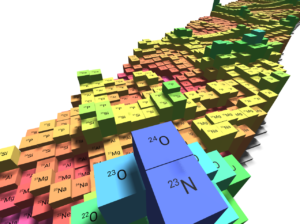
An example visualization from the 3D Nuclide Chart

The nuclide chart is a staple of nuclear physics, visualizing the properties of nuclides arranged by their number of protons and neutrons. The chart appears in text books, talk slides and Lego form (in the Binding Blocks science outreach programme). The 3D Nuclide Chart is a web app put together by Ed Simpson (@SuperSubatomic on Twitter) of the Australian National University. The app lets users plot the nuclear data of their choosing (taken from published data tables), play around with the 3D viewpoint (or work in 2D), set colour schemes and fonts, and then export the visualization as a png file or export the relevant data. The results are rather pretty, and the app is easy to use.

We asked Ed a few questions about the chart.

For our non-nuclear-physicist readers, what does the nuclide chart show?

The nuclide chart is like a nuclear physicists’ periodic table, and is a basic tool of the nuclear science community. Instead of visualising the elements, it plots the properties of nuclides. A nuclide is a specific type of nucleus, defined by its number of protons (Z) and neutrons (N). Plotting nuclides as a function of Z and N gives insights into basic nuclear properties such as radioactive decay and half-lives. It also allows us to spot patterns in nuclear structure, such as the “magic numbers” of protons and neutrons, which greatly add to the stability of nuclides.

Can you let us know a little about the history of nuclide charts?

The earliest nuclide charts date back to the mid 1930s. The evolution of the chart after that is somewhat hidden in the secrecy of the Manhattan Project, where much of the development took place. Declassified Los Alamos reports do tell us, however, that it had reached a recognisably modern form by 1945. The 2D visualisations of the nuclide chart have changed very little since then, though we’ve discovered many more nuclides: from 540 in 1946, to more than 3200 today!

What made you decide to make a new visualization tool for the nuclide chart?

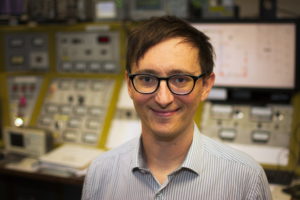
Ed Simpson in an accelerator control room

Nuclear physicists often use nuclide charts in publications, talks and outreach materials. The existing online tools were more focused on data than visualisation, and I developed the 3D Nuclide Chart with the primary aim of producing high quality images for reuse elsewhere. The chart has fine-grained control over the appearance – everything from the colour palette to fonts can be changed. Being 3D, it’s perfect for use in outreach and teaching, and being online, all that’s required is a recent web browser.

What are your plans for future developments of the visualization?

The main thing I’d like to add is loading of data from users (e.g., a set of calculations of nuclear masses). Plotting data as a function of time would also be really cool for visualising the abundances of nuclides during astrophysical events like the r-process, which is responsible for creating half the heavy elements we see around us today. I’m always open to suggestions, and many of the developments have come following feedback from users.


What it’s like to be a Reviews editor

Have you ever wondered what reviews editors do? Chasing authors to submit and making edits to the text of the reviews? That is just a small part of it.

In this editorial we outlined the story of a Review from commissioning to publication. As editors, we spend a lot of time searching for ideas for potential reviews. We travel to conferences and visit labs to find out what the community is interested in and whet types of reviews are missing. Then we work closely with authors to develop the idea of the review, and then polish the text before publication to make it accessible and self-contained so that physicists from other fields can follow, make use of — and enjoy — the article.

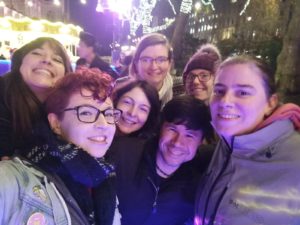
Some of the crew on an ice skating trip last winter

Being an editor is a busy and stimulating job. Producing monthly issues means regular deadlines and a lot of planning ahead. We coordinate and liaise with authors, referees, art and production editors to make sure that the content is published regularly as the readers expect. The job is also very sociable. We are part of the journal teams and the wider physical sciences reviews journal teams and even wider reviews team. We also interact a lot with our colleagues at Nature, Nature Communications and the Nature research journals. All editors have academic backgrounds and we all share the love of science and common experiences from our PhD and postdoc years.

Here are some comments from editors of Nature Reviews journals in the physical sciences:

Iulia Georgescu, Chief Editor of Nature Reviews Physics: I think the role of reviews editors is not well understood. We are not gate-keepers, but guides walking together with the authors all the way from idea to publication. We often think of manuscripts as ‘our babies’ because we are as invested as the authors who wrote them. It is a wonderful thing to see a Review evolve from a vague idea, to a well-structured outline and then a full manuscript. We feel great satisfaction when we see the reviews we worked on published and take pride when they are well-received by the community. I often think: look at my baby and how well it’s doing.

The editor’s natural habitat

Giulia Pacchioni, Senior Editor at Nature Reviews Materials: Being a Reviews editor is a lot of fun — I like keeping an eye on how ideas evolve from initial results presented at a conference to a flurry of publications as the topic becomes more established, and deciding when is the perfect moment to commission a Review. I am lucky to have the opportunity to travel to plenty of conferences and lab visits to keep in touch with the community, and to spend a lot of time reading and thinking about science.

Claire Ashworth, who works for our inter-journal team providing support to Nature Reviews Physics, Nature Reviews Materials and Nature Reviews Chemistry: I enjoy seeing an idea develop into a published Review and working with authors at each stage of the publication process to achieve this. I think that Reviews editors are quite unique in terms of the amount of time that we invest into each article and the extent to which we use both our scientific knowledge and editorial experience to help to ‘shape’ an article.

Stephen Davey, Chief Editor of Nature Reviews Chemistry: The Reviews editor role is rather different to that of a primary research journal editor – and not just because I spend my time chasing authors rather than being chased by them. I get to put a lot into every manuscript that I handle. And I do it all while travelling the world, meeting interesting people and slaking my thirst for knowledge.

Zoe Budrikis, Associate Editor at Nature Reviews Physics: Every day — every hour, sometimes! — in this job is different. I can go from looking for commissioning ideas in soft matter physics, to line-editing a review on the physics of climate modelling, to discussing with editors in other journals about what the latest trends in complexity research are.

Interactions: John Hammersley

After a PhD in theoretical physics (specifically, holography and the ADS/CFT correspondence), John left academia and later co-founded Overleaf in 2012. He has been developing Overleaf ever since to bring it to more and more users.

What did you train in? What are you doing now?

My background is in mathematics and physics; I completed an MPhys at Warwick in 2004, before heading up to Durham for my PhD, which I completed in 2008. I then moved out of academia into industry, working for Ultra PRT, the company behind the world’s first driverless taxi system. I joined the company as a research scientist, and my role later broadened out to be bid manager for the various projects the company was involved in.

How did Overleaf start?

When joining Ultra PRT, I was lucky enough to be mentored by Prof. Martin Lowson, a former rocket scientist and aeronautical engineer. He founded Ultra PRT out of Bristol University in the mid-nineties, and always maintained a strong link with academia, encouraging us to write up and share our research into large scale driverless taxi systems with the wider community. This involved collaborations both internally and with others at partner universities/organizations, and it was whilst collaborating on these research papers that we discovered Etherpad, a new browser-based collaboration tool. This made it easy for us to share and collaborate on notes, but because we typically use LaTeX for our papers, it wasn’t quite what we needed.

So one weekend, my co-founder Dr John Lees-Miller built the prototype for Overleaf (then called WriteLaTeX), which allowed us all to collaborate in the browser on LaTeX documents, and would generate a PDF output by compiling the LaTeX on a server. We also found that this greatly lowered the barriers to collaborating with others who were new to LaTeX, as there was nothing to install — all that’s needed is a web browser. Usage of the site continued to grow through word-of-mouth and being featured on sites such as HackerNews, and in late 2012 we decided to found our own company and work on Overleaf full time!

Who is using Overleaf today?

Today over four million people worldwide are using Overleaf! These range from students taking their first steps with LaTeX, through to large scale collaborations between hundreds of the world’s leading scientists. I’m always amazed at the wide range of uses people find for LaTeX and Overleaf. For example, one of the first projects on Overleaf that wasn’t one of our research papers was a set of wedding invitations!

We also see Overleaf helping to extend LaTeX out into fields where it’s less common, such as in the humanities and social sciences (for example, see this a short interview with Brian Lucey, Professor of Finance at Trinity College, Dublin, who started using LaTeX through Overleaf and is now part of our Advisor programme).

We’re also collaborating with partners in the publishing industry to try to help streamline the authoring, submission and publication workflows for journals and preprint servers, by providing updated templates and simple submission links. Overleaf is the natural place for authors and editors to be able to check that all the files for a submission are present, and that there are no compilation errors within a manuscript. Because of the built-in error reporting, and friendly interface, it also helps when there are any problems to resolve!

What I personally find most exciting is that Overleaf is helping students create and share their work in ways not easily possibly before. For example, the ‘Nano Ninjas’ — a group of 7th and 8th Graders in the US — used Overleaf to write up the engineering notebook from their school Robotics challenge! They won an award for their notebook, and have shared it in full on Overleaf as a template for future students to see and take inspiration from!

You can read more about the Nano Ninjas here, and some of their members also went on to form ‘The Three Musketeers’. It’s amazing to see, and hopefully provides an inspiration to future researchers and scientists everywhere 🙂

 What are the main challenges when starting a company? Do you have any advice to share?

There’s a lot I could talk about here! Although, I’m a bit reluctant to start by listing out challenges; you have to be somewhat naively optimistic to start a company, and focusing too much on any perceived challenges can be (wrongly) off-putting. So I’ll focus on advice instead.

If four points is too many, just read point four: don’t run out of money!

  1. Take everyone’s advice with a pinch of salt: we all give advice based on our own experiences, and in the early days it’s easy to get side-tracked by advice that’s well-meaning, but not relevant for you.
  2. Talk to people about your idea as early as you can, but don’t be put off if the first people you talk to seem a bit confused as to what you’re proposing. It’s natural, as you’re still developing the idea, and it’ll help highlight where you need to be able to explain your idea more clearly. Early on, you’ll need positive reaction for motivation, early adoption for validation, and any critical feedback for development. But remember to take any advice they give you with a pinch of salt 🙂
  3. Focus on solving the immediate problems that you need to get done to get yourself to the next stage (whether that’s finding a co-founder, building the MVP, or getting feedback from your first users), and don’t worry too much about things beyond that. At the start this is focusing one week or one month at a time, and certainly no more than six months ahead. If you focus too much on the long term, you’ll find it takes you too long to get the important stuff done now, and you’ll run out of time/money.
  4. Finally, and most importantly, it’s the CEO’s main job to make sure you don’t run out of money — whoever the CEO is in your founding team needs know how long you have with initial money you’ve saved/raised to get started, and needs to focus on getting the next funding secured before this runs out. If you run out of money, it doesn’t matter how close you are to solving any of the other problems; that’s usually game over.

I also wrote on a similar topic in a blog for ErrantScience, and in my Reddit AMA from a few years ago. If you’re interested in my longer thoughts on this, those are both good follow-on reads.

If you are starting a company, good luck, and feel free to reach out to me directly if you think I can help! If it’s in the #TechForGood space, I’d also recommend talking to the Bethnal Green Ventures team; they’re very friendly, and have a lot of experience helping start-ups develop in the very early stages. We were part of their summer cohort in 2013, and I still help out as a mentor and alumni!

Do you have a favourite Overleaf tip(s)?

If you’re at a university, check if your institution has a site license for Overleaf! You can see the list of institutions here, and if they do, you’ll be able to get a free upgrade to an Overleaf Professional account through that license!

My other top tip isn’t for Overleaf specifically, but can greatly help if you can’t remember the LaTeX command for a symbol — you can use detexify to find it! Simply draw the symbol, and it’ll give you the corresponding LaTeX command!

Finally, if you’re new to LaTeX itself, we’ve put together this short introduction which can be completed in about 30 minutes, to help you get started. Good luck, and if you do use Overleaf, we’d love to hear from you!


Interactions: Chen Fang and the Materiae database

Post by Anastasiia Novikova.

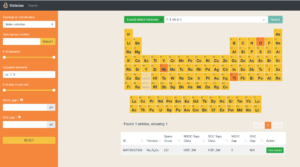
In theory, many ordinary materials can have exotic topological phases. But how can we find them? In 2018 a research group from the National Laboratory for Condensed Matter Physics in Beijing scanned 39519 materials to predict which phases of the already-known compounds might exhibit topological properties. These materials were summarised into an interactive database Materiae, where you can browse compounds containing particular elements, check if they have any topological phases and visualise their band structure.

We asked Prof. Chen Fang — one of the team members who worked on Materiae along with Prof. Hongming Weng —  to give us more details of the project, which has now been published in Nature.

When did the database start? What were the main challenges of this project? What goals do you have for the future?

The database has been online since 23 July 2018; it appeared simultaneously with the posting of the corresponding paper on arXiv. By now there have been over 10000 unique visitors (1=ip*day). The most difficult part is, naturally, the calculation that was done to obtain the topological properties of about 30000 materials. The theory, the underlying work was accomplished back in late 2017 (arXiv:1711.11049 and 1711.11050), but even so, it was an effort to implement the fully automated algorithm shown in the flowchart. Currently we have the band structures plotted for topological materials only, and in the future we will add the band structure plots for all materials, topological and non-topological.

Using your algorithm, you scanned 39519 materials. How much time did the whole calculation process take?

We didn’t track the CPU hours used on this, but if we count the time spent on debugging small bugs now and then, it took us about three to four months in total for the bulk results to come out.

You mention that 8056 materials from your database are actually topological. How many of these materials were experimentally studied?

All materials have been reportedly synthesized in literature, but most of them were not studied from a “topological perspective”, but were studied for superconductivity or ferroelectricity, for example. I think at most few hundreds of these materials have been studied for potential topological properties.

What is the most “underestimated” material?

One example is Tl2Nb2O7. Oxides are seldom considered as topological materials in literature, yet our database registers it as a topological semi-metal. Surprised by this result, we further looked into this material, and realized that the mixed-valence nature of Tl ion is the origin of the nontrivial topology.

Another is Ba3Cd2As4. The layered structure made us expect it to be a weak topological insulator, but our database shows it to be a new type of topological crystalline insulator (having so-called C2-anomalous surface states). Shortly after the prediction, experimental groups have started synthesizing this material.

We expect the study of certain materials, like the ones above, may be “revived” by what we show in the database.

The database contains only non-magnetic materials. Is it possible to envision a similar type of database for magnetic materials?

The entire prediction is based on first-principle calculation, but magnetism is notoriously difficult to predict/include in any first-principle calculations. Therefore, while some theoretical work on the mapping between symmetry data and topological data has been out there for a while (arXiv:1707.01903), I do not think a similar material database can be obtained in near future because of the inherent difficulty of DFT mentioned above.

Interactions: Federico Levi

Federico Levi is a Senior Editor at Nature Physics.

What made you want to be a physicist? 

I was a rather curious kid — the annoying kind that asks a lot of ‘why’ questions. But I never found my interests to be limited to the natural world. The adolescent me somehow decided that good learning opportunities would come from a degree in physics or history or English literature. While I like to think that some natural inclination towards analytical thinking nudged me in the direction of physics, the reality is that my parents were pretty persuasive in their case against a career in the humanities. But once I started learning physics for real, I was hooked. When I got to quantum mechanics, I was totally sold.

If you weren’t a physicist, what would you like to be (and why)?

I would like to write novels, I think. Too bad I’m not very good at it.

Which historical figure would you most like to have dinner with — and why?

Thomas Kuhn, to thank him for having written a great book.

What is the development that you would really like to see in the next 10 years?

Understanding so much better the foundations of quantum mechanics, cosmology or the interplay between quantum physics and general relativity to realize that what we all assumed was clearly right is actually rather wrong.

What would be your (physics) superpower?

Skipping stones for hundreds of meters.

What Sci-Fi gadget / technology would you most like to have / see come true (and why)?

A time machine to undo stupid mistakes. Could probably have other uses too.

Interactions: David Abergel

David Abergel is an Associate Editor at Nature PhysicsBefore joining Nature Physics in 2017, David carried out theoretical research on graphene and other two-dimensional crystals, and quantum topological materials. 

What made you want to be a physicist? 

When I was a kid, I was really into astronomy, so I guess I’ve always had an inclination towards science. Then, as a teenager, I read John Gribbin’s In Search of Schödinger’s Cat. I loved it. The vivid picture he painted of how quantum mechanics works, how it’s so different from the classical world that we experience, and most importantly how we can use maths to understand it had me hooked. From that point on I never wanted to be anything else.

If you weren’t a physicist, what would you like to be (and why)?

I would probably have ended up as a forensic scientist working for the police. I’m sure it’s nowhere near as cool as it looks on TV, but the idea of trying to piece together a lot of small clues to provide evidence for case seems like a really interesting type of problem solving.

What would be your (physics) superpower?

Getting code to compile first time!

What’s your favourite (quasi-)particle?

Undoubtedly the Cooper pair. I find it counterintuitive that the jiggling of an atomic lattice can make two negatively-charged electrons ‘stick’ together. And the fact that there is most likely a completely different mechanism that we don’t understand going on in high-Tc superconductors is a fascinating mystery.

What Sci-Fi gadget / technology would you most like to have / see come true (and why)?

Apart from the obvious ones like time travel and teleportation, I want someone to come up with a material that is soundproof, but allows cool air through. It would be the perfect window covering for warm summer nights.

Which physicist would you like to see interviewed on Interactions — and why?

Is this like one of those facebook things where you have to nominate five of your friends to keep the game going??!! But more seriously, seeing as he kind-of came up with the idea, I want to hear what Lev Landau’s favourite quasiparticle is.

Interactions: Vittoria Colizza

Vittoria Colizza is Research Director of the EPIcx lab at INSERM and Sorbonne Université.

What did you train in? What are you working on now?

My formal training is in theoretical physics, but already during my PhD my work was at the interface with biology. Since then, I’ve been working on the characterization, modelling and surveillance of infectious disease epidemics, moving progressively from theoretical approaches to increasingly applied research informing public health. If I have to use a single tag to describe my research it would be ‘Computational and digital epidemiology’, integrating statistical physics, mathematical epidemiology, computer science, statistics, medicine, public health, complex systems approaches, network science, data science, surveillance, numerical thinking and geographic information systems.

My research focuses on real epidemic outbreaks to gather context epidemic awareness and provide risk assessment analyses for preparedness, mitigation, and control. Applications range from human epidemics (e.g. 2009 H1N1 pandemic influenza, MERS-CoV epidemic, Ebola virus disease epidemic, childhood infections, antimicrobial resistance spread in hospital settings) to animal epidemics (e.g. bovine brucellosis, bovine tuberculosis, foot-and-mouth disease, rabies).

In 2011 I joined the French National Institute of Health and Medical Research (INSERM), after several years spent in interdisciplinary departments/institutions (my only affiliation to a Physics Dept. was during my education at Sapienza University in Rome).

How do you introduce yourself (e.g. I am a physicist/biologist/…) ?

It depends on the audience.

In front of an epidemic/medicine/public health community I’d just state that I’m a modeler, as this is the key information they would need about my profile, e.g. to distinguish my expertise from the one of field epidemiologists, biostatisticians, public health professionals, MDs, and others. But a few exchanges about my approaches would often identify me as a ‘stranger’ and force me to reveal I’m a physicist by training. I tend not to state that upfront as it may induce an unneeded distance that is not beneficial for the interaction.

Talking to physicists, I would introduce myself as ‘originally a physicist’ to establish a common ground facilitating the communication, but I would specify that my work is fully framed in the context of infectious disease epidemics (and therefore, it’s not physics anymore – at least most of the times).

In all circumstances, I try to introduce myself in a way that could avoid misunderstandings, assumptions, cross-disciplinary suspicion, and would allow putting my audience more at ease to have a comfortable and fruitful dialogue.

What did you find most difficult when you first had contact with other disciplines?

Definitely a long list of painful aspects that all interdisciplinary scientists experience – lack of shared language/notation/methods/practices, huge investment of time, confusion, need for uninterrupted nurturing of the interdisciplinary dialogue, mutual suspicion. These aspects are more or less foreseeable before embarking in an interdisciplinary endeavor (though experiencing them directly is unforeseeably painful).

What caught me completely by surprise was realizing that the very same reason behind interdisciplinary research – mindset diversity bringing additional richness – was also its biggest obstacle. Mindsets are mainly rooted in the disciplines of training of each scientist, thus shaping their ability to frame and interpret concepts. While each offers a different perspective to a given problem, they all need to be reconciled and synthesized in something new to achieve the knowledge advancement that interdisciplinary research aims to produce. And reconciling different mindsets, under varying conditions of rigidity, may be extremely challenging.

And what did you find most helpful to familiarize yourself with new concepts and jargon?

For me there was no other shortcut than reading reading reading out-of-my-field papers and books, attending Schools to complete my training, and discussing infinite times and for infinite hours with experts from other fields. And clearly I learnt a lot through the collaborations, as I still do.

Tell us about your experience the first time you went to a conference outside the field you trained in.

It was a rollercoaster of highs and lows. On the low points there was definitely the intimidating feeling of being an outsider along with the depressing realization that the community didn’t feel any need for outsiders… Up to the moment I realized that my just-developed model was able to answer the questions left open by the keynote speaker – so after all, the community didn’t have all the solutions within the boundaries of its discipline. This was a very powerful impulse for a young post-doc starting interdisciplinary science.

What would be your advice to a PI leading an interdisciplinary group?

I don’t think there is a single recipe for success. But I learnt that there are many important skills –beyond scientific expertise –  that are crucial to a successful and effective interdisciplinary dialogue. Among them, respect for other disciplines, for other points of view, as well as tolerance for ambiguity. These are not taught in courses and should be fostered and practiced in the everyday lab life. The aim is for young researchers to learn how to establish comfortable, engaging and unassuming scientific interactions, lowering cross-disciplinary barriers and removing perceived hierarchies of discipline importance.

Is there any anecdote you would like to share?

Oh yes, I have so many! Are you coming to the Nature Reviews Physics event in London on Feb 26? 😉

Interactions: Bart Hoogenboom

Bart Hoogenboom is a professor of biophysics at University College London.

What did you train in? What are you working on now?

My undergraduate degree was in physics, I did a final-year research project on the electronic properties of buckyballs (C60), and a PhD project on high-Tc superconductors, that is, all solid-state physics. During my PhD, I learnt how to build and use scanning tunnelling microscopes, which came handy when as a postdoc, I developed atomic force microscopy methods to image solid–liquid interfaces at atomic/molecular resolution. At present, my lab still makes extensive use of atomic force microscopy, complemented by other methods, largely to study — often by real-time, nanoscale visualisation — how biological molecules interact with each other and self-organize to collectively carry out tasks that are important for health and disease. Examples of such tasks are the repair of DNA damage (important in various cancer therapies, for instance), the perforation of cellular membranes (such as in bacterial attack and immune defence) and the regulation of transport into and out of the cell nucleus (exploited by viruses and in gene therapies, for example).

How do you introduce yourself (e.g. I am a physicist/biologist/…) ? 

By my training and way of thinking, I am very much a physicist. That said, I try to do interesting science, and in doing so am not too concerned about the question whether that science happens to be more physical or biological.

What motivated you to change your field of research?

For my PhD, I was working on intellectually challenging questions regarding local electronic excitations in superconductors, which was great fun. However, to keep me motivated and interested on the longer term, I felt that I would benefit from broadening my research horizons and learning about other fields of science. Biology has the advantage of such broadness, with a nigh-infinite collection of questions and problems and ample scope for physicists to make meaningful contributions.

What did you find most difficult when you first had contact with other disciplines? 

I find biologists on average more conservative than physicists. In my experience, physicists tend to be more open to new concepts and methods, even if their immediate use or validity in a practical context is unclear. By contrast, most biologists know that many concepts may apply in nature and many methods may a priori be helpful; however, the hard work is often not in defining a new concept or new method, but in determining which ones (out of many) are useful for the particular biological problem that they are working on.

And what did you find most helpful to familiarize yourself with new concepts and jargon?

To start with, I worked my way through a cell biology textbook. That took quite some patience, but in the end I could read relevant scientific literature and talk to biologists without feeling excessively ignorant. Next, in such discussions across disciplinary boundaries, it helps to be honest about gaps in one’s knowledge. I must have asked many, many naïve questions (and still do), and I count myself fortunate with many fantastic collaborators willing to answer such questions and even do research projects with me.

Tell us about your experience the first time you went to a conference outside the field you trained in.

I felt rather lost and was wondering what on earth I was doing there.

What would be your advice to a PI leading an interdisciplinary group?

A good interdisciplinary research team is a treasure chest that contains much more knowledge and skills than a PI can have on his/her own, and this can be further enhanced by collaborations with labs that have complementary expertise. For a PI leading such a group, my main advice is to appreciate and make best use of such knowledge and skills, encouraging the team to help each other and show a similar open, communicative and collaborative approach when interacting with other labs.

Is there any anecdote you would like to share?

Interdisciplinary communication can sometimes get a bit lost by lack of proper translation. Some years ago, I had done preliminary experiments to visualise the assembly of immune proteins that punch holes in target cell membranes. My postdoc at that time struggled to replicate my results in a room where the heating – not for the first time on our building – was failing. When he next reported to our biological collaborators how he had solved the problem, ‘I put the sample on a hot-plate’, our collaborators went through the roof. To alleviate their major concerns over what we had done to the delicate proteins, it sufficed to give them the appropriate biological translation of my postdoc’s remark, ‘He incubated the sample at 37oC.’

Interactions: Georgia Francis

Georgia Francis is a Senior Editorial Assistant for the Nature Reviews journals, who works hard to keep Nature Reviews Physics running smoothly.

What is your role? What do you do?

I’m a Senior Editorial Assistant — I act as a first port of call for authors and editors for the online submission system we use to handle all drafts of manuscripts. I am responsible for ad hoc duties, questions and queries, as well as managing  and tracking author and referees via the online database system. I am also responsible for checking and obtaining legal documentation, and ensuring that the flow of manuscripts is timely in relation to peer-review through to acceptance.

What do you enjoy about working on Nature Reviews Physics?

I thoroughly enjoy working with the authors and the editors of Nature Reviews Physics;  they make my job rewarding and fun!

What do you find challenging in interacting with physicists (authors, reviewers, editors)?

Part of my role is to ensure that manuscripts are on track for peer-review. Quite often the reviewers require extra time to complete their duties because they’re exceptionally busy! They’re always very polite in response to my emails however which makes the job a little easier.

Which historical figure would you most like to have dinner with — and why?

The historical figure I would most like to have dinner with is definitely Charles Darwin – I’d just be eager to see what he was like in person and express amazement at his influential work on evolution and humanity in general!


Interactions: Conversation with Martijn van Calmthout

Post by Christine Horejs, Nature Reviews Materials.

The theoretical physicist Sam Goudsmit had a remarkable life. Not only did he discover the electron spin with his colleague George Uhlenbeck (for which they did not receive the Nobel prize – to the surprise of many colleagues), he was also the scientific leader of the Alsos mission, the United States mission searching for the ‘German nuclear bomb’. After the war, in 1958, he launched the pioneering weekly Physical Review Letters, which became one of the top publications in science.

Martijn van Calmthout, photo by Hilde Harshargen, De Volksrant

Martijn van Calmthout, former science editor of the Amsterdam-based newspaper De Volkskrant and now head of communication at the National Institute for Nuclear and High-Energy Physics (Nikhef), tells the thrilling story of Sam Goudsmit’s life in his book Sam Goudsmit and the hunt for Hitler’s atom bomb (first published in Dutch in 2016, now translated into English by Michiel Horn). From his days as a Physics student of Paul Ehrenfest in Leiden to the crazy times of the Alsos mission during the final days of World War II, Martijn van Calmthout describes a rather humorous theoretical physicist with a very tragic family history – he lost his parents in Auschwitz, despite trying to help them to immigrate to the US. Goudsmit worked with Zeeman, Bohr and Einstein, and was a good friend of Heisenberg, whom he eventually hunted down in Germany during his mission to catch the German nuclear physicists. However, Goudsmit always undermined his own achievements in quantum physics as well as his participation in one of the most exciting times in theoretical Physics: “My God, it is as if you dated Marlene Dietrich or something,” said Goudsmit when asked about his famous Physics friends in the 1920s. “Back then it was all so unimportant.”

We talked to Martijn van Calmthout about his new book and the stories behind it.

How did the idea for the book Sam Goudsmit and the hunt for Hitler’s atom bomb take shape?

In the upshot to the Einstein year 2005, I was doing research for a small book on Einstein, called Einstein’s Light. As Einstein was often in Leiden, I noticed the name of the Leiden student Sam Goudsmit, whom I did not know, but who turned out to be one of the discoverers of electron spin. I was intrigued and as I delved into his story, I also found the war time memoir Alsos, which he wrote. An important Dutch physicist with a real war adventure concerning nuclear developments in Hitler’s Germany. I was surprised that all this was hardly known in the Netherlands. I decided to write a biography. At that time, the archives at the American Physical Society (APS) were getting published online, so research became a lot easier. Continue reading

Interactions: Iulia Georgescu

Iulia Georgescu is the Chief Editor of Nature Reviews Physics. Previously, she was an editor of Nature Physics, where she managed to sneak in three original “Alice in wonderland” illustrations (1, 2, 3) and the self-declared best cover-line ever.

What made you want to be a physicist? 

Star Trek. More precisely Mr Spock and Mr Data. Do I need to say more?

If you weren’t a physicist, what would you like to be (and why)?

A SF/fantasy writer or a manga artist because I love daydreaming about fantastic adventures. I hope it’s not too late, and my best-selling work is yet to be published (well, written first).

Which is the development that you would really like to see in the next 10 years?

Detection of dark matter or anything else beyond the standard model.

What would be your (physics) superpower?

Flying would be pretty cool. What is nice about this superpower is that you can imagine various ways in which flight would work with its strength and limitations.

What Sci-Fi technology would you most like to have (and why)?

Teleportation would come in very handy, in particular to save my commute time.

What is your non-scientifically accurate guilty pleasure (could be film/series/book)?

As you might have guessed by now SF/fantasy books and manga/anime, although I do not feel guilty in the least.

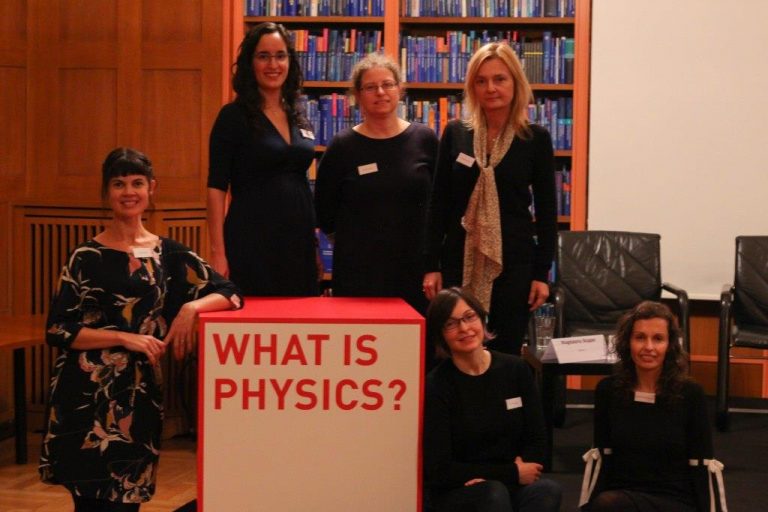
What is physics? Challenges and opportunities when working at the interface with other disciplines.

Post by Stefanie Reichert, Nature Physics

This year’s Berlin Science Week kicked off with a diverse programme. Among many events, visitors could discuss the connection between art and astronomy or learn how new technologies can be inspired by nature, or participate in a panel discussion at the Springer Nature office. The panellists set out to find an answer on how we define physics today, and to map out the boundaries with other related areas such as chemistry or biology.

Meet the panellists in our interviews from the run-up to the event: Abigail Klopper, Alba Diz-MuñozCosima Schuster, Magdalena Skipper Beatriz Roldán Cuenya.

Continue reading