Light and matter in sync

Contributed by Saar Nehemia and Ido Kaminer – Technion, Israel Institute of Technology.

In 1934, Pavel Cherenkov discovered that when charged particles surpass the speed of light in matter, they generate an electromagnetic shockwave. A well-known analogue for this phenomenon is a sonic boom – shockwaves of sound generated when jet planes surpass the speed of sound in air. This new understanding of light–matter interactions led Cherenkov to share the 1958 Nobel Prize in Physics with Ilya Frank and Igor Tamm for his experiment and their theory. The Vavilov–Cherenkov effect has been studied extensively since then and besides being of fundamental science importance, it has led to applications in particle identification, medical imaging, quantum cascade lasers, optical frequency combs, laser-driven particle acceleration, and other areas of nonlinear optics and nanophotonics

In 2020, our paper in Nature Physics demonstrated an experimental signature of a quantum Cherenkov effect. In this post, we take you behind the scenes of our experiment.

The quantum Cherenkov effect

The Cherenkov interaction and analogous effects were mainly studied in the context of classical physics; however, some scientists were interested in their quantum description. The first to study the quantum nature of the Cherenkov effect were Ginzburg and Sokolov in 1940. The conclusion from their work was that quantum corrections to the Cherenkov effect are negligible and irrelevant. In a later paper from 1996, Ginzburg even states that “In 1940, L D Landau told about my work stated that it was of no interest. It follows from the above, that he was fully justified in drawing this conclusion, and his comment hit the mark as was usual with his criticism”. For many years, this statement and related beliefs created a conception that kept scientists away from studying the quantum Cherenkov effect.

A series of theoretical papers from the past 5 years revisited the quantum Cherenkov effect and ignited a new interest in its consequences, starting with our theoretical paper from 2016. These papers predicted interesting consequences for a quantum treatment of Cherenkov-type effects and envisioned that modern experimental capabilities and advances in electron microscopy and in quantum optics could lead to the demonstration of quantum Cherenkov-type phenomena.

Over the last couple of years, other scientists began to predict similar theoretical features in related effects, such as the Smith-Purcell effect (see work by Talebi, Gover, Arie, Polman, and Garcia de Abajo). All these effects can be considered as Cherenkov-type because they all share the same underlying principle: an enhanced interaction between a charged particle and light that occurs when the velocity of the particle matched the phase velocity of light – also termed phase-matched particle–light interaction. These theoretical findings increased the general interest in building an experiment to test these theoretical predictions.
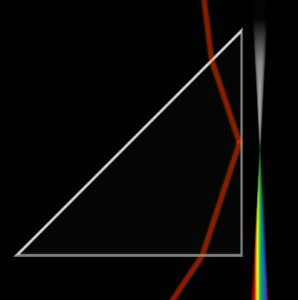
Illustration of the electron-laser interaction, inspired by Pink Floyd’s cover art of Dark Side of the Moon. Each electron is coherently split into a wide energy spectrum (rainbow). The laser light (red) has to be coupled at a precise angle to achieve the strong interaction, in which the electron simultaneously absorbs and emits hundreds of photons from the laser. {credit}Morgan H. Lynch and Saar Nehemia, Technion AdQuanta lab. {/credit}

There exist three types of quantum effects that can occur in phase-matched particle–light interactions.

  1. Recoil corrections due to the quantization of the electromagnetic field. The emission occurs in quantized packets, creating a deviation from classical theories of radiation emission. This effect was first analyzed in 1940 by Ginzburg and Sokolov, in the context of the Cherenkov effect.
  2. Intrinsic changes to both the charge dynamics and the emission properties due to higher-order processes in QED. These effects include photon re-absorption that causes an electron mass correction (analogous to Lamb shift in renormalization theory), all being effects that cannot be explained classically.
  3. Phenomena due to the quantum wave nature of the charged particle, with features that cannot be explained by a classical point-charge description, such as the emergence of discrete energy peaks in the electron energy distribution. This is what we measured in 2020.

Our paper

In our recent work, we measured the third type of the quantum effects described above. To demonstrate the Cherenkov-type interaction, we launched a laser pulse through an optical medium (see prism, below) to synchronize its velocity with a highly-collimated electron beam passing nearby. Using a very accurate electron energy spectrometer (as used in the EELS technique), we measured the electron energy distribution and revealed the discrete energy peaks discussed above. The longitudinal profile of the electron wavefunction altered the interaction. Analogous quantum corrections also arise from transverse features in the electron wavefunction, as its orbital angular momentum (OAM) or its transverse spatial profile.
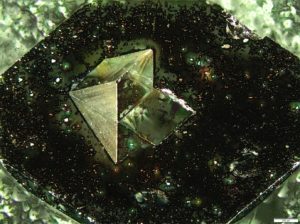
An optical microscope image of the prism used in the experiment. This 0.5 mm prism was attached to a 3 mm surface (darker background) with a square hole (center of image). The prism alignment was extremely precise to ensure that the electrons interact resonantly with the light in the prism. These electrons then pass through the square hole at the center of the surface. {credit}The Technion AdQuanta lab.{/credit}

Our experiment demonstrated a Cherenkov-type interaction between light waves and an electron wavefunction: the Cherenkov conditions are satisfied between an electron pulse and an incoming laser pulse that stimulates the interaction. This stimulated-Cherenkov effect is also known as the inverse-Cherenkov effect. The excitation laser pulse interacts with the electron at the Cherenkov angle (the same angle at which the radiation is emitted in the Cherenkov effect), resulting in a phase-matching between the electron and the laser light that leads to their strong interaction – causing both energy gain and energy loss – occurring simultaneously by each individual electron. In our experiment, this interaction is sustained over hundreds of wavelengths, causing the electron to become a coherent superposition of hundreds of energy levels.

Our setup is based on the ultrafast transmission electron microscope (UTEM), which utilizes femtosecond lasers for pump probe experiments. The microscope offers several degrees of freedom to measure the interactions between light and free electrons: controlling the delay between the light (“pump”) and the electron (“probe”), in addition to the light wavelength and polarization. The microscope allows us to control the electron wavefunction in space and time through its interaction with the laser.
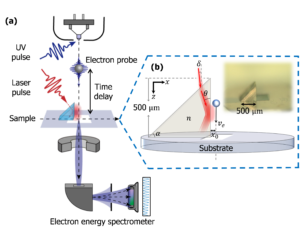
Illustration of the UTEM set-up, showing the grazing-angle interaction with a prism. {credit}Dahan et al. Nat. Phys. 16 1123–1131(2020){/credit}

Our Cherenkov experiment required a unique configuration that has never been achieved in a UTEM system, or in any transmission electron microscope: we needed to align the electron beam to graze the surface of our prism over 500 microns, while remaining at a distance of just 100 nanometers from the surface. To understand how complex this achievement is, consider that even samples that are 10,000 times thinner (nanometer scale, about the size of the corona virus or a couple of DNA strands) are considered quite thick in transmission electron microscopy.

To explain our results, we used the theory that was originally developed for a technique called photon-induced nearfield electron microscopy (PINEM), and extended it to describe our grazing-angle interaction. While all previous PINEM experiments dealt with localized interactions (in which the electron-light interaction spans over a single light wavelength or much below), our grazing angle experiment enabled the electron-light interaction to extend over hundreds of field cycles and hundreds of wavelengths. By satisfying energy–momentum matching over a long interaction distance and a prolonged interaction duration, the interactions become stronger by orders of magnitude compared to localized interactions – this opens the way to creating strong and ultrastrong coupling phenomena with free electrons.

Going back to the types of quantum effects that can arise in electron-light interactions, the PINEM interactions (see work by Carbone, Ropers and others) can be seen as an occurrence of the quantum effect of the third type – since it depends on the electron wavefunction. However, PINEM interactions before our work did not reach the Cherenkov-type interaction because they relied on localized fields (interestingly, even the acronym PINEM includes the word “nearfield”, although other types of fields can also create the effect).

The Cherenkov effect is only one example of phased-matched particle–light interactions. The energy–momentum phase-matching condition that is famously found in the Cherenkov effect also occurs in the Smith-Purcell effect, their inverse effects and a wide range of electron–light interactions that satisfy similar phase-matching conditions.

Looking Ahead
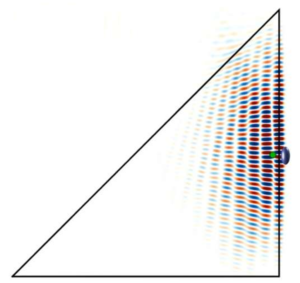
Simulation of the electron-laser interaction. The laser light (red-blue wave) interacts with the electron wavefunction (elongated sphere). This setup assures that the electron exchanges energy with the laser in a resonant manner – achieving the precise conditions of the Cherenkov effect. {credit}Dahan et al. Nat. Phys. 16 1123–1131(2020){/credit}

In another recent study by our group in 2020, published in Nature, we measured the interaction of free electrons with light captured inside a photonic cavity (also measured at the same time here). Looking ahead, we envision combining the Cherenkov phase-matched interaction with an elongated photonic cavity as a route to achieving efficient electron-photon interactions. The cavity will channel emitted photons that can then be resonantly reabsorbed by the elongated electron, creating a strongly-coupled electron–photon hybrid. This hybrid will enable the exploration of extreme conditions such as single-electron–single-photon interactions, which can serve as a novel mechanism for number-resolved single photons detection.

Reaching this regime of physics would open previously unknown processes like free-electron Lamb shifts, controllable free-electron mass renormalizations, and potentially even cavity-mediated Cooper pairs of free electrons. These exciting prospects rely on the quantum interaction of free electrons with photons that are dressed by their optical environment – which enables the Cherenkov effect and many other future ideas.


Behind the paper: CP violation in neutrino oscillations

In 1967, Andrei Sakharov proposed conditions required in the early universe for generating
matter and anti-matter at different rates, to explain the abundance of matter in our universe
today. Charge-Parity (CP) violating processes are essential under these conditions.
Measurements of the CP violation in quarks, first performed in 1964, are too small to explain
the difference, and finding other sources of CP violation is an ongoing quest in the physics
community. In April 2020, the T2K collaboration published a paper in Nature suggesting
large CP violation in the leptonic sector, namely in neutrino oscillations. Some of the
researchers involved in the project tell us their story.

A guest post by Ciro Riccio (Scientist, Stony Brook University), Patrick Dunne (Scientist,
Imperial College London), Pruthvi Mehta (Ph.D. student, University of Liverpool), Sam
Jenkins (Ph.D. student, University of Sheffield), Tomoyo Yoshida (Graduated Ph.D. student,
Tokyo Institute of Technology), Clarence Wret (Scientist, University of Rochester)

The oscillation analysis, whose results were recently published in Nature, is the last link in a
long chain of work. It amalgamates the effort of the entire collaboration, from those designing
and constructing the experiment 20 years ago, to the countless hours of detector operations
taken by people all over the world, to the development of the analyses.

The project
There are over 400 people working on T2K, in 12 countries, at 69 institutes. Many of us have
spent years building our bit of the experiment, from physical objects like detector or beamline
instrumentation, to abstract items like data analysis frameworks. Looking at the author list,
you’ll see that T2K consists of collaborators from all over the world. Our daily
communications happen online; in video meetings, emails, and chats. It’s sometimes a
challenge to find good time-slots for connecting people over 16 time zones, and it’s not
uncommon to sign-off from a meeting with a good-night, only to be met with a good-morning,
and vice versa.

Our international collaborators frequently fly to Japan to spend a week or two monitoring the
experiment in Tokai—on the east coast—where the neutrino beamline and Near Detectors
are, or Kamioka—just west of the Japanese alps—where the Far Detector is. In addition to
the flashing computer screens and sounding alarms, we get to witness a very different side
of Japan from the bright lights of Tokyo, from the beautiful mountains and rivers of rural
Japan, to the delicious local specialities. Avoiding the risk of data loss often occurs at the
cost of sleep for the operations experts (as the contributors to this blog post can attest)—but
all is forgotten after a morning visit to the local onsen (hot-spring).

It’s impossible to overemphasise the fantastic experience of Japanese culture as an added
bonus of partaking in T2K. Many of the restaurants in the Tokai and Kamioka areas are
familiar with members of the collaboration, and are very accommodating to international
collaborators. The owner of one particular restaurant in Tokai often recognises Sam and
remembers that he can speak a small amount of the language (chotto), and indulges him to
order in broken Japanese (we like to think it’s good for practice, and not solely their
entertainment). A favourite annual event is the sweet potato festival (imo matsuri), a
community event in Tokai held in November to celebrate the root vegetable that the Ibaraki
prefecture is renowned for.

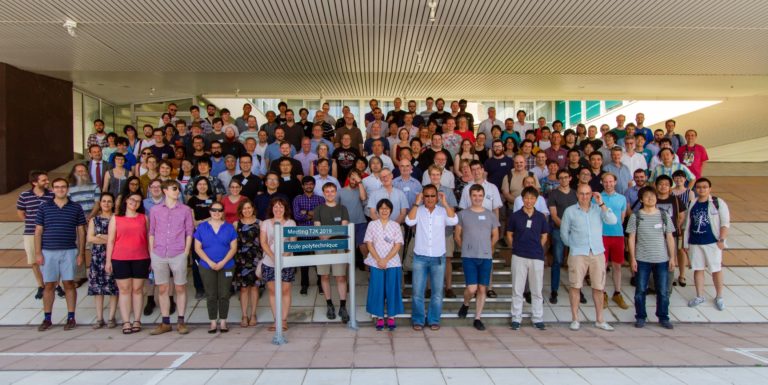
T2K collaboration meeting, Paris 2019, Credit: Pieyre Sylvaineat

The measurement
The Super-Kamiokande Far Detector started construction in 1991 in Kamioka, and operates
24 hours a day, 365 days a year, so as not to miss rare astrophysical events, such as
supernova bursts. The neutrino beam and the Near Detectors started construction 2001
(beam) and 2007 (Near Detectors) in Tokai, and are continuously operating when we have
pre-allocated beam time, sometimes up to seven months per year.
To make our measurement we not only need the neutrino beam and the detectors, but also a
computer-simulated model of the entire experiment, painstakingly quantifying how we think
each component behaves and how certain we are of that description. This includes
everything from the neutrino beam (and the proton beam collisions that creates it), to the
neutrino interactions in our detectors, to the density of the Earth between Tokai and
Kamioka, to how good our detectors are at measuring the neutrinos.

To characterise the neutrino beam, we have two detectors (“ND280” and “INGRID”) 280m
from the neutrino source, which have a staggering amount of neutrinos passing through
them. Occasionally these neutrinos interact at the Near Detectors, occasionally they interact
300km later in Super-Kamiokande, but most of the time they continue out through Earth’s
atmosphere, propagating deep into space. To put things into perspective, this analysis used
about 3×10²¹ (3,000,000,000,000,000,000,000) proton interactions to create the neutrino
beam. Roughly one neutrino is created per proton interaction, but due to their rare interaction rate with matter, we observe a mere 120,000 neutrino events at ND280 (60,000
of which were used in our analysis) and about 500 at Super-Kamiokande over the course of
nine years. In the early neutrino beam experiments of the 1970s, the data are often on less
than 500 neutrino events, with the experiments sitting right next to the neutrino source for
tens of years. Today we have about the same number of neutrino events in a similar amount
of time, but sitting 300km away from the source at Super-Kamiokande. It’s only recently that
we have the technology, international funding support from governments, and scientific
community in place to produce such powerful neutrino beams, which are the backbone of
these precise measurements.

Presentation of final results of the oscillation analysis. Credit: Pieyre Sylvaineat

Once the neutrinos are characterised at the Near Detector, the oscillation analysis takes all
the models of the neutrino beam, the detectors, the neutrino interaction, and neutrino
oscillations, combines them with their constraints, and blends them together to describe our
observations. The analysis and all of its inputs turns PhD students’, scientists’ and
professors’ daily work into many cycles of communication-implementation-validation, over
the course of more than a year. When validations and tests are satisfied, we finally get to
look at the data and make our measurement of the neutrinos’ oscillations. That last link in
the long chain has the privilege to see the final result first in the collaboration. The moment
when the plot pops onto your screen and you’re the only person who knows what it shows is
pretty special. For this result, published in April 2020, we first saw the results internally in
Autumn 2018, and spent the time between then and now extensively validating and testing
alternate explanations.

Looking ahead
T2K is currently in the process of updating the analysis using more data taken during
2019/2020, and using better models of the experiment, all thanks to the continuing dedicated
work of all our collaborators. Many of us are also working on upgrades of the neutrino
beamline, the Near Detectors and the Far Detector, to squeeze out more science from the
neutrino beam. Our results published in Nature are the strongest constraint on the CP
violating phase in neutrinos to date, but we have only taken about half of our allocated data.
There is much more to come and the prospects are truly exciting for all of us. As we
continue, we’re including the work of even more people than the analyses that came before;
new students, scientists and professors. We hope they, like us, get their share of the
pleasant, stressful, lovely, frustrating, and ultimately rewarding experience of being on an
international science collaboration such as ours.

Party at Abbaye des Vaux de Cernay. Credit: Pieyre Sylvaineat

Behind the paper: A bridge between theory and experiment

On behalf of Marcus Huber

{credit}Christian Murzek 2018 murzek.com{/credit}

Supposedly, there are two very different species of physicists: theorists and experimentalists. This alleged division is the subject of numerous nerdy jokes, but is more seriously reflected in university curricula, academic positions, grants, papers and non-surprisingly, reviews. Our review is an attempt to bridge the apparent gap that often complicates communication, focussing on a specific area of quantum physics that has seen a close connection between theory and experiment.

The story behind this review starts well before it was conceived. After finishing my PhD in theoretical physics, I remember being approached by experimentalist colleagues, asking seemingly simple questions about quantifying high-dimensional entanglement. At first, I couldn’t comprehend their dissatisfaction with my writing down a self-adjoint operator—after all, this is what constitutes a ‘measurement’ according to the postulates of quantum mechanics. After being presented with a bunch of tangible tools that were screwed to an optical table and asked to explain how to realise that specific measurement, I realised how little I actually understood quantum experiments and how pointless all of my theorems seemed for answering the simplest of questions.

This initially painstaking interaction with the mysterious species of experimentalists eventually bore fruit and led to a series of collaborations with experimental groups. There was a recurrent theme in our interactions experienced also by many theorist colleagues—we were presented with final experimental data and asked to tell if it is possible to certify or even quantify entanglement. The answers would have always been easy had they done the experiment in a slightly different manner, but alas, what was done, was done. I then spent sleepless nights trying to understand what each particular setup meant and how one could construct theoretical tests of entanglement for each specific situation—a process that could have been much simpler had there been a comprehensive review bridging this divide.

At some point, one of my frequent experimental collaborators approached me with an interesting proposition: we could run experiments together. And indeed a short time later, Mehul Malik joined my group as a senior postdoc and we started exploring the intricacies of multipartite and high-dimensional entanglement of ‘twisted’ photons. The first ‘experimental’ papers with a majority of theory authors were born and slowly the entire group developed a common language. Two more senior postdocs of the group had reported very similar experiences in different experimental collaborations, with Giuseppe Vitagliano working on spin squeezing in cold atoms and Nicolai Friis analysing ion traps with 20 qubits. We had often talked and decided the field really needs a review that covers all aspects in a unifying language, but never found the time to actually materialise it.

When I was invited to write a review for Nature Reviews Physics, we knew this was the chance to finally realise that dictionary that should become a handbook for both theorists and experimentalists to talk to each other, while comprehensively showcasing the state-of-the-art of quantum technologies. Of course, our initial dream was a bit too ambitious, given that there are dozens of experimental platforms, each with their own techniques and whole books could be written just about the theory of entanglement. So while trying to remain as objective and comprehensive as possible, we naturally decided to focus on aspects that we found most exciting at the moment.

The time we were planning to write the review also coincided with the move of Mehul Malik to his new professorship in Edinburgh and overlapped with the parental leaves of both Nicolai Friis and Giuseppe Vitagliano. While all joyous occasions, it was hard to gather the crowd even in the same Skype conversation. Collectively editing, planning and writing a comprehensive review with strict length constraints seemed an insurmountable task under these circumstances. So we turned to collaborative online LaTeX editors and at different hours of day and night wrote and commented the present review. When Nature Reviews Physics approached us about whether we would be willing to try Overleaf for collaborating with the editorial team, we were already well acquainted with the workflow, and went through several rounds of excellent editorial feedback, without ever having to worry about version control or sending a single document via email.

Beyond Einstein with neutrinos

Post by Teppei Katori, Janet Conrad and Carlos Argüelles.

The original paper in Nature Physics can be read here.

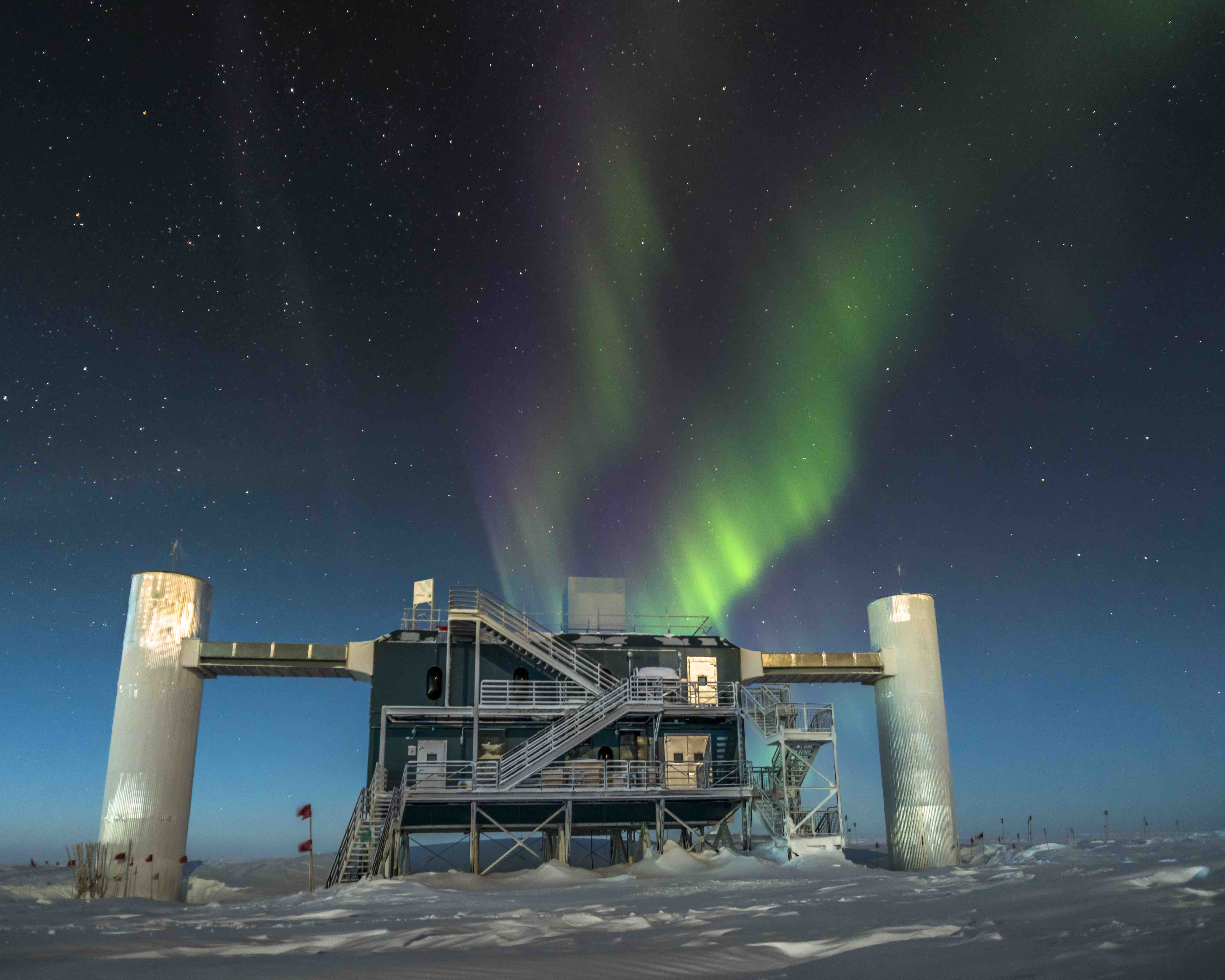
The IceCube Laboratory at the South Pole with the aurora australis. Photo courtesy: Martin Wolf (IceCube, National Science Foundation)

There is a website well-known to physicists that asks, “Are you a Crackpot?”  A leading question in the test is:  “Does your paper start with: Einstein is wrong?”  It’s a good cautionary tale to those of us who search for Lorentz violation.  The ground is littered with false claims that Einstein was wrong.

In fact, by the requirements of science, Einstein was clearly right.  His theory of space-time has withstood many, many tests, to very high precision.  It is a great description of our universe and still accessible today.  At this point, the question is not, “Was Einstein wrong?”  The real question now is, “Is Einstein’s theory sufficient?”

There is a famous example of a beautiful theory that was not wrong, but was not sufficient, and that is Maxwell’s equations.  These equations are a perfect description of how light behaves.  Since the 1800s, they have not been proven wrong.  What was proven wrong, by the influential Michelson and Morley experiment, was the worldview in which these equations were being interpreted:  light does not travel through an ether — its speed is the same from all directions.  Just because Maxwell’s equations are right, it does not mean there is an ether.

We love the Michelson and Morley experiment for many reasons.  First and foremost, of course, is the world-changing view of the meaning of Maxwell’s equations that this experiment demanded.  In fact, that changing worldview led directly to Einstein’s space-time theory.  But also, the interferometry of this experiment is a great analogy to the approach we use in our paper.  In addition, Michelson and Morley demonstrated the power of limits — although it found nothing, this is one of the most consequential experiments ever.  Limits are as important as signals. Continue reading

How advances in active noise cancellation unlocked a new form of waves

Post by Romain Fleury, commissioned by David Abergel.

The original paper in Nature Physics can be read here.

{credit}Credit: Jamani Caillet, EPFL{/credit}

Imagine you are playing the popular Nintendo game Mario Kart, and as you try to win the race one of the other players suddenly drives into the worst possible item box you can imagine: it covers the road in front of you with a very, very large number of banana peels, making it extremely unlikely for you to avoid these obstacles. If waves could have feelings, this is probably what they would think when a scientist tries to transmit them through a strongly localized disordered medium.

Yet, imagine now that you have the possibility to install some sort of magic boosters, or conveyor belts, that auto-pilot your kart seamlessly through these obstacles, while maintaining your precious velocity. This is certainly not possible in the game, but for our team of physicists and engineers, it made perfect sense to try this for waves in disordered media.

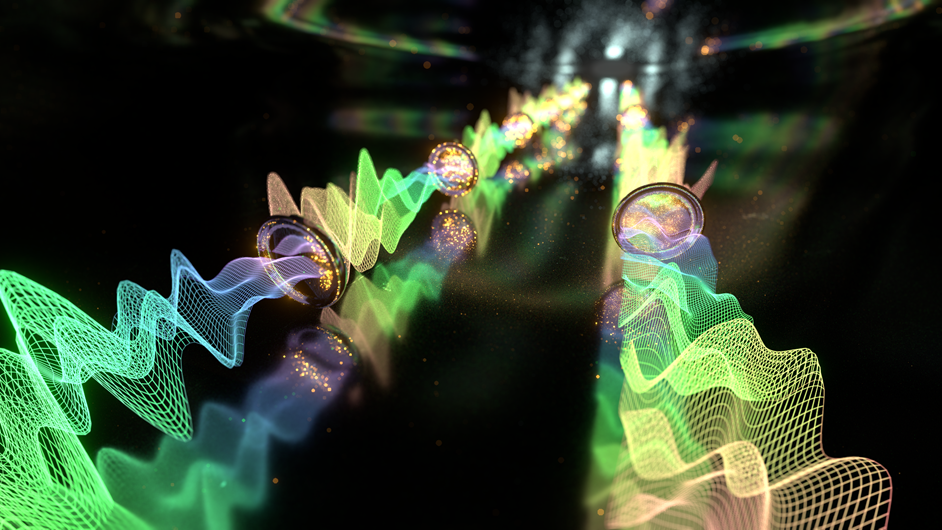
In our recent Nature Physics article, we have used acoustic boosters, or relays, to guide sound through a very nasty series of obstacles, and turned an Anderson-localized opaque medium into a perfectly transparent one by doping it with gain and loss. Interestingly, these acoustic boosters were made possible by recent advances in active noise control devices, similar to the ones you may use in your noise cancellation headphones during your next flight. Here is the story of how this idea came to life. Continue reading

Frequency scanning optoelectronic oscillator

Post by Ming Li, commissioned by Heather Partner

The original paper in Nature Communications can be read here.

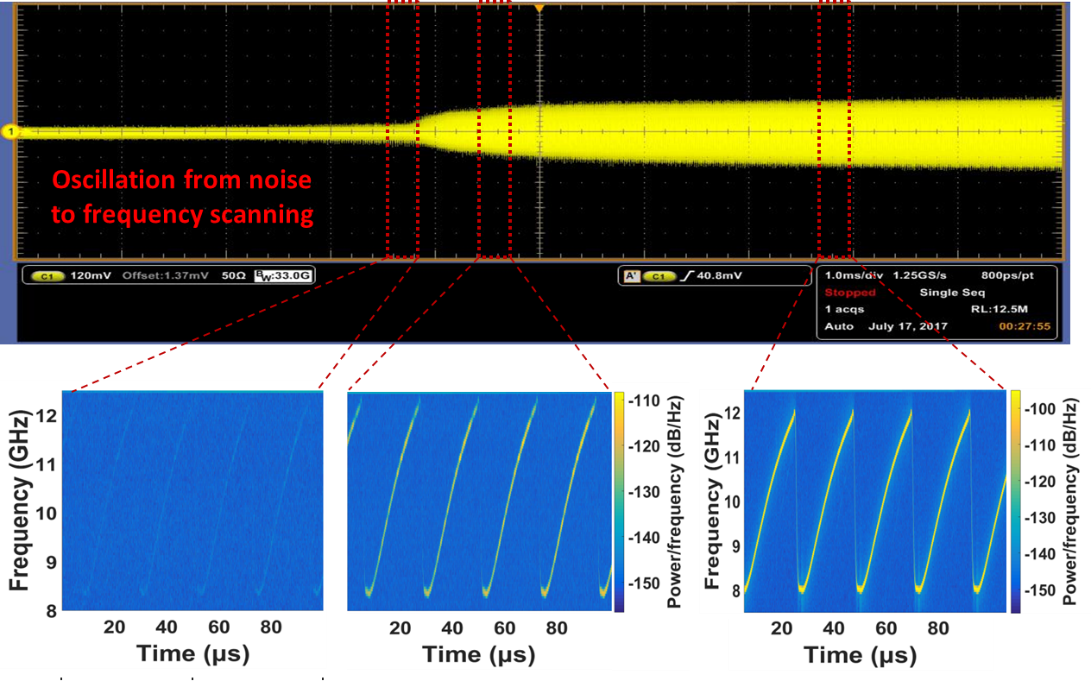
Radar and microwave communication systems have been invented many decades ago, but are still a growing area of research. For example, it is important for modern communication systems to be able to create microwave signals with fast-varying frequencies, called chirps. Optoelectronic oscillators are one way to produce ultra-low-noise microwave signals, but using them to produce a fast-varying signal with high quality is difficult, because a cavity-like component is used to reduce noise within these oscillators, and when the frequency is changed it takes time for a new low-noise frequency signal to build up in the cavity. In work published last month, we showed it is possible to have many frequencies oscillating in the system at once, so that the frequency can be changed rapidly without waiting for this build-up time. These simultaneous oscillations, all with locked phases, are made possible in a scheme known as Fourier-domain mode locking, which was previously applied to optical signals in lasers, but in this work is applied to microwaves using an optoelectronic oscillator .

An optoelectronic oscillator is like a laser, except that it has an optoelectronic cavity rather than a pure optical cavity. Although frequency-tunable optoelectronic oscillators have been widely studied, it is still a challenge to achieve continuous frequency scanning. Following the demonstration of frequency scanning lasers based on the Fourier domain mode locking technique in recent years, we wondered if it would be appropriate to extend this mode-locking principle to an optoelectronic oscillator.

In order to apply this technique to an optoelectronic oscillator, we needed a filter that could scan the selected frequency very rapidly — faster than what is made possible by most electrical schemes — so we decided to employ a microwave photonics solution that could perform faster tuning than electrical solutions.

One of the research interests of our group is semiconductor lasers. It is known that the lasing frequency of certain kinds of semiconductor lasers can be tuned by changing the driving current in a fast way. Fortunately, the passband of a microwave photonics filter based on phase-modulation to intensity-modulation conversion is related to the lasing frequency of the signal laser. Thus we achieved a fast frequency scanning microwave photonics filter by sweeping the frequency of the signal laser. Continuous frequency scanning microwave waveforms with very large time-bandwidth product are generated based on a Fourier domain mode locked optoelectronic oscillator. We run simulations that show that a Fourier domain mode locked optoelectronic oscillator oscillates in the same way as a conventional single-mode optoelectronic oscillator that uses the same optical and electronic components, except that the energy is shared by the many oscillation modes.

The employment of a Fourier domain mode locking technique in an optoelectronic oscillator provides an effective solution to generate frequency scanning microwave signals with large time-bandwidth product, which can find applications in radar and communication systems.

Ming Li

Reference: Hao T. et al, Breaking the limitation of mode building time in an optoelectronic oscillator. Nat. Commun. 9, 1839 (2018)

Plato, superheroes and a visit to the abattoir

Post by Malte Gather, commissioned by Nina Meinzer

The original paper in Nature Communications can be read here.

2010, Boston. The 50th anniversary of the laser. A device that was originally famously proclaimed as “a solution in search of a problem” and that became the solution to so many crucial problems of modern society and science. What better way to pay tribute to the laser than to bring it quite literally to life? With this in mind, my former supervisor Andy Yun and I got to work on turning living cells into tiny lasers, using a green fluorescent protein produced by the cells themselves as optical gain medium. When our paper came out, it inspired many people in … well … unexpected ways: “Sharks with frickin’ lasers attached to their heads”, “bacterial infection that shoots lasers in your body”, “superheroes shooting laser beams from their eyes”. The first two seemed rather undesirable, let alone the red-tape involved in any study aimed at their realization. But superheroes with laser eyes? Back in ancient Greece, Plato even believed vision itself was mediated by “eye beams” that scan our environment. So could laser beams emitted from the eye have a more peaceful application than what is suggested in the comic books of modern times?

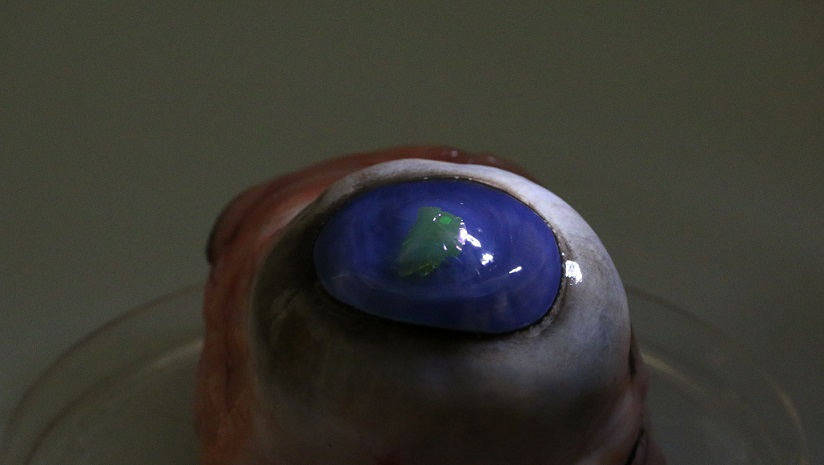
laser on a contact lens on a cows eye1

Fast forward to 2017, St Andrews, Scotland. Working with Professors Ifor Samuel and Graham Turnbull, our jointly supervised PhD student Markus Karl develops an ultra-thin organic semiconductor laser. He strips all non-essential components and ends up with a 200 nm-thick membrane that contains only gain medium and resonator; the pump is supplied externally by optical excitation. To fabricate these devices, Markus uses a carrier substrate and a sacrificial intermediate layer. In the final step of the fabrication, the membrane floats off the substrate and rises to the surface of a water bath. What now? Another solution in search of a problem?

We soon find that we can pick up the membranes with another substrate, or fish for them with a little net. Then we find that our membranes work like stickers, stickers that can turn any object into a laser. Ifor suggests to put them on banknotes as a new security feature. A membrane laser on every banknote in the United Kingdom would probably make our membrane lasers the world’s most numerous type of laser.

But what about Plato and the superheroes? Our lasers are not only among the world’s thinnest, they also have very low lasing thresholds. But how low? Say, compared to laser safety standards? It takes a bit of courage but eventually my student and I go to see the department laser safety officer to ask how their intensity – and more importantly the intensity of the optical pump – compare to permissible levels for intentional ocular exposure. In other words, could we use our membranes to shoot laser beams from one’s eyes without blinding ourselves? We check, twice, three times, four times, but the answers seems to be that it should be safe, with about a ten-fold margin before reaching maximum permissible exposure levels.

We refrained from testing our lasers on the human eye – at least for now. Instead, the last part of our study involved a trip to an abattoir near Edinburgh to buy some cow’s eyes. (Ophthalmology research often uses them as model for the human eye.) A few hours later a cow’s eyeball in a Petri dish shoots a green laser beam across our optics lab. In the future, we hope to use such lasers as an authentication and access control feature, complementing a biometric iris scan. For now, we are left with the slightly weird image of a zombie supercow shooting laser beams from its large blank eyes…

Malte Gather

Reference: Nature Commun. 9, 1525 (2018)  doi:10.1038/s41467-018-03874-w

Behind the paper: Serendipitous encounters

Post by Iulia Georgescu

If you meet an editor of the Nature journals they will likely assure you that to get published you just need good science. But, the truth is there is some luck involved too – especially for interdisciplinary work. Sometimes the editors accidentally come across gems of papers. Bart Verberck and Liesbeth Venema tell two such stories.

Bart Verberck: Mathematics and lizards

One of the most pleasant aspects of being a Nature Physics editor is the need to be in touch with the scientific community, which means a fair share of your time is spent away from your desk, at conferences and institutes.

On one such occasion, I found myself attending a conference called “Science of the Future” in Kazan, Russia.  The event was memorable for a number of reasons.  On the plane from Moscow to Kazan, for example, I happened to sit next to a French physicist checking his presentation for the conference, in which he referred to a (Physical Review B) paper I had co-authored back in the day when I was an active researcher.  And at the conference, as soon as I had expressed an interest in seeing the museum–room of Yevgeny Zavoisky — credited with the discovery of electron paramagnetic resonance, at the University of Kazan — hey presto, I was given a tour.

The scope of the conference was extremely broad; in one session of plenary talks one could hear from a historian (a first for me), a bioinformatician, a physicist and a mathematician.  The mathematician was Stanislav Smirnov, recipient of the 2010 Fields Medal.  His presentation touched on percolation and cellular automata, a subject I had been fascinated by for many years.

At the conference dinner, I approached Smirnov.  I wanted to know his opinion on Stephen Wolfram’s viewpoint that cellular automata are a sort of governing principle in nature, as expressed in his book A New Kind of Science.  After chatting a bit, Smirnov mentioned he was involved in a piece of work at the boundary between mathematics and biology.  He wondered whether, scope-wise, it would fit Nature

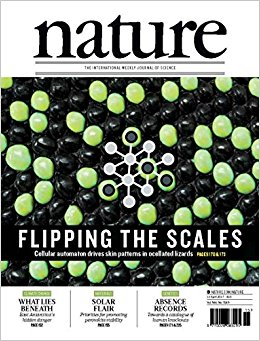
I would have loved to see the work submitted to Nature Physics, but, when I got an e-mail from Smirnov a few weeks later, asking for advice on where and how to submit, I did the honourable thing and put him in touch with Liesbeth Venema from Nature.  He submitted the paper — on how the pattern formation on the skin of a particular type of lizard is governed by, yes, a cellular automaton — to Nature, where it successfully went through peer review.  The paper’s publication in 2017 coincided with the centenary of “On Growth and Form” by D’Arcy Thompson and was on the cover of Nature.  Of course, I wrote a research highlight  about it in Nature Physics.

naturecover

Liesbeth Venema: Pyramids and robots

Another main attraction of being a Nature manuscript editor has always been, for me, the chance to learn a new scientific topic every week. This never gets boring. Admittedly, it helps if lizards are involved. Or sharks, spiders and tree frogs – all have played their parts in Nature papers I handled over the years.  Continue reading

Behind the paper: A bioengineering mission that led to a rendezvous with Anderson localization

Posted on behalf of Seung Ho Choi, Michelle Visbal and Young Kim, commissioned by Lina Persechini.
The paper in Nature Communications is here.

Capture

The field of biomedical optics and biophotonics has changed.  We felt it in the community.  “Much that once was is lost”.  This change might have originated from the perception that light in biological media is simply diffusing.  Such long-standing perception made everything seem trivial, which caused scientists and engineers to progressively lose interest in light transport in biological materials and structures.  In this story, we will tell you about the journey that led us to the observation of a totally unexpected linear optical phenomenon in biological systems:  Anderson localization of light (a phenomenon named after Nobel laureate Philip Anderson).

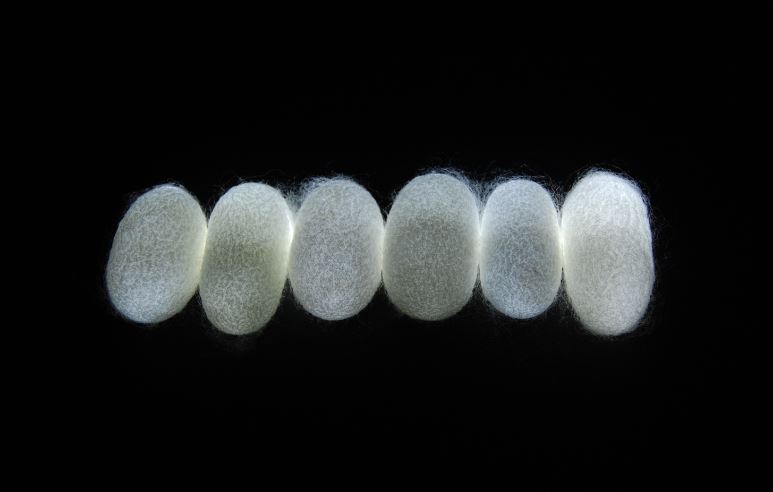
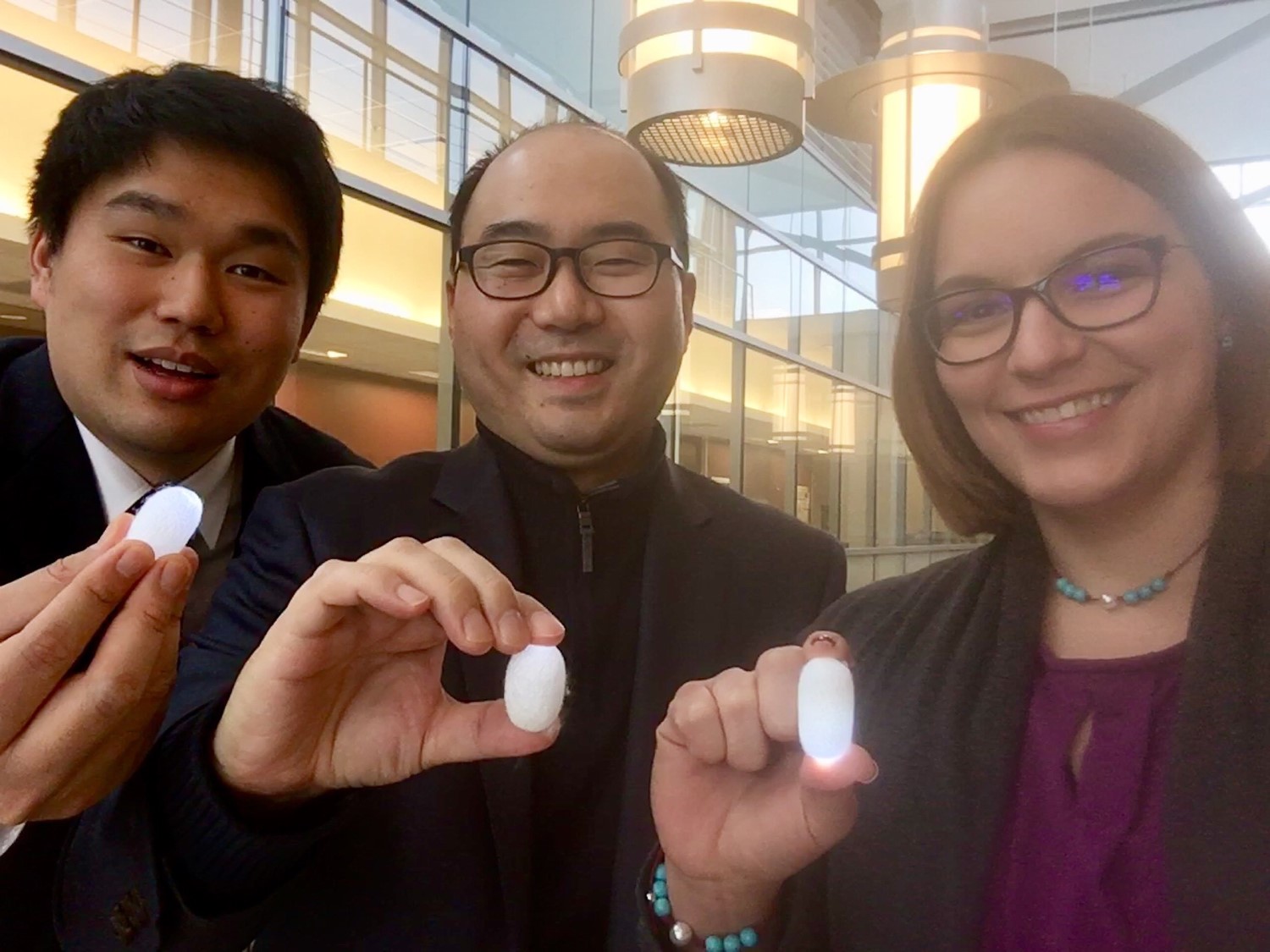
Initially, our research group was busy with realizing naturally occurring lasers (also known as random lasers) from biological and natural materials (such as bone and nacre of seashells).  In 2014, we happened to watch a Korean television news channel that made us come across a fluorescent silkworm.  This fluorescent silkworm opened an exciting prospect for investigating random lasing from a recombinant fluorescent organism.  We decided to fly to South Korea.  After presenting our ambitious proposal for high-tech biogenic lasers to the rural farmers there, we were able to receive the magical recombinant substances.  Using them, we obtained laser-like spectral lines, but was it really a lasing signal?  To address this question, we had to demonstrate additional lasers using different samples (later we realized that our first observation was not lasing).

However, we overlooked the fact that silkworms grow slowly eating mulberry leaves, and that these leaves can be harvested only once a year, in summer. For researchers with tight funding, an even more important issue than the topic of research can be the funding cycle; “To be, or not to be: that is the question”.  At that moment, we had to make a big decision.  We could not wait for the silkworms’ next life cycle to let them spin another batch of fluorescent silk.  Since we were not certain as to whether the silk had the capability to confine light, we decided to study a more fundamental optical phenomenon: Anderson localization of light.  During our random lasing study, we were able to observe a glimpse of extremely strong light–matter interactions from the lustrous reflection of native silk.  To investigate Anderson light localization with a minimal budget, we built our own transmission matrix measurement setup using components that were already comprised in other instruments. We had to combine three academic disciplines:  biomedical engineering, mesoscopic physics and structural biology.

Through our interdisciplinary approach, we held in-depth discussions, in particular with scientists in the field of mesoscopic physics.  When we were addressing peer-reviewers’ comments from hardcore physicists, one of our collaborators said “your work will be published, once your language is understandable to physicists”.  At the submission stage, we didn’t know what this really meant, but after multiple rounds of review, we completely understood it.  From a personal perspective, when combining several academic disciplines, different perceptions coming from different academic disciplines often appear to be conflicting.  Only once they completely understand each other, one discipline can realize the true meaning of the other.  At last, the reviewers in the field of mesoscopic physics were convinced of the experiment, analysis, theory and conclusion in our study.  Following this experience, we dream of a future where everyone realizes the beauty of others by overcoming differences between academic disciplines, religions, national origins, races, sexes and even species (humans and silkworms).

Seung Ho Choi, Michelle Visbal and Young Kim

Reference: Nature Commun. 9452 (2018doi:10.1038/s41467-017-02500-5

cocoons

Behind the paper: Quantum simulators at their best

Post by Guido Pagano, commissioned by Giulia Pacchioni. The paper in Nature is here: https://rdcu.be/CHsG.
Image

A universal quantum computer promises to tackle a wide range of problems such as materials design and molecular modelling, with the ultimate goal of addressing general classes of hard problems. A quantum simulator is a restricted type of quantum computer that uses qubits to study a specific many-body system. One of the main challenges in the development of such devices is scalability, namely the ability to increase the number of qubits while exerting individual control on each of them. In this work we performed the largest spin model quantum simulation to date, using 53 qubits.

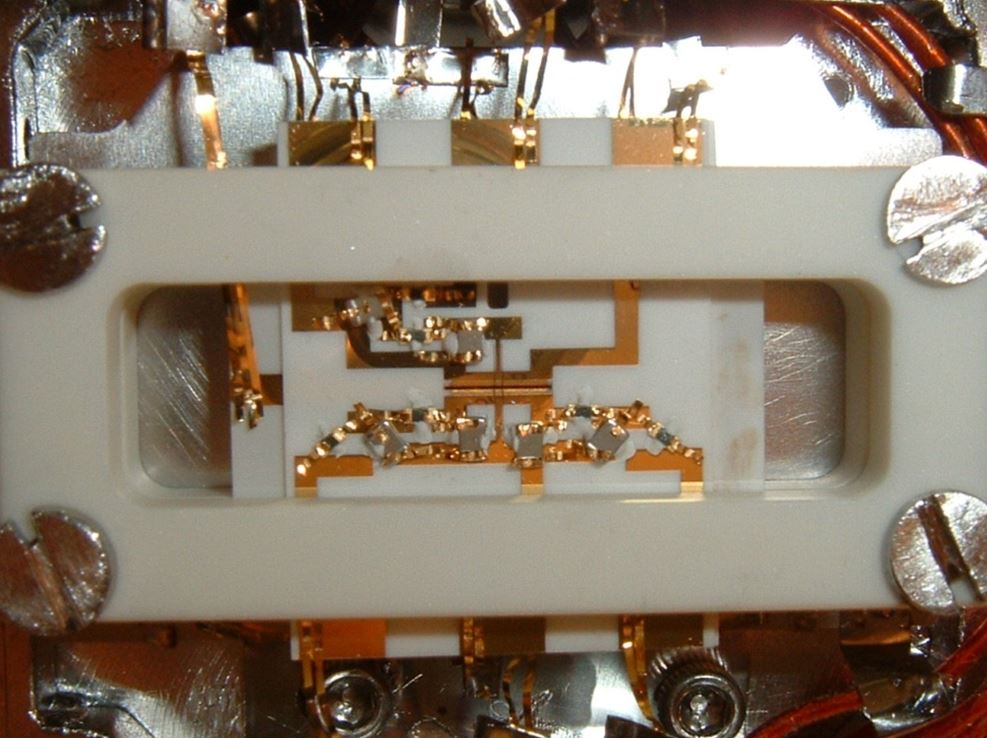
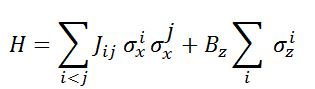
Our trapped-ion quantum simulator consists of individual ytterbium ions—charged atoms trapped in place by gold-coated electrodes—which are used to study quantum magnetism in out-of-equilibrium systems. In particular, we studied a dynamical phase transition that occurs after a sudden change of the system parameters, a.k.a. a quantum quench. The system is described by the following Hamiltonian:

hamil

where σxi  is the Pauli matrix acting on the ith spin along the x direction, Jij the Ising coupling between spins i and j, and Bz the transverse magnetic field. The spin–spin interaction is long range and falls off approximately as a power law Jij~J0/|ij|α . We studied the response of the system as a function of the ratio of the two competing energy scales in the Hamiltonian, namely Jand B. The experiment we had in mind was very simple: prepare the spins along the x-axis, quench the Hamiltonian and then measure the magnetization of the spins along the x-basis over long times. The question we wanted to answer was: is there a dynamical phase transition, namely a non-analytic change in the properties of the system, as we vary the ratio B/ J0?

Ideally, to answer this question and observe a non-analytic response of the system, we should have taken the thermodynamic limit both numerically and experimentally. Numerically this is possible for those few cases where the system can be solved analytically, but experimentally it was definitely out of question to put an infinite number of ions in the trap!

We decided more modestly to perform finite-size scaling, namely to measure how the properties of the system changed as the number of particles increased and try to observe non-analytic behaviors smoothed in a crossover by finite-size effects.

Therefore, we tried to perform the experiment looking at the long-time average magnetization of the systems, but our system sizes were not large enough to see any significant signature of the phase transition. At some point, we had the idea to look for the second-order correlations at long times and there we found something very interesting in the data: at what we thought to be the critical point, we observed a dip in the correlations! We checked in the numerics and had the confirmation that the dip—which is a signature of a dynamical phase transition—was physical. We numerically checked that the correlation dip went to zero in the thermodynamic limit of a toy model with all-to-all interaction (α=0 , which is analytically solvable), and it did. We had finally the first evidence of the phase transition! Since the finite scaling of this signal was not really satisfactory for systems with up to 16 ions, we tried to increase the signal-to-noise ratio as much as possible by going to larger and larger system sizes, and eventually we managed to take data with 53 ions.

This experiment offered a very concrete perspective on doing experiments with a very large number of qubits, putting us on the cusp of exploring physics that is unreachable by even with the fastest modern supercomputers.

Guido Pagano

Reference: Zhang J. et al. Observation of a many-body dynamical phase transition with a 53-qubit quantum simulator. Nature,  551, 601–604 (2017).