Too much of a good thing?

From Wilson et al.

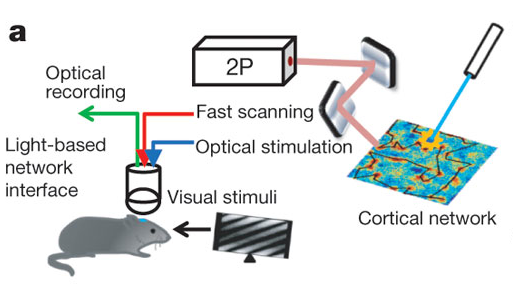
We published another double header yesterday, this time on the role of particular cell types in visual responses. Both studies describe the effect of optogenetically manipulating various interneuron classes in mouse visual cortex. The papers are Lee et al. from Yang Dan‘s lab and Wilson et al. from Mriganka Sur‘s labs. And in fact, both were preceded by Atallah et al. from Massimo Scanziani’s lab, which appeared in Neuron earlier this year. Which means a bonanza of data on the effects of activating parvalbumin-expressing interneurons, and also a bonanza of different conclusions about their exact role – everyone comes to slightly different conclusions.

We’ve discussed joint (and triple) publication a number of times already on this blog, including situations where findings diverge. We even just recently discussed a triple publication involving a paper from Yang Dan’s lab. So I’ll leave it to you to extrapolate the editorial discussions that likely took place in this case, but if anyone wants to know more, leave a comment. Instead, I’ll touch on another question that we get asked fairly regularly: what do we do when authors submit papers to us in quick succession? Is there a limit on how many papers from one lab we will publish per year? Since we’re mentioning today a paper by an author who had a paper covered in the previous blog post, you can infer that number is at least two. Just kidding. Of course we have no limit. Scientific progress unfolds at different rates, and sometimes labs have some very good years. As long as a study has potential impact, we are happy to consider. Continue reading
Positive feedback drives network (and manuscript) maturation.

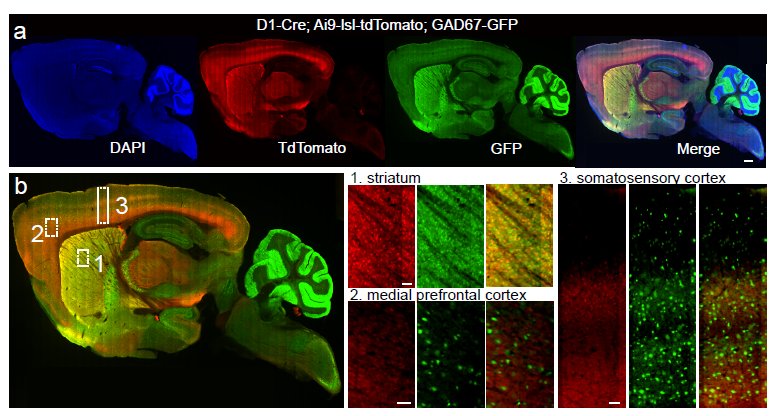
Whole-brain anatomical mapping of D1-Cre expression in inhibitory neurons (from Supp Fig.2)

It really is an embarrassment of riches here at Nature these days, what with so many excellent neuroscience-related studies emerging. Just in the last couple of weeks, we’ve had the following studies:

So really, a lot to write about from a science perspective. However, this blog is dedicated to bringing you the editorial back-story, so I wanted to touch on yet another interesting study, published in print today. This new paper offers an opportunity to discuss an important editorial issue: the manuscript appeal process. For more details, you can always read the appropriate section in our guide to authors. But it’s often helpful to follow a particular [successful] example in order to illustrate the process. Continue reading

Fear of the Light

fear-of-the-light**PLEASE SEE UPDATES BELOW**

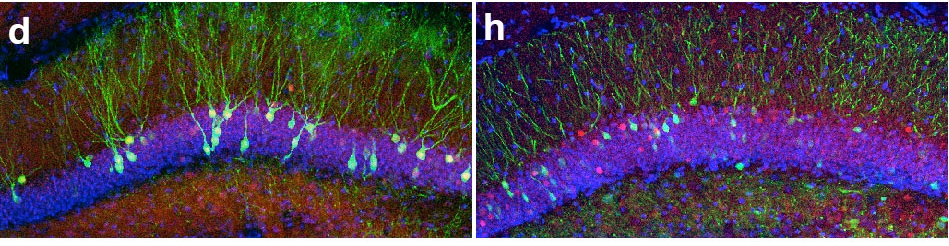
It is commonly believed that distinct mini-networks of neurons, firing together, may be the means by which memories and other conceptual encoding requirements are handled in the brain. However, it is only recently that we have had the tools available to directly test the sufficiency of such a mechanism. Today, a new study in Nature from the lab of Susumu Tonegawa documents the ability to use light as a means to activate distinct subsets of neurons responsible for the encoding of fear memories.

Continue reading

Layer magic and monkey business

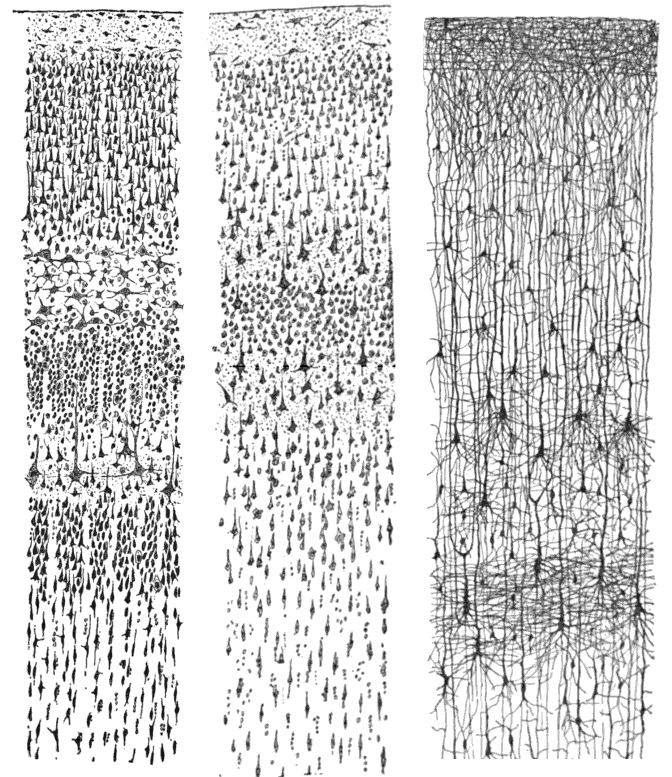
Layers of human cortex drawn by Ramon y Cajal. Image from Wikimedia Commons

We’ve known for over a century that sensory cortex is arranged in distinct layers, each containing a different make up of neuronal types and projection patterns, but we don’t actually know that much about the actual computations performed in each layer.  Today a paper from Massimo Scanziani’s lab takes a big step towards cracking the function of the bottom layer (layer 6) in mice. Layer 6 neurons project both to upper cortical layers and to the lateral geniculate nucleus in the thalamus, which itself is the primary input to cortex, and so are primed to play a large modulatory role. Using a monumental combination of optogenetics, intracellular recording, and behavioral testing, the paper convincingly makes the case that layer 6 controls the gain of visual responses of upper layer neurons (i.e. changes the size of their responses without altering their selectivity). Gain control is a fundamental computation in cortex, and has been invoked as a mechanism for attention, perception, spatial processing, and more. The cellular mechanism here is worked out in primary visual cortex, but it could potentially operate throughout layered cortex.

Continue reading